Category Archives: Government & Business

What’s brewing in Sacramento, Silicon Valley, and beyond

New Boss at the Pacific Institute, New Salvo from Heartland

The Pacific Institute and the Heartland Institute: Both sides are digging in

Peter Gleick is taking a temporary leave of absence from the Pacific Institute.

The Pacific Institute has posted a new statement to its website, saying the board is hiring an independent firm to investigate the actions and allegations surrounding its founder, Peter Gleick, who admitted last week to using deception in order to obtain documents from the Heartland Institute.

Gleick requested a temporary leave of absence over the weekend and the board has nominated Elena Schmid, an independent consultant, to head the organization on an interim basis. According to a bio from the Pacific Institute, Schmid has worked at California Independent System Operator, “focusing on policy, communications, and human resources for this corporation that manages the high voltage transmission lines for California,” and at the California Public Utilities Commission, “developing policies, programs, projects, and budgets that resulted in active representation of long-term consumer interests in telecommunications, gas, water, and electric industries.” Continue reading New Boss at the Pacific Institute, New Salvo from Heartland

Are We Giving Up Too Soon on Carbon Capture?

California could benefit from the controversial technology behind “clean coal”

It's not just for coal: Natural Gas-fired power plants could use carbon capture technology, too.

A prominent researcher says it would be foolhardy to abandon plans to siphon off the carbon dioxide from industrial emissions and store it underground. The concept, known widely as “carbon capture and sequestration,” or CCS, has been a slow starter in the U.S. In fact, worldwide, there are only a handful of working projects.

“It never had a chance,” said Sally Benson, following a panel at a major science conference. Benson directs the Global Climate & Energy Project at Stanford University, and is a proponent of CCS — though she says companies that were leading the charge are now “wavering.” She told me that the 2010 UN climate talks in Copenhagen were a turning point; when it became apparent that governments weren’t about to put serious restrictions on carbon emissions, she says investors backed away from CCS, which is still in the pilot stage of development and very pricey. Continue reading Are We Giving Up Too Soon on Carbon Capture?

Clouds Gather for Scientist who Purloined Documents

Support from Pacific Institute’s board, funders may be wavering

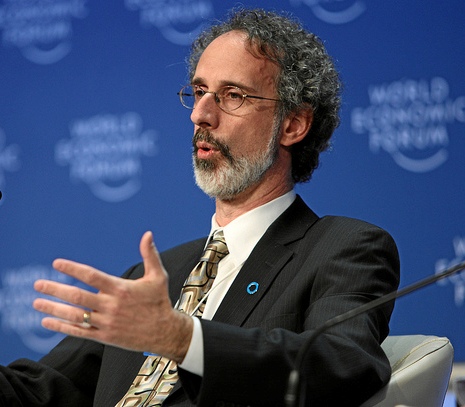
Peter Gleick is a prominent water scientist and a Macarthur Fellow.” credit=”World Economic Forum/Flickr

The furor surrounding Peter Gleick’s admission that he lied in order to get internal documents from the Heartland Institute appears to be gaining momentum, with the board and at least one major funder of Gleick’s Oakland-based Pacific Institute appearing to back-peddle on initial statements of support.

Gleick, who co-founded the Institute, wrote in a blog post earlier this week that he impersonated a Heartland insider to obtain the information, which includes strategy and fundraising details from the organization, a conservative think tank that’s against taking action on climate change.

Gleick has already stepped down from positions with the American Geophysical Union and the National Center for Science Education. Initially the Pacific Institute stood by him, saying in a brief statement posted to its website, Gleick “has been and continues to be an integral part of our team.” That statement is no longer there, replaced yesterday by one that takes a different tone:

The Board of Directors of the Pacific Institute is deeply concerned and is actively reviewing information about the recent events involving its president, Dr. Peter Gleick, and documents pertaining to the Heartland Institute. Neither the board nor the staff of the Pacific Institute knew of, played any role in, or condones these events. As facts emerge and are confirmed, the Board will inform all stakeholders of our findings and of any actions based on these findings.

Continue reading Clouds Gather for Scientist who Purloined Documents

Resignation and Remorse: Gleick Faces Fallout from Heartland Documents Leak

The Pacific Institute is standing by its founder, but other consequences are piling up

Peter Gleick is a co-founder of the Pacific Institute, a research group based in Oakland.” credit=”Craig Miller/KQED

Climate scientist Peter Gleick, who last night admitted that he was the source of leaked documents from the Heartland Institute, has resigned from the American Geophysical Union’s Task Force on Scientific Ethics. Gleick was chair of the task force, which met for the first time last November. According to a press release from the AGU, Gleick resigned last Thursday — after the explosive documents appeared on various blogs but before his online admission as perpetrator.

He’s also stepped down from a position which he hadn’t yet officially begun with the National Center for Science Education, an organization that advocates for evolution and climate change education in schools. Gleick was scheduled to begin serving on its board this week, but tendered his resignation yesterday.

Continue reading Resignation and Remorse: Gleick Faces Fallout from Heartland Documents Leak

Bay Area Scientist Owns up to Lying to Get Heartland Documents

The Pacific Institute’s Peter Gleick says he was blinded by frustration when he used subterfuge to obtain and leak the internal documents

Earlier this month, documents were allegedly leaked from the Heartland Institute — a think tank that questions human-caused climate change — which describe elements of the organization’s strategy to discredit climate science, and include background on funders. Now climate scientist Peter Gleick, the founder of the Pacific Institute, has admitted to using deception to obtain the information.

Continue reading Bay Area Scientist Owns up to Lying to Get Heartland Documents

Challenges for EPA’s Top Man In San Francisco

The latest in our series of television interviews with climate change thought leaders

Just about two years ago, Jared Blumenfeld took charge of the Environmental Protection Agency’s largest West Coast office, promising “revolutionary” strides forward. But it’s been a tough slog on the climate front, given the political climate in Washington.

Climate Watch Senior Editor Craig Miller sat down with Jared Blumenfeld, Administrator for EPA’s Pacific Southwest Region, to talk climate, green business and smart growth. Their interview airs this weekend on This Week in Northern California, on KQED Public Television 9. The segment is edited from a longer interview; here’s a clip that’s not in the TV version.

Continue reading Challenges for EPA’s Top Man In San Francisco

Tesla’s Model X: Sleek, Climate-Friendly and Made in California

Tesla is blazing a trail for electric vehicles, but its sky-high prices are still a barrier

Production on Tesla's Model X begins in 2013.

On February 8th, Tesla Motors CEO, Elon Musk, unveiled the company’s latest electric car: The Model X. Probably the sleekest and sexiest SUV you’ve ever seen, and also the priciest. But what’s most remarkable — beyond the falcon wings — is that the car will be manufactured here in the Golden State, at the former NUMMI plant in Fremont.

Why did Tesla choose to locate its headquarters and manufacturing in the high-priced San Francisco Bay Area? Was it linked to the state’s ambitious clean energy targets and policies? The new rules approved last month by the California Air Resources Board require automakers to produce 1.4 million zero-emission cars for the California market by 2025, and are part of the aggressive goal of reducing the state’s emissions 80% by 2050.

Tesla spokesperson Khobi Brooklyn eschewed policy explanations and told me, “We wanted to build our cars in California, not only creating jobs in the U.S., but also California specifically.” She cited Silicon Valley as “an incredibly rich pool of talent” and said that purchasing an existing car manufacturing facility saved money and time in preparing for car production. I’ve no doubt the California sales tax rebates on capital equipment purchasing (estimated at $20 Million) helped too.

Continue reading Tesla’s Model X: Sleek, Climate-Friendly and Made in California

Leaked Documents Describe Corporate Agenda to Discredit Climate Science

Bay Area climate scientist named in disputed document

The climate corner of the Blogosphere exploded this week with the alleged leak of numerous documents from one of the nation’s most ardent opponents of action to slow global warming.

It started when DeSmogBlog published a series of documents that its editors said were leaked to them, revealing much of the playbook for the Heartland Institute. If authentic, the documents would validate longstanding complaints that corporate interests have been bankrolling a deliberate campaign of disinformation, aimed at casting doubt on legitimate climate science, and that Heartland has been an important channel for this campaign. Continue reading Leaked Documents Describe Corporate Agenda to Discredit Climate Science

Climate Adaptation and Unintended Consequences

Radio documentary explores the social and economic impacts of adapting to climate change

Rising seas will irrevocably change life near the San Francisco Bay. That’s the premise of RISE: Climate Change and Coastal Communities, a three-part documentary by independent producer Claire Schoen. The final part, “Chuey’s Story,” airs this evening at 8 pm on KQED 88.5 FM.

By Claire Schoen

Chuey Cazares works as a fisherman out of the South Bay town of Alviso. Adapting to climate change may save his town, but it's having unintended consequences for his livelihood.

There’s an old adage that goes something like this: “The human capacity to create technology exceeds our capacity to understand its impact.”

Lots of people have referred to this idea, Einstein perhaps most famously when he said, “The unleashed power of the atom has changed everything save our modes of thinking and we thus drift toward unparalleled catastrophe.” Splitting the atom certainly brought us the promise of unlimited energy to run industry and military might to protect the world from Hitler. It also brought us a nuclear North Korea and Fukushima.

Continue reading Climate Adaptation and Unintended Consequences

State Analyst: Cap & Trade Plan Good as Far as it Goes

But what happens after 2020?

A non-partisan analysis of California’s recently approved cap-and-trade program says state regulators at the Air Resources Board (CARB) did a decent job of balancing competing directives, but warns that legislators need to start thinking about what happens after the program runs its course, less than a decade from now.

Craig Miller

“The legislature and the Air Board need to provide some certainty of what the regulatory landscape will look like after 2020, so that the regulated community can start planning and making appropriate investments,” Mark Newton of the Legislative Analyst’s Office (LAO) told me in a telephone interview. The state’s greenhouse gas emissions reduction law, AB 32, sets a goal of reducing California’s emissions to 1990 levels by 2020. “AB 32 leaves open the door to changes being made,” said Newton, “but it doesn’t provide any specificity about a new goal that you’ll be reaching after the 2020 goals are met.”

In other words, industries regulated under the program have no idea what will happen after 2020, although the legislative intent — and California environmental history — points to further regulation. It took regulators a solid four years to get their carbon trading plan off the ground, so planning ahead seems prudent.

Continue reading State Analyst: Cap & Trade Plan Good as Far as it Goes