Category Archives: Government & Business

What’s brewing in Sacramento, Silicon Valley, and beyond

Tesla and SolarCity Collaborate on Clean Energy Storage

The companies’ founders don’t just share business interests: they’re also family

Elon Musk is the founder of Tesla Motors and SpaceX, and supported the creation of SolarCity.

Elon Musk is well-known in Silicon Valley as the founder of the luxury electric vehicle company Tesla Motors, and of SpaceX, the private space transport company.

What’s less well-known is Musk’s contribution to SolarCity, the solar installer and energy efficiency auditor. Musk inspired–and helped fund–the creation of the San Mateo-based solar company. And Tesla is working closely with SolarCity on a clean energy storage solution that would combine Tesla’s lithium-ion batteries with SolarCity’s rooftop solar arrays. The collaboration makes sense: not only is Musk the chairman of SolarCity, but the founders of the company, brothers Lyndon and Peter Rive, are his first cousins.

Continue reading Tesla and SolarCity Collaborate on Clean Energy Storage

Climate, Corn, and the Coming Market Chaos

Climate change has an outsize effect on corn price volatility

Climate change -- and the ensuing heat waves -- will create more volatility in the corn price market.

By Michael D. Lemonick

Farmers know all too well that the prices they get for what they grow can fluctuate from one year to the next, sometimes wildly. Drought or heat can reduce crop yields; so can frost and floods. For corn producers, the Renewable Fuel Standard, which mandates the addition of ethanol to gasoline, is yet another source of volatility. It puts extra demands on whatever supply there is, making corn more expensive for consumers even as it puts more money in farmers’ pockets. And overlaid on top of it all is climate change, which exerts its on push on the ups and downs of weather.

Scientists have looked at different pieces of this equation, but researchers from Stanford and Purdue have analyzed the entire equation, in a paper just published in Nature Climate Change, and determined which factor causes the most trouble: it’s climate change, and for Stanford’s Noah Diffenbaugh, that came as a surprise. “I genuinely expected that climate would be a minor player relative to these other influences,” he said in a telephone interview.

Continue reading Climate, Corn, and the Coming Market Chaos

Can Clean-Tech Survive the Coming Funding Drought?

By 2014, federal clean-tech investment may tumble by 75% from its peak in 2009

Government policies and subsidies that support clean-tech are phasing out over the next two years. That could be disastrous for the industry, though it doesn’t have to be, according to a new report from the Brookings Metropolitan Policy Program. In 2009 when federal support was peaking, the industry received $44.3 billion. But the report, entitled Beyond Boom and Bust: Putting Clean Tech On a Path To Subsidy Independence [PDF], projects that by 2014, federal subsidies will have dropped to $11 billion.

“Undeniably, there’s a massive reset before us,” Mark Muro, a senior fellow at Brookings and one of the report’s authors, said this morning on KQED’s Forum radio program. Muro and the other authors examined 92 programs that provide policy or financial support to the clean-tech industry. Of those, 61 have pre-set expiration dates and, unless extended, will no longer be in place by the end of 2014.

Continue reading Can Clean-Tech Survive the Coming Funding Drought?

Thinking Long-Term About Power Plants

A new report warns against the folly of over-investing in natural gas

By Thibault Worth

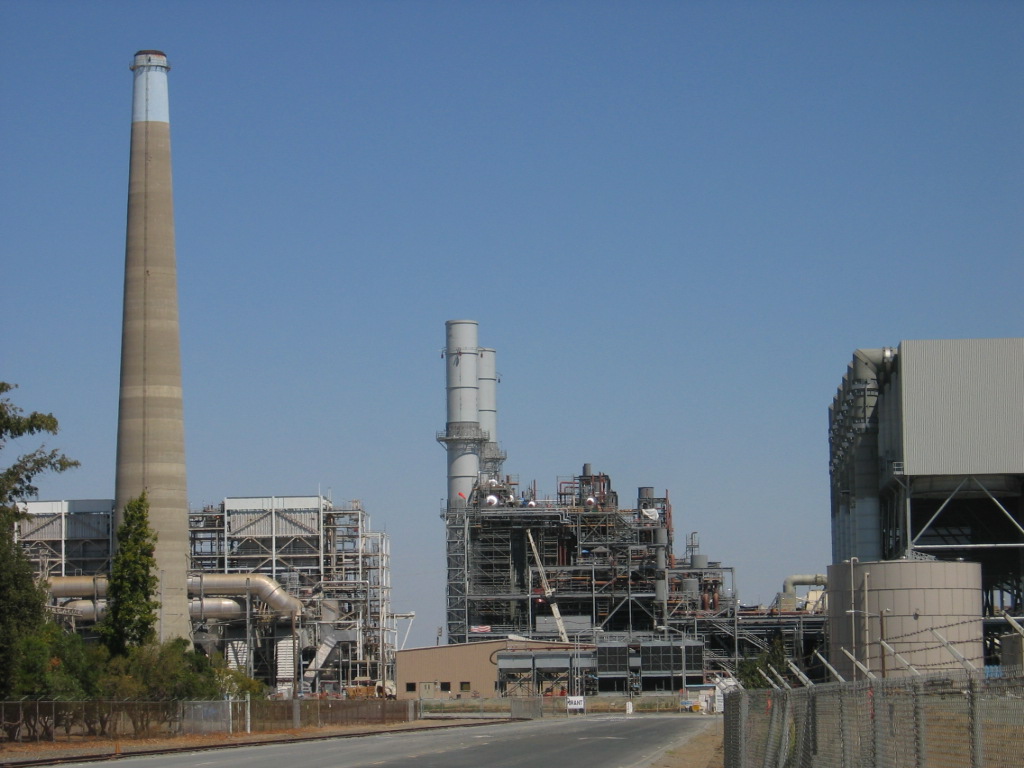
As the nation's power plants age, a new report warns against relying too much on natural gas.

The nation’s power plants are aging. An increasing number require replacement parts; others can’t keep up with new environmental regulations.

A report released today [PDF] by the Boston-based think tank Ceres estimates that in the next two decades, up to $100 billion will be invested in the electric utility industry every year – twice the amount invested in recent years.

According to the report, that boom in investment will take place in a shifting regulatory environment. Air pollution and greenhouse gas restrictions will increase, and fossil fuel-burning power plants will have to keep up. Governments are setting requirements for energy from renewable sources. (California, for example, is targeting a 33% renewable energy ratio by 2020.) Smart grids and new consumer technologies are changing how people think about energy production and consumption.

Continue reading Thinking Long-Term About Power Plants

Birds and Blades: Are Condors and Wind Turbines Compatible?

Lawsuits pit an endangered species against renewable energy development

This California condor, flying near the coast, is one of about 200 condors living in the wild.

Wind is a growing industry in the Tehachapi Mountains in Southern California. Kern County welcomes new wind projects, and Google has gotten in on the action. But some environmentalists say that developers and officials are ignoring the elephant — or, in this case, the enormous bird — in the room.

California condors are beginning to return to the Tehachapis after nearly going extinct in the 1980’s, and birds and wind turbines don’t mix. No California condors have yet had a run-in with a turbine. But they are still endangered — it’s illegal to kill them — and three environmental groups say that Kern County and the US Bureau of Land Management (BLM) are not properly considering the risks. The Sierra Club, Defenders of Wildlife, and the Center for Biological Diversity filed a lawsuit against the BLM today, regarding one wind development in particular. (They have previously sued Kern County over the same project).

Continue reading Birds and Blades: Are Condors and Wind Turbines Compatible?

California Braces for the Complex World of Carbon Markets

In which Air Board chief Mary Nichols performs a dramatic reading of a vintage Jerry Brown speech

As chair of the California Air Resources Board, Mary Nichols is presiding over the nation’s first comprehensive cap-and-trade program.” credit=”California Air Resources Board

When its nascent cap-and-trade program ramps up later this year, California will be the first state in the nation to reduce greenhouse gases by making a broad spectrum of big polluters buy permits to exceed their allotted emissions.

Other governments, industry and scientists will be watching, but there’s still a lot to sort out. That much has been evident at this week’s carbon market and policy conference in San Francisco, “Navigating the American Carbon World.”

The long and winding road to carbon trading was highlighted by Mary Nichols, chair of the California Air Resources Board, in a little prank she played on the gathering. Obviously reading from a script, she stumbled over words, looked up at the audience, then back down at the page, plodding through her replies to moderator Diane Wittenberg. Continue reading California Braces for the Complex World of Carbon Markets

Is Your Town California’s “Coolest?”

Let the Carbon Games begin: cities compete to cut emissions

Sacramento is one of the cities competing to be "Coolest California City."

We must’ve missed the opening ceremonies with the parade of flag-bearing competitors and giant torch-lighting — or maybe it was canceled to save energy. Either way, ten California cities are competing over the next year to reduce their carbon emissions.

Individuals, local governments and businesses will all be involved in the project, called the Cool California Challenge. The Cool California website has a carbon calculator, tips on reducing your footprint and links to rebates. Plus there’s a social media element, so you can envy, goad or cooperate with your neighbors as you see fit.

The competing cities are Chula Vista, Citrus Heights, Davis, Gonzales, Pittsburg, Pleasanton, Sacramento, Santa Cruz, San Jose and Tracy. Participants — whether they’re individuals, companies or other types of organizations — earn points by being more carbon-conscious.

Continue reading Is Your Town California’s “Coolest?”

Jean-Michel Cousteau on Oceans, Energy, and Our Collective Fate

Explorer keeps his father’s legacy alive by shining a light on the world’s oceans

The California coast near Pigeon Point.

When ocean explorer and documentary filmmaker Jean-Michel Cousteau brought his environmental message to Silicon Valley, I caught up with him to discuss climate change; President Obama’s energy policy efforts; and AB 32, California’s response to climate change.

Jean-Michel Cousteau is the son of legendary ocean explorer, Jacques Cousteau, and chairman of Ocean Futures Society, a non-profit dedicated to exploring, protecting and educating people about the world’s oceans. He was vocal in condemning BP for its Gulf oil spill and has frequently highlighted the link between climate change and the state of our oceans and coastline. Continue reading Jean-Michel Cousteau on Oceans, Energy, and Our Collective Fate

Green Light for Feed-in Tariff to Spark L.A. Renewable Energy

City Council OK’s demo program to buy power from small-scale renewable generators

Feed-in tariffs from private solar arrays like this one enable the world's largest source of renewable energy.

The Los Angeles Department of Water and Power (LADWP) now gets to ramp up a pilot phase that could add up to 150 megawatts of renewable electricity after 2016 — enough to power 22,000 homes — all with an eye toward hitting the state-mandated goal of 33% of its power from renewables by 2020. The measure awaits the mayor’s signature, expected late next week.

A common example of the new program would be a commercial real estate or large warehouse owner installing a rooftop solar power system and selling that power back to the local utility. The simplest definition I’ve found comes from another city that just approved a similar program for solar energy, Palo Alto: “Feed-in tariff programs involve a utility paying a fixed price, a “tariff,” for the power that is “fed into” their electric grid from local generation systems.” Continue reading Green Light for Feed-in Tariff to Spark L.A. Renewable Energy

Politics, Climate Change and Human Rights in the Maldives

The Island President tells the story of the former president’s fight for climate action

The new documentary, The Island President, depicts former-president Mohamed Nasheed’s efforts to draw the world’s attention to the plight of his country. The islands that make up the Maldives lie barely above sea level. With a few feet of sea level rise, they will be inundated.

John Shenk, the San Francisco-based director of the film, was a guest on KQED’s Forum last week. He talked about how Nasheed, the country’s first democratically-elected president (he resigned in February), and a former human rights campaigner, became a climate change activist.

“He took office and immediately plunged into the climate debate,” Shenk said. “He’s framing the climate debate as a human rights issue. He very much sees the climate fight, the struggle against climate change, as an extension of his fight for democracy.”

In a quote from the film, Nasheed explains: “When we came to power we thought we won the fight. After twenty years, we thought, ‘Look, OK, we’ll have a happy life.’ But we had our first few cabinet meetings, and most of the pending issues were climate change issues. Weather patterns are changing, and that’s having a very big impact on fisheries. We have lost a lot of the shoreline. Our islands are going to be flooded.”

Continue reading Politics, Climate Change and Human Rights in the Maldives