Those are the options offered by the environmental justice groups who won a court ruling against the California Air Resources Board (CARB) in March. The groups were seeking to halt cap-and-trade over health concerns for communities located near industrial polluters. A California Superior Court judge ruled that CARB had violated state environmental law by not adequately considering alternatives to cap-and-trade, and suspended all 68 regulations that implement California’s global warming law, AB 32, until the board complies.
The two sides entered negotiations to find ways for the state to move forward with parts of AB 32 other than cap-and-trade, but those talks broke down on March 30.
Tonight the Metropolitan Transportation Commission (MTC) kicks off the first of nine “Plan Bay Area” workshops, aimed at gathering public input on plans for sustainable growth in the region. The planning agency is seeking comment on the Initial Vision Scenario, which was released by MTC and the Association of Bay Area Governments (ABAG) last month. This scenario is the first draft of the Bay Area’s Sustainable Communities Strategy, a planning document required under the state law, SB 375, which was passed in 2008 and requires planning regions throughout California to cut greenhouse gas emissions from cars by integrating land-use and transportation planning.
The Bay Area, Sacramento, and San Diego
have some of the most aggressive reductions targets: seven percent per capita by 2020 and 13-16% by 2035 (compared to 2005 levels). The South Coast (by far the biggest region, including Los Angeles, San Bernadino, Ventura, and other counties) is shooting for an eight percent reduction by 2020, and 13% by 2035. Continue reading Planners Seek Public Input on Bay Area Growth→
While turning down your thermostat, taking public transportation, and buying locally grown food could all reduce your household’s carbon emissions, just how effective each of those individual strategies is depends on who you are and where you live, according to researchers at UC Berkeley.
The study, authored by Christopher M. Jones and Danial Kammen of Berkeley’s Renewable and Appropriate Energy Laboratory (RAEL), analyzed thousands of different “types” of typical carbon footprints by looking at households in all 50 states, including six different household sizes and 12 different income brackets. They used data from the US Labor Department’s Consumer Expenditure Survey.
The results of the analysis are summarized in a new “carbon calculator” that can help people estimate their carbon footprints and identify the areas where lifestyle changes would have the largest impact. Users can also compare their footprints to similar households in their own area. Continue reading To Shrink Carbon Footprints, One Size Doesn’t Fit All→
It’s not time to rename Joshua Tree just yet, says the author of a new study.
Climate change is threatening the Joshua trees in Joshua Tree National Park all right, according to a new report. But unlike the findings of recently-published study, this report finds the park’s iconic, spiky namesake is unlikely to completely vacate the premises over the next century.
The new report was funded in part by Joshua Tree National Park, and its author Cameron Barrows, a researcher at UC Riverside’s Center for Conservation Biology, says that he conducted it partly in response to the recent study by Ken Cole of the USGS, which found that the trees would likely be gone from the park within the next 90 years.
“I facetiously say if that was to happen, we’d have to rename the park ‘Creosote Bush National Park’ or something like that,” said Barrows. “It would be really sad if that’s the case.” Continue reading Time for “Creosote Bush” National Park?→
California’s utilities now have their marching orders: to provide one third of the state’s electricity from renewable sources by 2020.
Now that the “33-by-20” target is a mandate backed by state law, supporters say it will lure more renewable energy investments to California. There’s evidence that it already is.
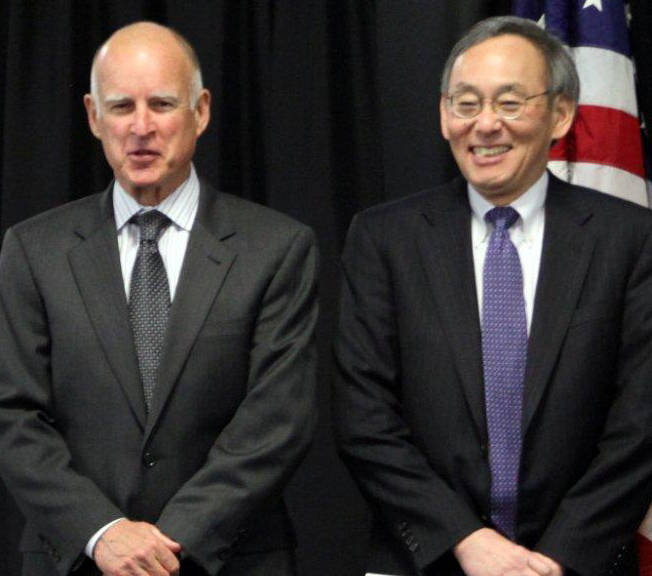
Calling it a “breakthrough,” Governor Brown signed the bill into law at the dedication of a new SunPower Corp. manufacturing plant in Milpitas, near San Jose. And he laid down a challenge:
“Last year six thousand megawatts of solar installations were produced by China and one thousand by the United States. Now, are we up for changing that? I think we are.” Continue reading Brown, Chu Tout New Renewables Law→
The 2011 Goldman Environmental Prize winners were honored in San Francisco last night. In a ceremony at the Opera House, they were each awarded $150,000 for their grassroots work addressing pressing environmental issues around the world.
Environmental degradation from energy production is a common theme in the work of at least half the winners: Dmitry Lisitsyn, who’s worked to protect the ecosystems of Sakhalin Island from rapid destruction caused by companies exploiting the region’s petroleum reserves; Hilton Kelley, for environmental justice work on the Texas Gulf Coast, a region plagued with air-quality-related health problems due to emissions from the major refineries and petrochemical plants in the area; and Ursula Sladek, who created Germany’s first cooperatively-owned renewable power company. Continue reading Goldman Prize Winners Reflect Energy, Water Concerns→
Compared to most of the world, California would appear to have a head start in planning for a changing climate.
Cities across the world are not doing enough to protect citizens from the likely impacts. That’s the finding of a new analysis from the National Center for Atmospheric Research (NCAR) in Boulder, CO. The report says cities are unprepared for rising seas, intensified heat waves, while failing to curb their own greenhouse gas emissions. Continue reading Report: Cities Fiddle While World Warms→
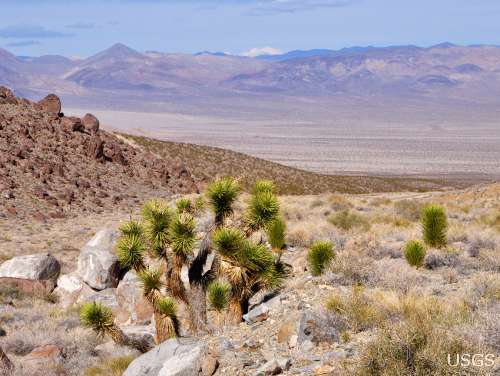
Joshua trees, the spiky desert-dwellers that are so iconic to Southern California’s dry country that they got a national park named after them, will likely disappear from 90% of their current range by the end of the century, according to a new study by scientists at the US Geological Survey.
Ecologist Ken Cole, the study’s lead author, said that means no more Joshua Trees in Joshua Tree National Park, which is currently in the southernmost part of the species’ range. It also means elimination of the trees across wide swathes of other parts of Southern California as well as Nevada and Arizona.
Cole and his team used climate models, field work, and the fossil record to project the future distribution of Joshua trees. They compared the projected increase in temperatures for the Southwest (four degrees Celsius, according to a “middle of the road” IPCC scenario) to a similar rapid increase in temperatures nearly 12,000 years ago, at the end of the ice age.
Using fossil sloth dung and packrat midden, the scientists reconstructed how Joshua trees responded to that warming. (Sloths, which are now extinct in the region, and packrats, ate the Joshua tree fruit, spreading the seeds and leaving them behind for the scientists to track.) Continue reading Joshua Trees Losing Ground, Fast→
“Climate Watch Conversations” is a series of television interviews with experts from California’s climate change community. Below are the interviews we’ve done to date. All originally aired on KQED’s weekly public affairs program This Week in Northern California.
May 4, 2012
Threats posed by rising sea levels and extreme weather patterns are changing the way California’s coastal communities plan for the future. Senior Climate Watch editor Craig Miller talks with National Oceanic Atmospheric Administration’s Margaret Davidson about the impact of climate change on Bay Area shoreline, most visibly along San Francisco’s Ocean Beach.
February 17, 2012
Climate Watch Senior Editor Craig Miller hears Jared Blumenfeld’s take on the top climate change challenges for the Environmental Protection Agency in Northern California. Blumenfeld also discusses his recent visit to San Francisco’s Mission Motors, an electric motorcycle company seen as a poster child for the Obama administration’s focus on renewable energy and “green” jobs it creates.
December 16, 2011
Heavy precipitation, brutal storms, and devastating drought will continue to afflict the planet in the coming decades. That’s according to the latest report from the U.N.’s Intergovernmental Panel on Climate Change (IPCC). But where’s all this climate science leading us if governments aren’t acting upon it? Climate Watch Senior Editor Craig Miller discusses the impact of the report with Chris Field, a leading scientist with the IPCC.
June 24, 2011
Climate Watch Senior Editor Craig Miller discovers why Jon Jarvis, Director of the National Park Service calls climate change “the greatest threat” to our national park system. With rising temperatures, extended fire seasons and foreign plant species threatening some of California’s most treasured parks, Jarvis discusses actions underway to respond to the crisis.
May 13, 2011
Climate Watch Senior Editor Craig Miller talks with Mindy Lubber, president of the Boston based nonprofit Ceres. The organization works to address sustainability challenges such as global climate change and water scarcity. This week, it held a conference in Oakland at which environmentalists, executives and investors from around the world gathered to consider ways for business to adopt environmentally sustainable practices.
April 8, 2011
European Union Commissioner for Climate Action Connie Hedegaard speaks with Senior Editor Craig Miller about working with California leaders on climate policy. The Commissioner met with Gov. Brown and business executives at a conference on climate related issues and policy.
March 18, 2011
Climate Watch Senior Editor Craig Miller talks with Mary Nichols, Chair of the California Air Resources Board about implementing AB 32, the state’s renewable energy goals and promoting alternative transit.
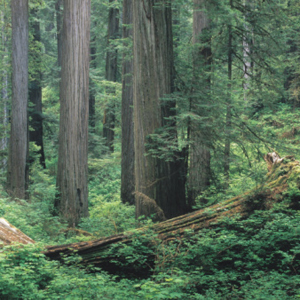
Environmental groups are criticizing the Obama Administration’s new proposed rules for managing the country’s nearly 200 million acres of national forest, arguing that they weaken current standards for protecting wildlife and watersheds.
More than 100 organizations, including the Natural Resources Defense Council and Defenders of Wildlife, signed on to a letter sent to Secretary of Agriculture Tom Vilsack on Monday, arguing that the proposal “fails to provide critical, concrete protections for the most precious resources of our forests — water and wildlife,” and that it “weakens the strong standards for safeguarding water quality and wildlife viability first issued in 1982 by the Reagan Administration and currently still in place.” Continue reading New Rules May Put National Forests at Risk→


 While turning down your thermostat, taking public transportation, and buying locally grown food could all reduce your household’s carbon emissions, just how effective each of those individual strategies is depends on who you are and where you live, according to researchers at UC Berkeley.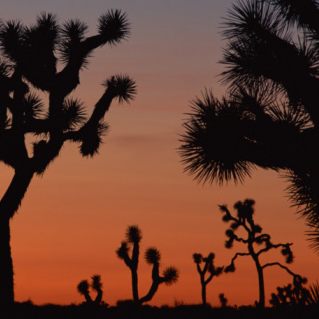
 Environmental groups are criticizing the Obama Administration’s