All posts by Gretchen Weber

A Different Kind of Tsunami: Climate Refugees


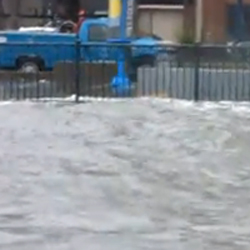
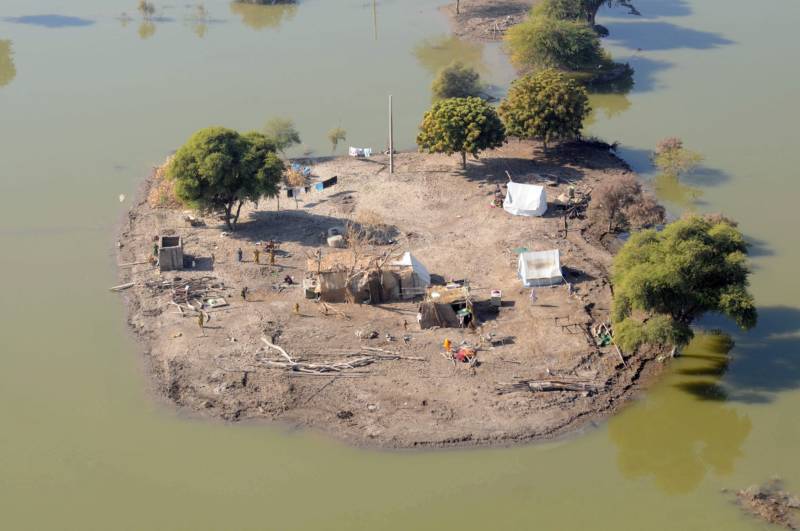
Remains of a flooded village in Pakistan in December 2010 (Photo: RIZWAN TABASSUM/AFP/Getty Images)

It’s not so much the planet we need to worry about, it’s each other.  And ourselves.

That’s the message of the documentary Climate Refugees, which aims to portray “the human face of climate change.” The film takes viewers to flooded disaster zones in Bangladesh and China, to tiny island nations like Tuvalu under threat from sea level rise, and to the desert wastelands of Sudan, where, according to the UN,  the devastating war in Darfur has been driven partly by climate change.

Extreme weather events are expected to become more common as the climate continues to change, raising the odds for disastrous floods like the ones Pakistan last year, which displaced more than 20 million people, and major droughts which will likely increase desertification in vulnerable areas of Africa and Asia, threatening food and water supplies for millions of people.

And all of those people will need someplace to go.
Continue reading A Different Kind of Tsunami: Climate Refugees
Connecting Citizens and Science… with Smart Phones

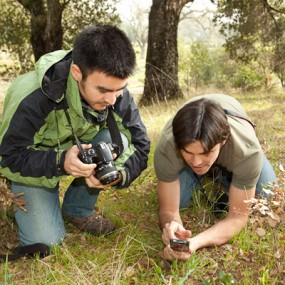
Harnessing the power of “citizen science” can be a challenge, but many think technology can provide the missing link.

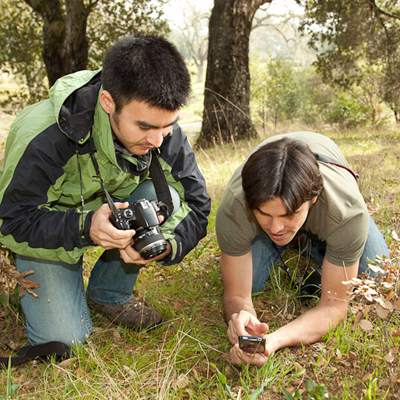
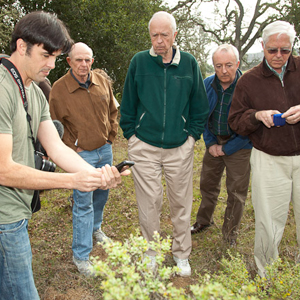
Scott Loarie demonstrates the iNaturalist iPhone app to docents at Jasper Ridge. (Photo: Richard Morgenstein)

The new iPhone app for the online community iNaturalist is officially out and available for free download from Apple’s App Store.  Its creator, Ken-ichi Ueda, hopes that the new app will make sharing and uploading field observations so easy, that more people will want to document what they find next time they’re out on a hike.

“My primary motivation is to get people outside, thinking about the plants and animals they are seeing and actually recording them,” he said.  “The act of recording really locks it in your mind.” Continue reading Connecting Citizens and Science… with Smart Phones

Storm Surges and King Tides

Pacific storm makes for some high tides and scary waves on the Bay

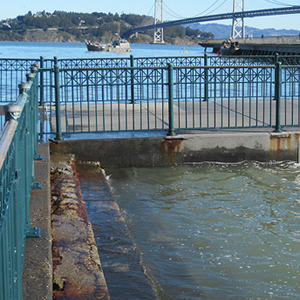
Waves slosh on to San Francisco's Embarcadero during Thursday's "king tide" (Photo: Gretchen Weber)

Take naturally-occurring extremely high tides, and add to them high winds and torrential rain, and you get some pretty big seas.

At least, that’s what I got out on the San Francisco Bay today.  How big exactly, is hard to say (our uneducated guessed ran the gamut), but they were big enough to wash over the bow of our 26-foot boat on more than one occasion and to keep most of us aboard holding on for dear life for much of the three-hour voyage.   What I can say for sure is that as I type this blog post, four hours later, my body still feels like I’m rolling up and down and back and forth on some stormy seas.

We braved the weather today to check out the latest round of “king tides” and see how they affect low-lying shorelines in places like Crissy Field, Treasure Island, and SFO. The seas were so rough that we didn’t make it all the way to the airport, but we did see waves crashing over the sea wall along the Embarcadero  just south of the Ferry Building (see video below). At Crissy Field, the beach was nearly submerged and a small footbridge near the mouth of the estuary was almost awash. Continue reading Storm Surges and King Tides

Photograph High Tides, Glimpse the Future?

High tide at Pier 14 in San Francisco on January 19, 2011 (Photo: Jack Gregg)

This week another round of extremely high tides will hit the California coast, providing a glimpse of what the state can expect as sea levels continue to rise. These “king tides” will roll in from February 16th through the 18th, with the highest swells expected on the morning of the 17th, between 7:30 and 9 a.m.

A consortium of environmental groups is again calling for help documenting these high tides. The San Francisco Bay National Estuarine Reserve (NERR), which is spearheading the local effort, has set up a Flickr site where members of public can share their photos.  Organizers launched the site last month, in time for the king tides in January, and since then more than 80 photos have been uploaded by dozens of contributors. Continue reading Photograph High Tides, Glimpse the Future?

NASA Climate Funding Under Attack

The head of a major NASA research facility in California is downplaying efforts by a handful of House Republican members to strip the agency’s budget of its climate science funding.

An image from a joint NASA-NOAA satellite project. (Image: NASA-NOAA GOES Project)

S. Pete Worden, the director of NASA Ames Research Center in Mountain View, expressed confidence that the agency’s 2012 budget would remain intact, despite a letter sent to committee heads from Congressmen from Florida and Utah, urging an end to climate science research at the agency. Continue reading NASA Climate Funding Under Attack

Why the Pros Need “Citizen Science”

iNaturalist Update: A biologist’s take on the potential for citizen science in a changing climate

(Photo: Richard Morgenstein)

Last month I went out to Jasper Ridge Biological Preserve near Stanford, where Scott Loarie and Ken-ichi Ueda showed me and about a dozen docents how to use the new iNaturalist iPhone app, which Ueda created. The aim of the app is to make recording and sharing of accurate field observations incredibly simple. It’s still in testing mode and not yet available to the public. “Citizen scientists” can already upload their digital photos and share them with an online community of naturalists around the world, at the iNaturalist website.

This week I spoke with Healy Hamilton, who directs the Center for Applied Biodiversity Informatics at the California Academy of Sciences. Below are some excerpts from our interview about climate change, citizen science, and iNaturalist: Continue reading Why the Pros Need “Citizen Science”

Greenpeace Urges Facebook to “Unfriend Coal”

Greenpeace gives Facebook a deadline to clean up its act…on Facebook.

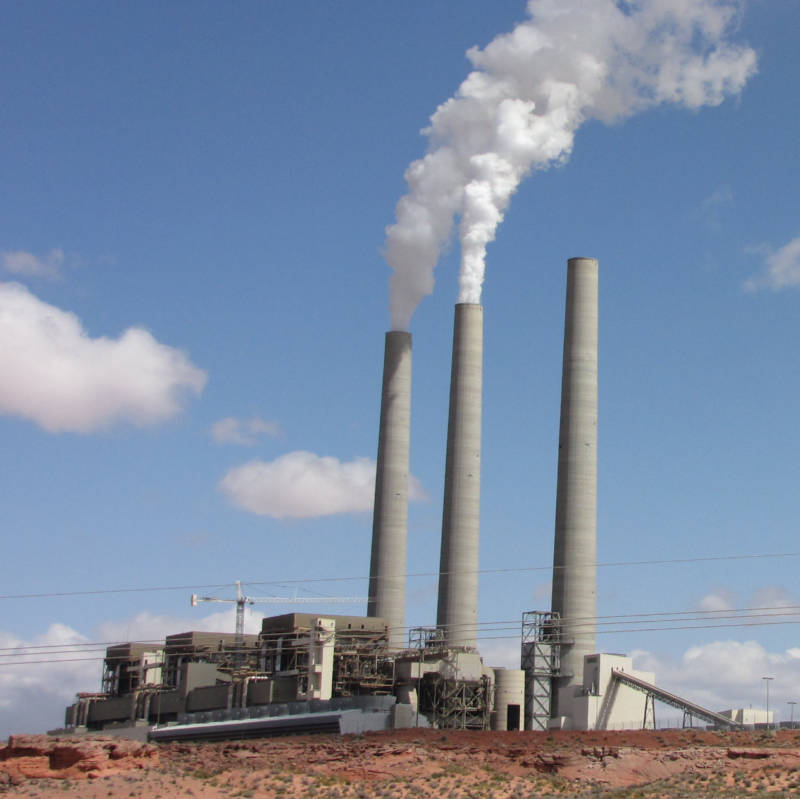
Navajo Generating Station, a coal plant, located near Lake Powell in AZ (Photo: Gretchen Weber)

With its stepped-up “Facebook: Unfriend Coal” campaign, Greenpeace is calling on the Palo Alto-based company to become coal-free by 2021, to be transparent about its carbon footprint, and to advocate for clean energy sources at all levels of government. And it wants a public commitment by April, 22: Earth Day.

“We’re saying, ‘Look, you’re being looked at as a leader in the technology space, and the corporate space, and to be using 19th century technology to power your 21st century company doesn’t make sense,” said Casey Harrell of Greenpeace.

Facebook drew some criticism last January when it announced plans to construct a data center in Oregon.  Despite high efficiency standards and plans for facility-wide LEED Gold certification, environmental groups protested the data center’s energy source; a utility that is powered largely by burning coal. Continue reading Greenpeace Urges Facebook to “Unfriend Coal”

CA Air Official Rebukes Auto Trade Group

I-80 near the Oakland interchange known as "the Maze." (Photo: Craig Miller)

In a strongly-worded letter [PDF] to the CEOs of seven major auto manufacturers, California Air Resources Board chair Mary Nichols defended California’s efforts to curb greenhouse gas emissions from cars and trucks and accused the trade group, the Alliance of Automobile Manufacturers, of misrepresenting California’s cooperation with federal agencies in letters to Congress.

At issue, wrote Nichols, are letters the Alliance sent to Congressmen Darryl Issa (R-Vista) and Fred Upton (R-MI) in January, calling “our commitment to a national program into question.”

“For the Alliance to suggest we are no longer committed to a cooperative effort is disingenuous at best, and incorrect,” wrote the Air Board chairman.

Nichols called on the executives to “distance” their companies “from future efforts by the Alliance to undermine the achievement of our mutual goals to set standards that will provide American consumers with cleaner and more efficient vehicles.”

The letter comes just as California and federal agencies announced a shared deadline for their collaboration to set national fuel economy and greenhouse gas standards for model year 2017-2025 cars and trucks.

Margot Roosevelt of the Los Angeles Times has more, including a response from an Alliance vice president who reportedly would not address the Nichols letter directly, but did express support for the shared fuel standards deadline.

NASA’s Closer Look at the Bay Area


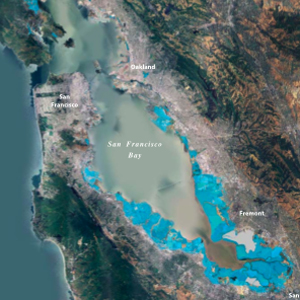
Taking global climate models and “downscaling” them for use at the local level is an ongoing challenge for scientists and for planners.  But thanks to new climate projections from NASA, the Bay Area now has a sharper view of what may be in store.


BCDC map showing 16 inches of sea level rise in the SF Bay, which the agency projects will occur by mid-century.


NASA says two-thirds of its facilities are at risk from sea-level rise, including Ames Research Center, which sits at the southern edge of San Francisco Bay.  So, it’s not exactly altruism that motivated the agency to deploy its own scientists to take a closer look at what climate change will really mean on the ground in places where it’s heavily invested. Continue reading NASA’s Closer Look at the Bay Area

Citizen Science: The iPhone App

A new iPhone app aims to make recording and sharing observations of the natural world fast, easy, and could eventually help bring climate models into better focus.

Ken-ichi Ueda and Scott Loarie demonstrating the new iNaturalist iPhone app at Stanford’s Jasper Ridge Biological Preserve (Photo: Richard Morgenstein)

At Jasper Ridge, a biological preserve and study area on the Stanford campus, a dozen of the preserve’s docents gathered this week to learn about a new iPhone application that could ultimately help scientists study how ecosystems are adapting to climate change.

The new app, called iNaturalist, is the mobile version of a citizen-science website by the same name.  The iPhone app is still in testing and not yet available, but the website, iNaturalist.org, is already an active online community of citizen-scientists around the world who use the site to record and share their sightings. Continue reading Citizen Science: The iPhone App