 Wind, water and solar energy can provide more than enough energy to power the world, according to a new plan proposed by two California scientists in the November issue of Scientific American.
Stanford civil and environmental engineering professor Mark Z. Jacobson and UC Davis researcher Mark Delucchi crunched the numbers and have concluded that if the world used existing technology to convert entirely to electricity (and hydrogen powered by these renewables) by 2030, the world’s power demand would be reduced by 30%, from the expected 16.9 terawatts to 11.5 terawatts. They base this expected reduction on the premise that fossil fuel and biomass combustion are inefficient, losing up to 80% of the produced energy to heat. With energy produced by electricity, only 20% is lost as heat.
Even without this reduction in world energy needs, the two researchers assert that there is more than enough renewable energy available to meet the world’s needs (their data pegs the potential worldwide energy from wind at 1,700 TW and solar at 6,500 TW). When difficult-to-reach areas and protected lands are excluded from their calculations, the scientists find at least 40 TW available from wind and 580 from solar. Currently, they find, we generate only .02 TW of wind and .008 of solar.
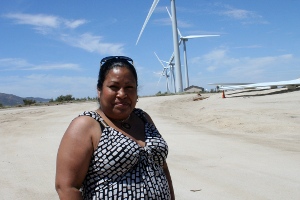
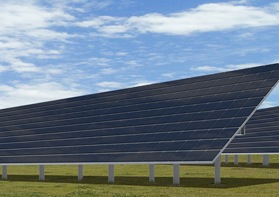
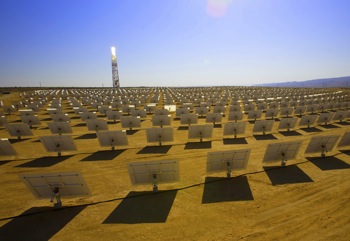
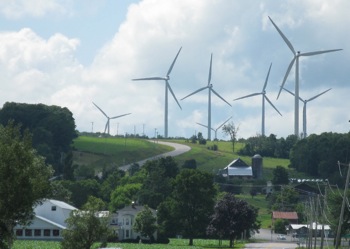
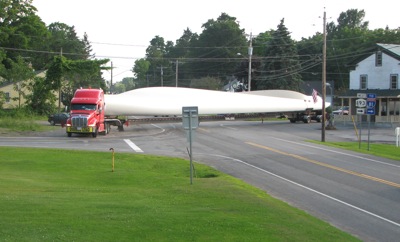
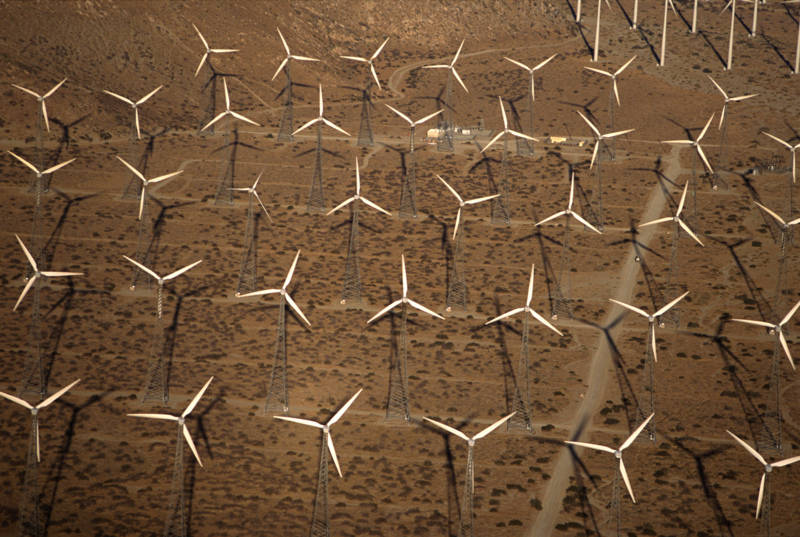
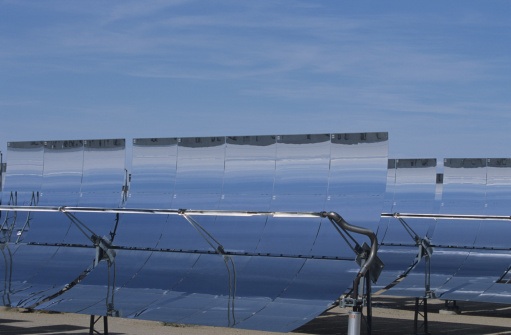
The ambitious plan calls for 3.8 million large wind turbines, which, when spaced appropriately would occupy 1% of the Earth’s land, and 89,000 300-megawatt photovoltaic and concentrated solar power plants, which would occupy .33% of the Earth’s land surface. The plan also requires 490,000 tidal turbines; 5,350 geothermal plants; 720,000 wave converters; and 1.7 billion rooftop photovoltaic systems. Less than 2% of these energy producing installations current exist. The plan also requires 900 hydroelectric plants, of which 70% are currently operational.
“I know it’s possible,” said Jacobson. It’s just a question of whether people want to do it.”
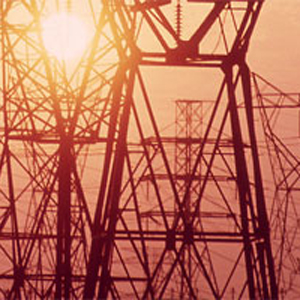
Of course, overhauling the entire world energy economy in 20 years is a Herculean task to say the least, and the researchers are upfront about the obstacles their plan faces. They concede that not only would there need to be significant political support in the form of feed-in-tariff (FIT) programs, taxes on fossil fuels, and significant investment in long-distance transmission systems, but materials availability could also be a barrier in the long term.
“It’s all a question of politcal will,” said Jacobson. “It’s not a technical problem. If we shifted subsidies to things that are clean, that’s being smart. Why invest in something that puts out more carbon and air pollution rather than something that doesn’t?”
The idea of shutting off all of the world’s coal and nuclear plants and building hundreds of miles of wind farms and solar arrays is controversial to say the least. Aside from (not exactly minor) political, social, and economic obstacles, there is the issue of baseload power–what’s available around the clock, rain or shine, to keep the lights on–which we currently draw primarily from nuclear and fossil fuel plants. Proponents of nuclear power like Stewart Brand argue that until there’s a massive storage system for wind and solar energy, renewables will remain supplemental sources of energy.
Jacobson and Delucchi do address this issue in their article. “Intermittency problems can be mitigated,” they write, “by a smart balance of sources, such as generating a base supply from steady geothermal or tidal power, relying on wind at night when it is often plentiful, using solar by day and turning to a reliable source such as hydroelectric that can be turned on and off quickly to smooth out supply or meet peak demand.”

 California may not have met its goal of 20% renewable energy by 2010, but outgoing California Energy commissioner Jeffrey Byron says the state is close, and that California is on track to meet its its goal of 33% renewable energy by 2020.
 The federal government