Powering Paltown: Pushing PV in Japan

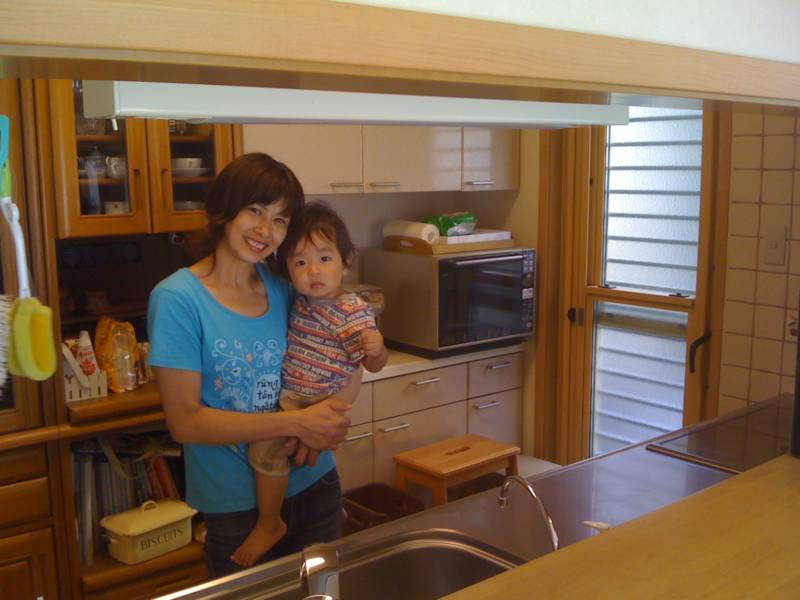
Thank you, Paltown. Asako Sugawara with her son, Sota. The Sugawaras received free solar panels in exchange for living in the middle of a government experiment.

It may have a silly name, but its mission is all business: Paltown, a neighborhood of around 800 homes outside the Japanese city of Ota, built by the government to study what happens when an entire neighborhood goes solar. This is what I find most fascinating about the Japanese: they’re so meticulous in tackling problems that they establish entire towns as part of their tinkering.

Each of the 758 homes in Paltown has photovoltaic panels on top of it. Paltown’s purpose is to work out the kinks of concentrating PV capacity in one neighborhood. One of the problems they’re looking at: On PV homes, the excess energy goes back to the grid. If the grid’s transmission lines are at capacity, a suppression system on most arrays kicks in, reducing the amount of power they generate. This, in turn, squanders the panels’ full generating potential. Engineers at Paltown prevented the suppression system from kicking in by storing excess energy in  batteries on the sides of the homes. That energy is then used in the evening, when the panels aren’t generating any electricity. Since it was established in 2002, Paltown has rarely generated too much electricity for the grid to handle. In fact, it has only happened during the holidays, when the biggest electricity consumer, the local Subaru assembly plant, shuts down. But when it has, the batteries worked.
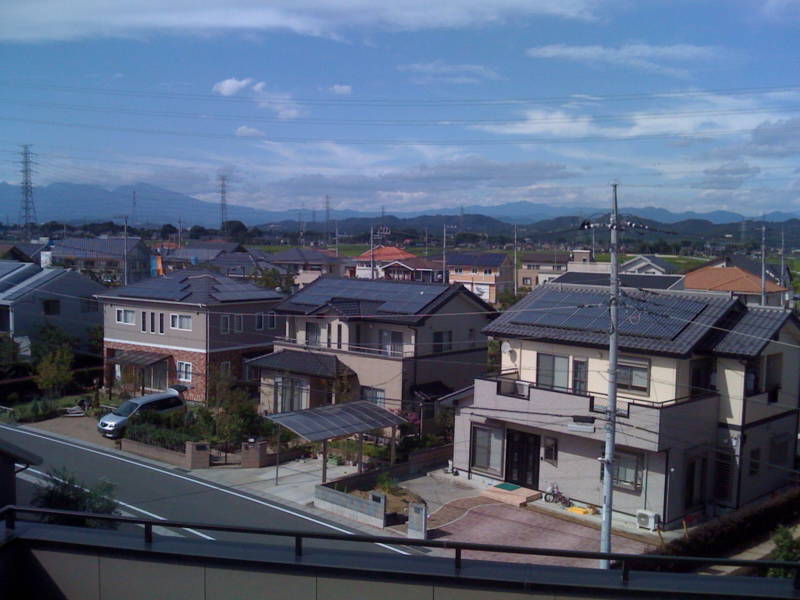
Paltown’s 758 homes all have solar panels on them.

Another thing they’re looking at is developing a system to stop sending electricity to the grid during a natural disaster. Japan is one of the most seismically active countries on Earth. When earthquakes damage homes, PV panels will usually continue to generate electricity, making a damaged system very dangerous for anyone near it. Paltown engineers have developed technology that will turn them off in these situations, they’ve patented the technology, and will soon start selling it to PV manufacturers.

Paltown pulled the plug on the battery experiment last year. The battery packs were removed but the working panels remain, along with the people who actually live here, in this renewable energy petri dish. What do they think? Asako Sugawara moved here with her husband and three children five years ago. They earn between thirty and eighty dollars a month from their solar panels. That will almost double when Japan’s Feed-in Tariff kicks in. She meets up with other housewives in the neighborhood each day, and the conversation inevitably turns to new ways they can save money. Lately they’ve been talking about the new feed-in tariff system. They’ve also shared methods of using electricity to get the biggest bang for their buck. “I’ve learned that electricity rates are the lowest after 11 at night, so I and many other housewives I know set timers on all of our appliances so that they use electricity in the middle of the night,” she told me. So much for using renewable energy when it’s available.

Rob’s radio series on energy efficiency in Japan concludes Monday morning on The California Report. All of Rob’s radio reports, blog posts, photos and video clips are collected on the Rising Sun series page.
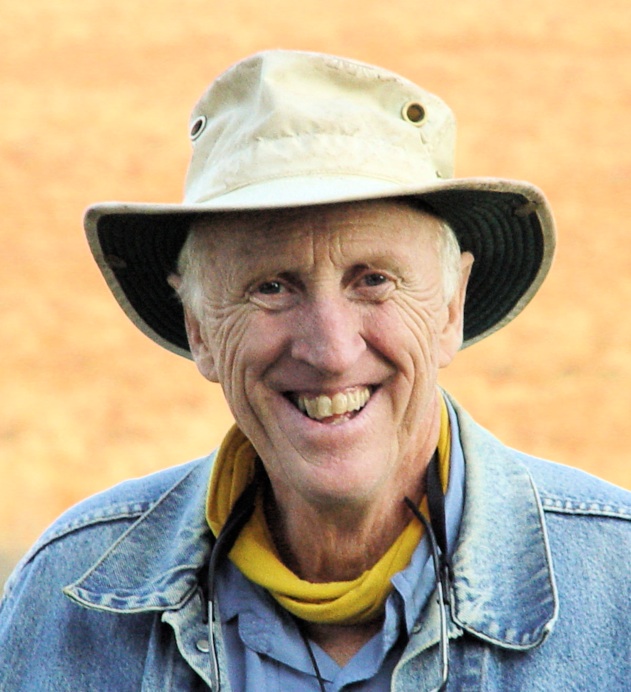

An Hour with Stewart Brand

Photo by Ryan Phelan

Climate Watch sat down with ecologist and futurist Stewart Brand to talk about the rethinking of “traditional green pieties” that he says environmentalists will have to confront, in order to address climate change. In his new book, Whole Earth Discipline, he argues for a major change in the way “greens” have traditionally thought about stewarding the planet — one that calls for managing the earth’s natural infrastructure “with as light a touch as possible and with as much intervention as necessary.”

What do you think the world is facing in terms of climate change?

“I pretty much buy James Lovelock‘s approach that we’re warming toward an equilibrium of maybe five degrees warmer than now, which doesn’t sound like much, but the last time we were that was 55 million years ago and crocodiles were swimming around in the polar oceans. [Lovelock] thinks the carrying capacity for humans in a world that’s five degrees warmer would be about a billion to a billion-and-a-half people. And it could happen fairly quickly because there are various positive feedbacks that are self-reinforcing, amplification of change going on. A four-or-five-billion person die-back is horrible to contemplate. Nothing like it has ever happened in human history, and it does get your attention.

“I am persuaded by a number of data points he looks at and climatologists he listens to and the system dynamics of climate, which is tremendously non-linear. It has lots of these positive feedbacks in it and various thresholds. Sometimes we know where the threshold is, and sometimes we find out after we’ve passed it. Abrupt climate change, it turns out, is pretty common in the historical record and that’s what we could be looking at this century, maybe even in the first half of this century.”

You write in your book: “Accustomed to saving natural systems from civilization, Greens now have the unfamiliar task of saving civilization from a natural system: climate change.” Can you talk more about this?

“I wonder if there will be people turning up soon saying, “Let the climate do what it wants. Gaia’s just having her usual carryings-on and we must not stand in her way.” [Ed. Note: There are people already saying this] I think when it cuts this close to home, environmentalists do realize that when humans are an endangered species we’ve got to rise to the occasion and be green to protect this species and its habitat as well.

“There’s a shift that goes on because the standard, deep, ideological, emotional stance of environmentalists is that nature is always right and humans are always wrong, and this is a case when actually, nature is up to something we really, really don’t like and we have to do, as humans, something that’s right to head that off. That’s a switch. And it’s my point of leverage in the book which is to say, okay, bear that switch in mind, now think through all the things you’ve had opinions about for 20 or 30 years and revisit them.

“The climate crunch gives us permission, indeed encouragement, to rethink nuclear power, to rethink genetically-engineered food crops, to rethink how we feel about cities, and to start thinking in a serious way and an encouraging way about geo-engineering, which is direct intervention in the climate.”

The idea of “playing God” with nature can raise a lot of emotion and controversy…

“The thing is, we’ve been having god-like power in nature for a very long time, probably at least 10,000 years, maybe 55,000 years when we started doing massive burning to change the landscape in a way that we liked. In ecology, the current term is “niche construction” or “ecological engineering.” We don’t have a choice not to do it because it’s what we are doing. One of the terms for our era geologically is the ‘Anthropocene;’ the human-dominated era of geology. And so we’re already terraforming the Earth, and we’re doing it badly. So, is the choice to stop terraforming the Earth? No. Actually that’s no longer an option. The only choice is to stop doing it badly and start doing it well.”

It’s a large laboratory that we’re talking about in terms of learning from our mistakes, because we’ll be conducting our experiments (geo-engineering, bio-engineering, etc) in the world.

“We’re running an experiment in the world anyway by raising the greenhouse gas percentage in the atmosphere, and we’re starting to get results from that experiment, and we don’t like them, so we’re already doing interventionist science outside the lab in the laboratory of the world. If we don’t like what’s happening so far, we have no choice but to do better experimentation and better science and start getting the results that are better.”

How do you respond to Amory Lovins’ recent article on Grist, criticizing your position on nuclear power?

“I think it’s great that Amory Lovins, who is an old friend, has put up a rebuttal to my chapter on nuclear in the book. I think that’s absolutely fair and right since my whole chapter is basically a rebuttal of his anti-nuclear arguments.* I respect him enormously for most of the things I think he’s right about. I think he’s wrong about nuclear. He thinks I’m right about most things, and that I’m wrong about nuclear, so that’s the debate.”

*Last week we posted highlights from a conversation with Amory Lovins, aired originally on KQED’s Forum program. Brand’s name was not evoked in those excerpts but Lovins was critical of the idea of a nuclear power revival, dismissing it as financially unsupportable.

Mottainai! Saving Energy as Cultural Value

Follow Rob’s quest for understanding of Japan’s energy efficiency on this interactive map.

While reporting my series on Japan’s energy efficiency, I’ve come across a list of explanations from economists, government officials, industry insiders, and Japan experts about how Japan became the most energy-efficient country in the world (measured by greenhouse gas emissions per unit of GDP). Most of the reasons revolve around Japan’s lack of fossil fuels; a market-based supply-and-demand answer.

A few weeks ago, when I met with Ikutoshi Matsumura, he gave me the same answer. I let him finish, and then pushed harder: “But Matsumura-san, there are many countries, like Japan, that are equally resource-poor, and they are very poor and struggling. Why is Japan different?” Matsumura, an executive at Nippon Oil, Japan’s largest oil company, started chuckling [Ed: Matsumura also appears in Part 2 of Rob’s radio series as head of Japan’s Fuel Cell Association. He’s that, too]. He admitted that he, too, had thought this over during his lifetime, and that the conclusion he always reached was that there were more than market forces at work here. The deeper reason was cultural.

The 750 year-old Great Buddha of Kamakura. How much of Japan’s energy-saving path is cultural?

“Japanese culture has always emphasized education and hard work,” he told me. “The reason we succeed is because of our human resources, not our lack of natural resources.”

One last Mochi + Nobody to eat it = a Mottainai moment.

Mottainai is a term in Japanese that roughly translates to “What a waste.” The concept is an ancient one based on Buddhist philosophy. The meaning of Mottainai is that one should never waste anything. Buddhists traditionally used the term to show regret for wasting something sacred, such as religious lessons. In modern colloquial Japanese, Mottainai is often heard. If a child doesn’t finish his rice, his parents will spit out “Mottainai!” If you forget to put the newspaper in the recycling bin, a neighbor will see this and whisper “Mottainai” under her breath. You get the idea.

In 2005, Nobel Peace Prize winner Wangari Maathai visited Kyoto from her native Kenya, and learned about the word. A world-famous environmentalist, Maathai quickly applied the word to climate change. She’s reportedly used the word on her lecture tours, and while addressing the U.N. Commission on the Status of Women, she led the audience in a ‘Mottainai’ chant. Maathai’s publicizing of Mottainai prompted the Japanese government and non-profits to start using the word as a call to protect the environment, too.

“Things like this often happen in Japan,” says Japanese Sociologist Yuko Kawanishi, ” Although we are the world’s second largest economy, there is something in the Japanese mind that unless something is recognized and valued by non-Japanese, there will not come the realization that ‘Oh, we have such a wonderful thing.'”

I spoke to Kawanishi about Mottainai prior to my trip in August. She’s finishing up as a visiting scholar in New York. I asked her if the concept has helped Japan become so energy efficient. “It might have helped us to exercise the spirit more easily,” she told me, but she added other important cultural traits. “It’s something about Japanese people’s collective social psychology….the Japanese people follow instructions easily. There’s also a lot of peer pressure, sort of watching each other. And also there’s this disposition among Japanese to be meticulous and thorough to whatever task is assigned to them, so if the task is to save as much energy as possible, they’re more likely to really put a lot of effort toward it, and they’ll watch each other to make sure the others are doing it as thoroughly as they are.”

Kawanishi added that this dynamic combination of internal values is not comfortable for the Japanese, but when applied to protecting the environment, it works.

An Hour with Amory Lovins

In case you missed it amid the flurry of climate-related news last week: On September 30, Amory Lovins, founder and chief scientist of the Rocky Mountain Institute, and an honest-to-goodness energy guru to many, spent an hour in conversation with Michael Krasny and callers to KQED’s Forum program. You can listen to the entire archived broadcast or scan some of the highlights here, compiled by Climate Watch intern David Ferry.

On China:

“We can count on China to lead the world out of the climate mess…Even though the U.S. has led the world in wind installations the past three years, this year China’s going to pass us so fast we won’t even hear them go by. China’s doubled its wind installation each of the past four years, and there’s a new paper in Science from Harvard and Tsinghua in September saying that China can meet all its electric needs–not the growth but the total–till at least 2030, cost effectively, from its wind resources.”

On Nuclear Power:

“Basically nuclear and coal plants are getting walloped in the global marketplace by efficiency and renewables and cogeneration because they’re a lot cheaper and they have less financial risk so they can attract private investment.”

Grading the Obama Administration on Renewables:

“Greatly improved and I think on the whole doing very well.”

On the Upcoming UN Climate Talks in Copenhagen:

“I’m cautiously optimistic…But remember that governments are usually the last to figure these things out. Most governments still think climate protection is costly. They haven’t figured out yet that economic theorists got the sign wrong and actually climate protection is profitable. Once you change the conversation from cost, burden and sacrifice to profit, jobs and competitive advantage it makes the politics a whole lot easier.”

On Energy Efficiency & Steve Chu’s “Low-Hanging Fruit” metaphor:

“The technologies keep improving faster than we use them, so efficiency is an ever bigger and cheaper source–it’s as if the ‘low hanging fruit’ had fallen on the ground; it’s mushing up around the ankles, it’s spilling in over the tops of our boots and the efficiency tree keeps dumping more fruit on our heads.”

On Large-Scale Solar Farms v. “Distributed” Power Generation:

“The sun is distributed for free. Why gather it in one place and then pay to spread it out again? The National Renewable Energy Lab says if we put solar cells on seven percent of the structures in this country it would run all our electric needs without using any land. And for that matter, the wind potential on available windy land in this country is several times our total electric need and the footprint is actually very small.”

On Whether Climate Change is Irreversible:

“There are a half-dozen known mechanisms of rapid climate change. Several of them show like they may be starting up, so it’s urgent to reverse that…we have plenty of technology already available to stabilize climate to the extent that irreversible changes have not already started. We don’t know what that extent is, so we ought to go full bore on best buys first and hope that we’re in time.”

You can also take a virtual tour of Lovins’ home in Colorado, which doubles as a laboratory for energy innovation.

Diatoms Have Their Day

Everybody’s got a summit nowadays. Last week, while the governors were doing their climate summitry in L.A., scientists and policy wonks convened at U.C. Davis for an ag-and-climate “summit.” The discussions seemed interesting and productive, despite (or perhaps because of) the fact that no world leaders appeared. This week the gods of green goop are gathered in San Diego for an Algae Biomass Summit. Climate Watch contributor and climate scientist Abbie Tingstad explains why algae deserves a summit.

tingstaddiatom2_blogThe Power of Pond Scum

By Abbie Tingstad

The slimy yellowish brown muck known as “pond scum” may soon help fuel your car, make your airplane trips more environmentally friendly, and power your home. Scientists and start-ups around the world are now looking to tap into this unsightly source to produce ethanol, biodiesel and jet fuel, and even more efficient solar cells. This sustainable energy source consumes carbon dioxide and can be developed without competing with food crops for land.

Yellow-brown pond scum is composed of diatoms; single-celled algae with elaborate silica-based cell walls (green films on water are made up of other types of algae and small water plants). These primary producers are ubiquitous: they inhabit a wide range of environments, requiring only sufficient light for photosynthesis and enough moisture to prevent desiccation. Worldwide, there may be 100,000 species living in oceans, lakes, estuaries, rivers, swamps, moist soils, and other damp environments.

Climate and environmental researchers have taken advantage of diatoms’ cosmopolitan living habits to reconstruct past climates and infer recent environmental changes related to pollution and climate warming. Since different locations tend to have unique diatom community compositions, these tiny algae have also helped forensic investigators solve crimes.

Now, diatoms and other types of algae and small aquatic plants like duckweed and watermeal might be used to generate ethanol, biodiesel, and jet fuel. A number of start-ups, such as Aurora Biofuels and SunEco Energy in California, have begun developing technologies to “farm” algae on non-agricultural land, using salt-or lower-quality fresh-water and also just happens to consume carbon dioxide. This research has seen renewed interest at large laboratories such as the National Renewable Energy Laboratory (NREL). Big private-sector players, such as ExxonMobil, Chevron, Dow Chemical, and Honeywell International, have begun investing in research as well.

Diatoms may also be able to make solar cells more powerful, according to recent research out of Oregon State University and Portland State University. Unlike more conventional silicon-based cells, dye-sensitized solar cells, which absorb photons on a dye molecule thin-film joined to a layer of titanium oxide on glass or plastic, are made from environmentally neutral materials and work well in lower light conditions. Using diatoms to coat the dye-sensitized solar cells could triple their efficiency, making them more competitive with silicon cells.

These diatom-based technologies are still in their infancy so it’s difficult to determine whether they’ll make a meaningful contribution to a new wave of renewables. However, California may well benefit if they do become more widespread because these can potentially be operated on dry land and, in the case of fuels, using salt water.

With these technologies still in their infancy, it’s not clear how soon, if ever, they’ll become widespread. However, with its surfeit of sunshine and lots of available desert land and access to saltwater, California stands to benefit from an algae boom, should investors wade in.

Abbie Tingstad is finishing her Ph.D. in the Department of Geography at UCLA, where she specializes in the analysis of tree-rings and diatoms (environmentally-sensitive unicellular algae) to infer information about climate and environmental change.

Behold the power of pond scum in the recent television segment produced by KQED’s Quest.

Keeping Up with the Sakakis

Rob’s companion radio report to this post begins his series: “Rising Sun: Why Japan is Winning the Energy Race.” Part One airs Monday on The California Report.

Meet the Sakakis: Thirty-something mom and dad Yukiko and Hiroshi, and their three-year-old daughter, May. They’re a typical Japanese family: they live in the Tokyo suburb of Musashino, they have one child (and they’re stopping there, they say), and both parents work to afford a middle-class lifestyle.

The modern-day energy-saving Japanese family

I visited the Sakakis to get an idea of how an average Japanese family consumes energy. I left their home with a greater understanding of why Japan is a much more energy-efficient country than ours.

I visited the Sakakis on a Saturday. It was 85 degrees and muggy outside; a typical early September day in Tokyo. Despite the conditions, the Sakakis weren’t running their air conditioner, opting instead to open the windows and close the drapes to their two-bedroom apartment, in order to block out the sun and let a humid breeze flow through. When I asked them why the AC wasn’t on, Sakaki-san went to his desk drawer and pulled out his electricity bill. The Sakakis pay 24 yen per kilowatt-hour. That’s equivalent to about 30 cents in U.S. currency. That’s also roughly twice as much as Californians pay for electricity. Despite their frugal energy habits and diminutive quarters, the Sakakis pay what amounts to a little over $100 a month on electricity. They spend around the same for natural gas each month.

The typical Japanese fridge: several doors to save energy when opening it, and a compact size to accommodate the Japanese habit of shopping every few days (this is a large fridge, by Japanese standards, say the Sakakis).

Energy is expensive in Japan. The country has no domestic fossil fuel resources, so it has to import them. The government taxes its citizens heavily for energy consumption, and then uses the revenue to put Japan at the forefront of renewable energy R&D. This has made Japan a world leader in solar panel sales and it’s put the country years ahead of the rest of the world in the development of other innovative energy-saving technologies like hydrogen fuel cells and batteries for electric vehicles. According to Japan expert Llewelyn Hughes at George Washington University, Japan leads the world in green technology patents. “It’s not even close,” he told me in an interview to prepare me for my trip.

Like many Japanese families, the Sakakis share their bath water each evening. Their high-tech bath includes a temperature control mechanism and panels to trap the heat.

All of these technological innovations mean Japan is poised to emerge from the global recession with great economic potential. It also means that the Sakaki household has some very cool gadgets: a refrigerator with several different drawers in order to separate perishable items and save energy, a floor that heats up in the winter, and a bath that talks to them.

UN Climate Chief: 2014 “Will Alarm the World”

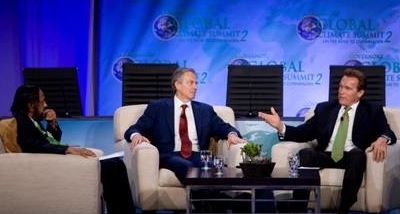
As Governor Arnold Schwarzenegger wrapped up his three-day Global Climate Summit today, with signatures and ceremony, the U.N.’s top climate official set a sobering tone with his own parting shot.

In a final panel this afternoon, the Governor was joined by former Prime Minister Tony Blair and Rajendra Pachauri, who chairs the U.N.’s Intergovernmental Panel on Climate Change (IPCC). Pachauri said the worst-case scenarios from previous climate modeling appear to be coming true, and warned that the next climate change assessment from the IPCC, due out in 2014, “will alarm the world.”

Then he went on to reiterate a prediction he made before the U.N. earlier this month; that based on the science he’s seen, 12 countries are in danger of becoming failed states due to the impacts of climate change. And while he stopped short of listing the nations, previous statements appear to imply that several of the states on his list are in Africa.

Elsewhere at the summit, 30 delegates from state and local governments around the world signed a final agreement to collaborate on climate change. If they follow through with some muscle on the partnership, they’ll be collaborating on clean transportation and on climate adaptation strategies.

Governors from Brazil, Indonesia and U.S.also called on their national governments to address deforestation at the UN climate treaty talks in Copenhagen. Forest loss accounts for 20% of climate emissions globally. California also signed its agreement with the Jiangsu Province of China.

The three-day summit’s title was “On the Road to Copenhagen” and the international talks have been front and center in the discussions here. The governors attending would like their role in combating climate change formally recognized there. They see themselves on the front lines of climate change, as evidenced by this much cited statistic: 50-80% of the emissions cuts needed to reach the UN’s goals will be implemented by states and cities.

But despite the Copenhagen-mania, Schwarzenegger stuck with his subnational message, saying: “Climate change isn’t all about this one treaty.” Even if the talks at Copenhagen fail, he says states and provinces should keep forging ahead.

Photo: Office of the Governor.

A Bottom-Up Climate Approach

Governor's Office
Photo: Governor's Office

The second Governors’ Climate Summit kicked off yesterday with a plenary on adaptation to climate change. Most of the climate policy we hear about has to do with mitigation; cutting emissions to reduce the rate of climate warming. Increasingly, though, policy makers are looking at ways to adapt to the effects that are already palpable.

Several international leaders had stories to tell:

– Premier Gordon Campbell of British Columbia said that due to warming winters, pine beetles will kill 80% of the mature pine forests in his province by 2013.

– Dr. Dessima Williams of the Alliance of Small Island States said rising sea levels make climate change “a case of life and death” for island nations.

According to a World Bank analysis cited by Michele De Nevers of the Bank’s Environment Department, adapting to climate change will cost $75-100 billion dollars a year for developing countries–and that’s with only 2 degrees (Celsius) of warming by 2050. That seems like a big number, but De Nevers reminded the crowd that it’s on par with the recent financial bailout.

I also spoke with Margret Kim, China Program Director for the California Air Resources Board and EPA, who has been working with the government of the Jiangsu Province in China.  She filled me in on the agreement that Governor Schwarzenegger is expected to sign today with leaders from the province to help them reduce greenhouse gas emissions.  Based on this framework, California would develop an action plan to share expertise and research with the province.

This partnership is built on a 2005 agreement that California signed with the province, which was focused on energy efficiency. Barbara Finamore of the Natural Resources Defense Council says real progress was made on the first agreement with Jiangsu, which set several efficiency incentives and programs in motion. But they have more to do.  Ninety-five percent of the province’s electricity comes from coal.

The announcement comes on the heels of President Hu Jintao’s declaration less than two weeks ago that China would make notable reductions in its carbon intensity by 2020.  Carbon intensity isn’t quite as simple as a straight emissions cut. It measures the amount of carbon dioxide produced for each dollar of economic output.  And fixed targets aren’t part of the expected Jiangsu agreement either. But Finamore says this is a landmark agreement since it shows an important shift in China’s willingness to tackle climate change. As she said, “I’ve been working in China on energy issues for more than 20 years, and there has been a tremendous amount of recent progress.” And a bottom-up approach–with states piloting environmental policies before national governments adopt them–is certainly something we’re familiar with in California.

Provincial Climate Summitry: Day One

Governor Schwarzenegger kicked off his second Global Climate Summit Wednesday in Los Angeles–and “global” is certainly the emphasis.  The three-day conference features panelists from more than 70 states, provinces and countries who are discussing “subnational” strategies to cut carbon emissions.  (That’s the policy wonk term for regional, state and provincial governments).

Events like these are at risk of being feel-good political meet-and-greets, but I spoke with Louis Blumberg of The Nature Conservancy, who believes that the partnerships created at the last climate summit have borne fruit in the past year. Blumberg is part of a deforestation working group made up of five Brazilian states, two provinces in Indonesia and three states in the U.S. They’re working on carbon accounting techniques for forestry projects–or in carbon parlance, REDD (Reduced Emissions from Deforestation and Degradation).

Expect more partnership announcements from the rest of the summit.  The first signed this week came from California and Mexico, who announced a partnership to protect Monarch Butterfly habitat in Mexico through reforestation.  California forests are also getting some attention.  The Governor also announced a deal with the largest private forest owner in California, Sierra Pacific Industries, to produce carbon credits from its forestry projects.

Still, for all the state-level dialogue, national climate news stole the show.  EPA Administrator Lisa Jackson appeared just after the Governor to announce  a proposed rule to use the Clean Air Act to regulate greenhouse gas emissions from large power plants and refineries. And in Washington, Senators Barbara Boxer and John Kerry released a national climate bill in the Senate (see Craig Miller’s post for more on that).

The Governor took it all in stride, reminding the audience that California piloted many of the policies the national government is now considering. “That’s how powerful states and regions are,” said Schwarzenegger. “We really are the laboratories for the national governments. That’s where the action is.”

And Now, the Senate Show Begins

Senators Barbara Boxer (D-CA) and John Kerry (D-MA) have released their climate bill into the maw of Senate committees. Their Clean Energy Jobs and American Power Act is designed to cut greenhouse gas emissions by 20% from 2005 levels by 2020, with a long-range goal of 80% by 2050.

Sen. Boxer told me in an interview today that five committees have jurisdiction over various pieces of the legislation, which runs about 800 pages at this point (versus 1,400 for the version that narrowly passed the House). She conceded that it’s unlikely to clear the committee gantlet and get to the Senate floor in time for the next major round of U.N. climate talks, set for December 7 in Copenhagen.

Given multiple major distractions such as economic recovery, health care reform, and two ongoing wars, Boxer predicted that it would likely be late December before a version of the climate bill could come to the floor. She said “I have a hunch we’re going to be in until Christmas Eve, frankly.”

Box says she and her colleagues have “broadened the coalition” since a House version of national carbon legislation squeaked through by nine votes over the summer. “We think at the end of the day, they (skeptics) will realize that this is the most flexible way to stand up and fight this challenge called global warming.”

Boxer counterposed this “flexibility” with what some consider the likely alternative; non-legislated regulation of greenhouse gases by the Environmental Protection Agency, under the decades-old Clean Air Act. Coincidentally or not, EPA took a step in that direction today by announcing proposed new requirements for large industrial emitters of carbon dioxide.

EPA’s proposed “tailoring rule” covers six known greenhouse gases produced by power plants, oil & chemical refineries and other large-scale operations. Boxer says she doesn’t see the announcement as competing with Congress. “I think this is a very important signal to my colleagues that the EPA wants to work with us. They’re just going after the biggest polluters and that’s following our lead.”

As for “subnational” initiatives like the Governors’ Climate Summit, going on this week in L.A. (and where EPA chief Lisa Jackson chose to announce the new rules), Boxer said her bill “should encourage the Governors to keep on going. Keep on keepin’ on because the more we all do, the easier it will be in the end.”

Boxer said “We have to step up here or we’re going to see the terrible results of unchecked global warming. This is the moment,” she said. “We’re losing the window.”

Lauren Sommer is covering the L.A. summit for Climate Watch. Watch for her daily posts.