
Lawsuits Loom Over “Fantasy Island”

Concerns linger over plans to transform Bay island into city of the future

The massive redevelopment of Treasure Island in San Francisco Bay has cleared all regulatory hurdles and is now officially green-lighted for construction as early as next year. But the project’s eco-credentials are still in dispute.

As San Francisco Mayor Ed Lee signed off on the project last week, environmental groups were pondering a lawsuit. They’re calling the $1.5 billion project to remake the former military base too car-centric to be labeled “sustainable.” And they say housing as many as 19,000 people on bay fill is too risky with the triple threat of earthquakes, tsunamis, and sea level rise. Continue reading Lawsuits Loom Over “Fantasy Island”
Out On a Limb

PG&E green program helps preserve forests already saved by state taxpayers

By Susanne Rust
California Watch

California’s largest utility company promises its customers green salvation through its ClimateSmart program.

For every bit of energy a PG&E ratepayer uses – turning on a vacuum cleaner, powering up a computer or heating up an oven – a little part of a tree or forest is saved to erase the carbon sins of the customer. The voluntary program costs ratepayers an average of $60 a year.

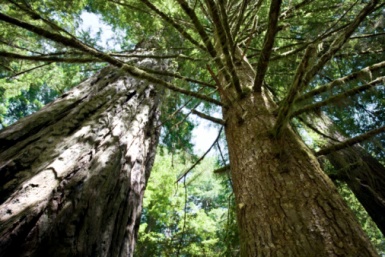
But the company isn’t telling its customers one crucial fact: Those forests were purchased years ago by a Virginia-based conservation group that used nearly $50 million in loans and grants from California taxpayers. That group, The Conservation Fund, then sold PG&E carbon credits on the land it had already purchased for preservation and selective logging.

Thousands of PG&E customers are effectively paying twice for the same Mendocino County forests. Continue reading Out On a Limb

Deconstructing the Drought

A new report disputes some alleged impacts to the Central Valley from water restrictions, reveals others

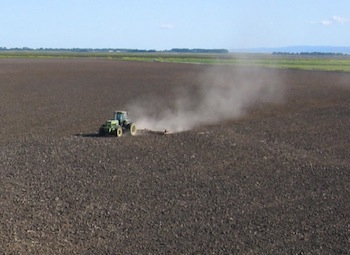
(Photo: Craig Miller)

Blame the housing recession, not water restrictions. That’s the conclusion of a new report from the Oakland-based Pacific Institute, which scrutinizes the connection between cutbacks in farm water deliveries and Central Valley job losses during California’s recent three-year drought.

Impacts of the 2007-2009 California Drought: What Really Happened? is described by its authors as a “nine-month assessment of new data from California’s agricultural, energy, and environmental sectors.”

Its main finding, that “Farm job losses were largely unrelated to water constraints,” appears to be a direct refutation of claims by Congressman Devin Nunes (R-Fresno), and others, that regulatory and court-ordered restrictions on water deliveries have caused “massive unemployment” in the San Joaquin Valley. Continue reading Deconstructing the Drought

A Water Meter Mandate for California Farms

Regulators seek better tracking of farm water use

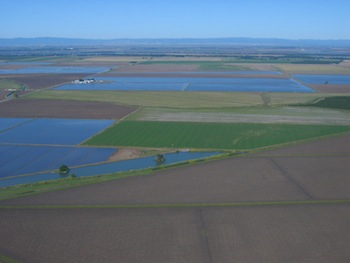
Flooded rice fields in the Sacramento Valley. (Photo: Craig Miller)

Most urban dwellers get a water bill each month that’s based on how much water they use. But on some California farms, that’s not the case.

“In many parts of the state, the amount of water farmers use is not measured,” says Susan Sims of the California Water Commission.

Instead, farmers are charged a flat rate for water in some districts. Sims says that makes it difficult for farmers to conserve water. “It’s very hard, even when you want to conserve. I think the first step in saving water is knowing what you’re using.”

Toward that end, the Water Commission votes today on rules that would require water districts to meter the volume of water farmers use — and to charge them accordingly. Sims says many water districts, including some in the San Joaquin Valley, already do this. Others in Northern California don’t. Continue reading A Water Meter Mandate for California Farms

The Cruel Paradox of Water Conservation

The more we conserve, the more it costs  :-/

The cost of water could soon rise for more than a million people in East Bay communities of the San Francisco Bay Area.

Tonight the East Bay Municipal Utility District (EBMUD) will consider a six-percent price hike for this fiscal year.

(UPDATE: District directors approved the increase unanimously)

Water districts around the state are also increasing rates as customers conserve water.

“It’s a horrible conundrum,” admits Herb Niederberger, a division chief at the Sacramento County Department of Water Resources. “The more you conserve, the better it is for the utility, but at the same time, less revenue is generated and in order to cover costs you have to raise rates.”

The Sacramento agency and EBMUD are completing a regional water-supply project.
EBMUD is also contemplating another six-percent hike next fiscal year.

Google Invests Millions in Residential Solar

SolarCity infusion is Google’s largest yet

(Photo: Craig Miller)

Google is giving a boost to the solar industry today – but not to those large solar farms in the California desert. Nope, the company’s largest clean energy investment to date is going to home solar.

Five years ago, SolarCity was a small, Bay Area start-up. Today, it’s getting a $280 million-dollar investment from one of the most influential players in the game.

“We are very excited,” says Lyndon Rive,  CEO of SolarCity. “It’s a big vote of confidence in SolarCity as well as hopefully a big vote of confidence to the entire market.” Continue reading Google Invests Millions in Residential Solar

Air Board Hands in its Homework

Issues court-ordered do-over of alternatives to cap & trade

In response to a court ruling (which it’s still appealing), the California Air Resources Board today issued a new analysis of its proposed carbon trading program, weighed against several alternative means of reducing greenhouse gas emissions.

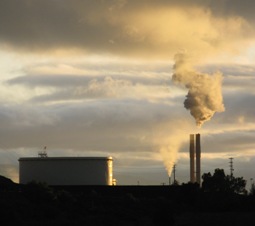
Oil refineries are among California's biggest emitters of greenhouse gases. (Photo: Craig Miller)The fresh look includes the original five options, including cap & trade and the option of doing nothing at all. It does not add any new options but rather seeks to flesh out the other three. The non-trading options include regulating emissions at the source, implementing a straight-up tax on carbon emissions, and a mixed bag of actions. The reworked analysis expands discussion of those three alternatives from a few pages to more than 60. It will be up to the courts to decide whether the extra paper carries enough substance with it to comply with the California Environmental Quality Act. Continue reading Air Board Hands in its Homework

The True Price of Gasoline

It’s even higher than you think

With the price of gas hovering near $4.00 per gallon (still almost a buck more than a year ago, despite the recent retreat), most Californians are already in “station shock.”

But what does gas actually cost? There’s the price at the pump, sure, but what about the hidden costs of pollution in terms of health and the environment?

The Center for Investigative Reporting takes us along on the journey that a gallon of gas makes, from oil field to gas tan, keeping a tally along the way.

California Watch, at the Center for Investigative Reporting is a content partner of KQED and Climate Watch.

San Francisco Tops List of Climate-Friendly Cities

Canadian firm ranks three California cities among the US top ten

(Photo: Gretchen Weber)

The new ranking places San Francisco at number one because of its “political leadership and commitment” in the fight against climate change, according to the study’s author, Boyd Cohen of CO2 Impact, a Vancouver-based carbon offsets company. The city also has a “proactive” university community, lots of active clean-tech investors, and the largest number of LEED-certified buildings per capita in the country, he said.

Two other California cities made the top ten: San Diego in sixth place, and San Jose in ninth. Continue reading San Francisco Tops List of Climate-Friendly Cities

An Assault on Hetch Hetchy Dam from the Flank

Activists take a new tack in attempt to restore a scenic valley in Yosemite

After years of frustration with the frontal assault, activists have shifted to a flanking maneuver to restore Yosemite’s Hetch Hetchy Valley. The group Restore Hetch Hetchy (RHH) says it will challenge the re-licensing of Don Pedro hydroelectric dam, downstream from Hetch Hetchy.

The flooded Hetch Hetchy Valley stores water from the Tuolemne River, for San Francisco. (Photo: San Francisco PUC)

Often compared to Yosemite Valley in grandeur, Hetch Hetchy Valley has been flooded since the construction of O’Shaughnessy Dam in the 1920’s. Water from the reservoir serves the City and County of San Francisco but activists have long argued that it’s not needed, and that the Valley’s original attributes are more valuable. Continue reading An Assault on Hetch Hetchy Dam from the Flank