On Monday April 4, KQED’s Bay Area Bites bloggers went out on the town (well, out to the Marina) — drinks at Nectar Wine Lounge, then dinner at Bistro AIX. Each of us wrote our own account of the evening, which follows…
BABette’s Feast by wendygee
It was a treat to meet & eat with the BAB bloggers. There was a constant hum of food-related banter, critiques, stories and six degrees of separation.
We had a mellow 3 flight wine tasting at Nectar prior to dining a few doors down at Bistro AIX. The wine descriptions are designed as foreplay for the date & mate crowd. And, of course, we had to read them out loud to each other prior to embarking on each flight. My fave from the “Bubbles Flight” was the Schramsberg Blanc de Blancs. If you haven’t visited Schramsberg, tasted their bubbly, and toured their wine caves you must go — but be sure to make reservations. On the “Bad-Assed Red Flight” I enjoyed the 2002 X Winery and on the “Anything but Chard” flight the 2003 Alois Lageder Pinot Grigio was light and fruity.
Bistro AIX was especially tasty since I was dining with three foodies and we all shared. In general, the food was all very fresh, prepared simply yet elegantly, and delicious. The highlights for me were the Tempura Fried Calamari with Red Curry Aioli, Asian Cabbage Salad & Cilantro appetizer, the Grilled Top Sirloin with Maitre’d Butter, French Fries and Watercress, and the Tahitian Vanilla Bean Creme Brulee. The calamari was cooked just right, light, plump, and with tangy seasoning. The steak was perfectly medium-rare and juicy and the fries were light, crispy on the outside and creamy on the inside. The creme brulee had a crisp carmelized top with a flavorful smooth creme filling. Even the little cookie accessory that came with the brulee was tasty. The waiter steered us in the right direction with the wine selection and we had two excellent bottles, a Chinon and a Vacqueryas. The service was great, the atmosphere was relaxed and unpretentious — we sat outside on the enclosed patio which was comfortably heated. I would definitely go back to Bistro AIX.
BABs About Town by KimG
Stephanie, Wendy and I had 9 wine glasses in front of us when Amy strolled in to Nectar. I’m sure we were a sight with our 3 flights of wine (one bubbly, one white, and one red), but she jumped right in as we took turns reading the rather sultry wine descriptions aloud dramatically and then relentlessly gave our wine critiques.
Shortly before we were due to arrive next door at Bistro AIX for our reservation we decided that we needed to get some food before all that wine made us too loopy to remember that we had a reservation. The restaurant was fairly empty but a glance toward the back revealed where everyone was hiding. The enclosed back patio was warmed from the glow of heat lamps. Stephanie and I gleefully ordered a Chinon (taking me back to a summer evening in Paris) after the waiter agreed it was an excellent choice. Light and refreshing it was a perfect complement to the array of salads, the perfectly fried herb-spiked calamari, and the rich broth-based bean soup that we ordered. As with the flights of wine, and the rest of the meal, we shared everything. Yet another highlight to the evening. (As Amy mentioned in her review, and like most foodies I know, I like to try as many dishes as possible when I go to a restaurant so I’m always into sharing. I’m happy with just taking a bite or two of a dish and then moving on to the next.)
For the main event we moved on to a more full-bodied Vacqueryas (suggested by our wine-savvy waiter), and ordered exclusively from the specials menu: hearty potato gnocchi with black trumpet mushrooms and asparagus, tender lamb shank, fresh seared halibut, and a perfectly medium-rare steak frites. My favorites dishes were the lamb, rubbed with fresh herbs and served atop creamy polenta, and the steak. I’m a big fan of gnocchi, but it is rare when I think it is done incredibly well. The best gnocchi I’ve ever had were made by friends (albeit, one was a chef and the other an Italian who was food-obsessed and an excellent cook). Anyway, the gnocchi was okay, but didn’t hold a candle to the meat and the fish dishes we tried.
Finally, with as much wine as we could drink and remain standing (or actually, sitting, since we had not left yet), we moved on to the desserts, which frankly Amy did a fantastic job of describing. We did order all 4 desserts on their menu, and they were all delicious, but my favorites were the strawberry-filled crepe and the creme brulee. In fact, I think the brulee rivaled the best I’ve ever had.
All in all, we got a lot out of the evening. We found a great new wine bar, a fantastic French restaurant that I will certainly frequent, and we had a great time together. I can’t wait until our next BAB culinary adventure!
Aix Marks the Spot by Stephanie
My memory is a little fuzzy from the most excellent Chinon and the Vacqueryras we had with dinner, but I believe I can recall the night’s revelries pretty well. After sharing three flights of wine at Nectar Wine Lounge — with every flight we giggled more at the thoroughly lascivious, but thoroughly delightful wine descriptions — we BABers staggered next door for dinner at Bistro AIX on Chestnut and Steiner. Out on the patio, we were kept warm by an overhead tarp and heat lamps that got downright toasty as the night and wine flowed on.
I’m sitting here thinking about our starters and I can’t decide which I liked the best. They all seemed to fill a mood for me. Wendy’s salad was a simple, perfect plate of butter lettuce and herb vinaigrette. Kim’s baked goat cheese salad with mesclun greens (or maybe it was spring mix) was pretty much what I’ve had at Chez Panisse but still quite nice. If I had been in the soup mood, Amy’s clear broth soup with butter beans and kale would have really hit the spot. In fact, it’s actually something I’d really hanker for when my stomach is out of sorts, but the truth of it is, I’ve been feeling beety these days and my beet salad was just what I needed. It struck that perfect balance between all the important elements: tangy, creamy chevre, deep earthy beets, tender spinach, and just a zing of orange zest to brighten everything up. The calamari was a tangle of spicy daikon radish greens and shredded cabbage drizzled with a piquant, peppery aioli. It wasn’t overly battered or greasy, and the squid itself was tender and chewable — not so rubbery that your jaw snaps back when you try to bite into it.
On to the mains. Kim’s gnocchi dish was quite delicious with delicate trumpet mushrooms and lightly sauteed greens but the gnocchi themselves were a little heavy for me. As summer comes on, I’m not a big fan of dense pasta dishes — I want my gnocchi light and ethereal. Yes, that gnocchi can be found, I found it at Quince last October and I dream of it to this day. Amy’s main was lamb shank. Now, I’m a lamb lover but I’ve never actually had lamb shank. I probably won’t again, either. It’s not that the lamb shank was bad, mind you, I’m just not a fan of stew meat. It’s why I usually steer clear of Boeuf Bourguignonne as well as short rib dishes. Braised is not the way I like my red meat. I like it bloody. On that note, Wendy’s steak was tops. Perfectly seasoned and perfectly medium-rare without a hint of grey on the edges. That’s how I like to judge a good restaurant — forget the tired foams, gelees, and nicotine cocktails — if I ask for medium-rare beef and I actually get medium-rare beef, I’m coming back. My halibut with butter beans and baby artichokes was light, full-flavored, and deeply satisfying. I had been craving halibut ever since halibut season started and this was a wonderful way to satisfy my yen.
Of all the desserts, I believe a few of us (chocoholics not included) felt very “meh” about it. For me, it was just like every other flourless chocolate cake on every other menu — nothing more, nothing less. The sliced strawberries folded into blessedly thin crepes was a delicious reminder of my mother’s perfect crepes and I really enjoyed the apple tart as well. However, what really got to me was the creme brulee. I am usually not a fan of either creme brulee or creme caramel. I sort of think the creme jiggles and wiggles too much like snot. I also have serious mental trauma associated with caramel. However, this creme brulee proved to me that there are creme brulees out there that I could grow to love, adore, and quite possibly cherish. The wonderfully hard sugar crust cracked appealingly to reveal velvety vanilla depths and I really had to restrain myself in the presence of the other BAB-ers not to run into a corner with the little ramekin and start licking.
Basically, it was good food, good conversation, and good people — I don’t ask for much more than that on a night out.
My Dinner with BAB by Amy Sherman
So when it comes to dessert there are several different kinds of people. The chocolate people and the not-so-chocolate people. The pastry people and the give-me-creme-brulee-or-give-me-death people and the “please call it crehp, not crayp” people. We had all those people represented at our first BAB blogger dinner. Fortunately the one thing we all had in common is something I have begun to hypothesize all foodies may have in common–a desire to share.
Foodies share opinions and share meals, they even share the very food off their plate. What’s mine is yours and what’s yours is mine. The only foodie I know who refuses to share dessert is my husband who had a terrible incident where his chocolate mousse got passed around the table and the poor boy never got a bite. As a result of this trauma he became a dessert protectionist. He’s also only a foodie by association, so perhaps he doesn’t really qualify anyway.
The desserts were as follows: vanilla creme brulee, flourless chocolate “cloud” cake with raspberry sauce, a free-form apple pie with vanilla ice cream and crepes with strawberries and cream. I was most happy with chocolate cake, it was light and fluffy and chocolatey, just what I look for in a chocolate cake. Have I given myself away as the chocolate person? The creme brulee was so good it convinced a non-brulee eater of its merits. The crepes were delicate and filled with fresh, succulent berries. The apple pie was more of a tart really and while not the best ever, certainly respectable.
Like good little children there were empty plates all around and no fighting. Ultimately the story had a happy ending and everyone found something to love.
The beauty of the blog is the interactivity it inspires. Amy was blogging about Jacques Pepin and sent so much traffic to KQED’s Jacques Pepin: Fast Food My Way website that we checked out her site. When we decided to create a KQED aggregate food blog we naturally asked Amy to participate.
Tapping into the realm of Bay Area food bloggers has provided a great alternative to mainstream media’s take on local food. If you are a diehard foodie I recommend getting a free newsreader like Pluck or Bloglines and subscribing to a bunch of these blogs. Then you can scan the headlines daily in one location. And if you are an aspiring local food blogger there is a commmunity of like-minded people with whom to share your passion.
What’s a bunny chow? How about kitfo and fufu? Those are just three of the signatures for a trio of different cuisines from the giant continent of Africa. And, for a continent of its vast size and staggering number of unique cultures, it’s surprising how small of an impact its cuisines have had on the Bay Area. Outside of Moroccan restaurants and Ethiopian ones, the Bay Area is limited to a handful of restaurants representing countries from South Africa to Tunisia to Nigeria.
That’s too bad for curious local diners. But, there are exciting opportunities to learn about several cuisines with a little bit of research. As we learned eating our way around the continent by exploring Africa’s cuisines around the Bay Area, there are many gems to be found, whether it’s a perfectly spiced piece of goat or a destination-worthy Moroccan pastry. Join us for a tour around ten different specific African cuisine and African-inspired restaurants.
Amawele’s South African Kitchen
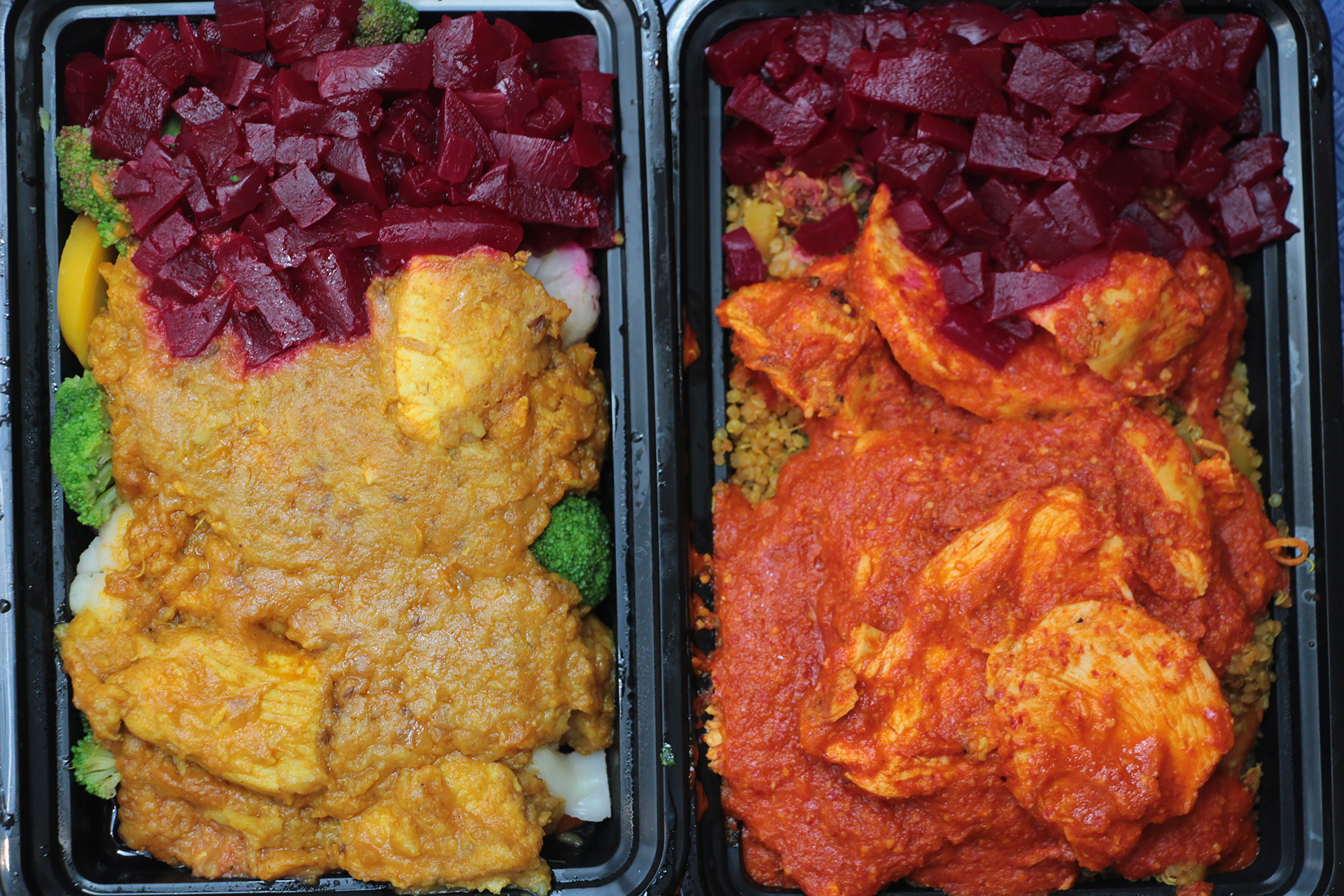
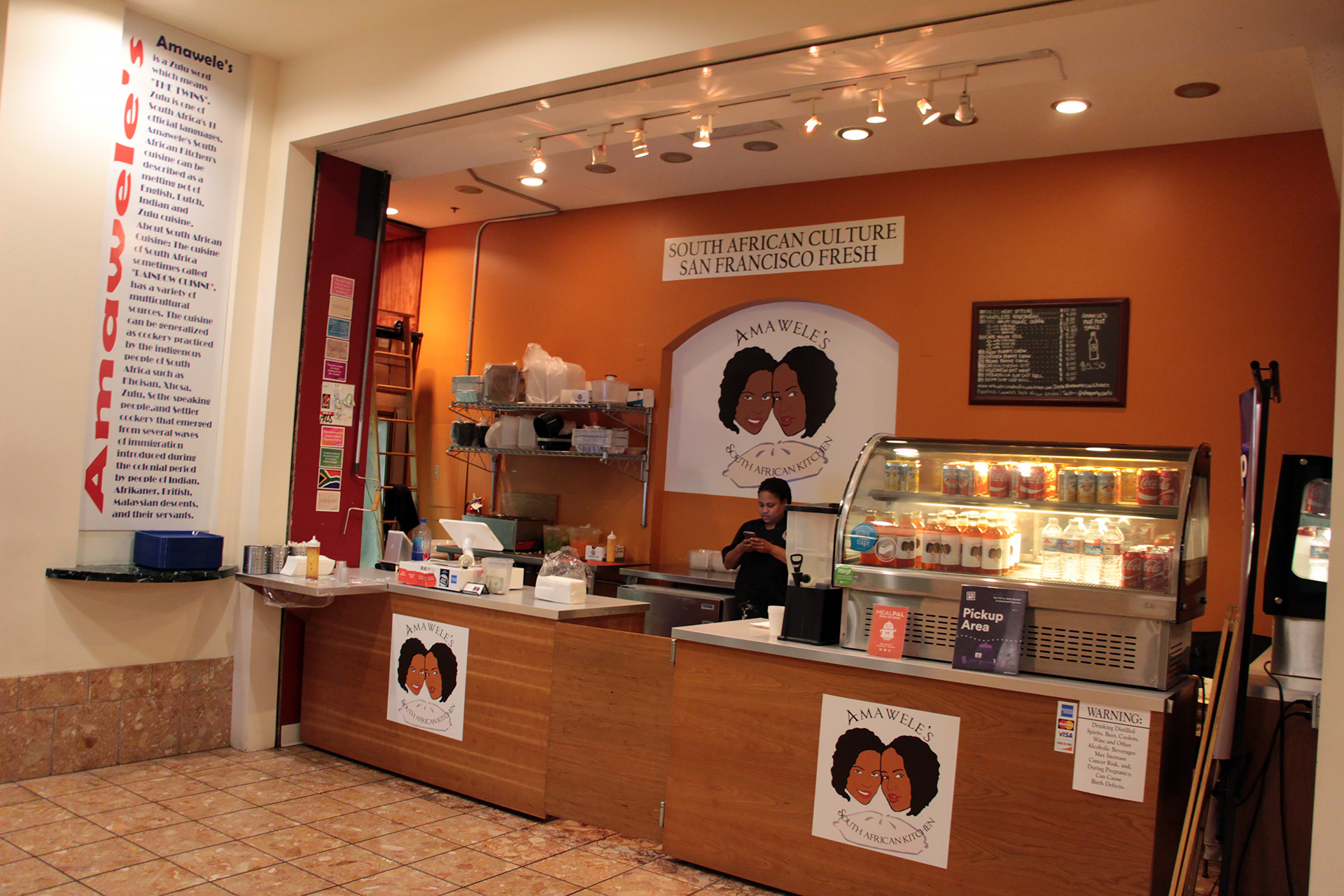
Peri peri chicken and Cape Malay quinoa with chicken (Wendy Goodfriend)Amawele’s South African Kitchen (Wendy Goodfriend)
There is no Chenin Blanc or Pinotage at the city’s lone South African food kiosk. You’ll have to head to a wine store for the country’s wines, which are far better known in the U.S. than South African cuisine.
Thanks to amaweles (a Zulu word for twins), Pam and Wendy Michaelson, San Francisco has one spot for learning about this diverse country that is somewhat similar to California climate-wise but almost exactly half a world away from here.
The identical twin sisters grew up in Durban, South Africa’s third-largest major city (think Chicago with Los Angeles’ location). It’s a fun, easy-going beach vibe that’s also a giant city on the Indian Ocean. It’s also quite notable for its dining scene, reflecting the diversity of its country. South Africa’s indigenous population and immigrants from centuries of being a colony for European empires have led to a decidedly eclectic cuisine. On the plate, influences come from England, the Netherlands, Malaysia, India, Portugal and the local African history.
Pam and Wendy initially lived in the country’s capital and largest city, Johannesburg, and tried to make it as professional singers, while working in the mundane world of finance. One career didn’t quite pan out and the other wasn’t fulfilling. So, they decided to explore traveling around the U.S. as childcare providers. The mutual love of cooking led them to their current restaurant home, Amawele’s South African Kitchen, in San Francisco, curiously located in the FiDi’s Rincon Center (best known as the home of Yank Sing). Fast-casual tends to be more of a niche for burritos, sandwiches, salads and the like — not complex curries and obscure names like bunny chow.
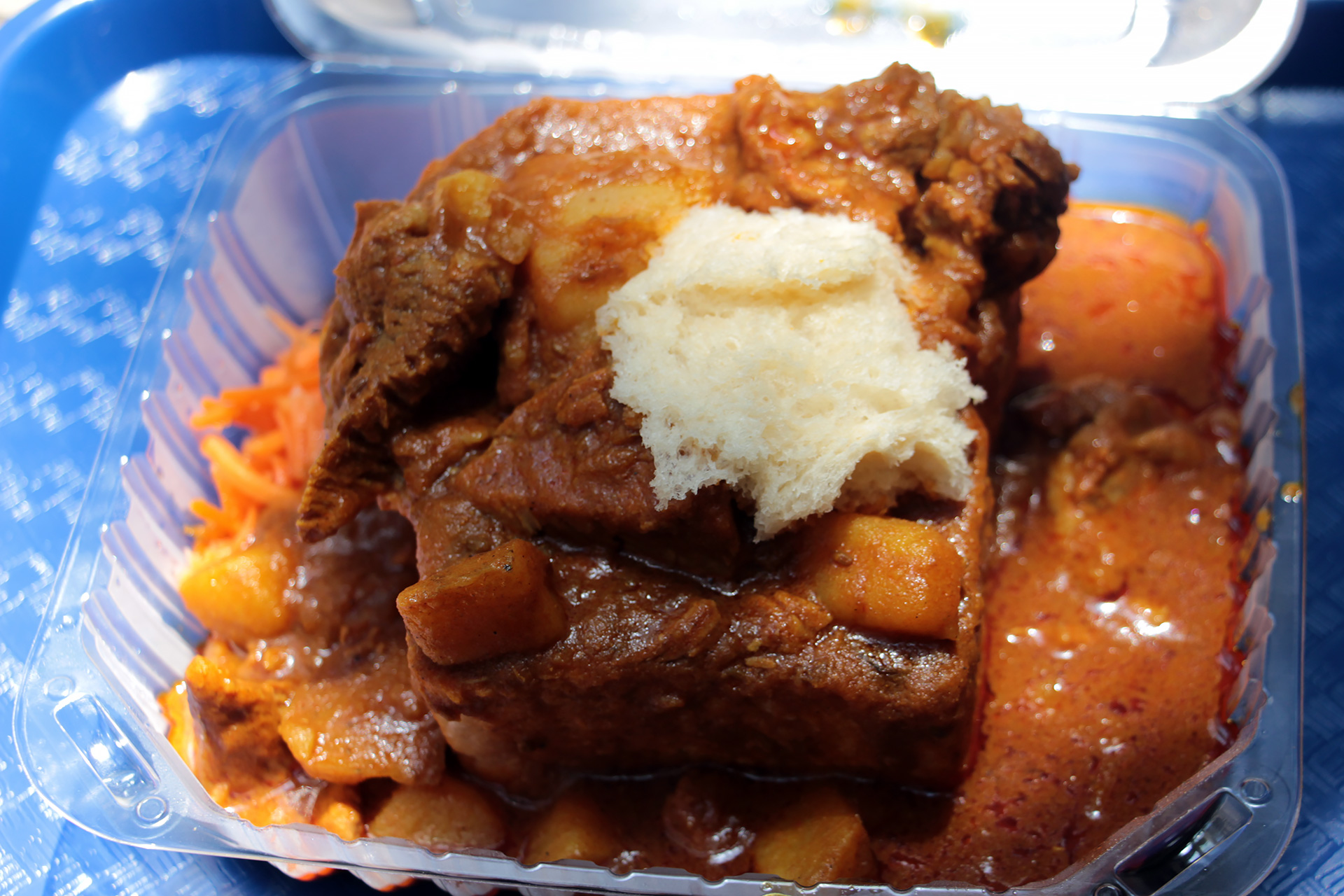
Bunny Chow (Wendy Goodfriend)
If you’re after the Instagram likes, South Africa’s fast food favorite, bunny chow, is obligatory. It’s not colorful but it’s pretty profound visually. There are no rabbits involved — rather a deeply nuanced and carefully spiced curry full of tender beef hunks in a hollowed out bread bowl. SF diners, I know what you’re thinking but this bread is more like a thick, fluffy white loaf than hearty sourdough à la Fisherman’s Wharf clam chowder in sourdough bowls. Except here, the curry doesn’t just stay in the bread bowl. It overflows filling the whole container. Talk about a dish not meant for take-out but has to be served to-go. Eat with caution.
Also on the fast food-drunk food side of South African cuisine and a popular item at Amawele’s is frikadella, a Dutch-style meatball that usually is served on soggy fries but here the two are served together as a wrap (hello, fast-casual!). It’s the South African version of Primanti Brothers, the everything-in-one sandwich behemoth from Pittsburgh (try it in SF at Giordano’s Bros. in the Mission).
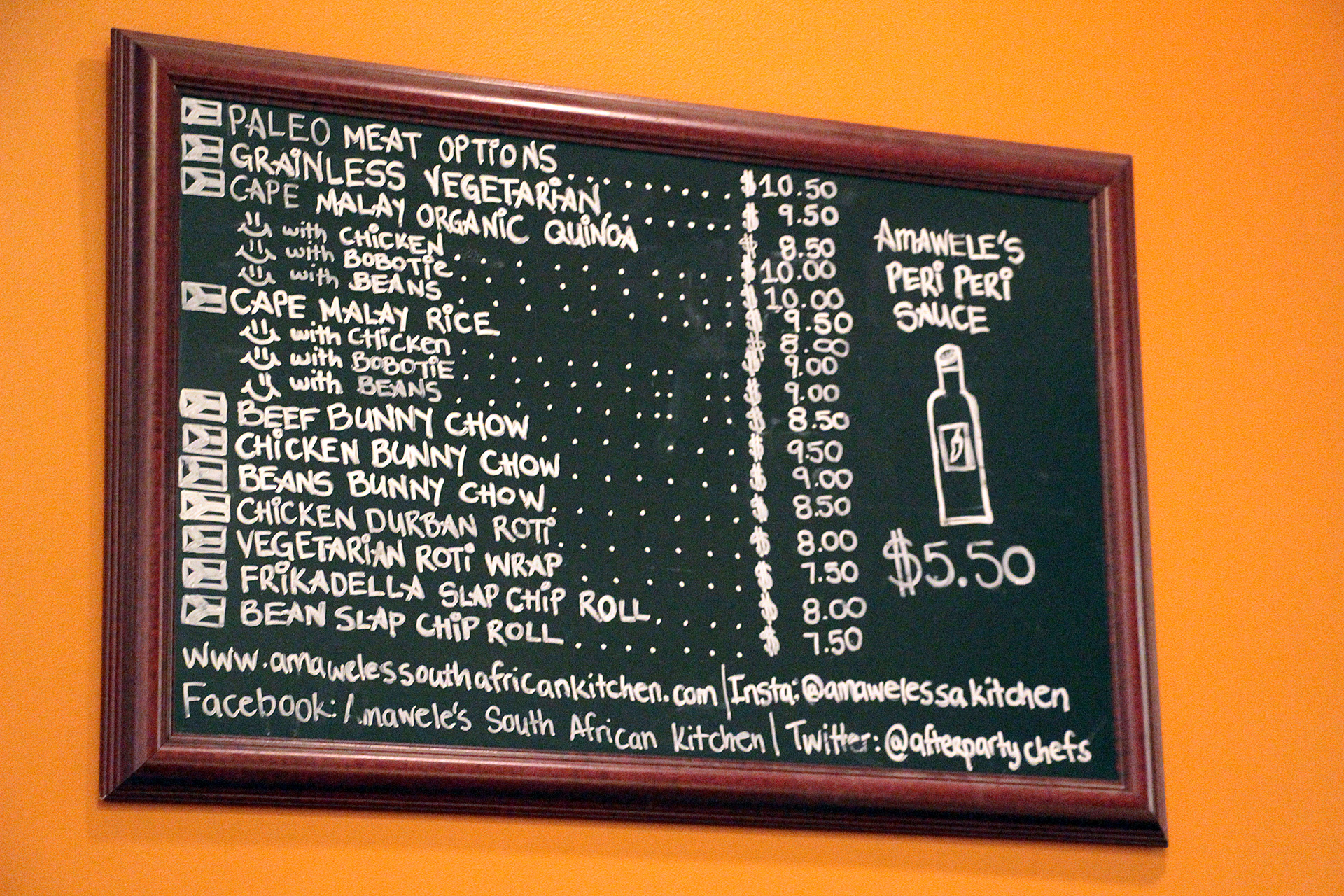
Along with the bunny chow, peri peri chicken is a must at Amawele’s, where the sauce made in-house (also sold by the bottle) boasts a sharp, bright chile kick that burns but doesn’t hurt when slathered on chicken and served paleo-style on vegetables. It’s too bad the chicken breast is dry but just focus on the sauce.
Also on trend, like the paleo section of the menu, quinoa can replace the Cape Malay spiced rice dish with proteins of your choice on top. It works particularly well with sweet potatoes and a host of non-seasonal vegetables (carrots, broccoli) that taste fine but are an uninspiring diet-friendly ensemble. Paleo or quinoa bowl, both are very fitting for a weekday lunch that will power you into the afternoon, not weigh you down at the 3 PM meeting. But, honestly, if you’re exploring South African cuisine, get the bunny chow. Leave the paleo stuff for later.
Amawele’s South African Kitchen menu. (Wendy Goodfriend)
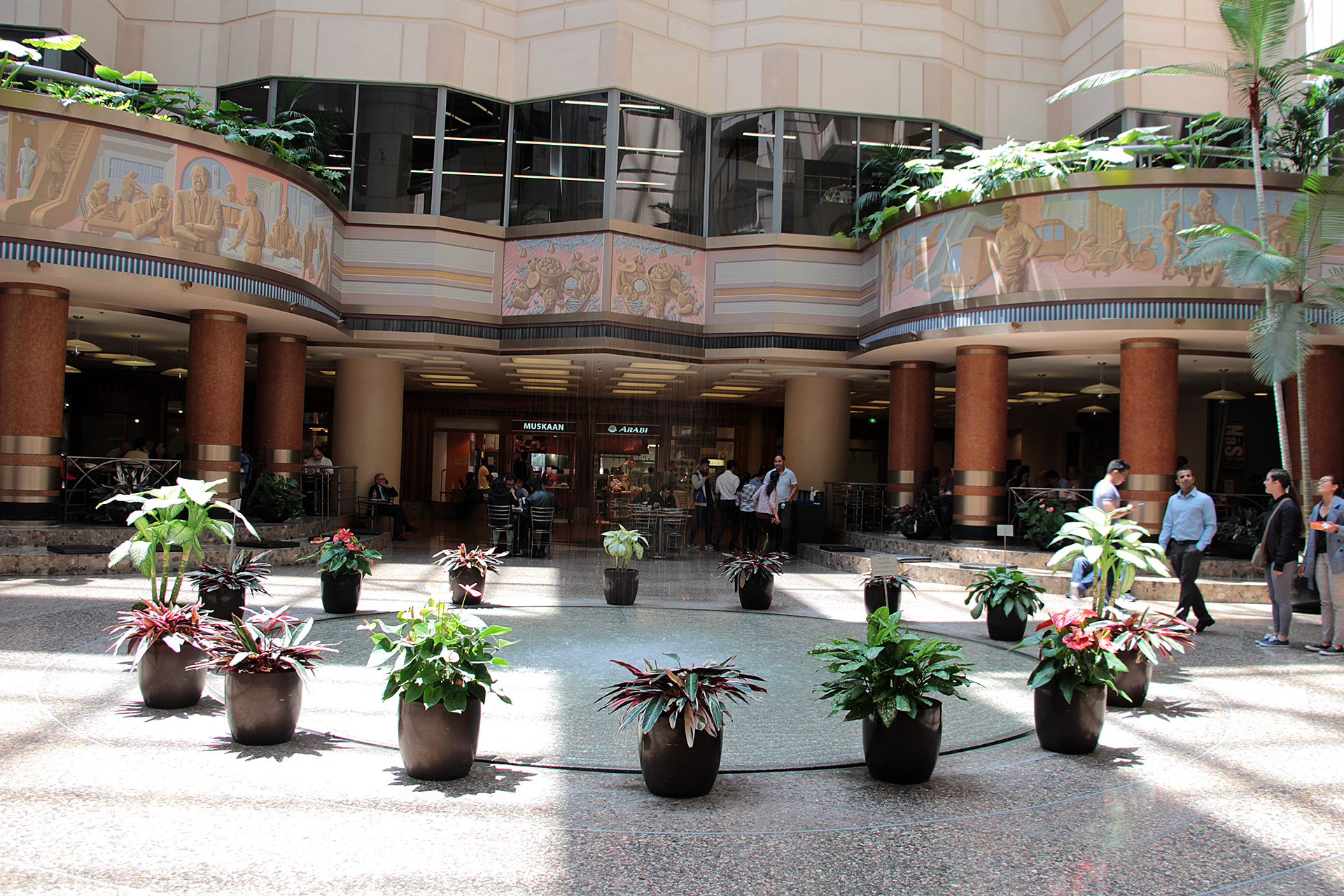
Once you’re through your giant meal (the bunny chow can easily serve two), linger with the housemade rooibos tea on a seating cushion by Rincon Center’s fountain and think how peaceful this is compared to the mad rush for dim sum a few steps away at Yank Sing. Eating bunny chow gazing at the upside-down fountain is one of those quirky “this can only happen here” moments that can liven up any routine weekday lunch hour.
Rincon Center’s fountain is a scenic spot to enjoy to-go lunch. (Wendy Goodfriend)
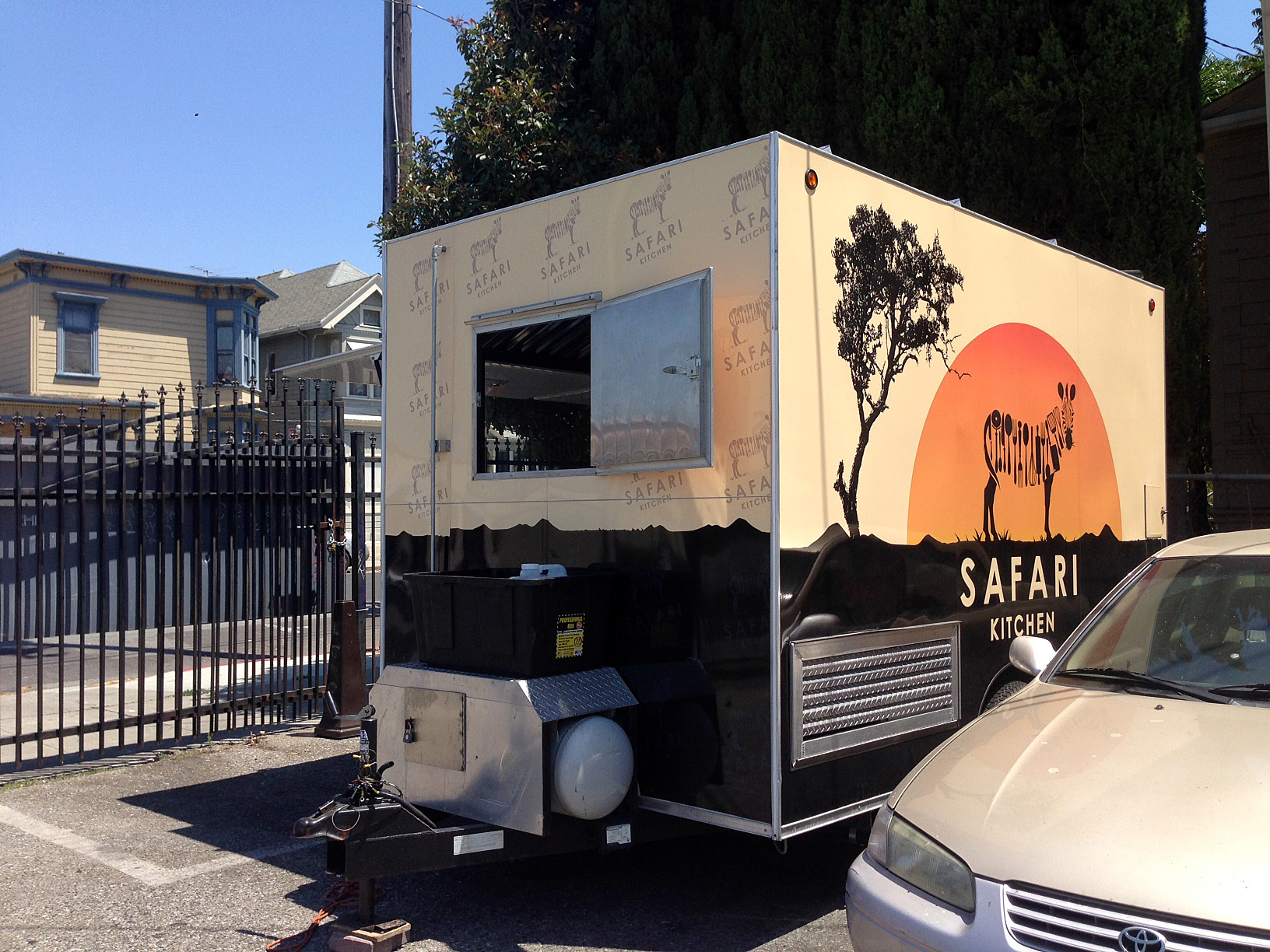
Somali food trailer that houses Safari kitchen. (Trevor Felch)
There is no seating, no park nearby to picnic at and congested parking in the narrow parking lot where the months-old Somali food trailer, Safari Kitchen, resides in. It’s decidedly no-frills and feels like Austin, Texas both with the fact that it’s a niche cuisine food trailer and the roaring summer heat on one visit. Continuing the no-frills agenda, the menu doesn’t provide much choice either. You’ll have a bed of rice topped with beef, chicken, beef and chicken, or vegetables. So, you better like rice.
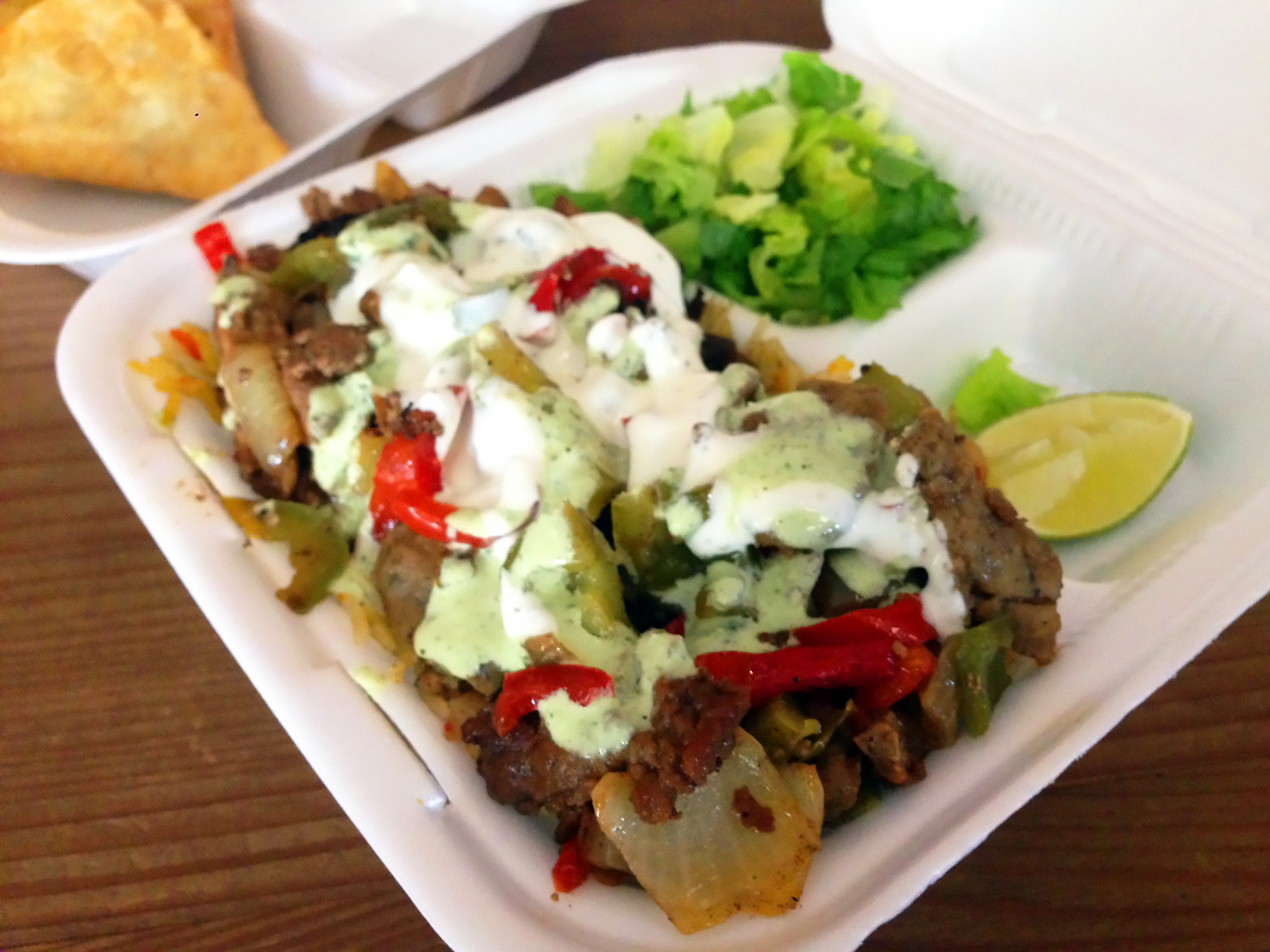
Beef and Chicken combo rice plate at Safari Kitchen in San Jose. (Trevor Felch)
Those familiar with The Halal Guys will notice this Somali staple isn’t dissimilar (there is even mild white sauce and a hot red sauce to squeeze on) but miles superior in everything from the recent New York transplant addition to SF — from the quality of meat to the heavy hand in seasoning to the slickness of the rice. A host of spices (“all starting with “C” as the cook in the Safari Kitchen trailer joked) including coriander, cumin, cinnamon and cardamom penetrate every cube of chicken and beef, along with the base of buttery, perky basmati rice. Imagine the flavor profile of barbecue with a supporting element of tandoori. Combined it’s smoky, sweet, salty and has a hint of umami that keeps bite after bite of meat and rice seem far more enticing than it sounds like. Sure, it’s enough food for two hungry eaters but who can complain about leftovers?
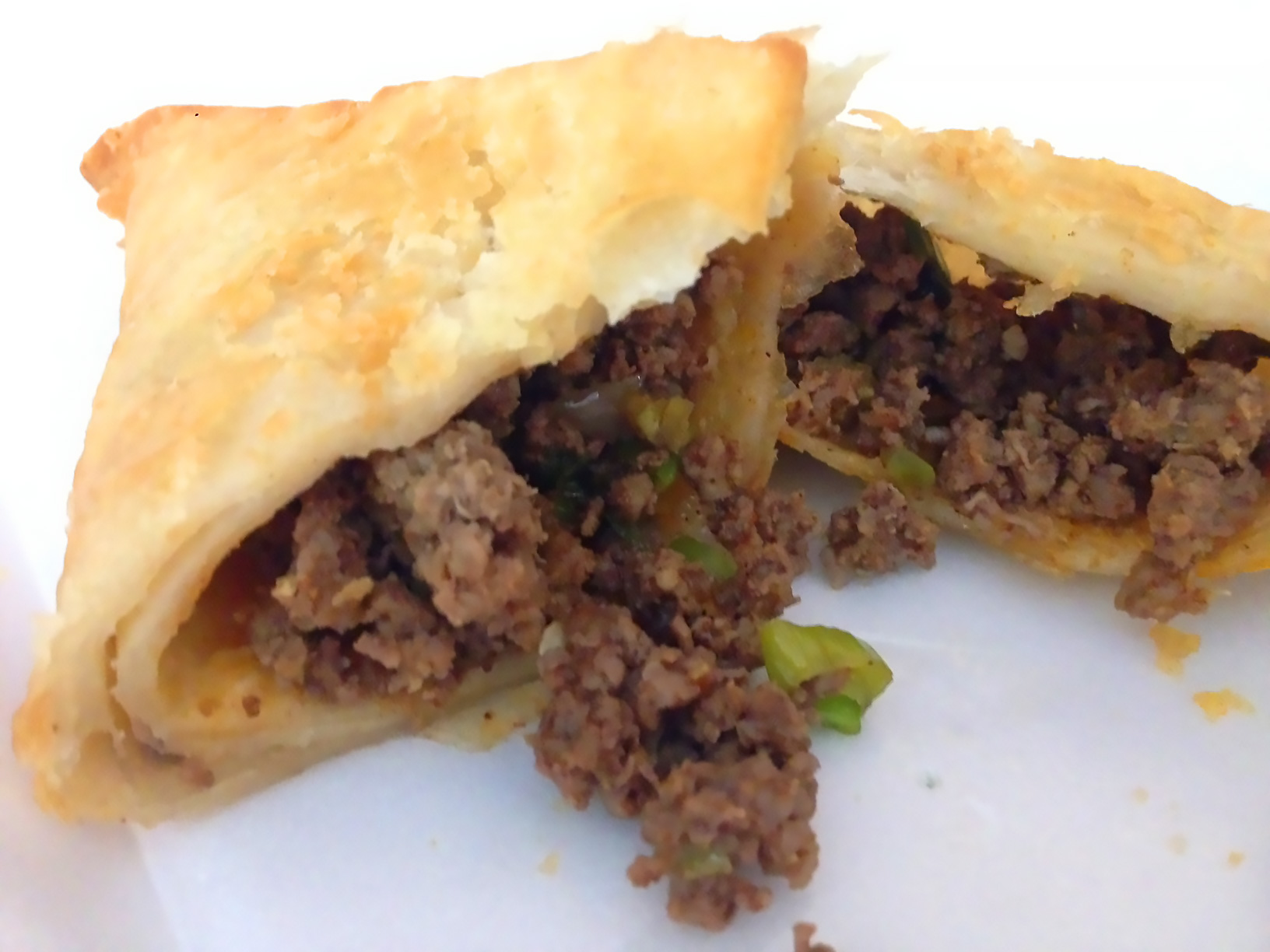
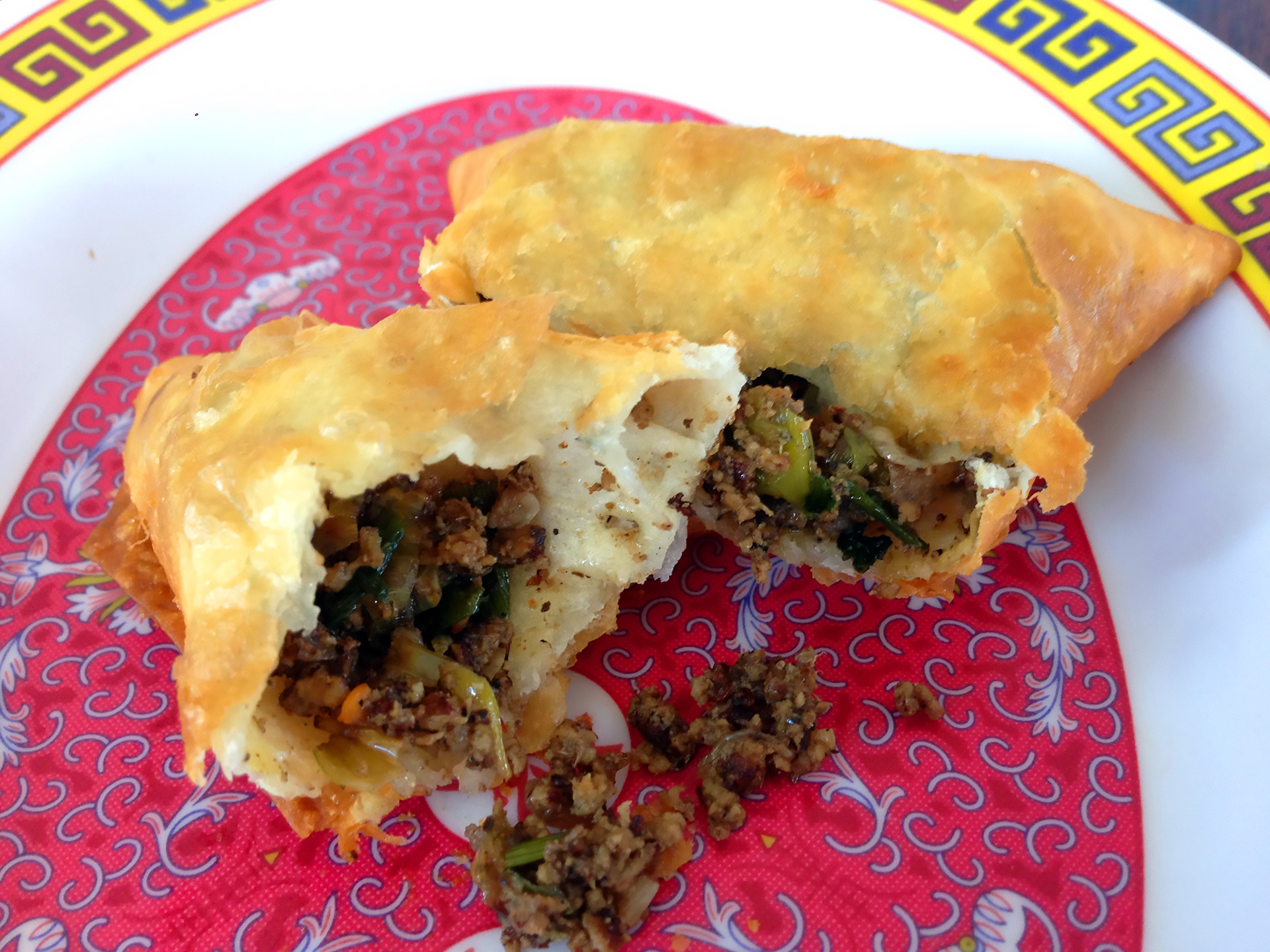
You’ll round out the meal with samusas, which are exactly like the better-known samosas in several other cultures around Africa, the Middle East and Asia. The flaky phyllo triangles filled with beautifully spiced, juicy ground beef. Also try the sweet version with cherry preserves that might be less traditional but will compete with any fruit preserve hand pie you’ve encountered before. The fry is perfect in both versions with not a speck of grease anywhere. It’s easy to fill up on these alone. Don’t do it.
Beef Sambusa at Safari Kitchen. (Trevor Felch)
At just a few months old, Safari Kitchen is still in its youthful stage and awaiting its first academic year with the nearby college students (it’s right between Downtown and San Jose State). Co-owners Amin Munye and Guled Yousef met as undergraduate students at Arizona State University and both ended up in the Bay Area afterwards — Guled in tech and Amin as a barber at The Barbers Inc. The two decided to give entrepreneurship a try but originally had no idea what type of business to do. Munye is originally from Somalia and moved to the US when he was 14. His older sister worked for the US embassy in Somalia and was given the option to move to the US for health reasons. A few years later, Amin and his family were able to join her in the US where they settled in the South Bay. After all sorts of business plan brainstorms, the two budding entrepreneurs thought, “Why not do a food truck with a few dishes from Somalia served?” The Safari Kitchen then was born and the hope is to eventually have a more substantial menu and sit-down experience at a brick and mortar restaurant.
This is definitely not your average food trailer (or truck or stand or vendor or what not). The logo of a zebra made of cooking utensils is even pretty startling, just like the tenderness of the meat and deft hand with a cupboard of spices. Thinking about the rice plates, we’re ready for our next Somali lunch.
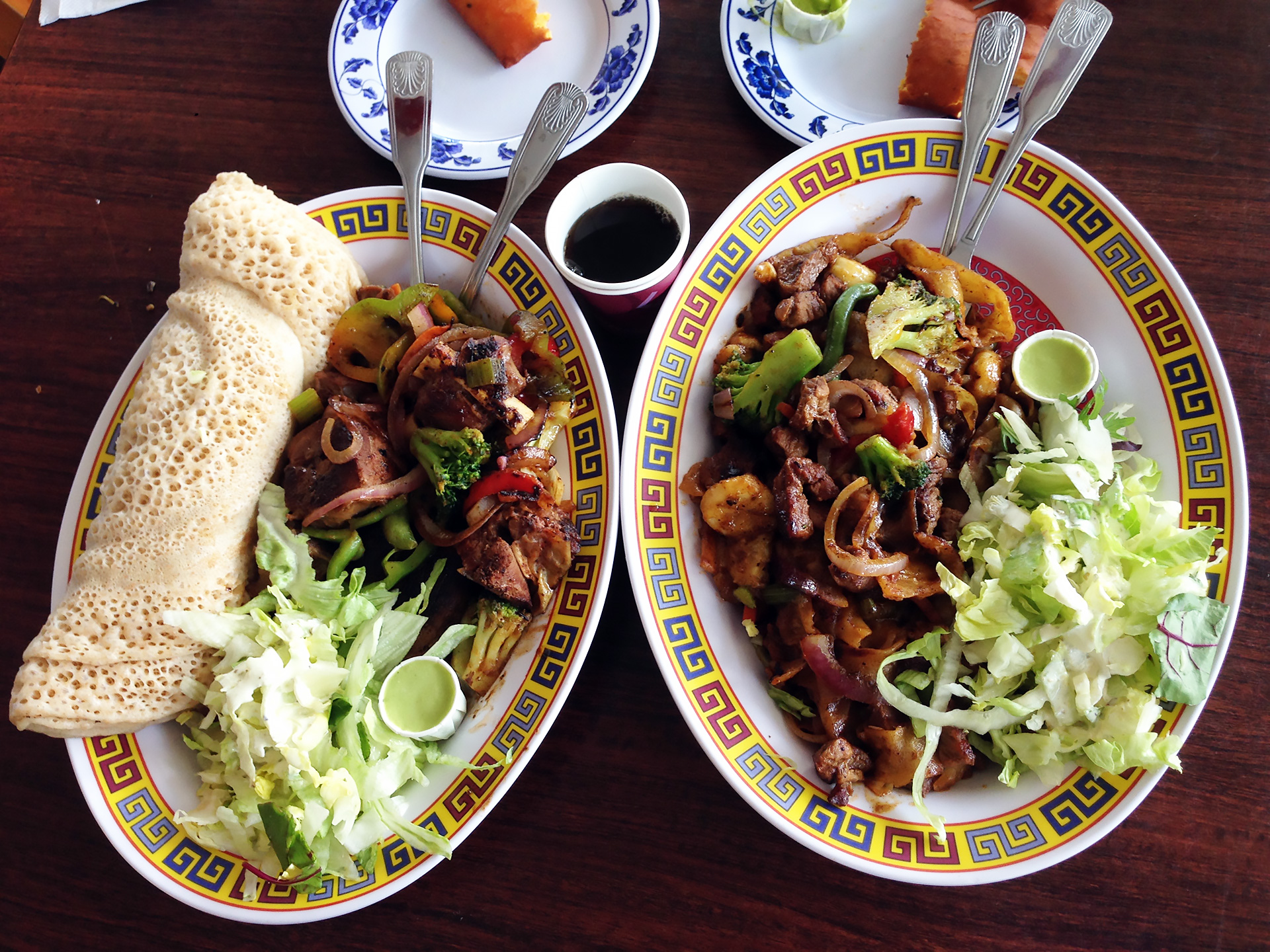
Roasted goat cutlet (L) and beef suqaar kay kay (R). (Trevor Felch)
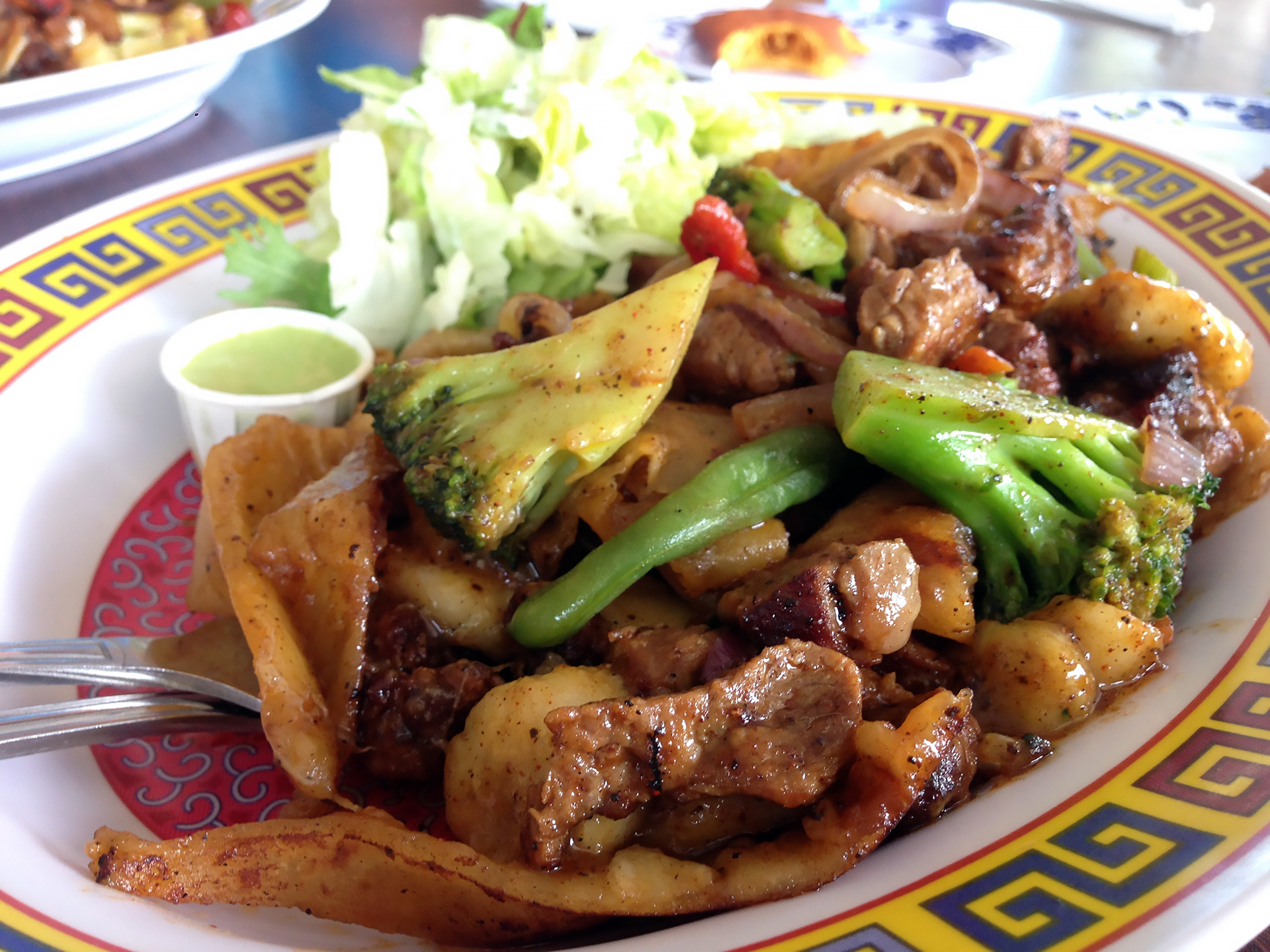
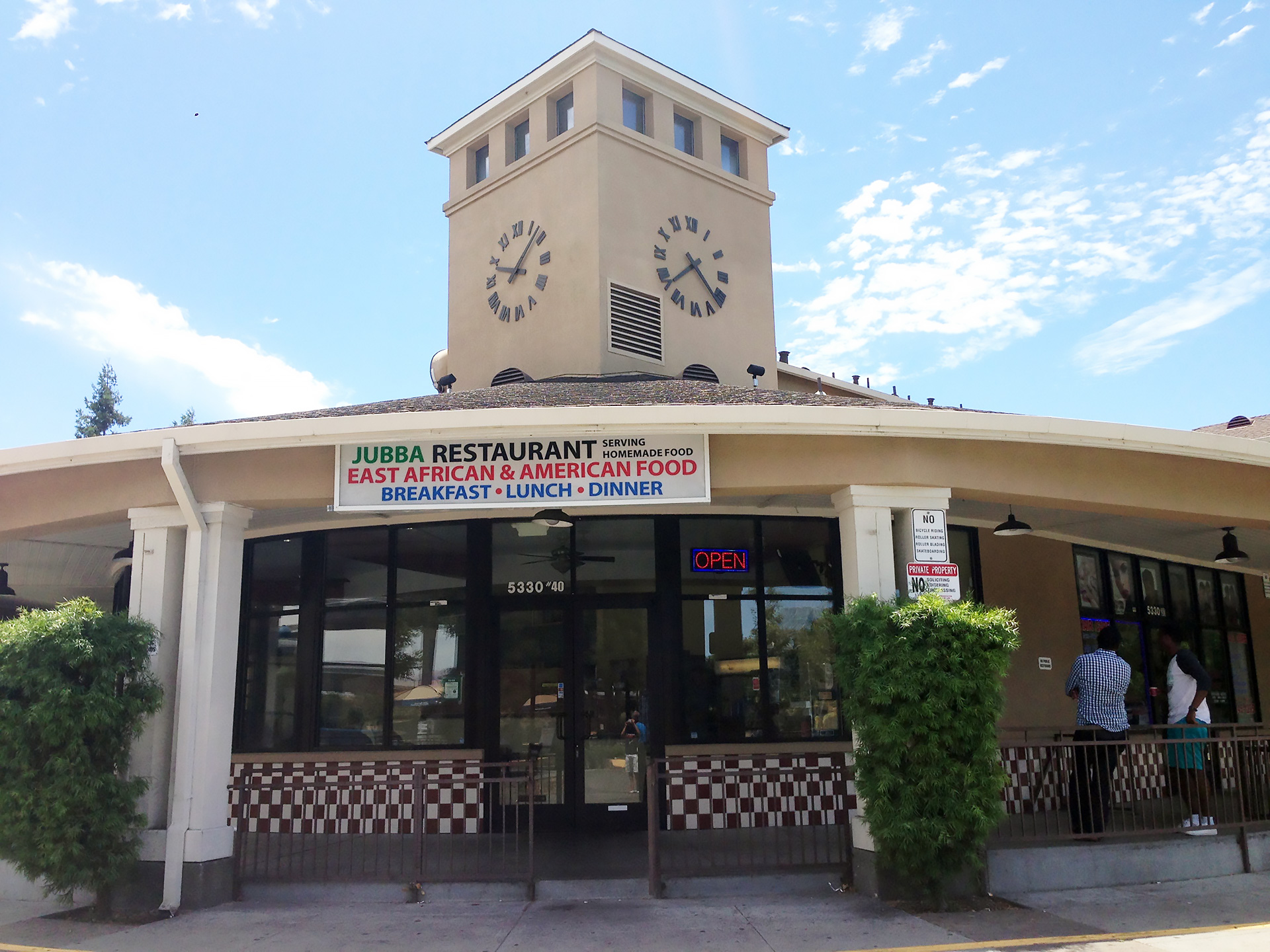
The sit-down restaurant Jubba is Safari Kitchen’s contrast, on the opposite side of the sprawling city of San Jose and boasting the same no-frills vibe but there are chairs, tables and air conditioning. Other than the aforementioned heavily spiced meat-on- basmati rice plates, arguably the two most celebrated dishes of Somali cooking are a platter of similarly spice rubbed goat and a sweet and sour stir-fry of sorts called kay kay. Both can be found at nine-year old Jubba, located in a mostly non-commercial residential community, right by the busy Santa Teresa VTA light rail station. In that kay kay, seemingly two pounds beef cubes (called beef suqaar) with no gristle (often a stir-fry’s downfall) gets tossed with chapatti (like flatbread shreds), bananas, onions, about a pound of nicely softened broccoli and snap pears, and an extreme amount of sesame oil that will definitely leave you wanting plenty of water from the salt rush. Ultimately, it’s the banana that ends up as the over-arching flavoring agent. Beef suqaar, flatbread and banana? Who knew it could be a hit?
Jubba interior. (Trevor Felch)Kay kay, a stir-fry with beef suqaar at Jubba. (Trevor Felch)
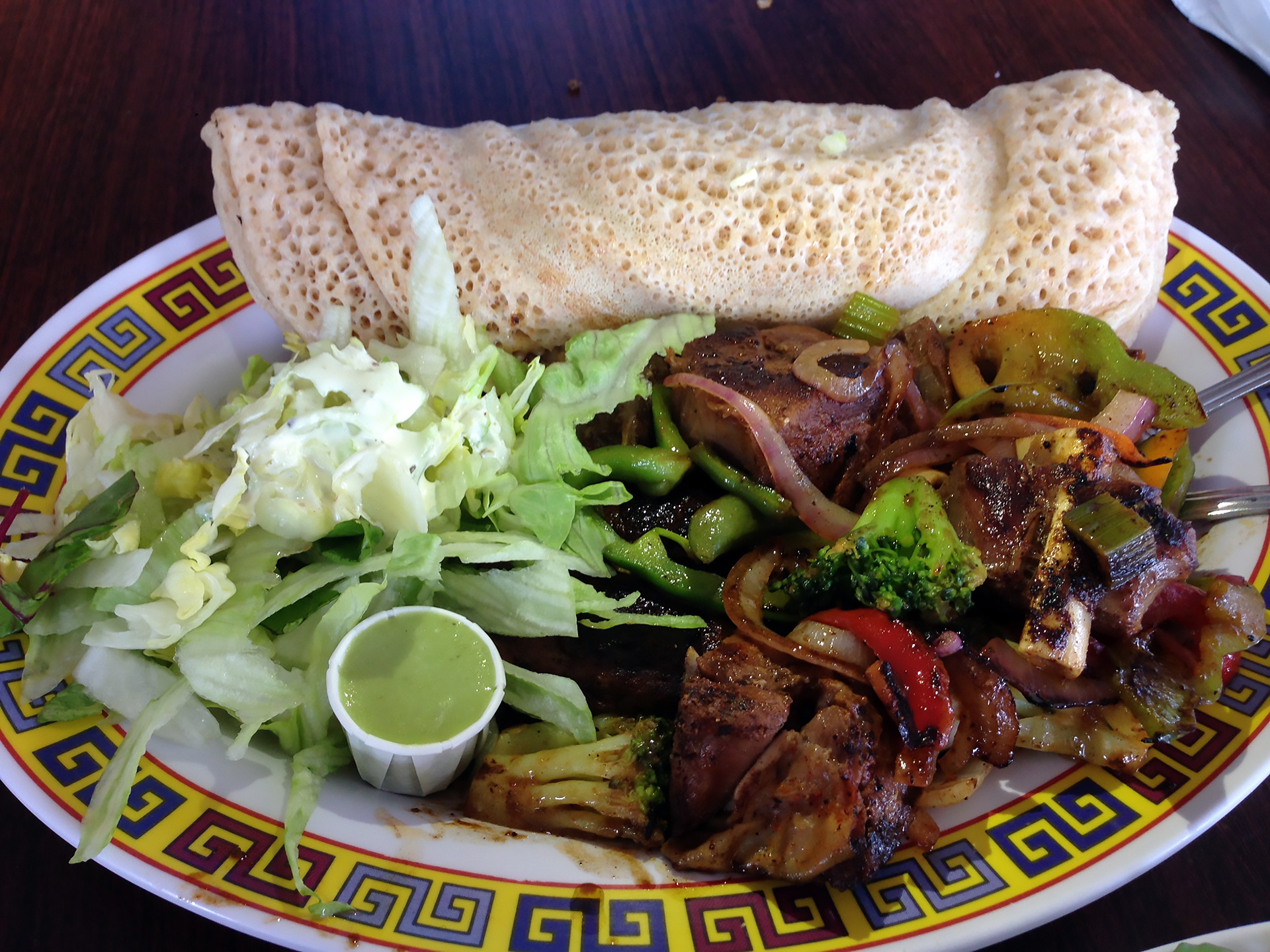
For the next specialty, goat comes as bone-in hunks, ranging from dry and flabby to fork tender. The meat itself doesn’t have the barnyard smirk that can make a Mexican birria specialist’s goat taste so polarizing and also so special. Jubba’s goat tastes of indifferent meat and the berbere spice mix doesn’t coat the meat with the same unabashed punch as at Safari Kitchen.
Roasted goat cutlet. (Trevor Felch)
The main mode of eating at Jubba appears to be the chapatti wraps. It’s essentially a Somali burrito in size and just swaps out rice, beans and guacamole for onions and peppers joining tilapia, beef or chicken. The only reason to opt for this over the other platters is serving size. Yes, they’re more than enough for one but the platters are really for 2-3 people (a steal for $12-13). The Sports Plate gets two people two proteins on one tire-sized plate with basmati rice or spaghetti for $26 and seems perfectly geared to diners looking more for leftovers than anything else. Like with Ethiopia’s cuisine often having Italian components from its colonial history, the same is the case for Somalia. Spaghetti seems like a strange match for deftly spiced goat but it’s a diet staple — and we certainly saw several diners digging into their pile of spaghetti with beef suqaar. Yes, this is not your typical meatballs and marinara.
Our vote for platter accompaniment goes to the injera bread that is much thicker and a less tart than most versions at Bay Area Ethiopian restaurants (like the Italian influence, here’s another nod to the similarities of Ethiopian and Somali dining). But, the injera does have the same function (use your hands!) here as at any Ethiopian restaurant. Unlike in Ethiopia, though, the food is not served on the injera itself. Since most Somalian dishes aren’t curry or sauce based like in Ethiopia, you’ll end up using a fork and knife and rip off some injera as a palate cleanser.
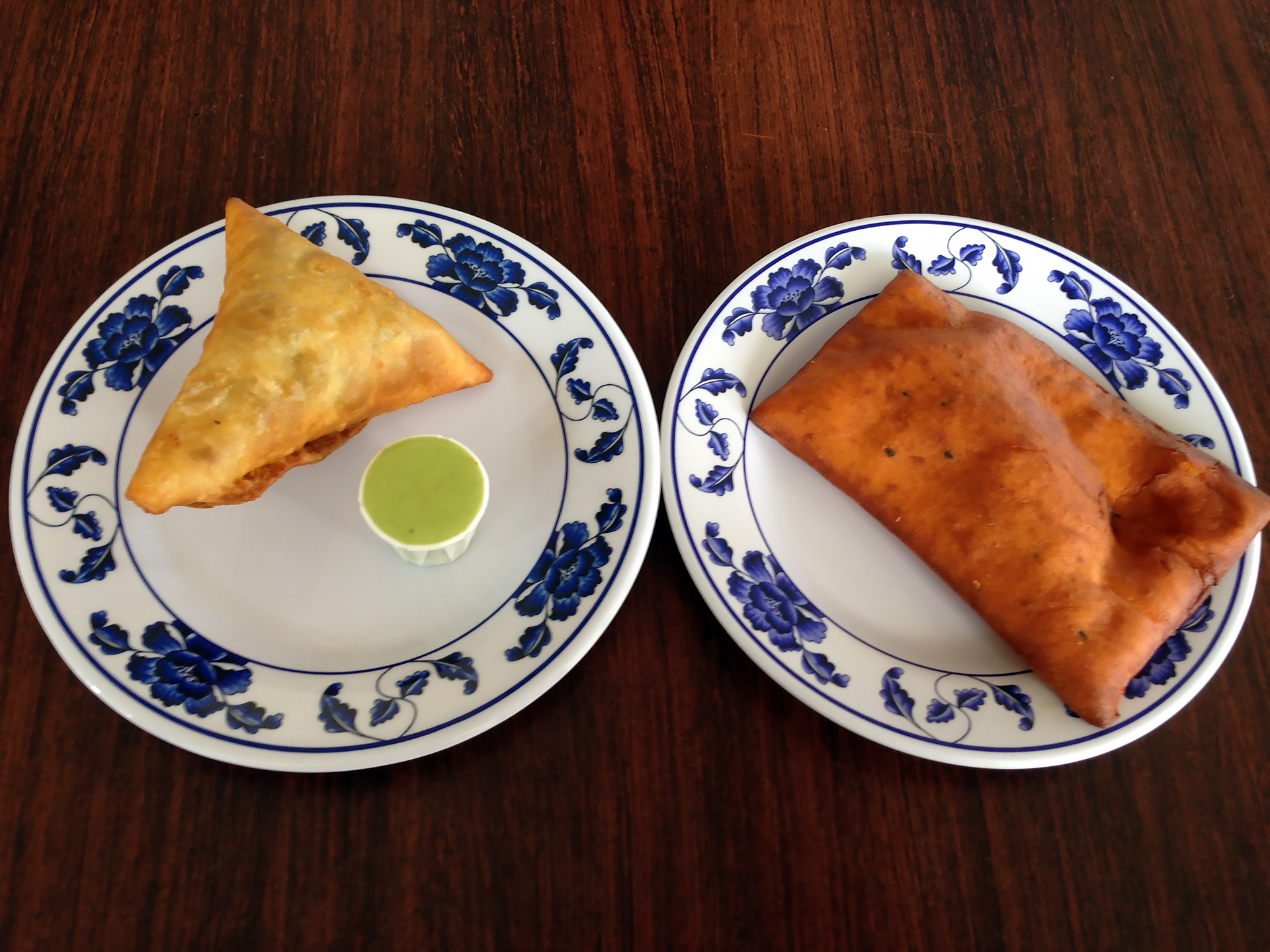
Sambusa and mandasi pastries at Jubba. (Trevor Felch)
No matter what entrée lies ahead, start with a samusa, fried to perfection with no hint of grease and a filling of ground beef and spices that come tumbling out dramatically after your initial bite. Mandasi, a sweet potato pastry that tastes and looks like a flattened yam beignet, has pretty little to recommend for it in the shadow of the samosa. It’s a harmless version of fried dough if that’s a needed part of your meal. For both, make sure to dunk the pastries in the medium hot green spice condiment that come on the side.
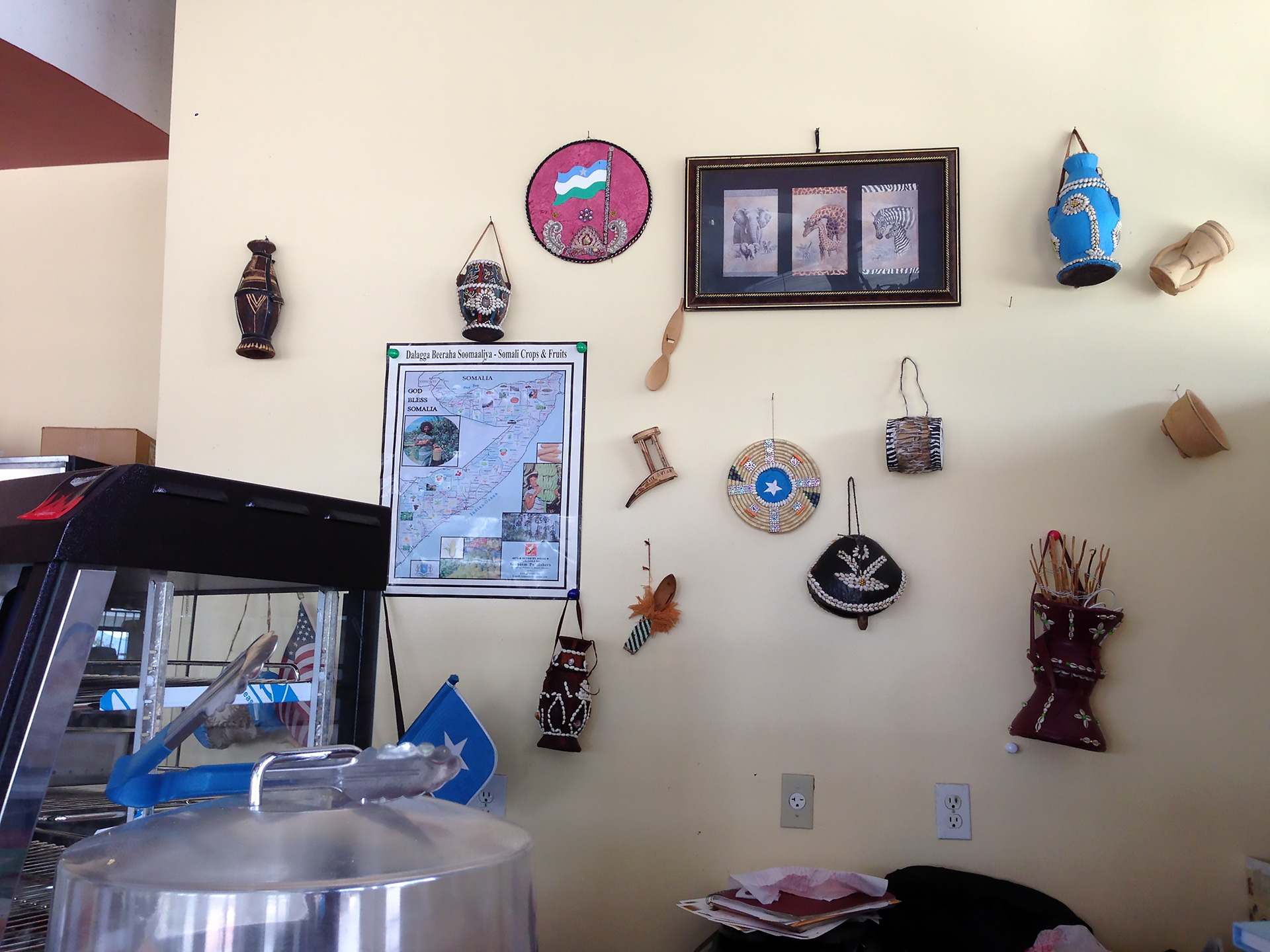
The ground beef filling of the sambusa. (Trevor Felch)Somalian art decorations at Jubba. (Trevor Felch)
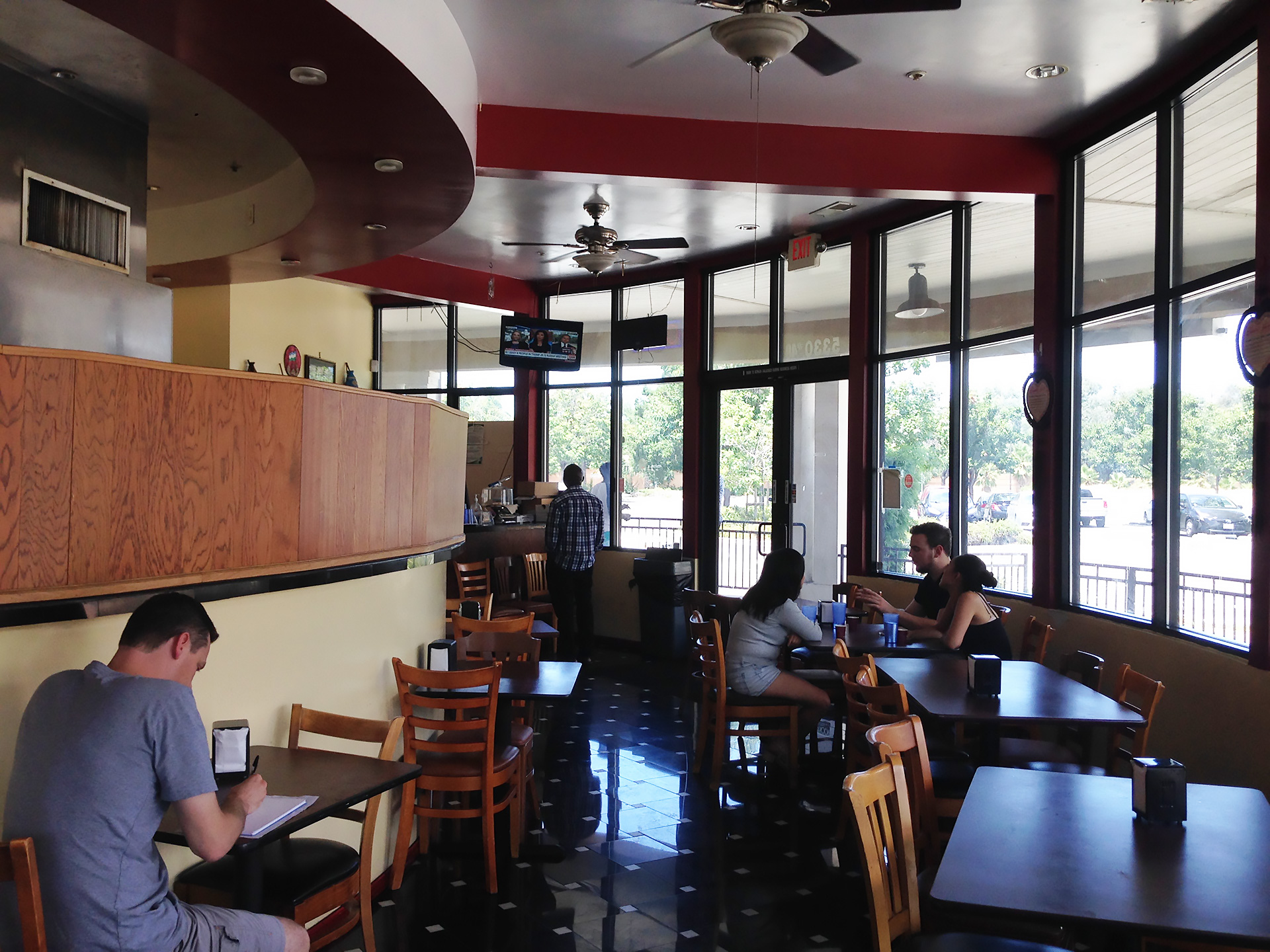
There’s a lot to love about this opposite of flashy family-run operation, from the food to the fact that decor is limited to a few woven objects on the wall, a placard of Somali crops and fruits and a TV on CNN by the entrance. It’s not an elaborate set-up but has a lot of heart and is clearly a local favorite with the African community. Diners stream in randomly to order, then savor, the free pour-yourself sweet tea that comes out blazing hot (use two espresso-sized paper cups!) and packs more sugar than the typical sweet tea on a porch in Mississippi. Somehow, its over the top quirky sweetness seems to taste just right when eating some kay kay in this far corner of San Jose.
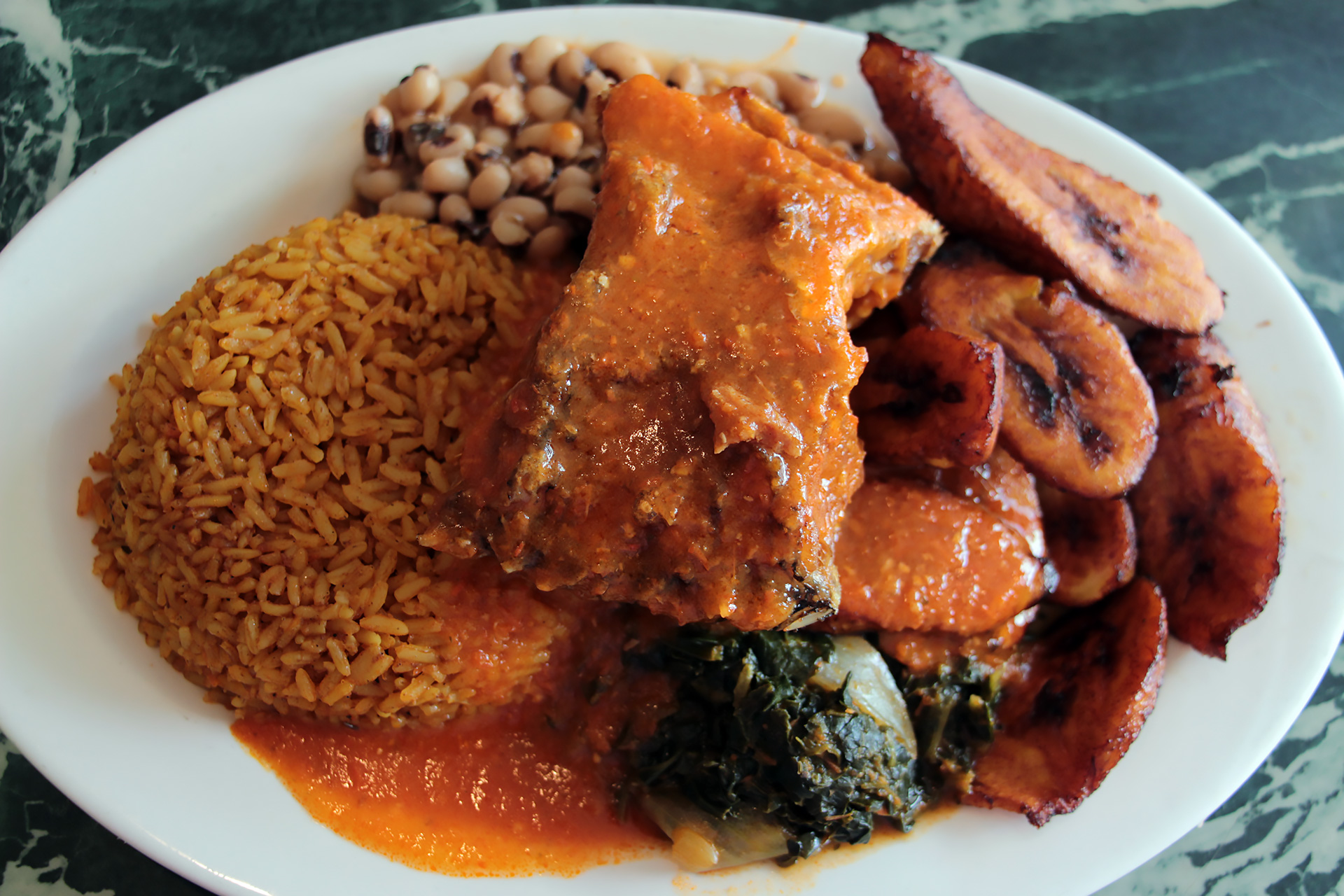
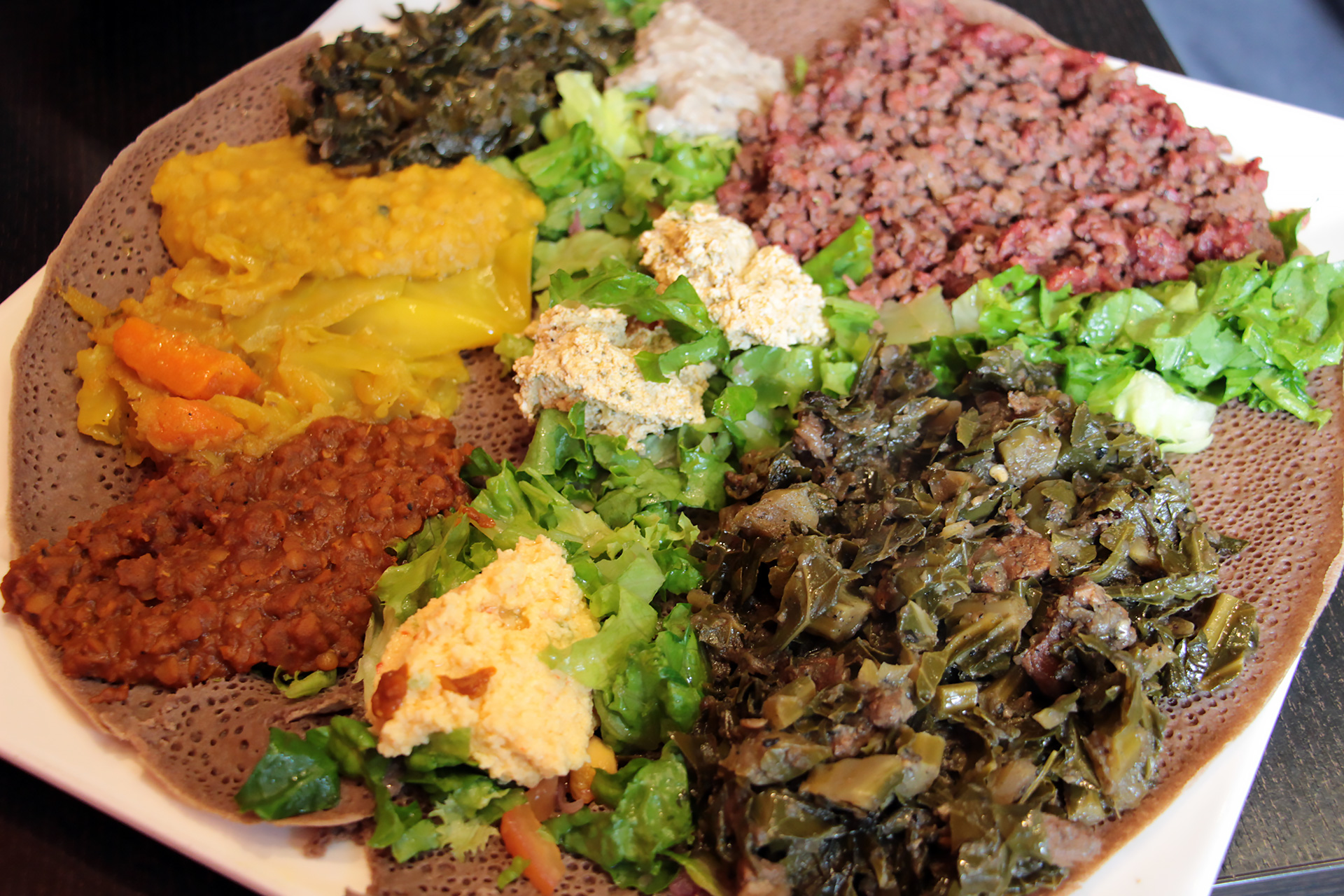
Combination RIce and Bean Plate with Fish at Miliki. (Wendy Goodfriend)
It was an inauspicious start when we arrived at Miliki one recent weekday, wondering if the place was even open. There were no diners eating lunch. The menu outside only says that American diner-style food is served. Yet, somehow there has to be some of the Nigerian food that we ventured to Oakland’s Laurel District (it’s a stretch of MacArthur Blvd. by 580, southeast of Downtown) for, right? Noticing us stalling outside, the gracious waitress and mother of a co-owner, Enny Aregbe, came outside to say that only African food was available at that time.
You can sense our relief.
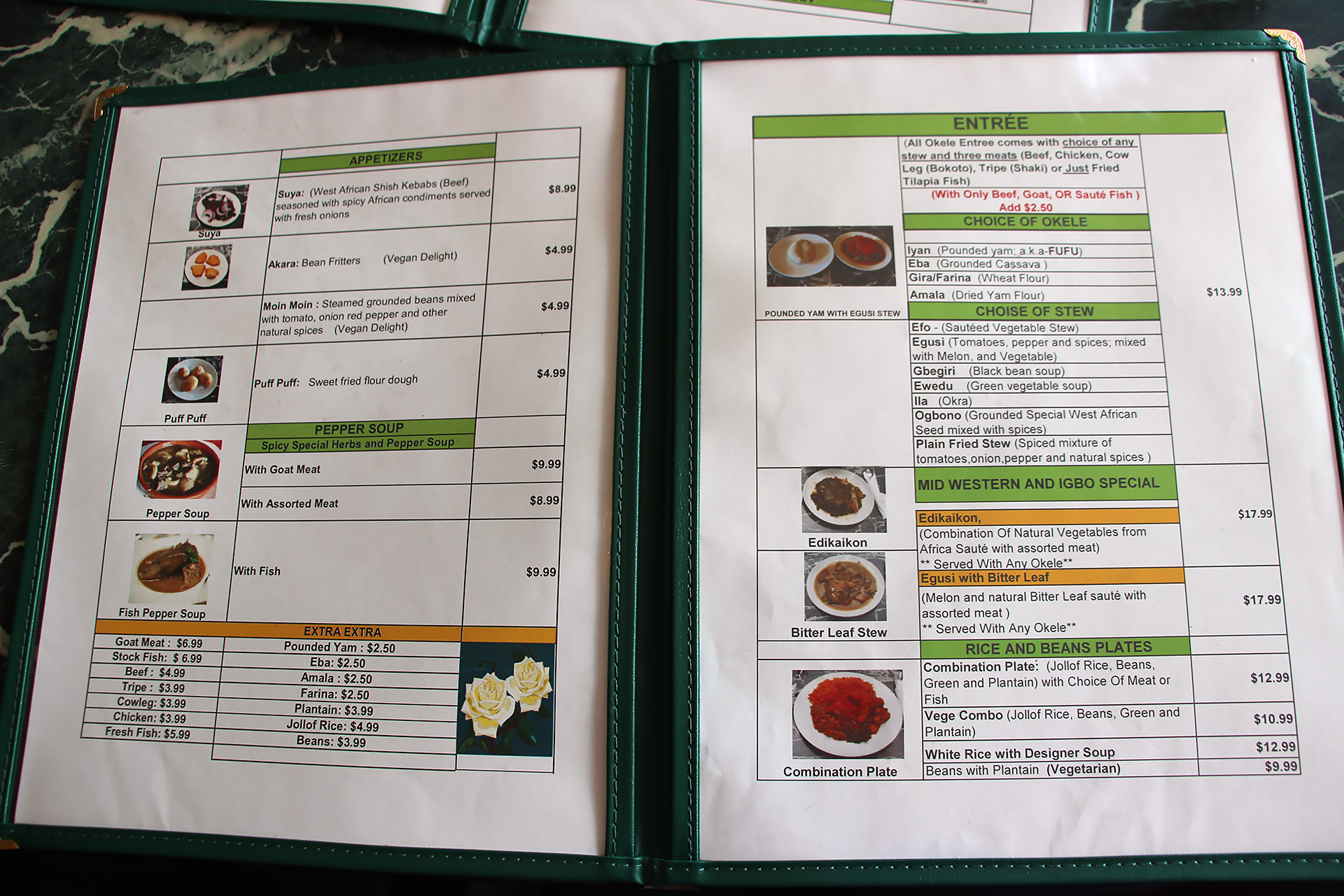
Miliki menu (Wendy Goodfriend)
It turns out that the American food is served in the morning when chef Kirk Roberts runs the kitchen. Roberts previously owned Full House Cafe next door but it closed and became the ultra popular Sequoia Diner under new owners. Now for two years, Roberts has run essentially a permanent breakfast pop-up at Miliki (word of advice: for Nigerian food, come after 1pm to be sure it’s being served). So, as tempting as biscuits and gravy and bacon hash sound, we wanted fufu. And we got plenty of it.
Nigeria is a country of 186 million people, making it the largest country on the continent and over twice the size of second place Ethiopia. The country’s largest city, Lagos, is one of the fastest growing cities in the world, yet according to a study by the Financial Times, nearly 2/3 of the city lives in slums. It’s a city that represents the cultural and economic possibilities of a whole country on the western coast of Africa — and its struggles.
For whatever reason, be it lack of tourists visiting and craving the food or hard to find ingredients, Nigerian cuisine hasn’t made the big leap to the U.S., and certainly the Bay Area, like Moroccan and Ethiopian cuisines. But as Miliki will teach you, it’s an extensive cuisine full of huge flavor like you’d expect from a country of Nigeria’s size.
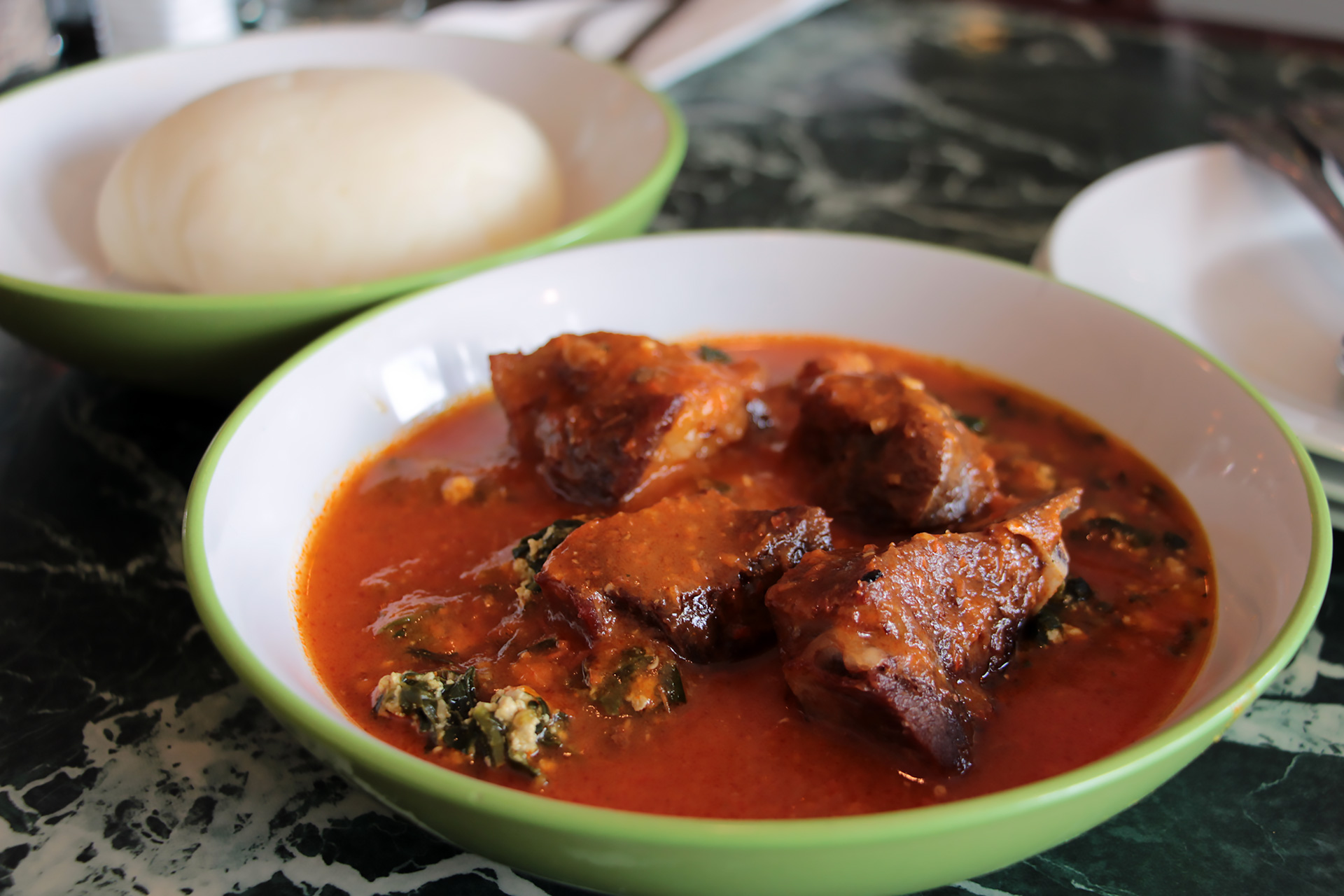
Goat served on the bone in the rustic, chunky tomato and spinach stew with mashed egusi. Served with Fufu. (Wendy Goodfriend)
The core of the menu is based on hearty entrées that are customizable in a mix and match style (just wait for the Nigerian fast-casual concept, coming soon to the FiDi!). Diners choose an okele (starch), stew and meat. It’s confusing because the menu says that three meats can be served per stew, yet we only were given the option of one. One does indeed seem like plenty.
Goat served on the bone in the rustic, chunky tomato and spinach stew with mashed egusi (a melon seed), had a beautiful gamey flavor but lurked on the dry side texture-wise. It needed to bathe in the stew, fragrant in the earthy-herbal profile like a thoughtfully made marinara sauce with egusi looking and even tasting a bit like you added some Parmesan.
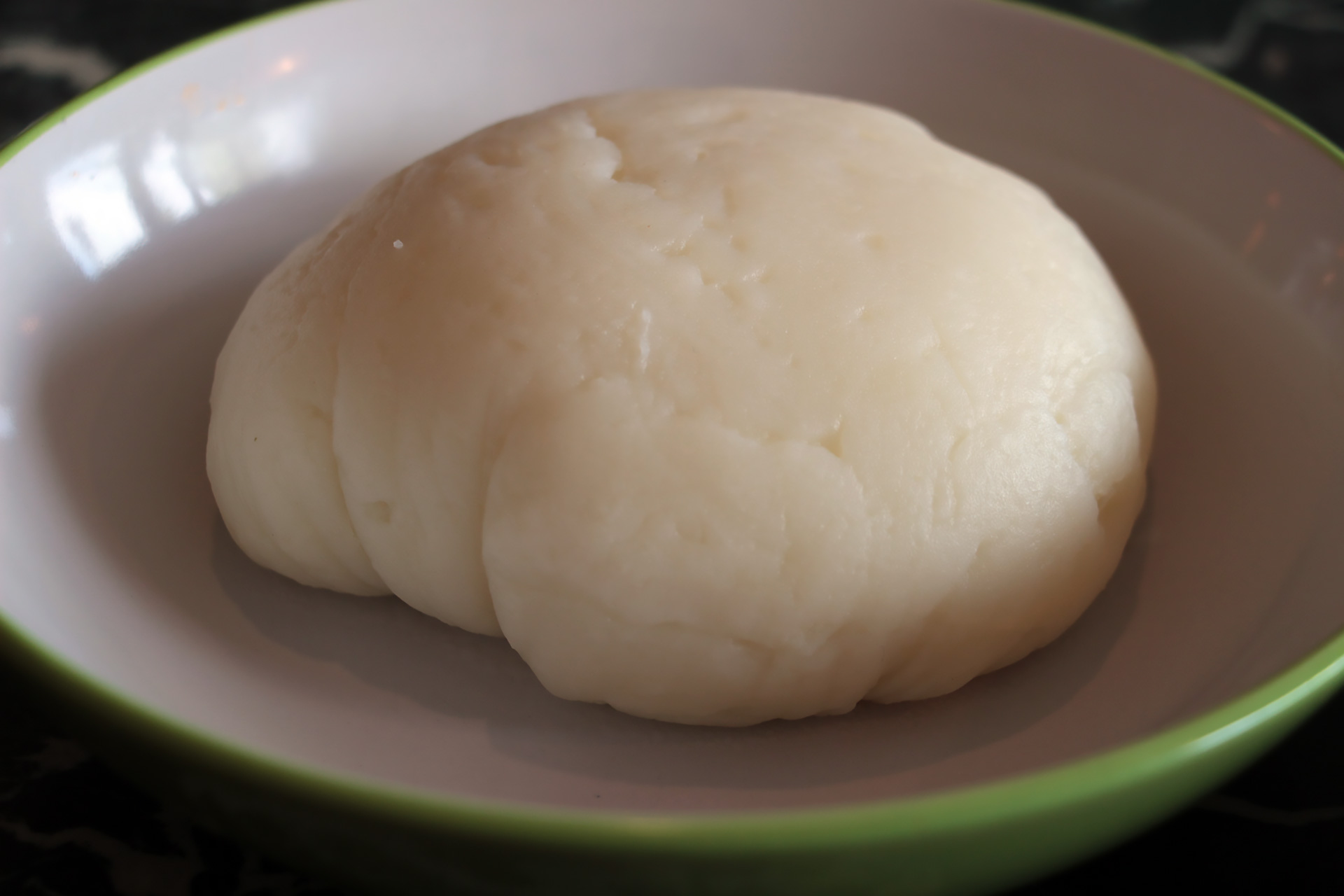
Our chosen okele for this was fufu, essentially a pile of mashed yams that has the cloying consistency of mochi and, as a dining companion correctly pointed out, tastes identical to Betty Crocker’s instant mashed potatoes. Fufu is pretty boring stuff, yet necessary for ripping and grabbing that goat meat (forks are discouraged but offered). It’s also the best known Nigerian diet staple, seen at practically every meal everywhere in the country, like baguettes in France.
Fufu (Wendy Goodfriend)
The egusi was a sign of rewarding flavors to come. Dish after dish presented careful but forceful spicing. Even the seemingly banal scoop of rice on the combination platter scored with tomato, peppers and onions alongside flaky tilapia. That rice, by the way, is jollof rice — one of the key parts of Nigeria’s cuisine and very similar to what is called dirty rice in New Orleans. Every component lifts the other — the rice, fish and trio of smoky, slow-cooked beans, tender stewed greens, and sweet fried plantains. It’s the must-order at Miliki.
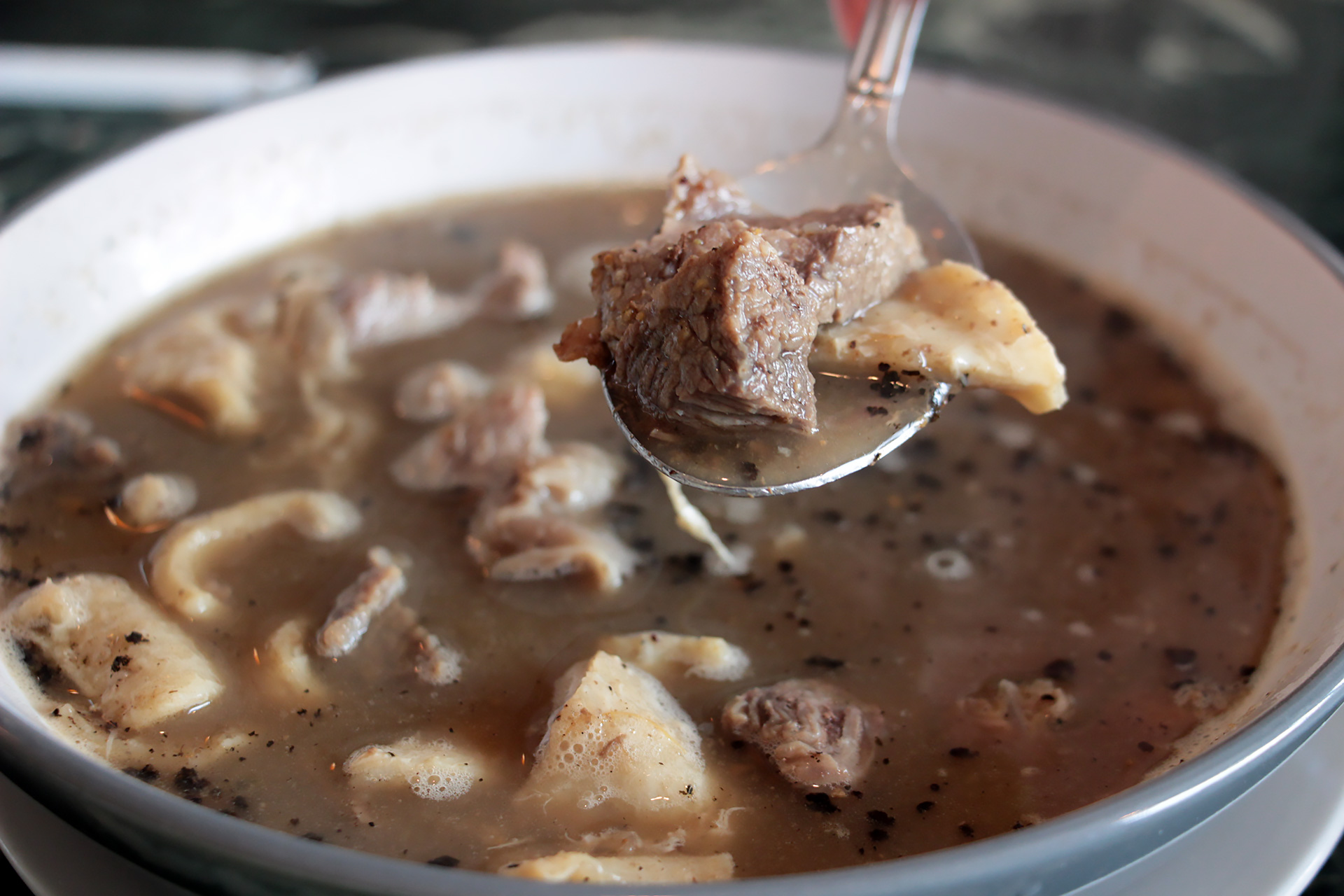
When it comes to spice, Miliki’s pepper soup had a sharp, pungent style of spice courtesy of the aggressive alligator pepper. Think of ash and Tabasco sauce combined. It’s weird. It’s not great. It’s not bad. The broth was too watery to stand up to tough beef and tender tripe (fish is probably the way to go). Try it once but chances are it won’t be a dish you come back again and again for. But you never know if you don’t try…
Pepper Soup (Wendy Goodfriend)
Black eyed pea fritters called akara, suya (beef skewers) and sweet, fried balls of dough, appropriately called “puff puff,” are the main appetizers. They seem more like hunger-satiating snack munchies to accompany the almost sugary non-alcoholic Malta Guinness beer from Nigeria or one of the various non-craft beer bottles available before heading towards the stews and starches.
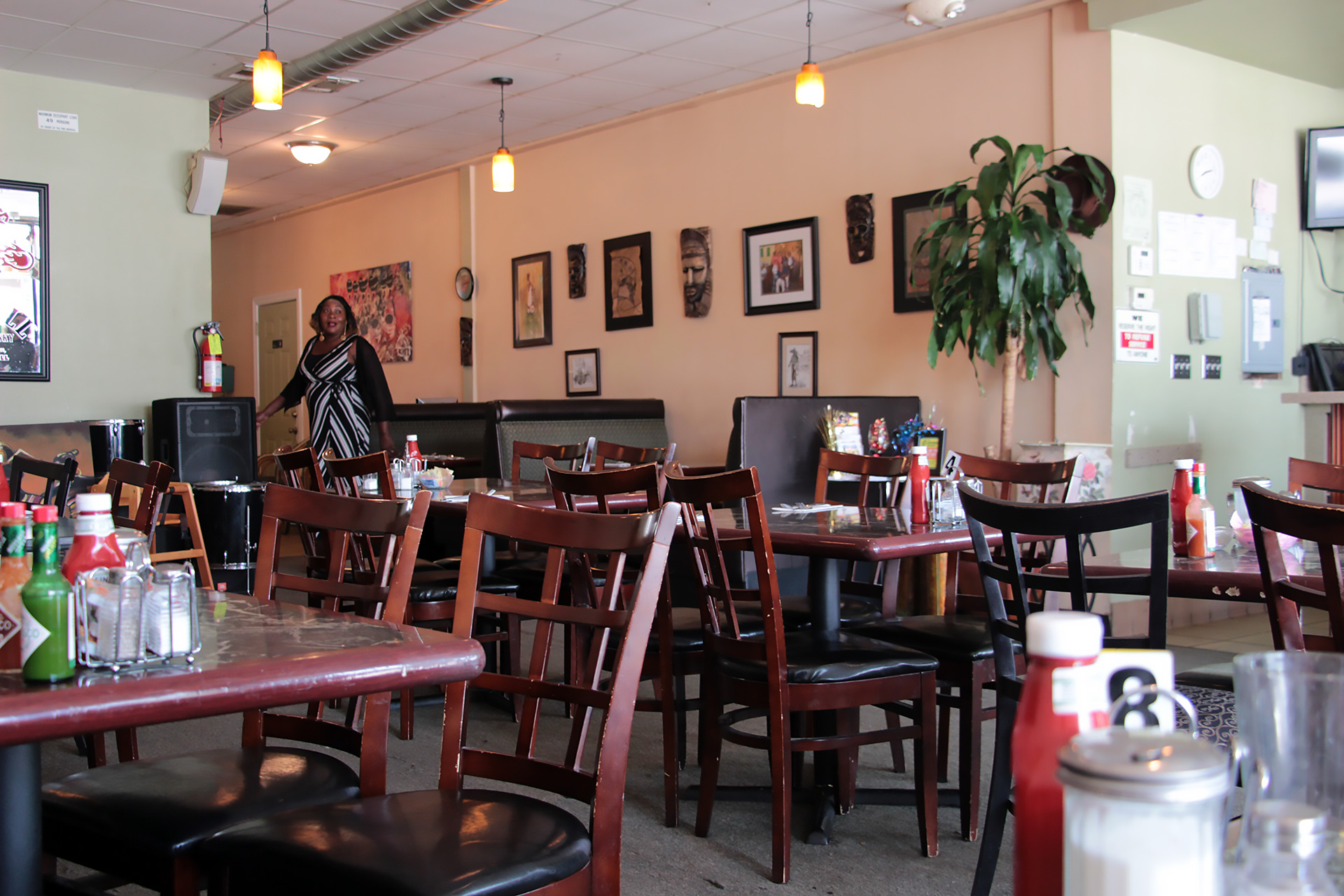
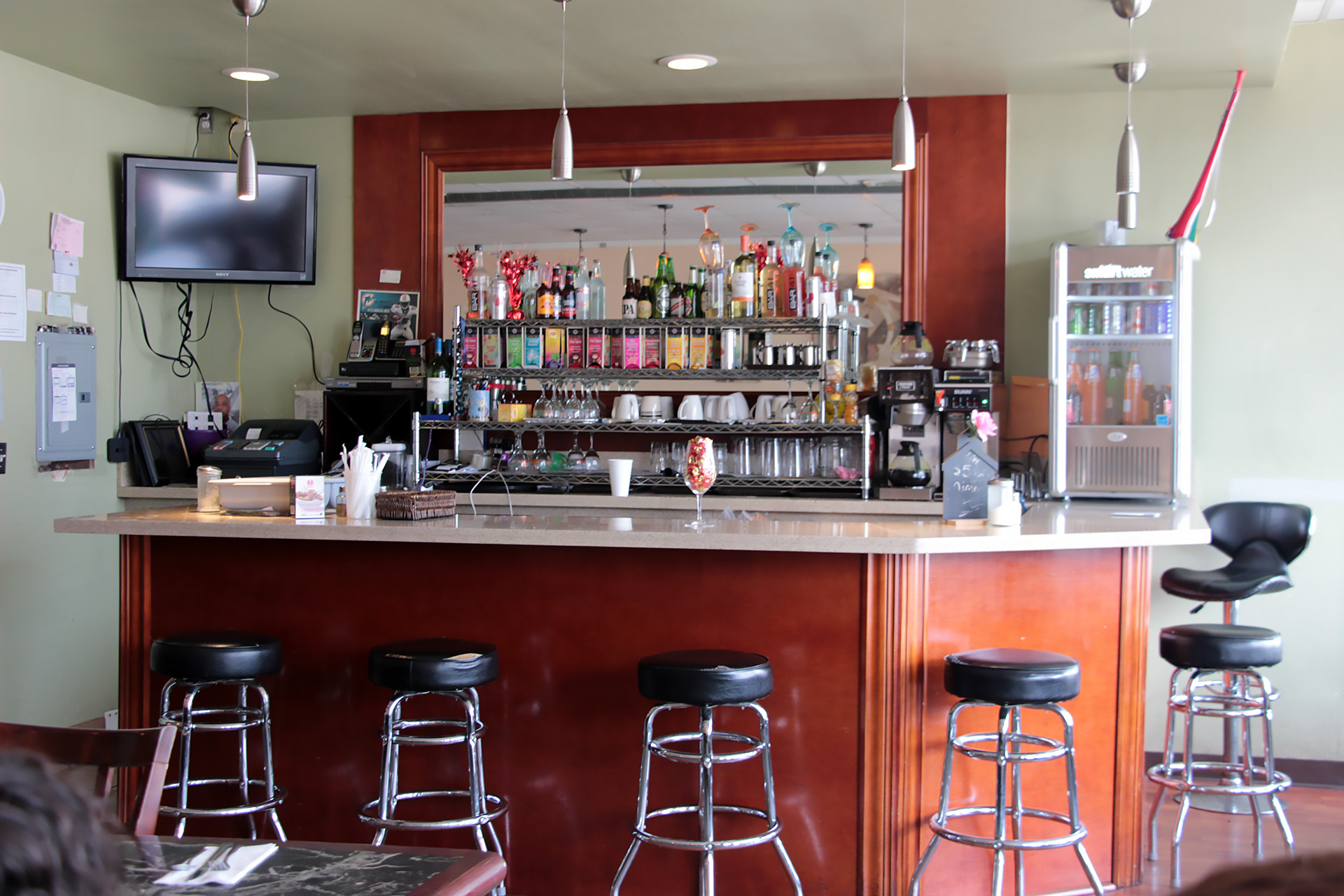
Miliki interior dining area with host Enny Aregbe in background. (Wendy Goodfriend)The bar at Miliki. (Wendy Goodfriend)
Decor isn’t Miliki’s strength with a faded, worn look to the booths and tables, though some art on the walls and the front bar makes thing look like they get pretty exciting at some point. That exciting time would be Friday nights when a DJ takes over and Miliki offers a fun evening of music and food “to keep the community together” as Enny told us. That’s vital right now knowing the many issues facing Oakland, from gentrification to crime. Enny’s son Bayo started the restaurant almost eight years ago with his friend Ishmael Okunade and, together, three have helped steer the restaurant through some tough times.
Just a year ago, Miliki almost was part of that rapid gentrification when a landlord looked to replace it with a craft beer garden. Just look at the brunch lines at Sequoia Diner, the forthcoming opening of 4505 Meats in the retro Glenn’s Hot Dog location and the construction right outside of Miliki on MacArthur — the area is changing and it’s not hard to see the gentrification coming, for better or for worse. Luckily, we still have Miliki. And there’s plenty of fufu and pepper soup to sample because of that.
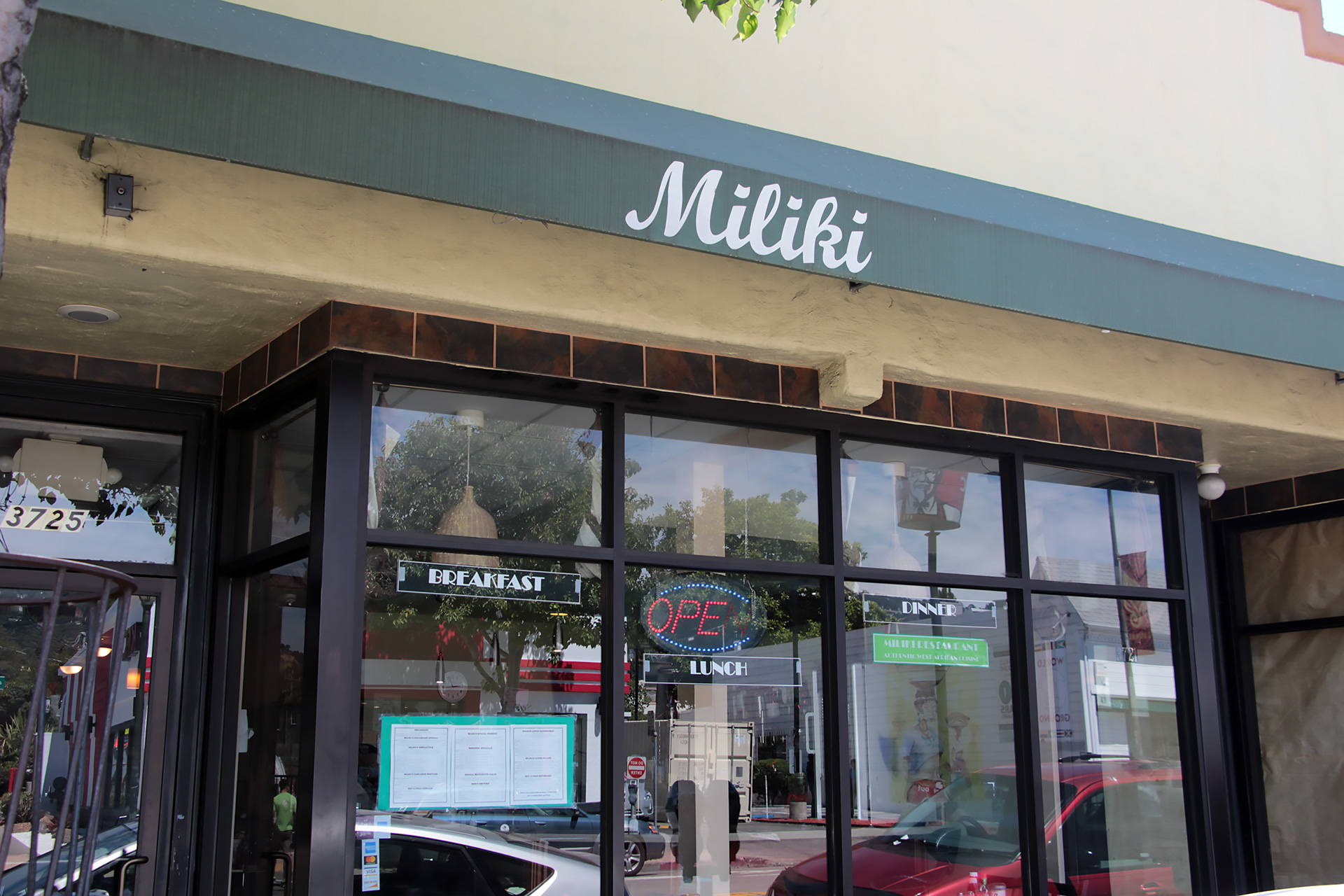
Miliki exterior on MacArthur Ave. in Oakland’s Laurel district. (Wendy Goodfriend)
Miliki
3725 MacArthur Blvd.
Oakland, CA 94619 [Map]
Ph: (510) 531-6970
Hours: Tue-Sun 8am- 8:30pm but Nigerian food starts roughly around noon; Closed Monday
Facebook: Miliki Restaurant
Price Range: $$ ($11-$15 per diner)
Yelp: Miliki
Tadu Ethiopian Kitchen
Combo platter: Vegetable dishes and Kitfo. (Wendy Goodfriend)
Outside of the couscous and tagines of Morocco, Ethiopia’s communal injera-based platters and strong cups of coffee from the country’s renowned beans is the best-known African cuisine in the U.S. Washington D.C. and Los Angeles have their own Little Ethiopia enclaves where avid diners visit the different Ethiopian spots and everyone has their particular favorite amidst stiff competition like we talk about dim sum in the Richmond or Mission burritos. It’s not quite the same in San Francisco. Oakland and Berkeley are home to some fantastic Ethiopian destinations as our guide will show you. The city has a handful of Ethiopian restaurants but for the most part, diners head across the Bay for their kitfo fix.
Except, at the two-and-a-half-year old Tadu, named for the owner’s grandmother and honoring her lifetime of warmth and love. Owner Elias Shawel, a former limousine driver, opened the restaurant because he couldn’t find a good place for kitfo. He definitely solved that issue.
Inside Tadu Ethiopian Kitchen. (Wendy Goodfriend)
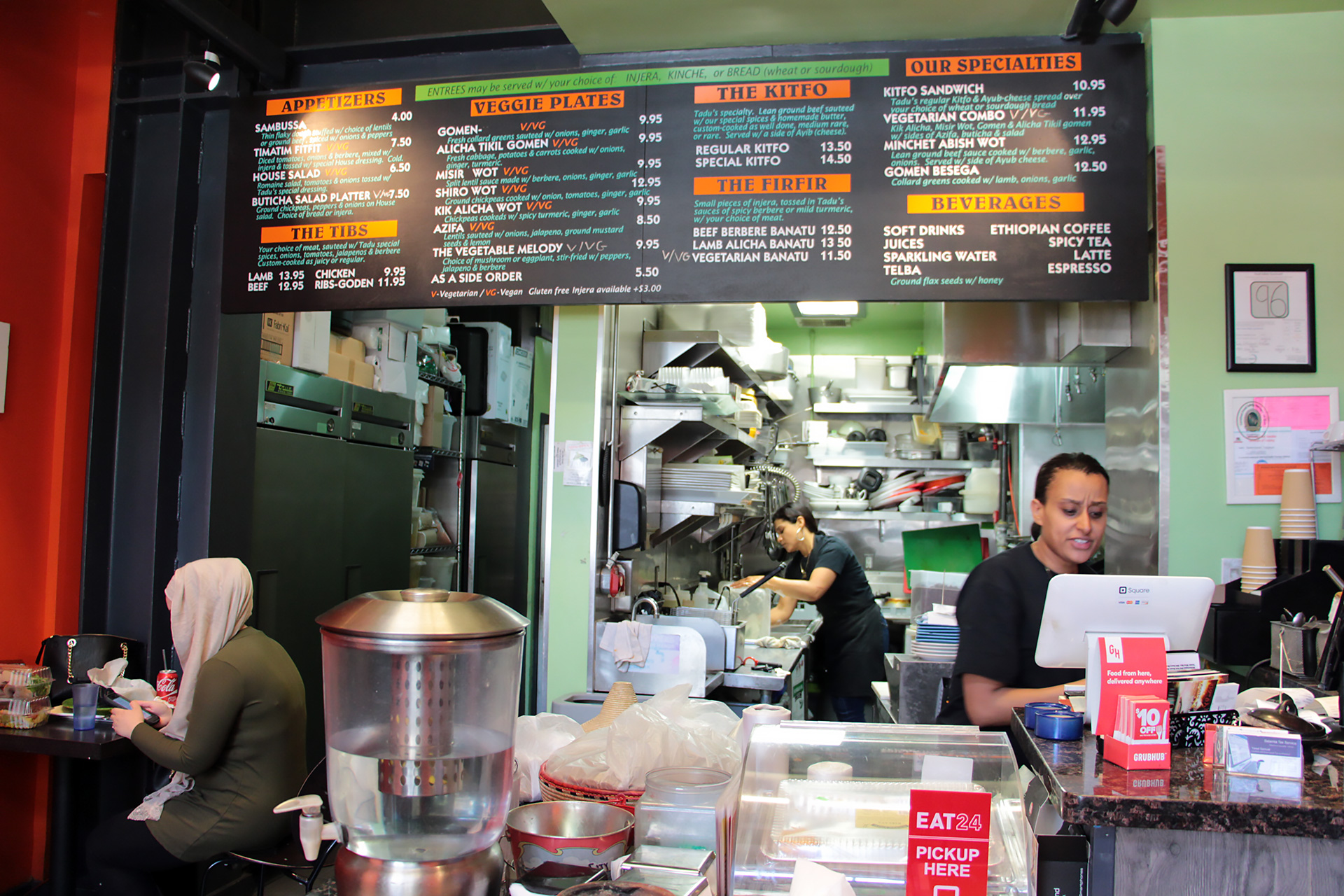
Tadu is at the edge of the Tenderloin now. When it opened, Tadu was truly in the thick of it — a classic example of the rapid changes going on around this particular San Francisco neighborhood. Inside the restaurant, you’ll find orange splashed walls with Ethiopian art and maps, a semi-open kitchen and a central register where diners come and go every few minutes picking up to-go orders — a strange thing since this doesn’t seem like food that can travel well. Well, there is a kitfo sandwich. But you’re not coming to Tadu for a sandwich, are you? No, you’re here for the grand injera platters.
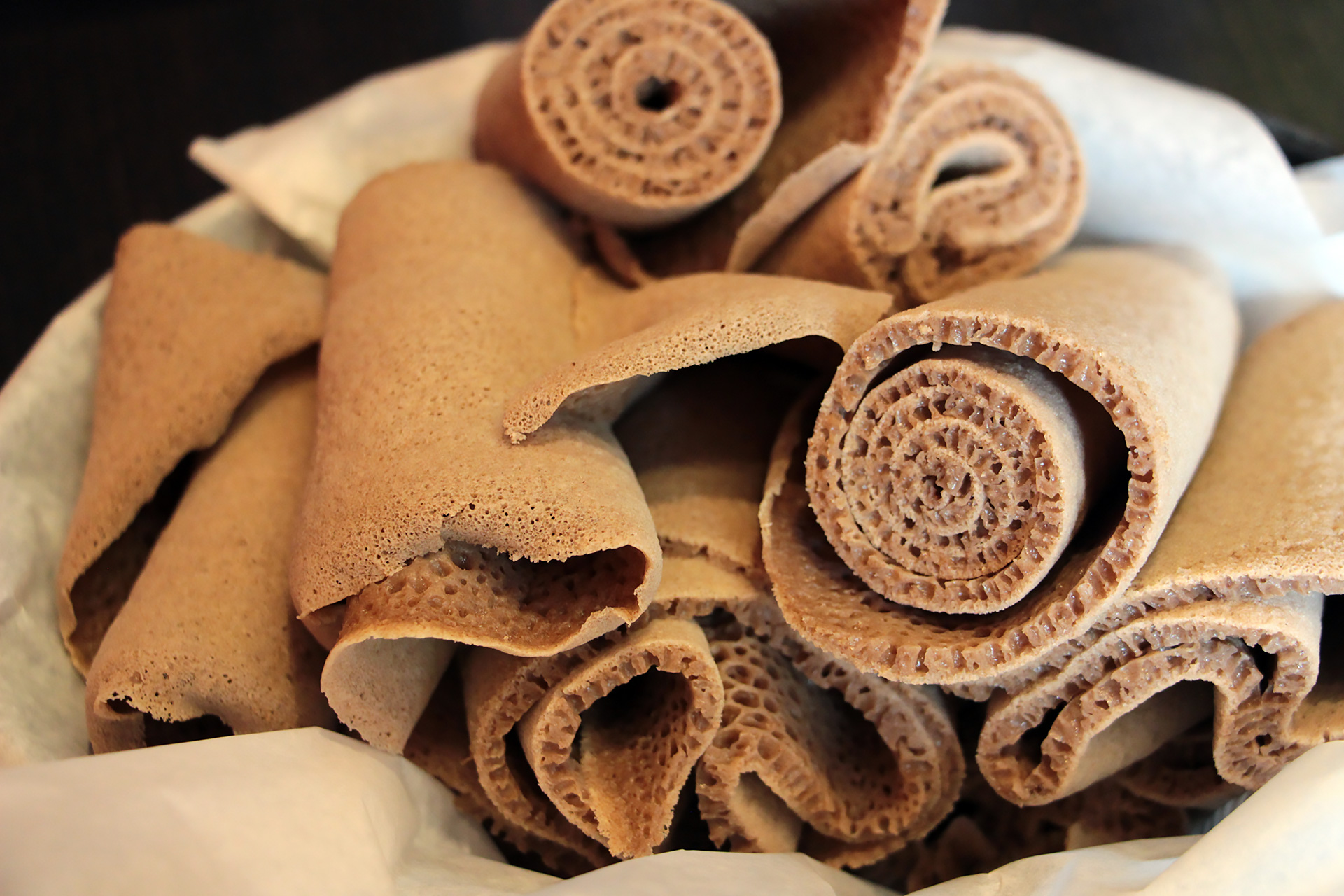
You can feel the childlike giddiness when one of the round platters arrives à la a pizza at the center of the table. This is a meal for everyone, from the solo diner to a party of six. Be it lunch or dinner, the entire meal sits on injera made in Oakland and driven back to Tadu daily. Injera covers the entire platter and additional rolled up injera is served on the side functioning as fork, knife, and spoon — heck, it might be the napkin and a water glass too if you’re really going for it. Bitter as a grapefruit, injera begs to be covered in other flavors, instead of being consumed on its own. Remember, it’s a utensil. There are no off tastes but you won’t crave injera like a Josey Baker bread or Tartine’s country loaf.
Rolls of Injera at Tadu (Wendy Goodfriend)
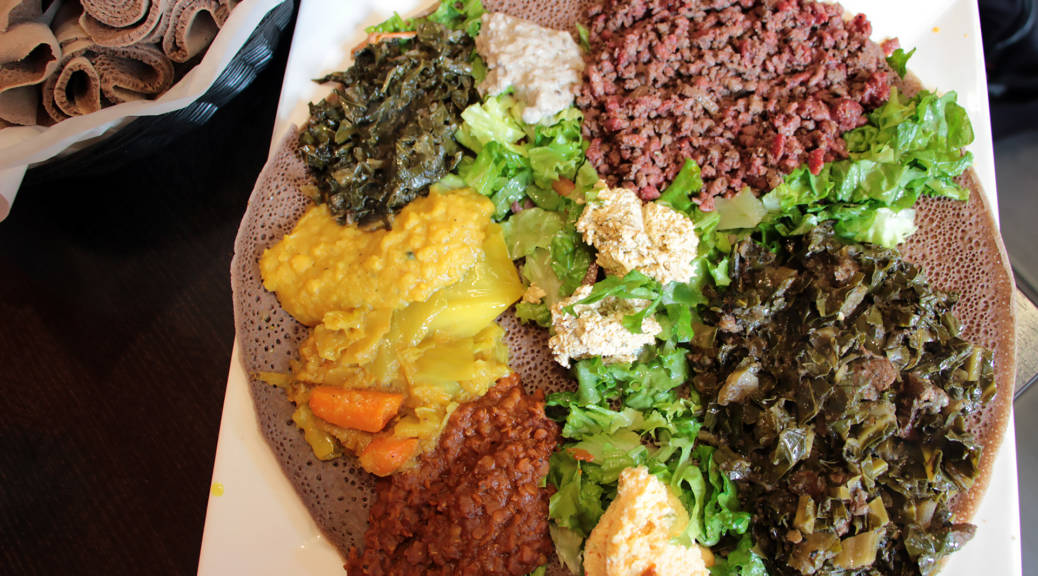
Ethiopian cuisine is particularly great for vegetarian and vegan diners since the standout dish is the vegetarian sampler. The injera is covered by various spreads, dips and wots (stew-like curries. Azifa, a preparation of lentils fragrant with mustard seeds and jalapeño, wins big, while the misir wot (a lentil sauce with berbere spices) provides a nice dose of heat but isn’t much more than a pile of lentils. Buticha, mashed chickpeas, comes on a lettuce salad and could be a fine hummus at a party. The sautéed collard greens, known as gomen, are passable but far better when ordered with lamb since some of the meat’s juices rub off. When countless rolls of injera have been ripped, dunked and eaten, it’s the shiro wot (a dark purée of chickpeas, ginger, and tomatoes) and the refreshing alicha tikil gomen (precisely cut, turmeric-stained potatoes and carrots with fresh cabbage) that emerge as winners.
Kitfo is the other iconic dish you’ll see on the majority of tables at any Ethiopian restaurants. It’s essentially ultra buttery ground beef, best ordered raw like how it’d be consumed in Ethiopia. That being said, many diners hesitate and opt for it medium rare to medium but sadly the gamey funk and soft texture leaves. It becomes greasy hamburger meat. You have the option to liven things up with jalapeño and cheese. Skip the cheese (there’s enough butter already) but do go for the spice since ground beef on its own has little taste.
Cubes of chicken, lamb and beef known as “tibs” are the other main dish to know, beautifully seasoned with berbere spices and jalapenos. Diners can start with sambussas, filled with ground beef or lentils, but, trust us, you won’t need more than what comes on the injera. Just sip some of the thick and kind of bland telba (a flax seed and honey drink) or grab some more injera, and you’ll be more than content.
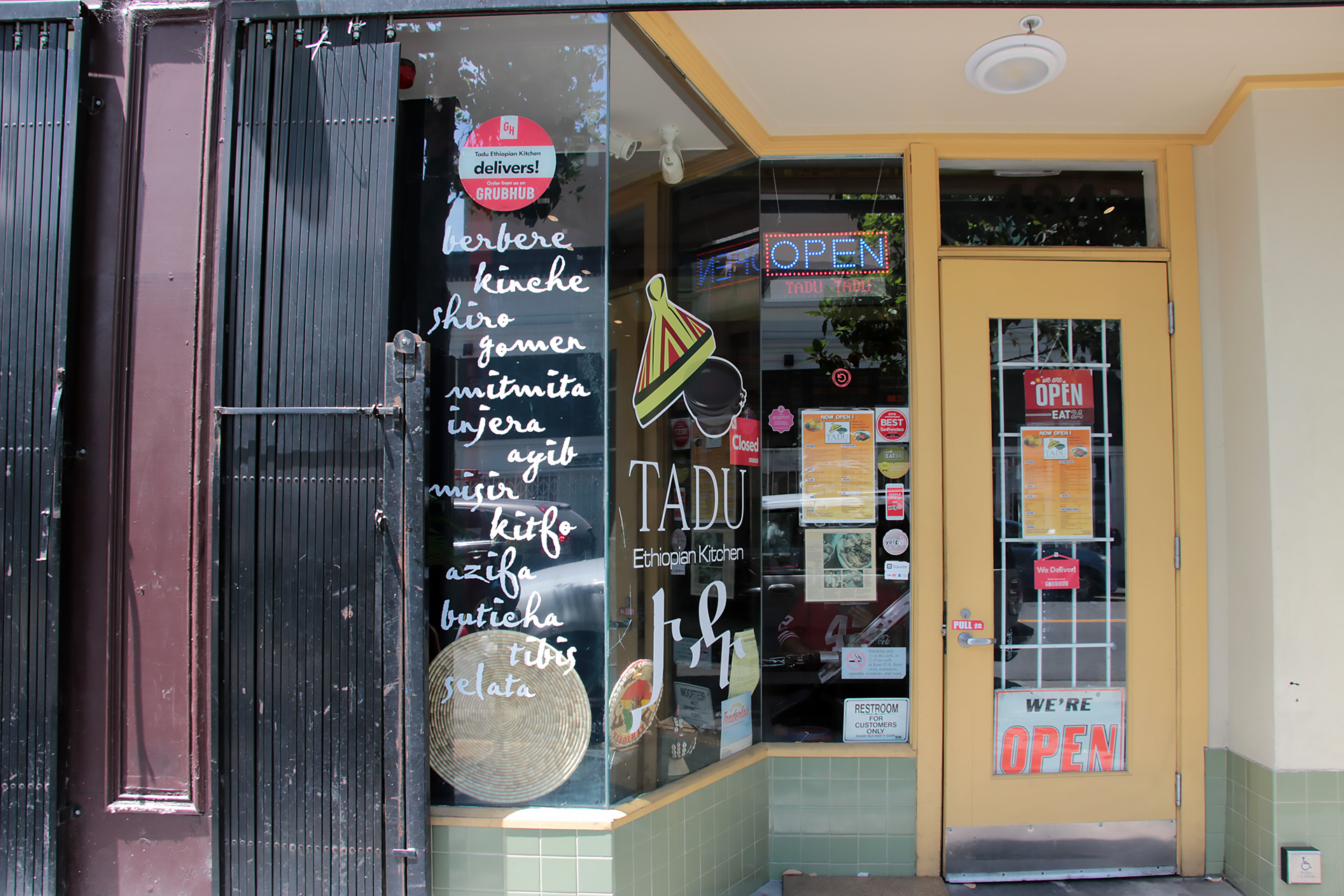
The entrance to Tadu Ethiopian Kitchen. (Wendy Goodfriend)
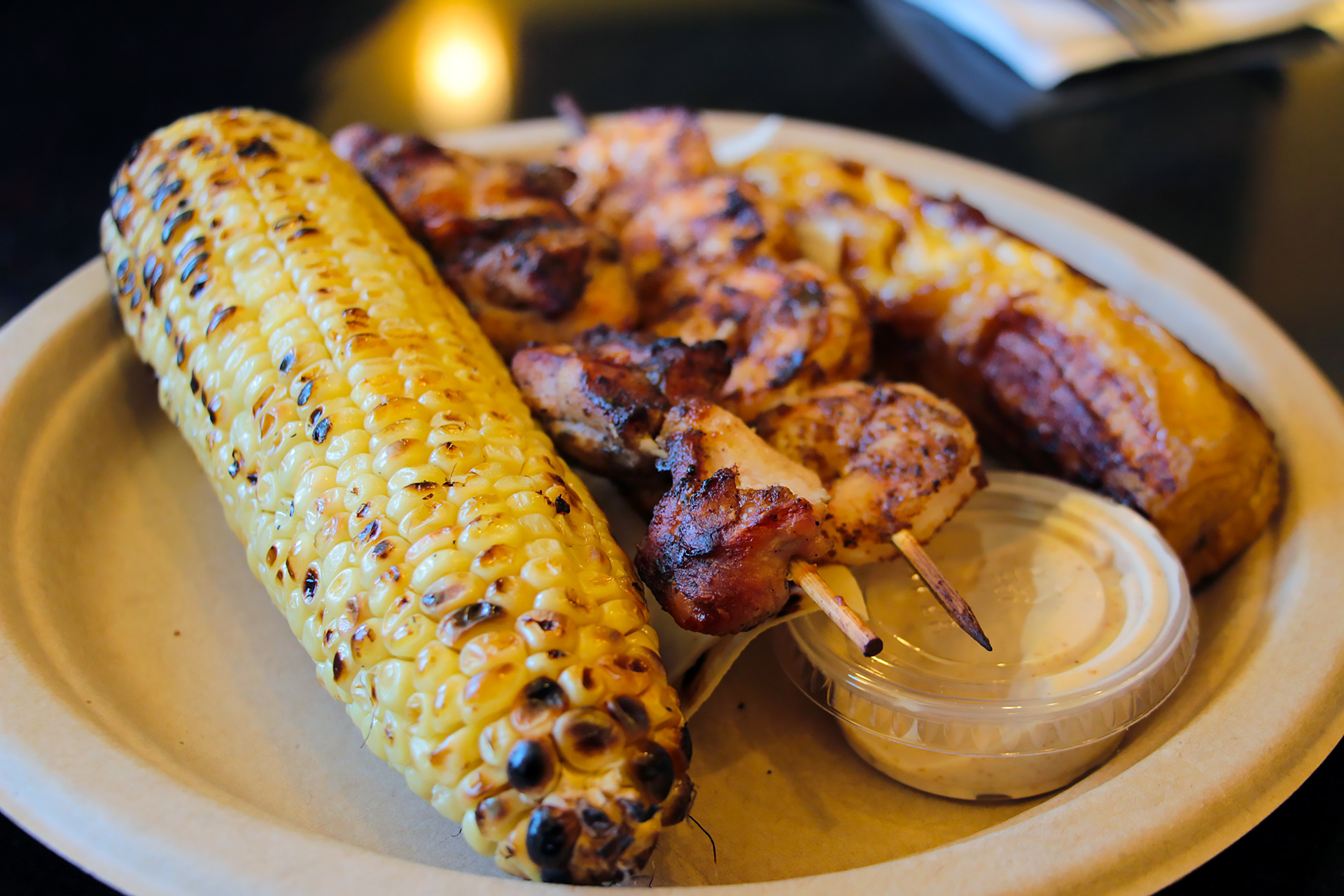
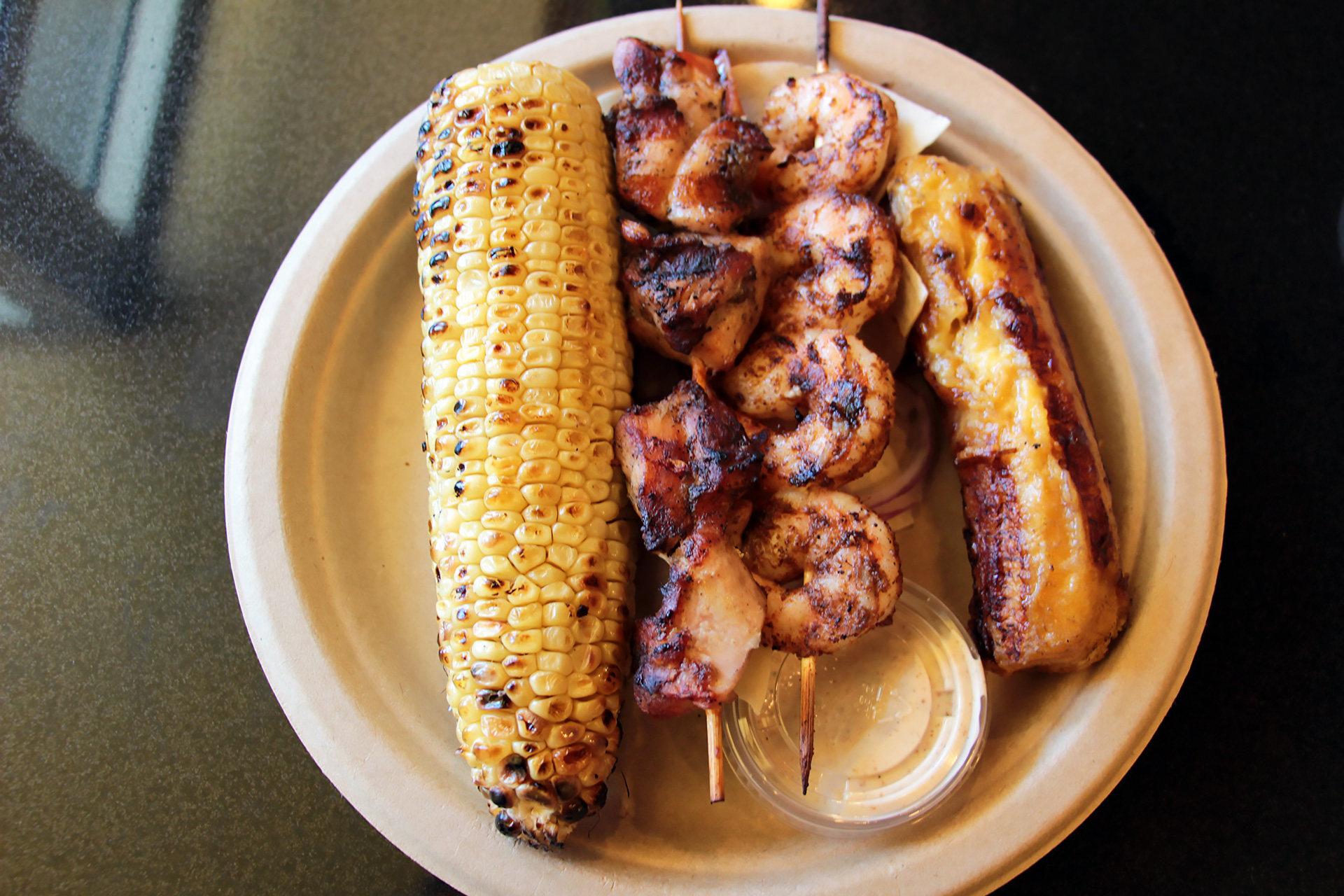
The suya spice worked about as well on nicely grilled prawns, while the jerk seasoning was surprisingly tame in contrast on chicken. (Wendy Goodfriend)
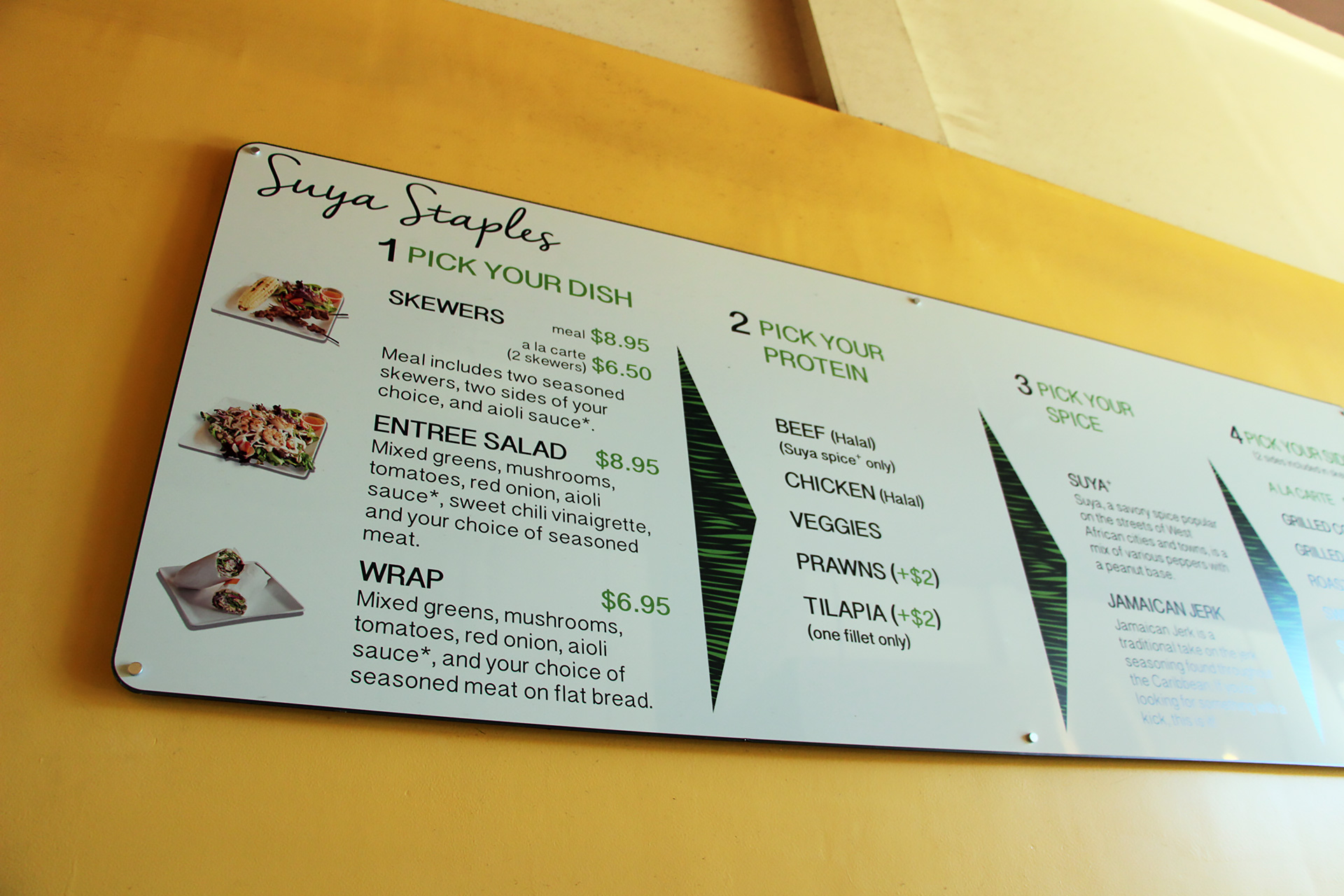
On the menu of the aforementioned Miliki, suya is a traditional beef skewer coated in a rub of myriad spices, chilies and crushed peanuts. At Uptown Oakland’s African and Caribbean fast-casual spot, Suya, “suya” is referred to as a West African spice rub. Will the real suya please stand up? The answer is: both. Suya is a term for a spice and that spice on grilled skewers of meat. In the case of Suya the restaurant suya is the spice rub.
The menu at Suya. (Wendy Goodfriend)
Now that we’ve answered this question, here come a few more. Remember, this is the fast-casual world where customization is key. So the question isn’t just which protein but also which spice: Jamaican jerk or suya?
It was all about the suya and it truly is the highlight on beef, chicken, prawns, vegetables or tilapia. (Wendy Goodfriend)
For our purposes, it was all about the suya and it truly is the highlight on beef, chicken, prawns, vegetables or tilapia (only suya spicing is allowed on the beef). The suya is an earthy, slightly sweet rub that slowly grows in heat to a point where a glass of water is needed but there’s no raging fire to put out. In contrast, the jerk seasoning on the chicken was tame.
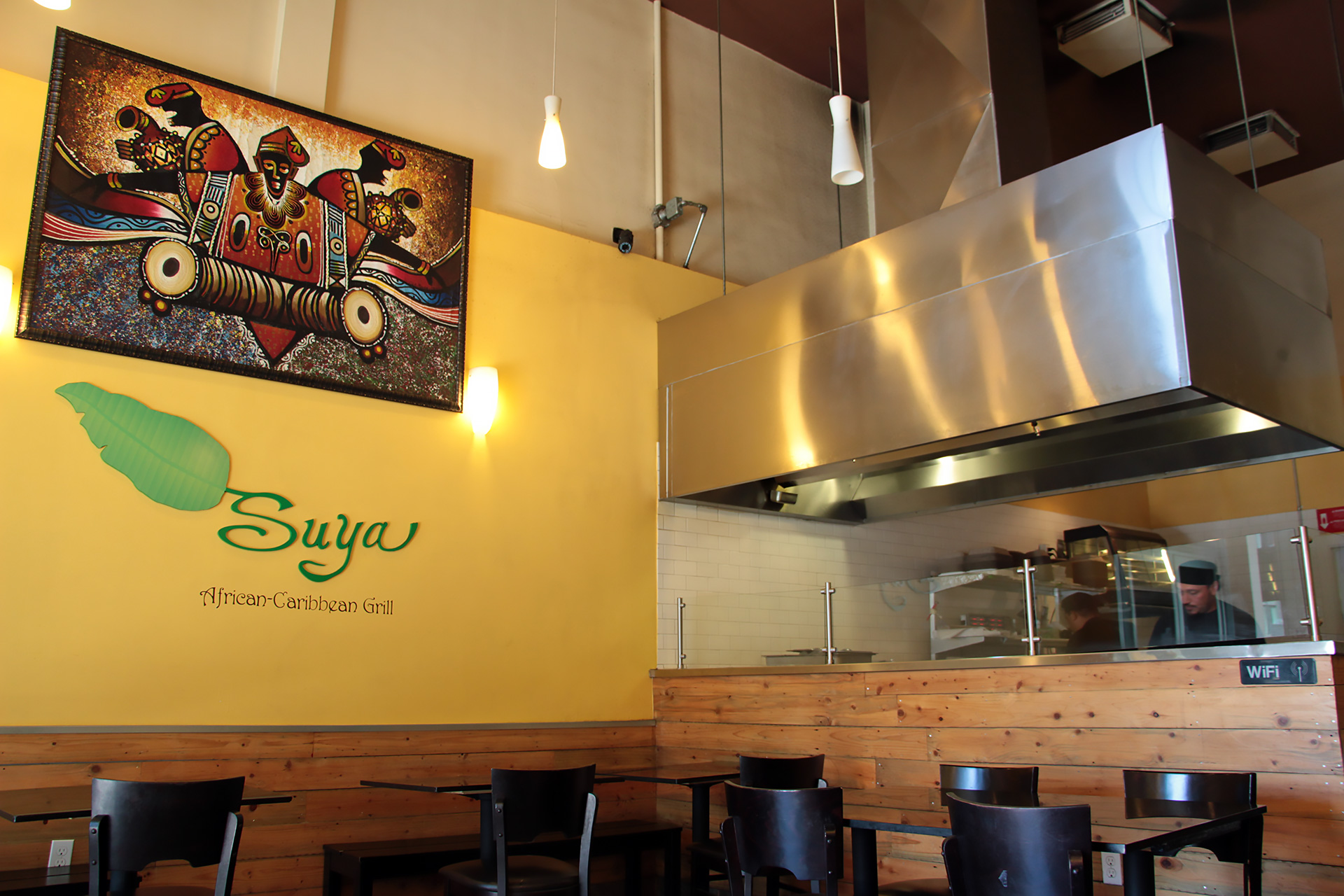
The interior space at Suya in Oakland. (Wendy Goodfriend)
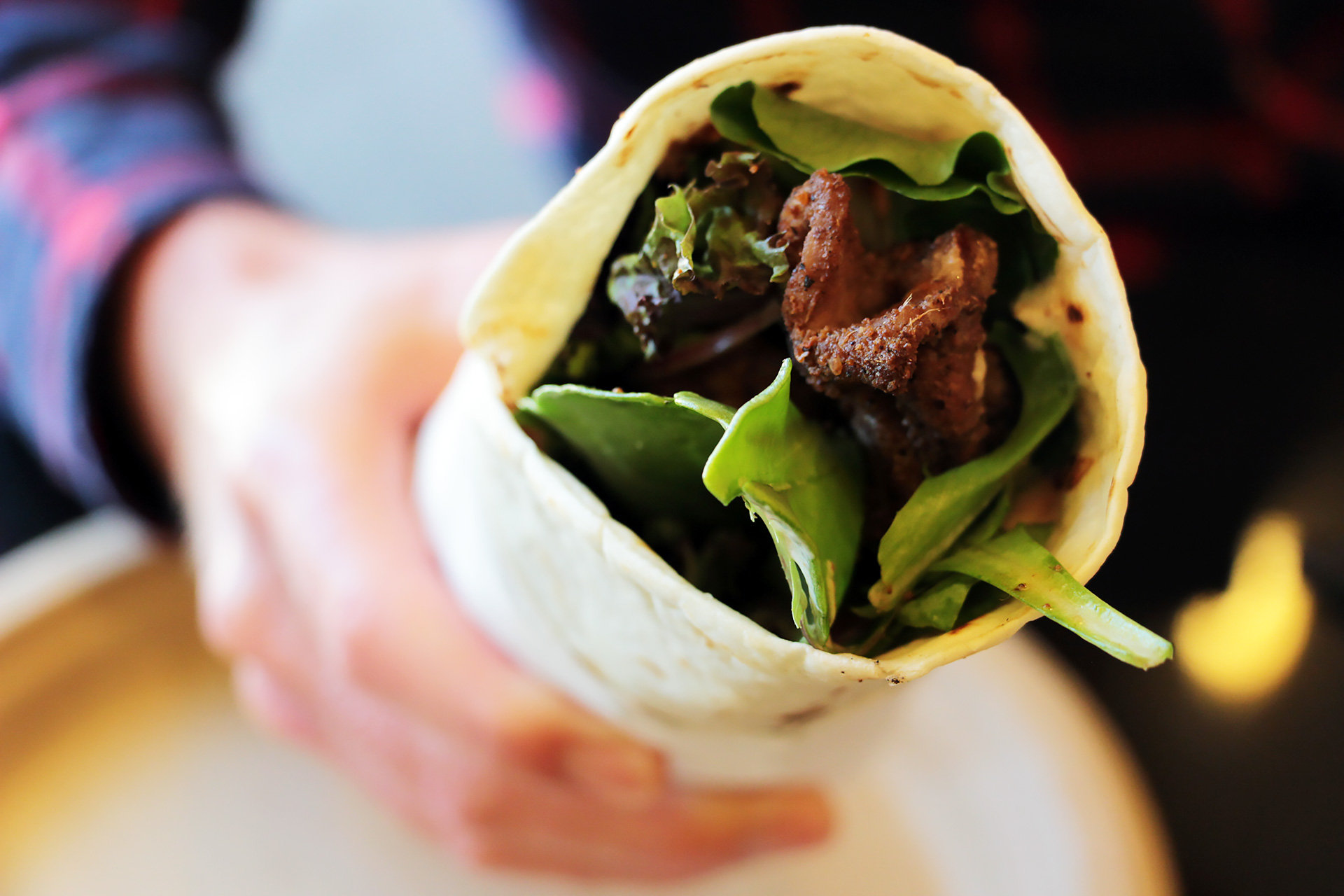
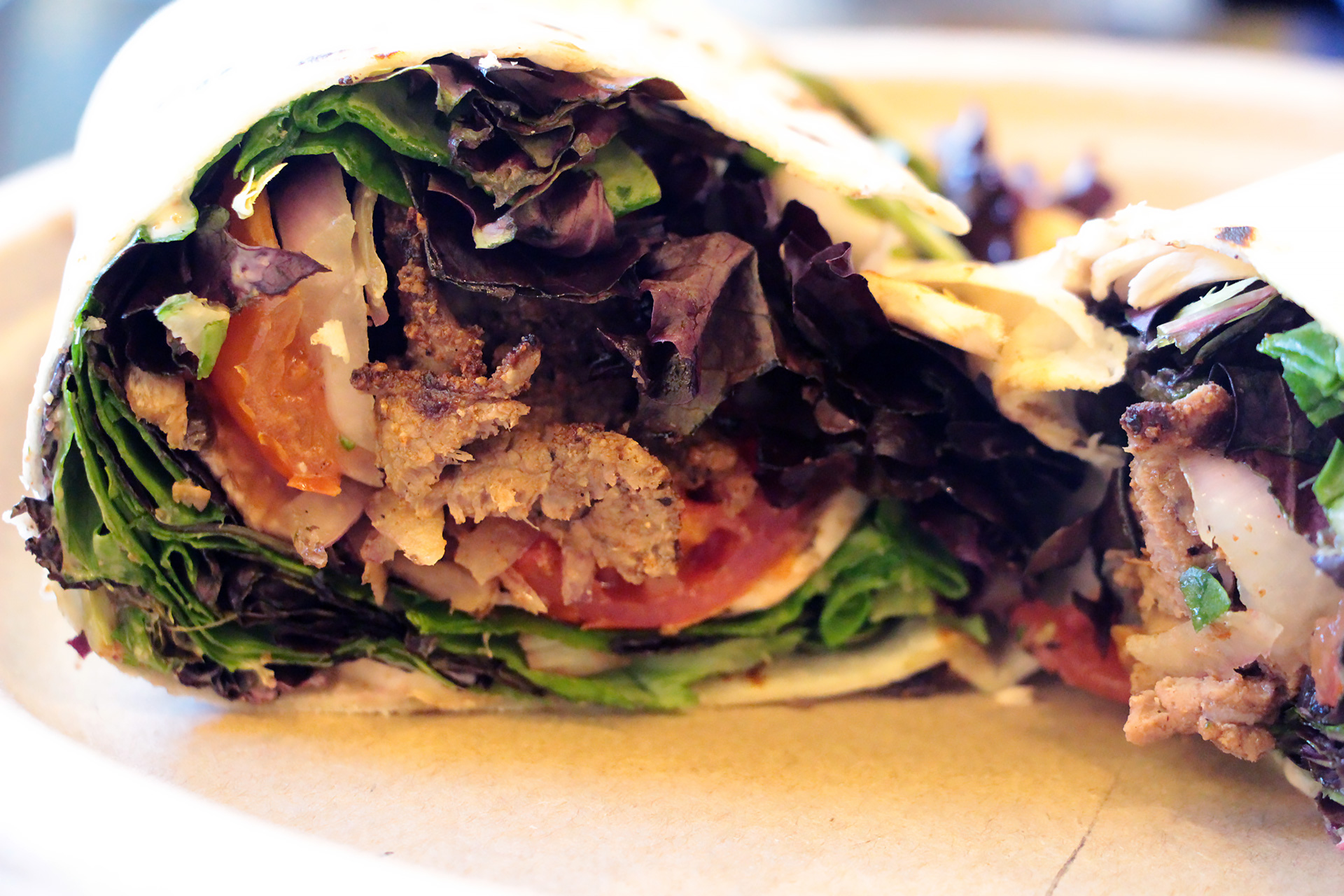
We got ahead of ourselves. Protein and spice selection are step three. Step one for this fast-casual menu is method of eating: skewers, entrée salad or wrap? Most diners seem to stick to wraps because if there’s one thing we’ve learned from the fast-casual world, it’s that SF diners love anything in a wrap (see: Souvla, Sushirrito). Unfortunately, perfectly suya-spiced beef was lost amidst a filling of 95% lettuce mix and scattered raw mushrooms in the wrap. The suya spice worked about as well on nicely grilled prawns, while the jerk seasoning was surprisingly tame in contrast on chicken. I’d steer you towards the skewers with two sides but the grilled corn was weeping from dry kernels and a mushy grilled plantain would have been the nightmare of anyone who’s found a banana lost in their backpack a week later. Solution: opt for the salad since the sides are lacking and wraps need some tweaking.
Suya is a smart idea and one that was ahead of its time when husband-and-wife team Seun and Zain Oke (he’s from Nigeria, she’s from Oakland and attended Cal) saw the overlap of Caribbean and African cooking and decided together to package it as a student-friendly fast-casual concept. The space is bare other than a single West African painting but the vibe isn’t subdued. Bob Marley is on the stereo, after all. Suya is an interesting concept and one that is clearly a hit with East Bay diners. The original location is in Berkeley near the Cal campus. This second one was somewhat crowded on one recent weekday lunch hour with some groups sticking around to eat some jerk chicken and sneak in a Friday Corona treat, while others hustled back to Pandora and the other companies in this rapidly growing tech hub. The concept’s popularity in this area recently led to the opening of a third Suya, just a few blocks away in the heart of downtown Oakland.
Strangely, for a fast-casual spot, conveniences and details are lacking. Diners have to ask for water, silverware or napkins. The Jamaican ginger beer tastes like straight sugar syrup, lacking any of the desired sharp ginger bite. But, hey don’t worry, just focus on the suya beef skewers and every little thing will be alright.
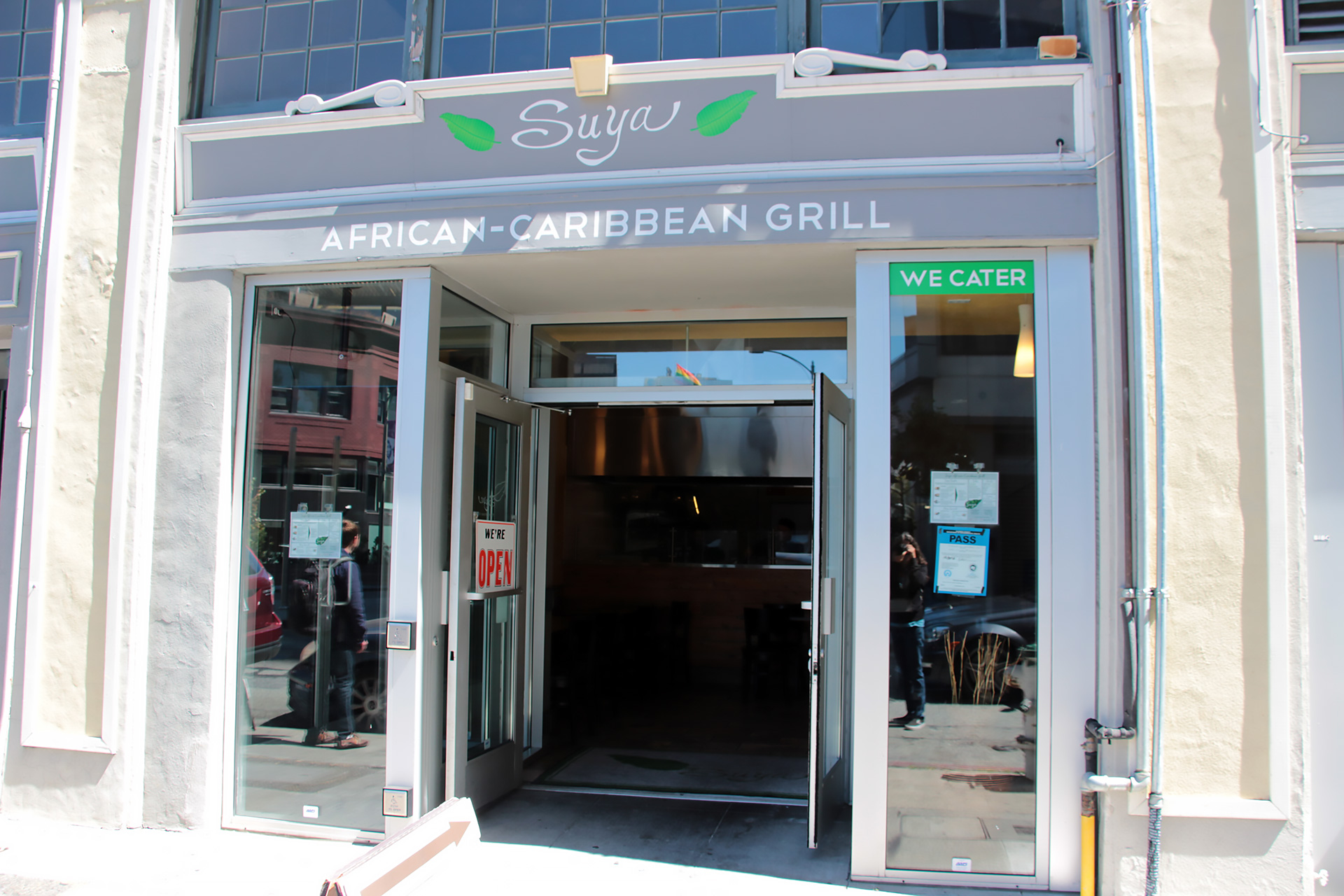
Suya African-Caribbean Grill exterior. (Wendy Goodfriend)
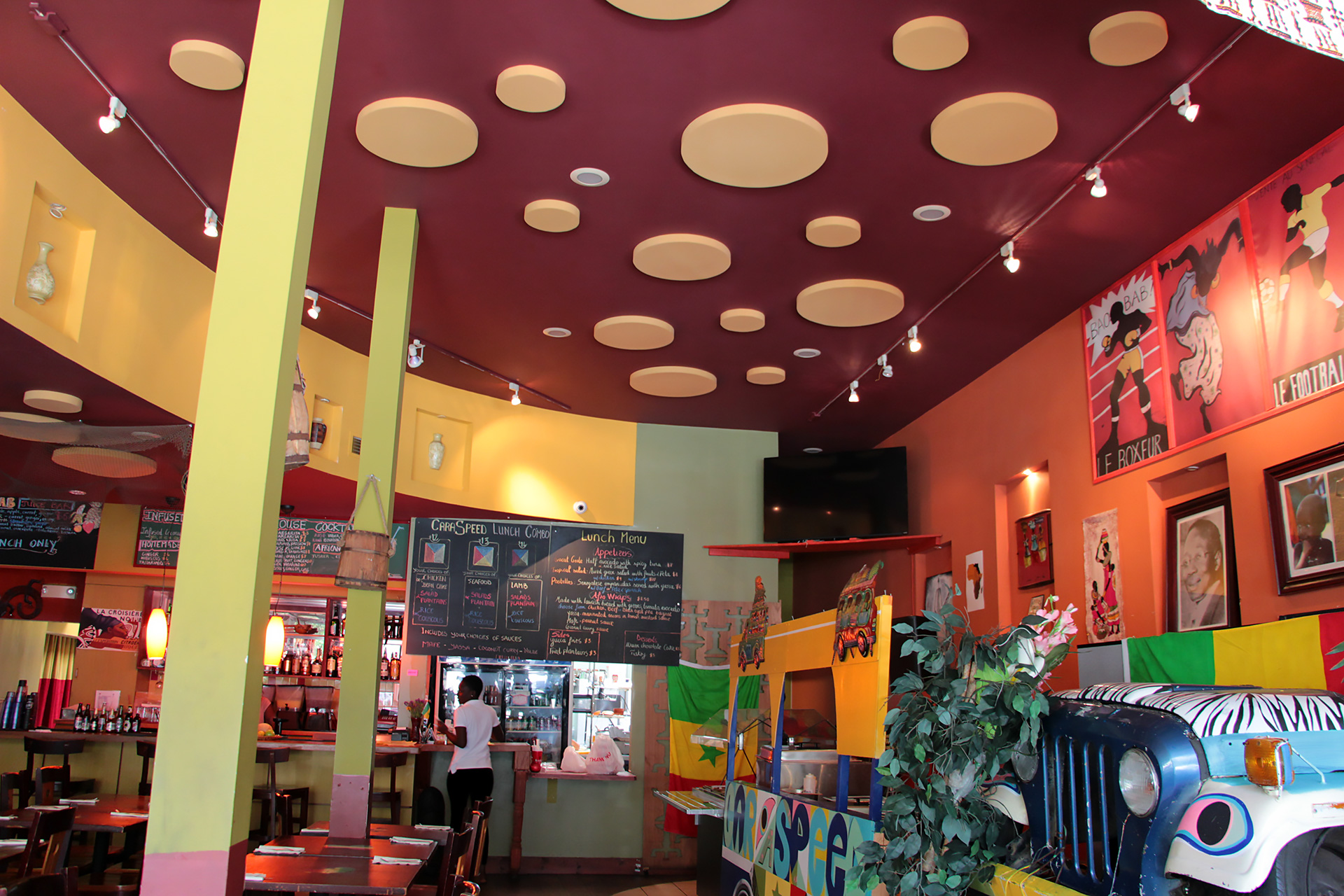
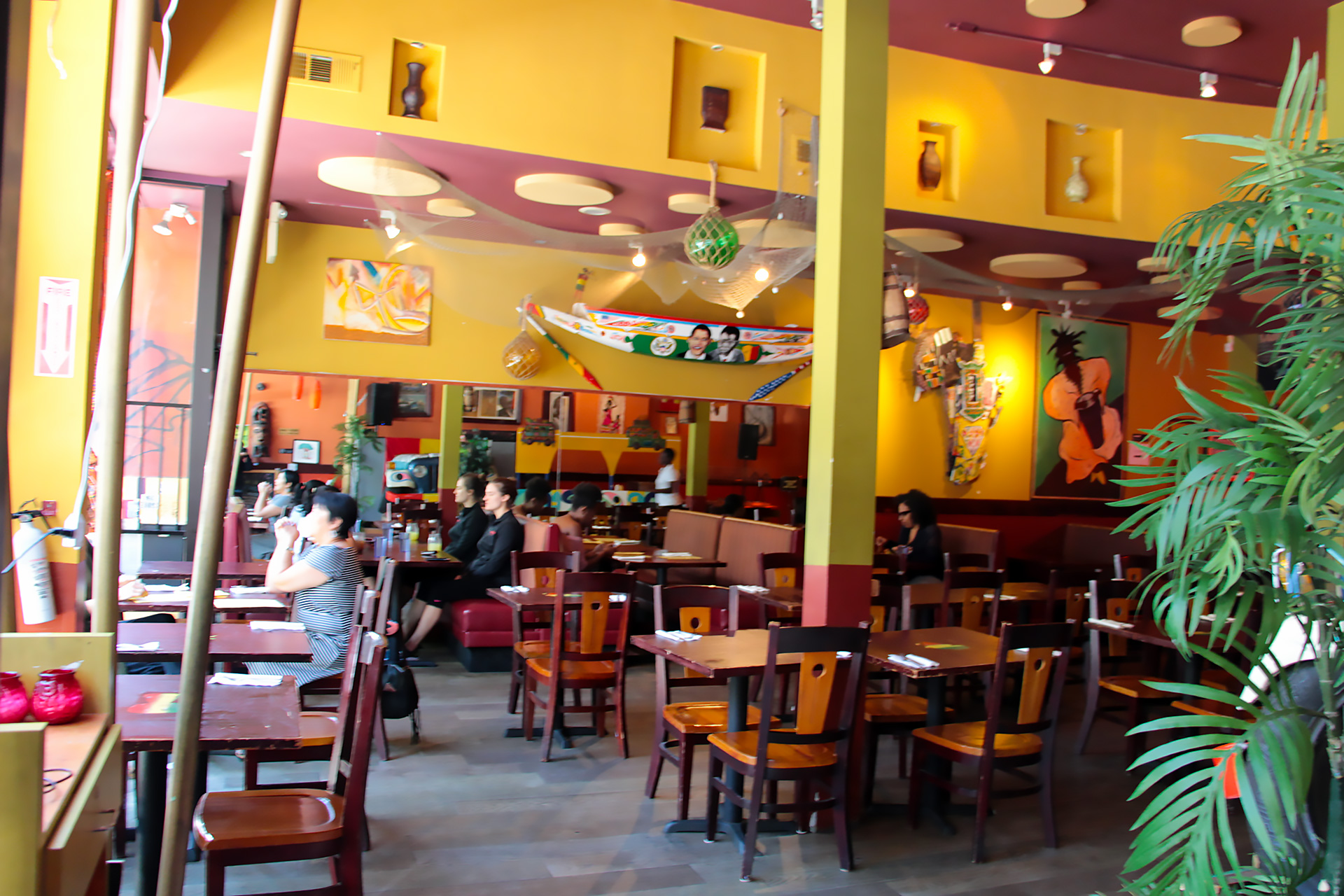
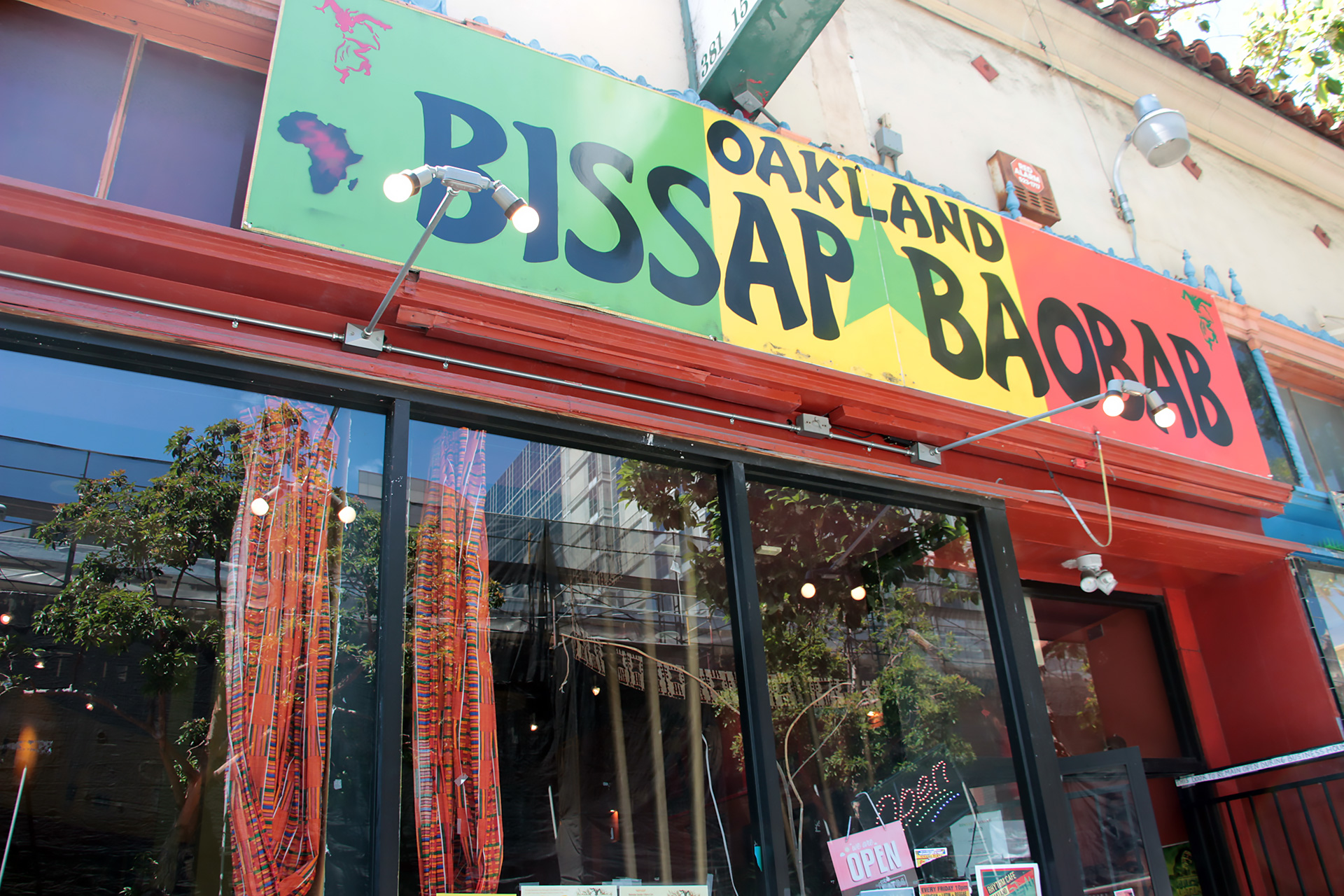
There’s no lacking decor at this Downtown Oakland Senegalese restaurant. Everywhere you look is something — a car, colorful posters, even ceiling art installations that look like clouds. Festive as an adjective for the atmosphere is putting it lightly. You’re going to have a good time. It’s a different type of good time than at the older sibling in SF’s Mission District, where the original Bissap Baobab is better known for dancing and late night drinks. You can get that weekends in Oakland, too, but lunch is only served in Oakland.
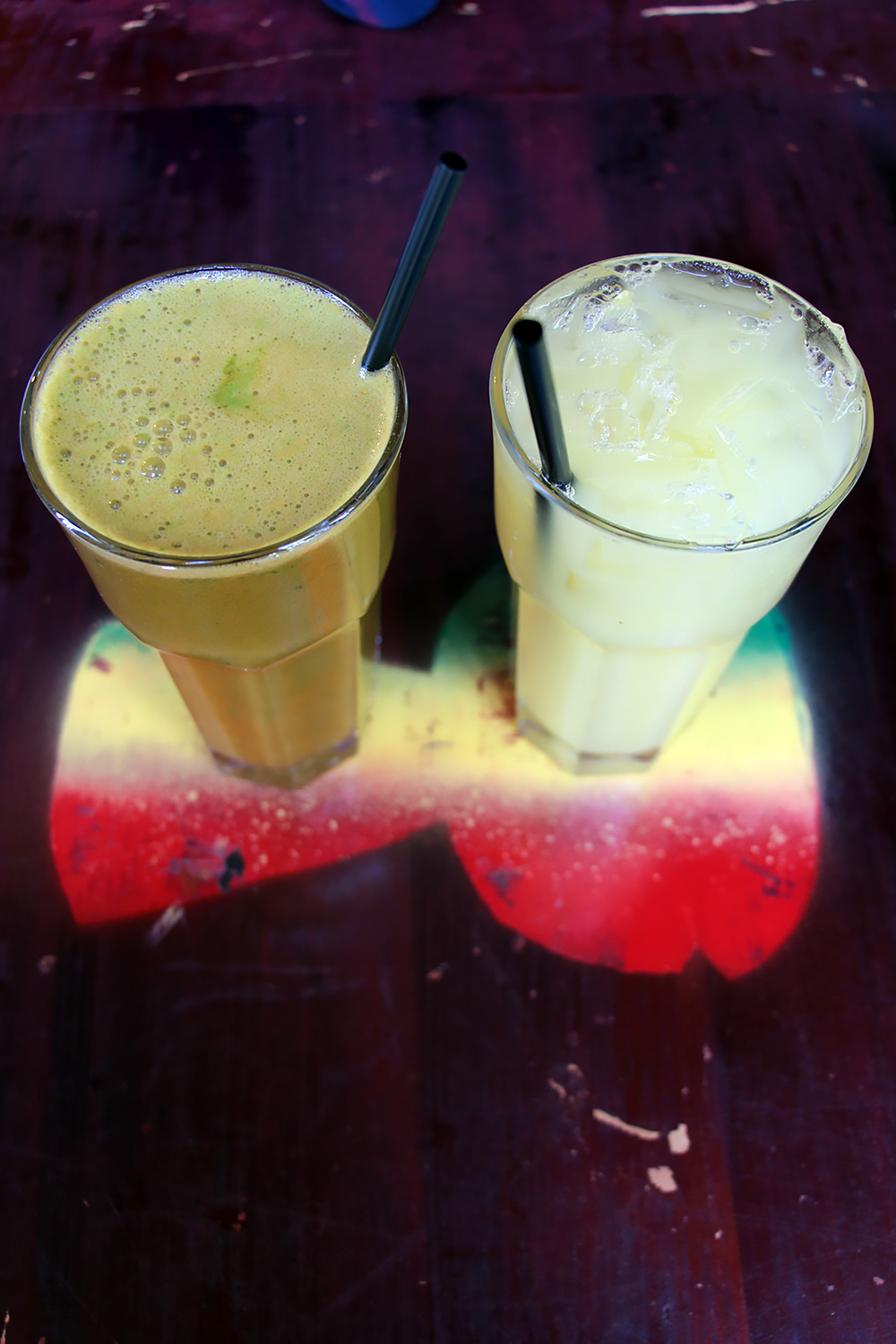
You can still get a hibiscus margarita and other fruit-spiked cocktails in the daytime or a more lunch-friendly bracing ginger and pineapple juice or kale, ginger, apple and carrot smoothie. In Oakland, it’s fully about the Senegalese cuisine. The Senegalese cuisine in turn, is really about a holy trinity of sauces (different than the holy trinity of ingredients in New Orleans cooking).
Kale, ginger, apple and carrot smoothie (L) or ginger and pineapple juice (R). (Wendy Goodfriend)
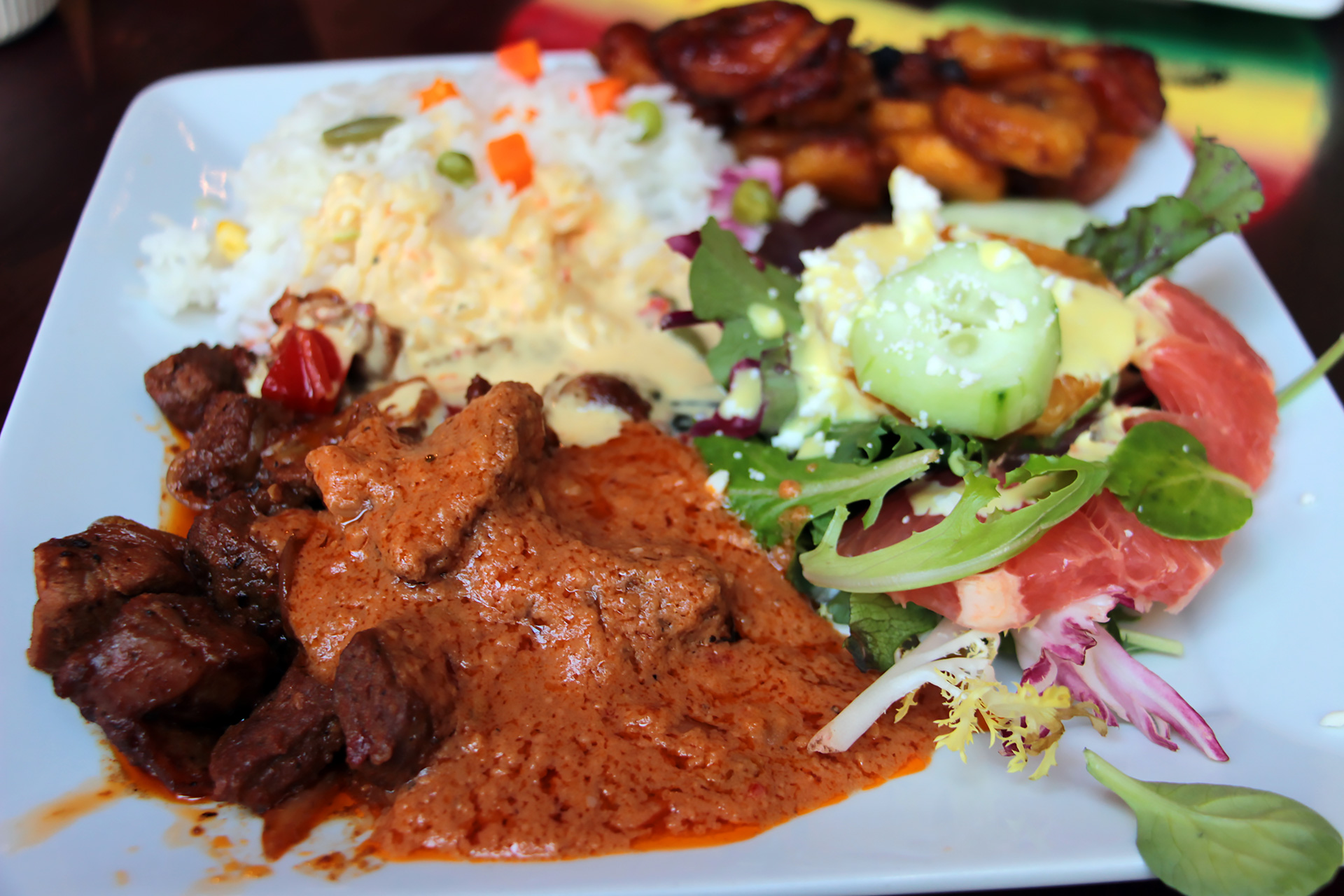
Mafe is a peanut stew that tastes more of unsalted nut butter than what you’re probably used to from a sweetened creamy jar of Jif. It coats cubes of lamb perfectly but is slightly on the awkward greasy side.
Mafe plate with lamb. (Wendy Goodfriend)
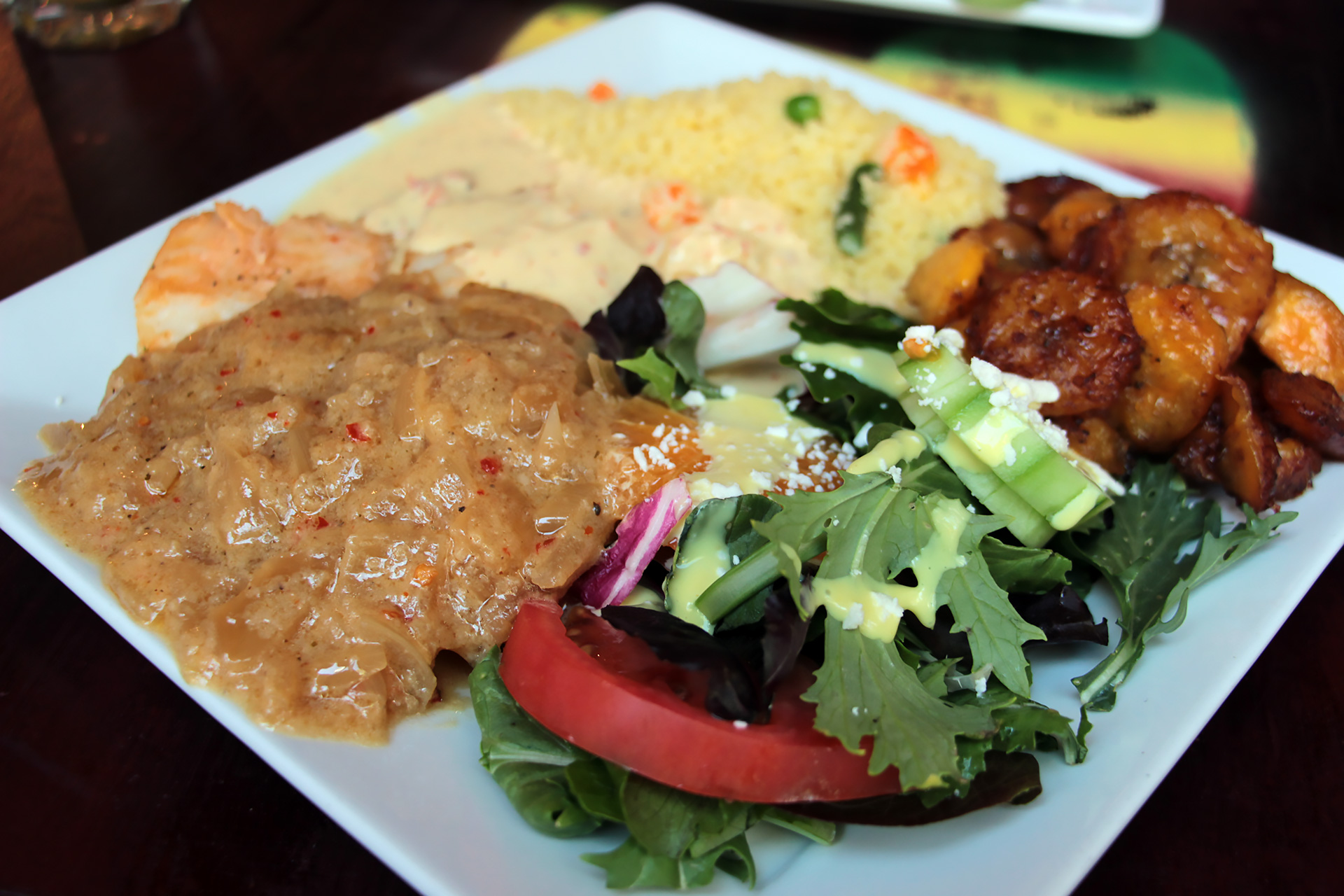
Yassa is for the mustard fans in the house, where the honey mustard-like base gets a necessary burst of acidity from lemon and works well coating a flaky filet of tilapia.
Yassa with tilapia. (Wendy Goodfriend)
Most assertive is a nameless spicy coconut curry that has such a resolute coconut-forward taste, you won’t notice what protein it’s with. If, like this writer, you swear by coconut, this is the sauce for you. However, any subtleties of tilapia beneath it will be completely lost, so try to have it coat the rice and not the protein.
The focus on being a sauce-based cuisine is largely from the French colonial influence on Senegal, one of the few Francophone countries in Africa. It’s not a direct pipeline of Escoffier to Senegal but diners certainly can see and taste the connection. These are flavor-packed sauces that aren’t fussy and aren’t overly heavy on the stomach, like say a buttery béarnaise. Some additional spice could be welcome and that’s where the on-point pepper condiment comes in handy adding just the right jolt when you’re ready (don’t add too much and drink ginger juice at the same time!). It’s a fun type of cooking and great when things are kicked off with a Créole dish of spicy and jasmine rice filling a halved avocado or a clean, proper “tropical” salad of greens and citrus slices. That salad joins the three sauce preparations for a steal of a lunch deal running $12 to $13 and can feed two. That lunch platter also comes with perfectly fried plantains and rice (the couscous one time was clearly undercooked, so avoid it). It’s no secret why Oakland office workers try to sneak here for a vacation at lunch that will fill them up but not weigh them down and feel like they’re 3,000 miles from the cubicle.
The dining area at Oakland Bissap Baobab. (Wendy Goodfriend)
The original Bissap Baobab just entered its third decade in business, an eternity in restaurant years, especially after a fire that closed it a few years ago and led the owners to seek out the Oakland location. The SF one is back and busy as ever. So, both sides of the Bay can count on good times and enjoyable, reliable Senegalese food at Bissap Baobab. It’s time for another round of hibiscus margaritas.
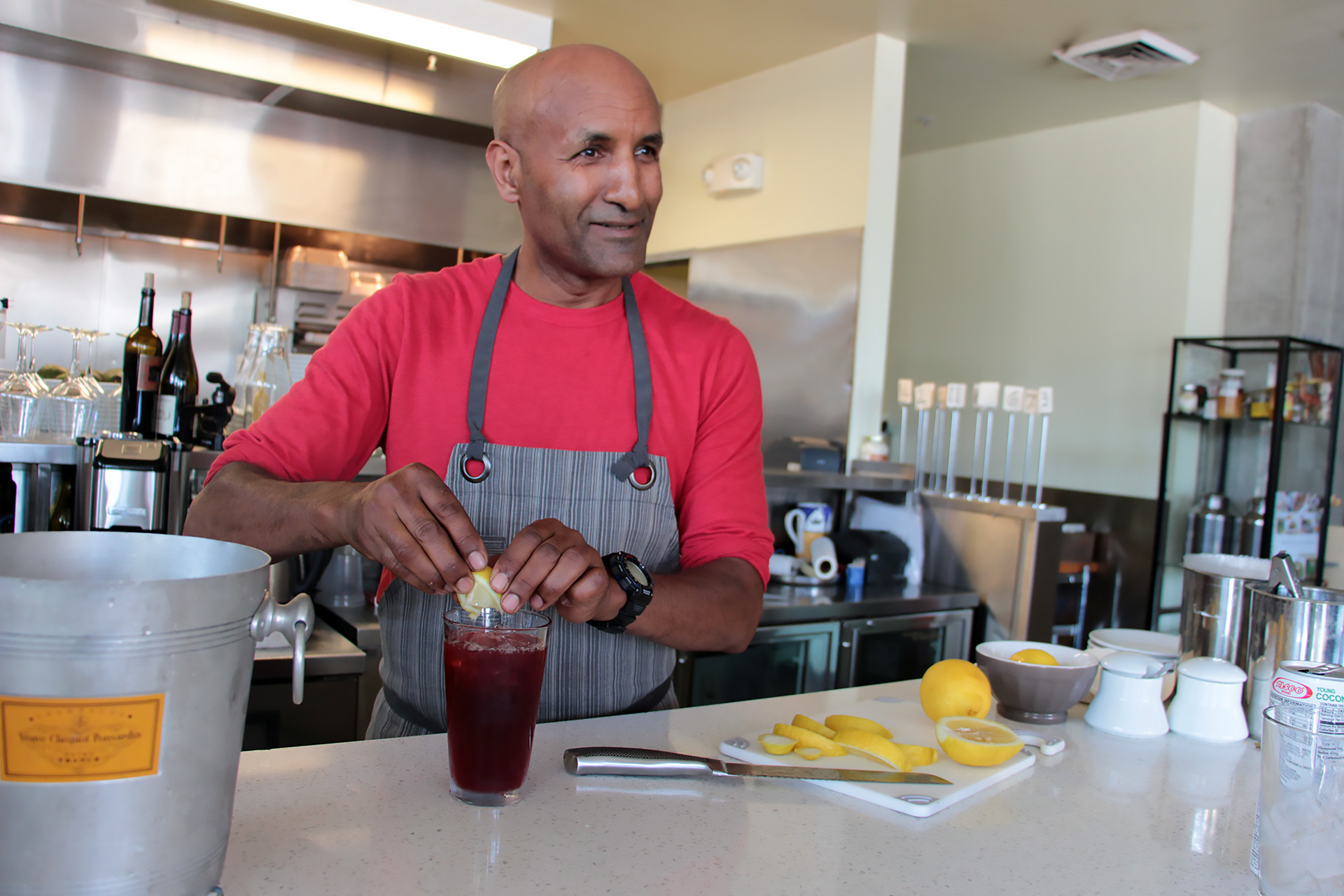
Eskender Aseged, owner/chef at Radio Africa. (Wendy Goodfriend)
Mourad Lahlou and Eskender Aseged are the two Bay Area chefs from African nations who have reached the level of being household names for many Bay Area diners. What’s interesting is how neither is cooking anything traditional. Lahlou did cook traditional Moroccan with Californian influences at Aziza and now his namesake FiDi restaurant, Mourad, is really the inverse as a contemporary Californian restaurant with Moroccan elements.
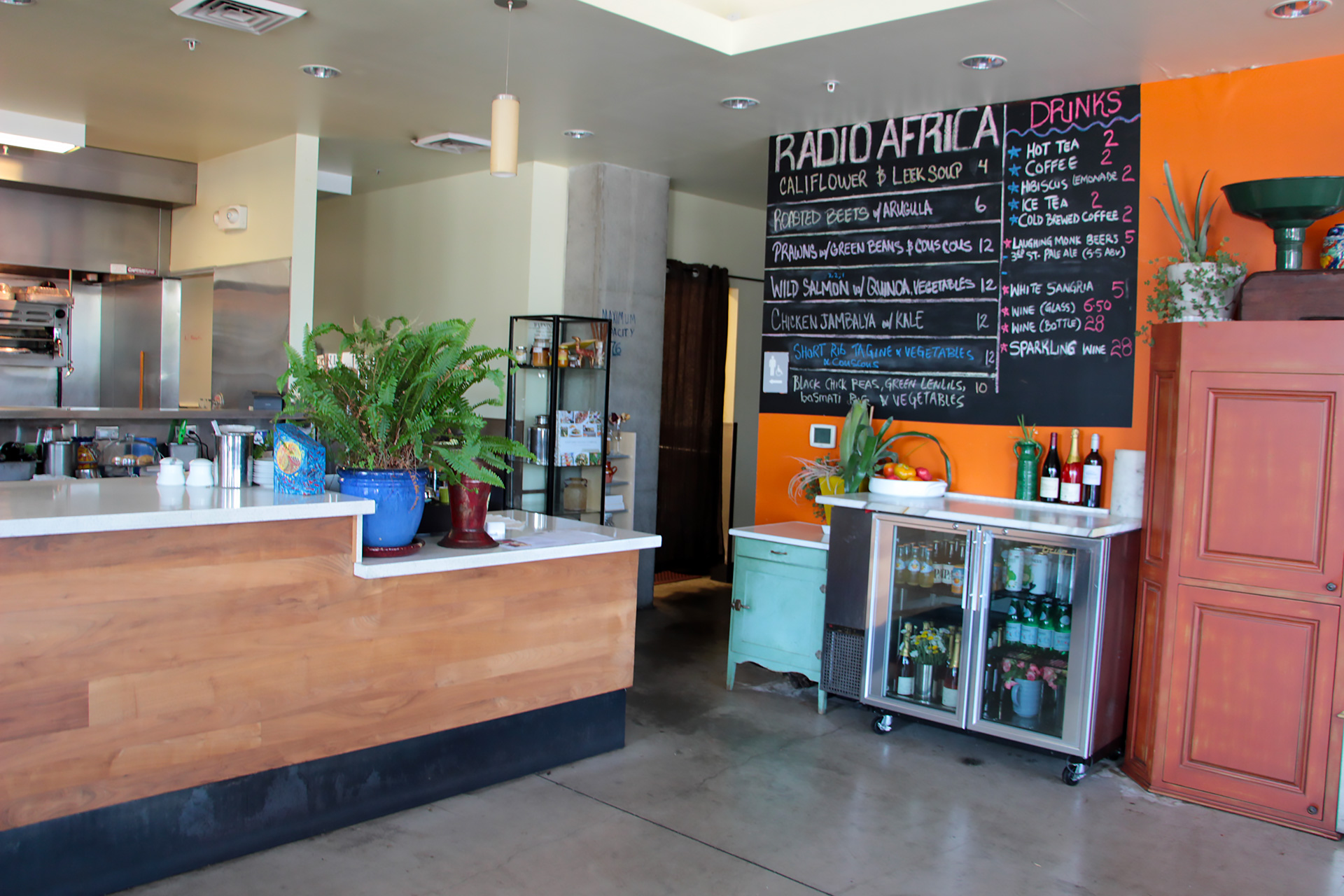
The counter and menu inside Radio Africa. (Wendy Goodfriend)
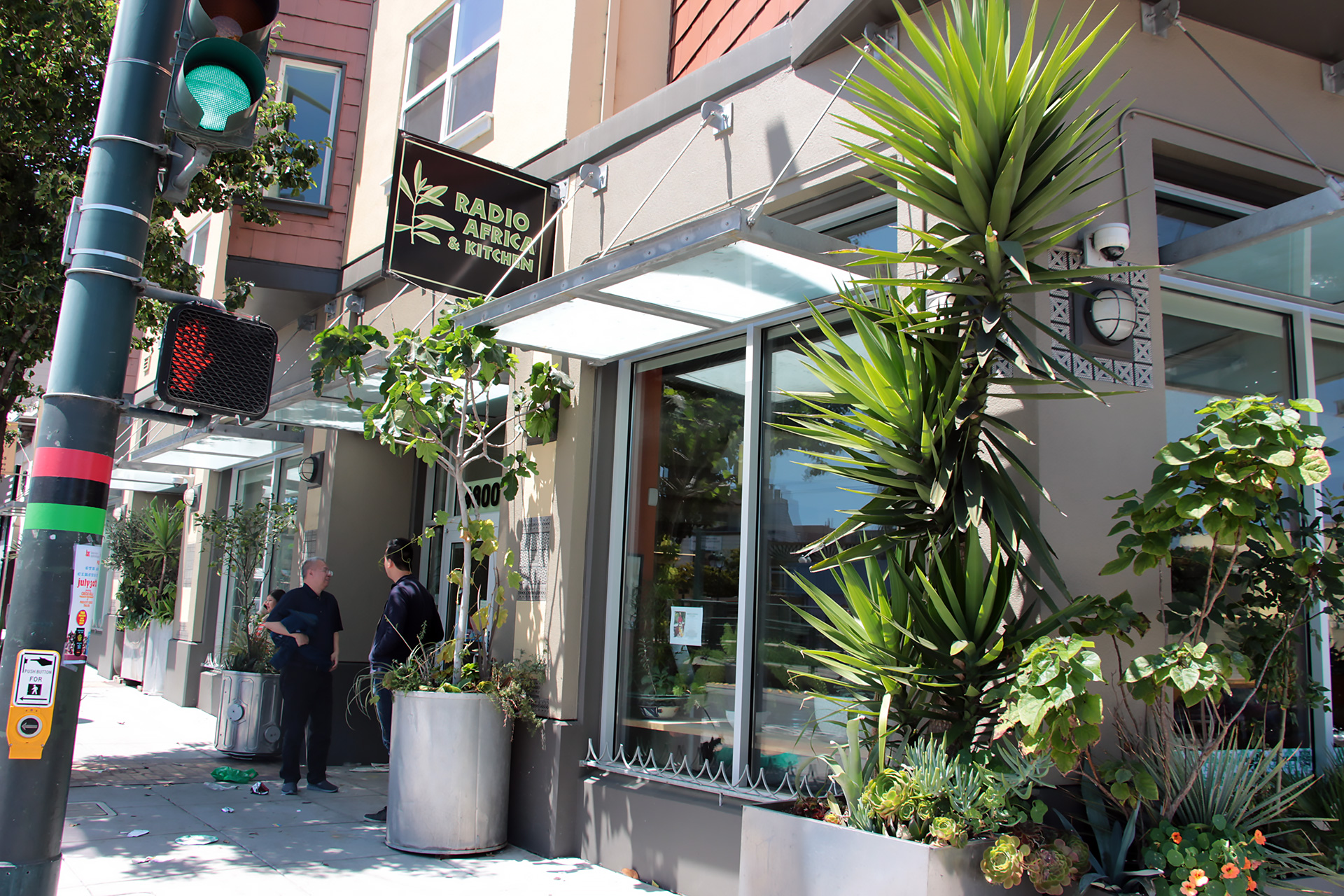
While Mourad is a lavish dining room with soaring ceilings and chandeliers on the ground level of the spectacular gothic skyscraper on New Montgomery Street that also houses Yelp’s headquarters, Aseged is quietly cooking in the far southeast corner of the city. His restaurant, Radio Africa, opened along Third Street in the Bayview in 2012 and the expected movement of gentrification to the neighborhood following its lead hasn’t really happened as expected — yet, at least.
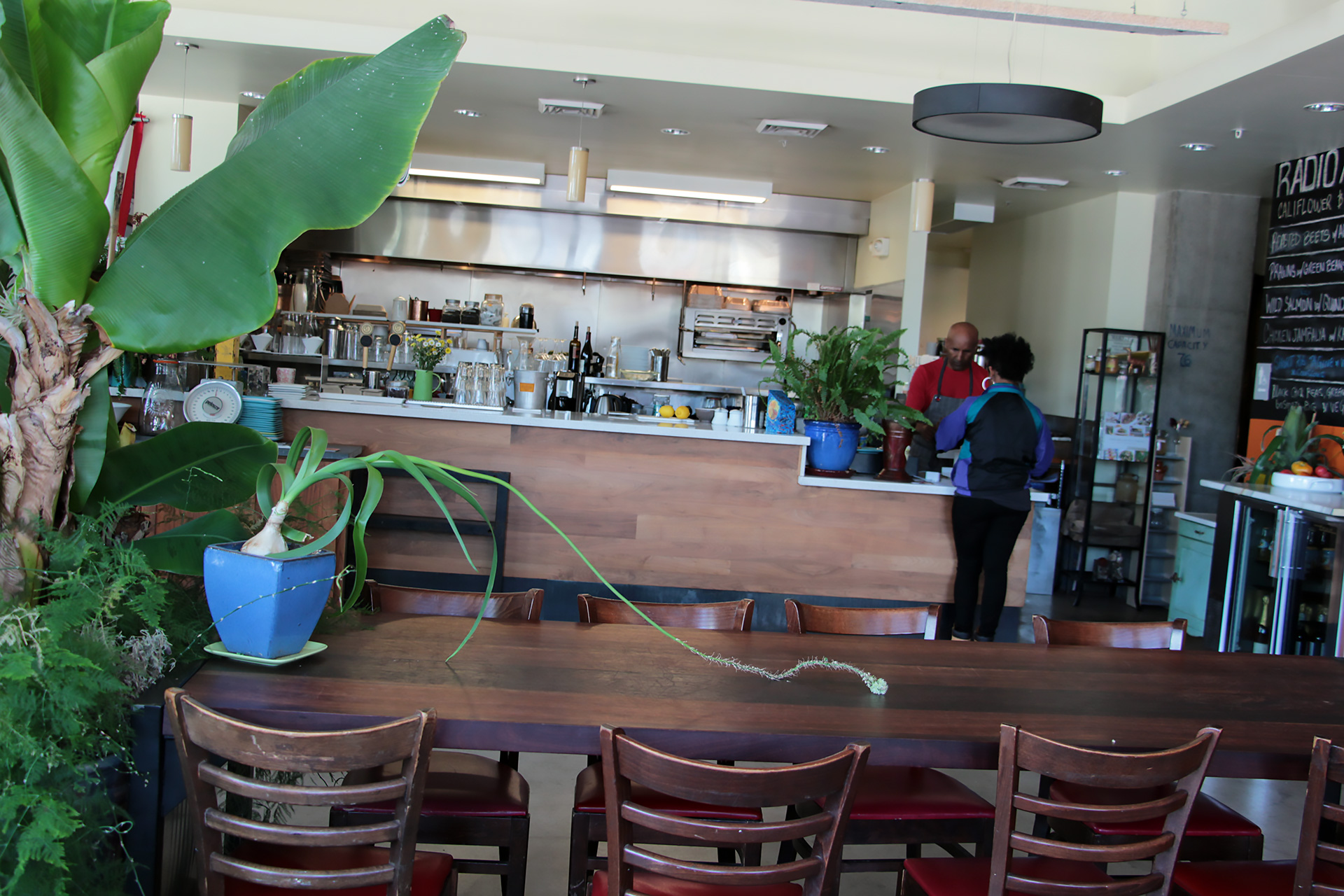
Inside Radio Africa, you’ll find an abundance of flora and fauna, cactus, communal tables, and ample natural light. It feels like you’re eating in a greenhouse, a contrast to the often frantic vibe outside the restaurant. That relaxed, virtuous vibe extends to Aseged’s plates.
Radio Africa interior. (Wendy Goodfriend)
The dishes are virtuous and simple with very basic embellishments in the fashion that Whole Foods and meal-kit deliveries are trying to promote (think Healthyish and holistic diets). There might be an African spice here and there, maybe a housemade chermoula condiment on one dish. Let’s be honest, though, it’s mostly yoga cuisine and that’s not a bad thing when you feel great and the food isn’t dull.
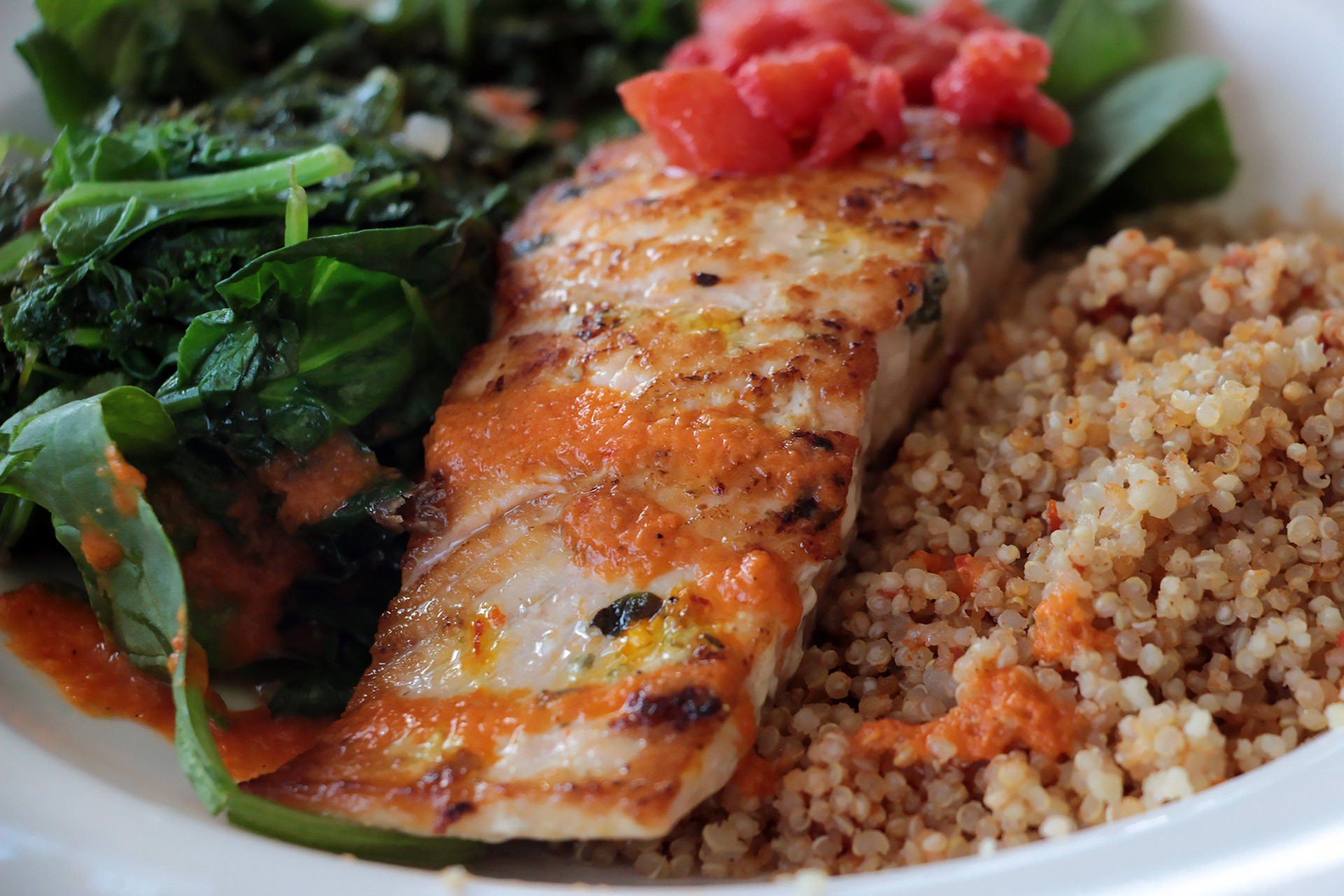
Wild salmon comes simply with quinoa and cooked spinach. (Wendy Goodfriend)
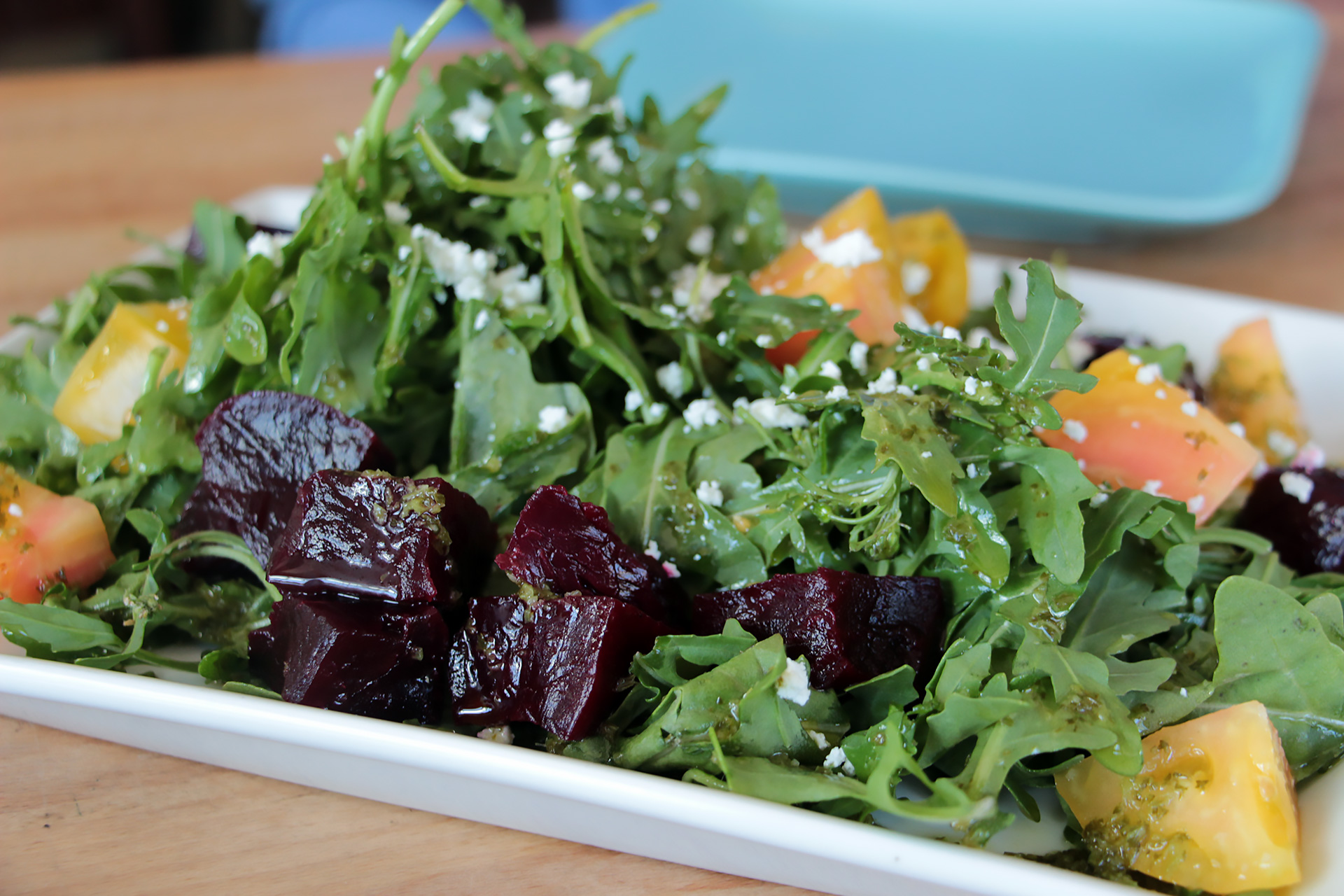
Wild salmon comes simply with quinoa and cooked spinach is a dish that could please both James Beard (perfectly cooked piece of fish and equally perfect quinoa) and Weight Watchers. An arugula salad with roasted beets had a few surprise bursts of early summer tomatoes, scattered goat cheese and a pesto sauce that tied everything together without becoming uncomfortably oily. It’s nothing trailblazing but also not just #anotherbeetsandgoatcheesesalad.
Arugula salad with roasted beets, early summer tomatoes, scattered goat cheese and a pesto sauce. (Wendy Goodfriend)
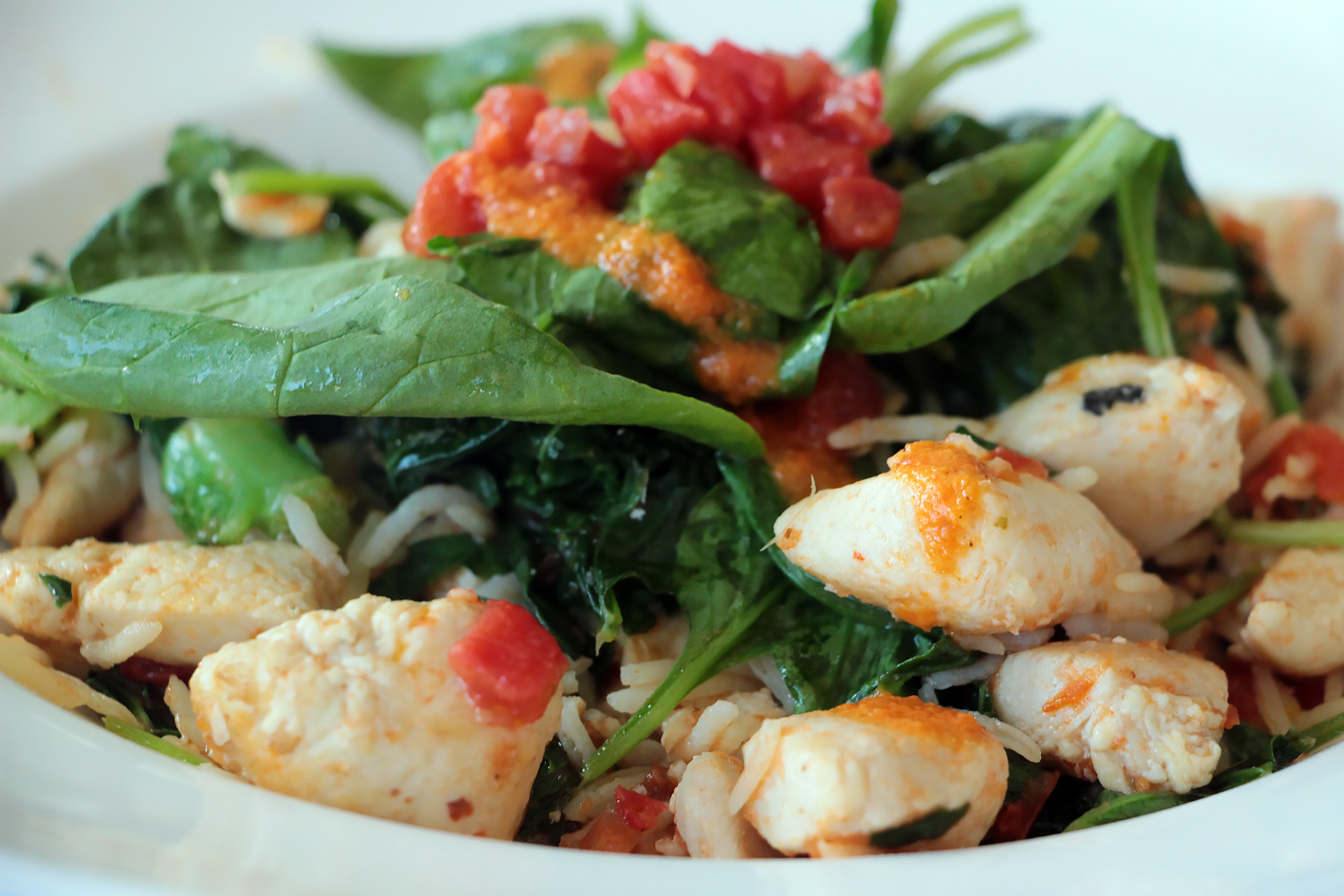
A chicken jambalaya has very little to do with the spicy tomato-based rice dish of New Orleans. The sauce is a lightly spiced pepper-base one mixed with wilted kale and long grain rice. There’s no shrimp. It’s just bite-size skinless chicken pieces that are one notch from being dry but saved by the well composed other parts on the plate. It’s not a perfect dish. It’s satisfying, however. It’s also a dish that makes you think about jambalaya being served as a rowdy good times touristy dish on Bourbon Street but has serious roots in the Low Country slaves and reaching further back to Africa pre-slave trade centuries ago.
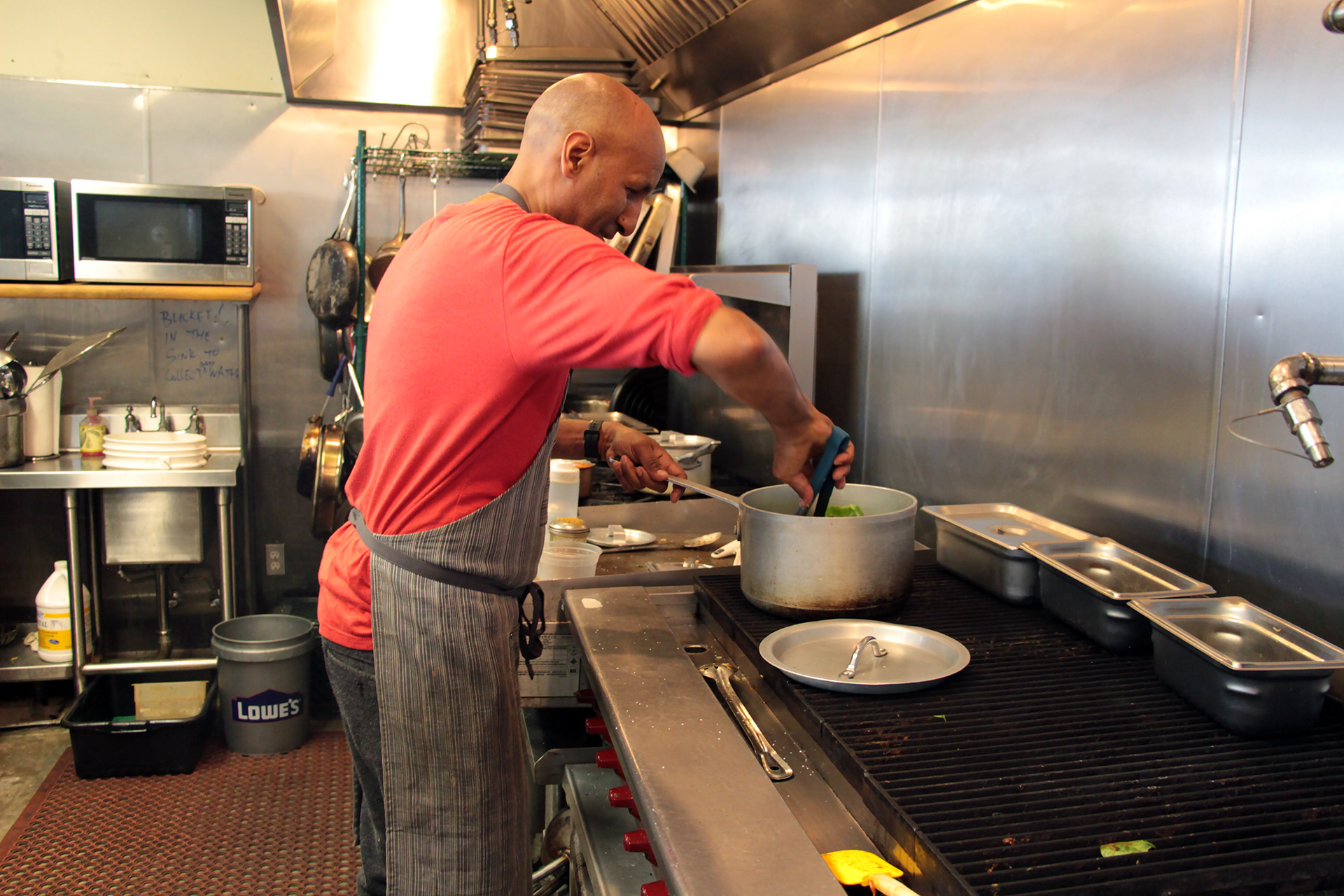
Chicken jambalaya. (Wendy Goodfriend)Eskender Aseged, owner/chef at Radio Africa, cooking in the kitchen. (Wendy Goodfriend)
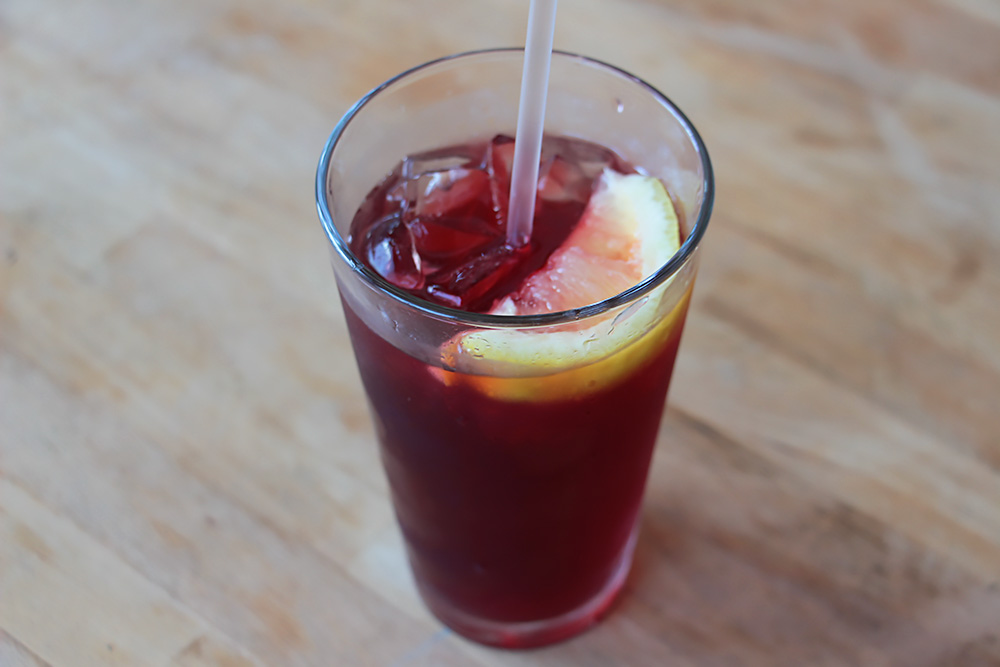
What’s more important to note about Radio Africa than the food is the powerful story of Aseged himself. The chef hails from Ethiopia and escaped to Sudan before immigrating to the U.S. His big break came as a cook in the kitchen of Square One, Joyce Goldstein’s restaurant that for much of the 80s and 90s was one of the post-Chez Panisse second wave of Californian cuisine trailblazers with the likes of Boulevard, Stars and Zuni Cafe. Aseged worked front and back of the house elsewhere at the likes of Boulevard and Campton Place before fulfilling his Radio Africa dream as one of the pivotal early pop-ups in SF around the same time the likes of Mr. Pollo and Lazy Bear started. Now five years in, it’s clear the restaurant is a centerpiece of the neighborhood judging from everyone who stopped in for lunch and a (sweetened just right) hibiscus lemonade.
Hibiscus lemonade. (Wendy Goodfriend)
Aseged even gives a neighborhood shoutout on the beer front with the 3rd St. Pale Ale from Bayview’s year-old Laughing Monk Brewing, a neighborhood newcomer that followed Radio Africa’s lead and is seeing success at its tap room. See, Radio Africa is much more than just an enjoyable lunch of salmon and quinoa.
Radio Africa Kitchen exterior in Bayview. (Wendy Goodfriend)
Most of the Moroccan restaurants in the city of San Francisco share three traits — they’re formal affairs open only for dinner (with belly dancing frequently on weekends), sport an intricate interior design, and are located in the Lower Nob Hill area around Polk Street.
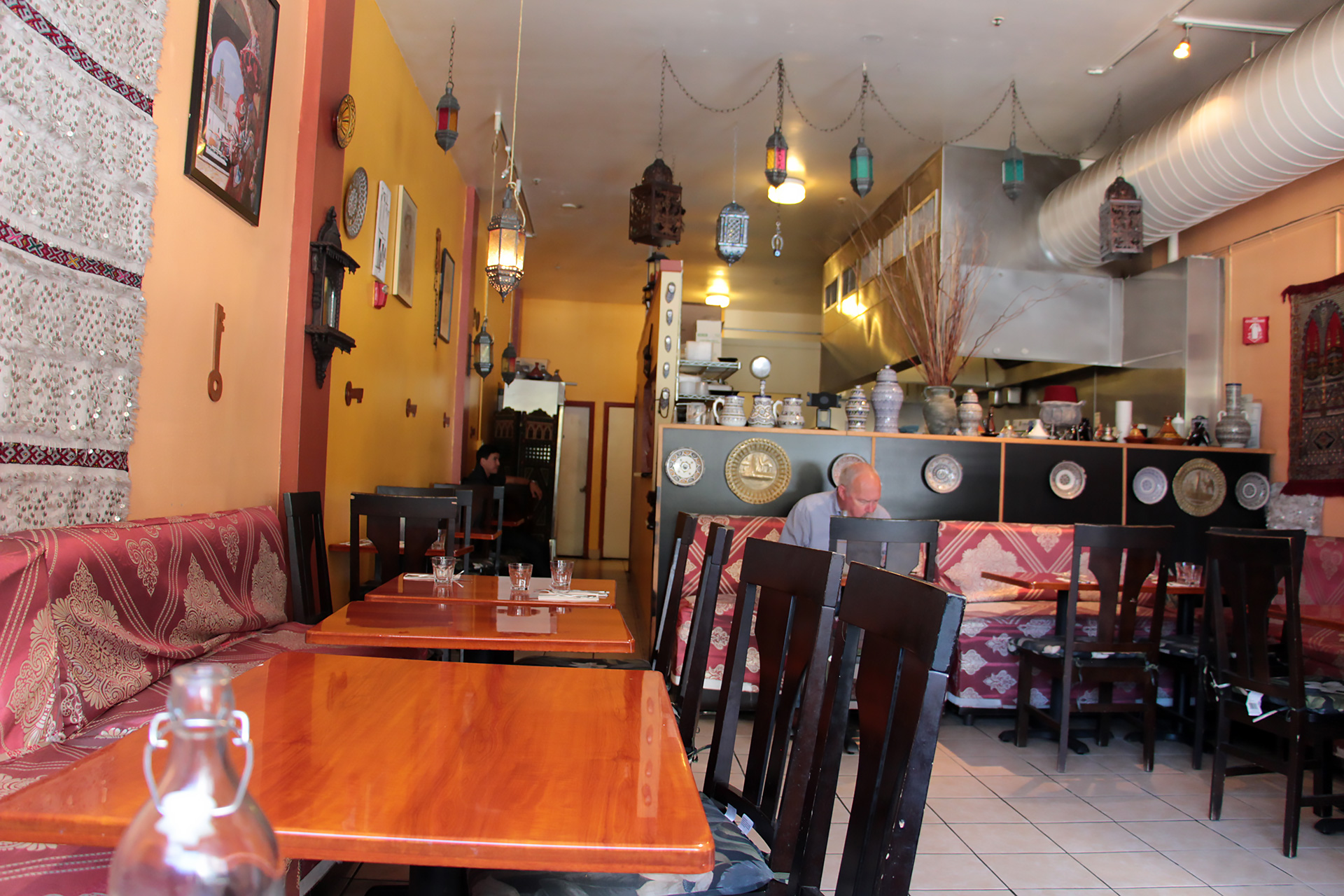
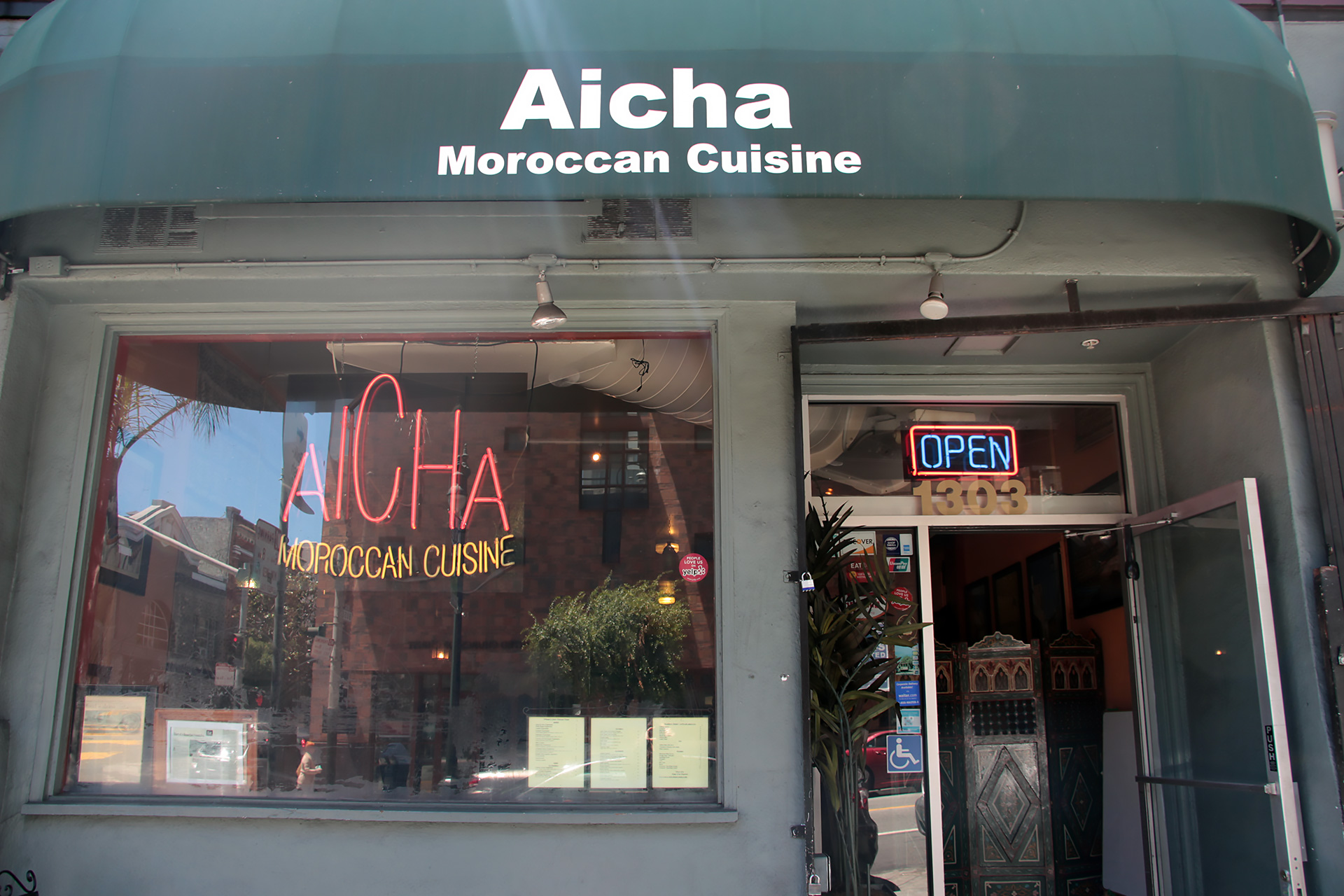
The six-year old Aicha, started by a first-time restaurateur from the tech industry (long before that was the cliché it is today in 2017) only satisfies the latter of that trio. It is indeed open for lunch and its dark, warm space with lanterns dangling above the kitchen, Moroccan art pieces scattered on the walls cushions and low-back banquettes covered with sheets that provide a calm escape from the relentless bar crawl of Polk Gulch outside but hardly an ornate environment like at a ritzy Marrakech hotel. It feels a little musty, like a well-worn living room of an apartment where most of the apartment is an open kitchen and food storage.
The main standards of Moroccan cuisine make up Aicha’s menu, led by kebab-on rice “grillades” and 15 total choices for tagines and couscous plates.
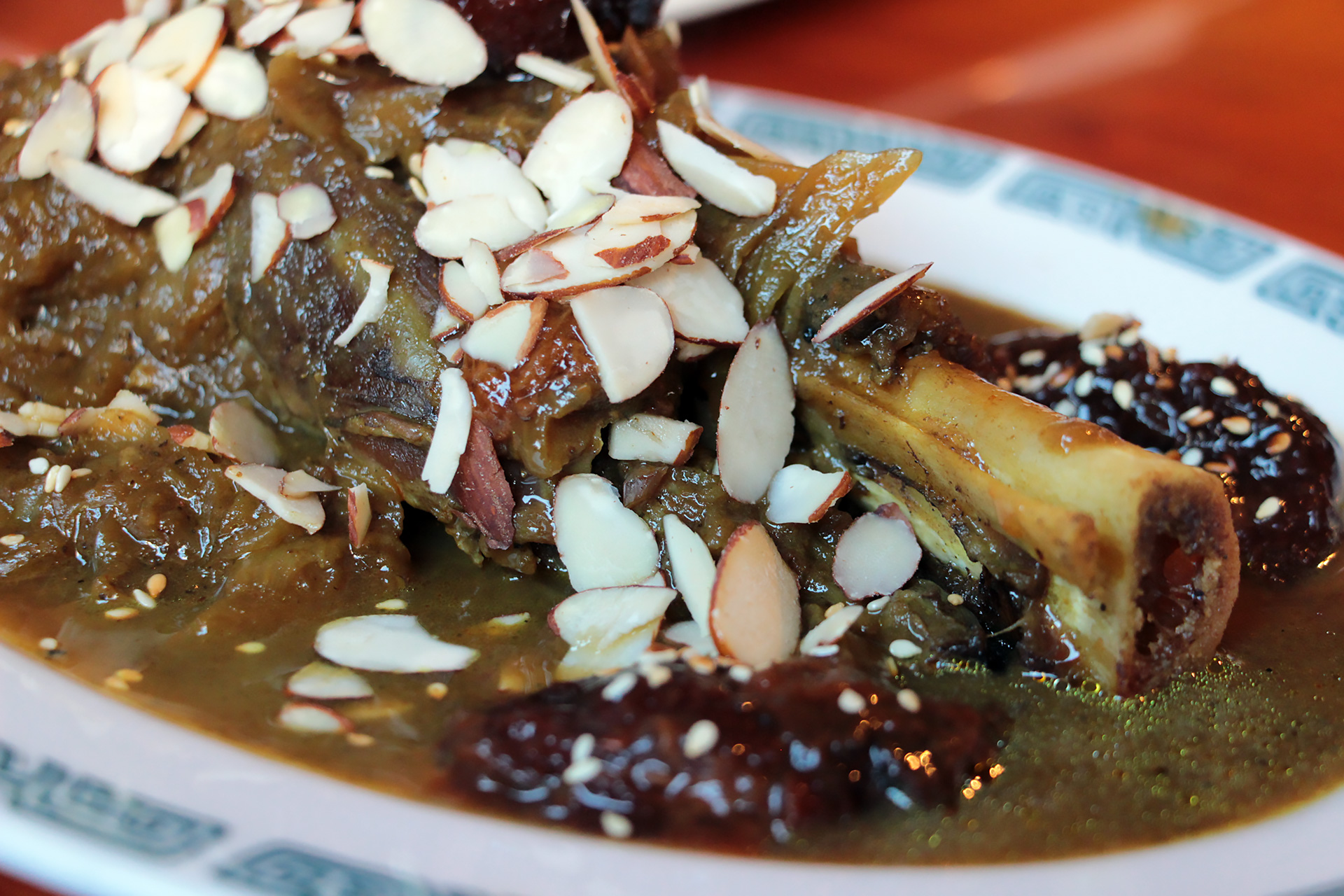
Lamb shank tagine. (Wendy Goodfriend)
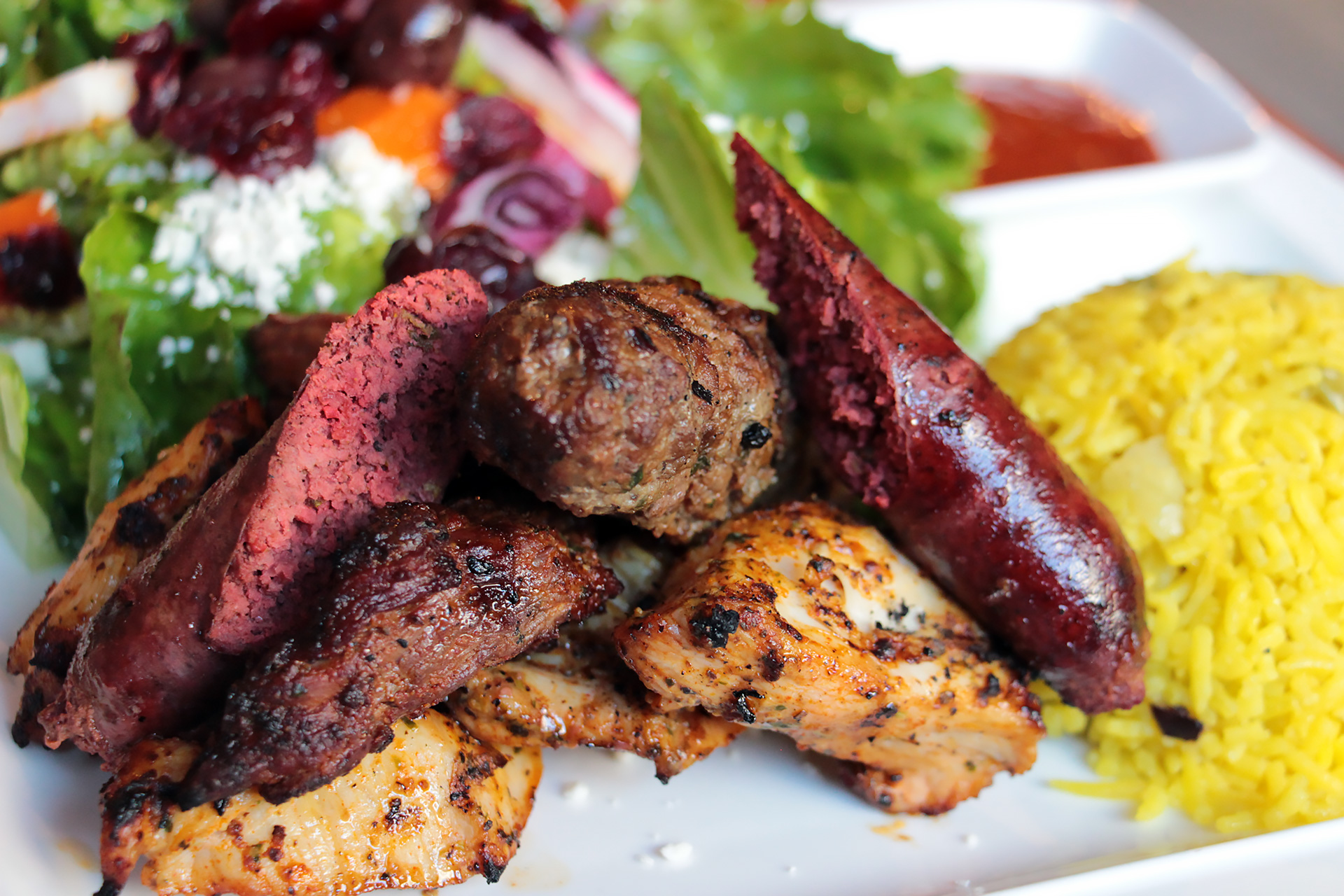
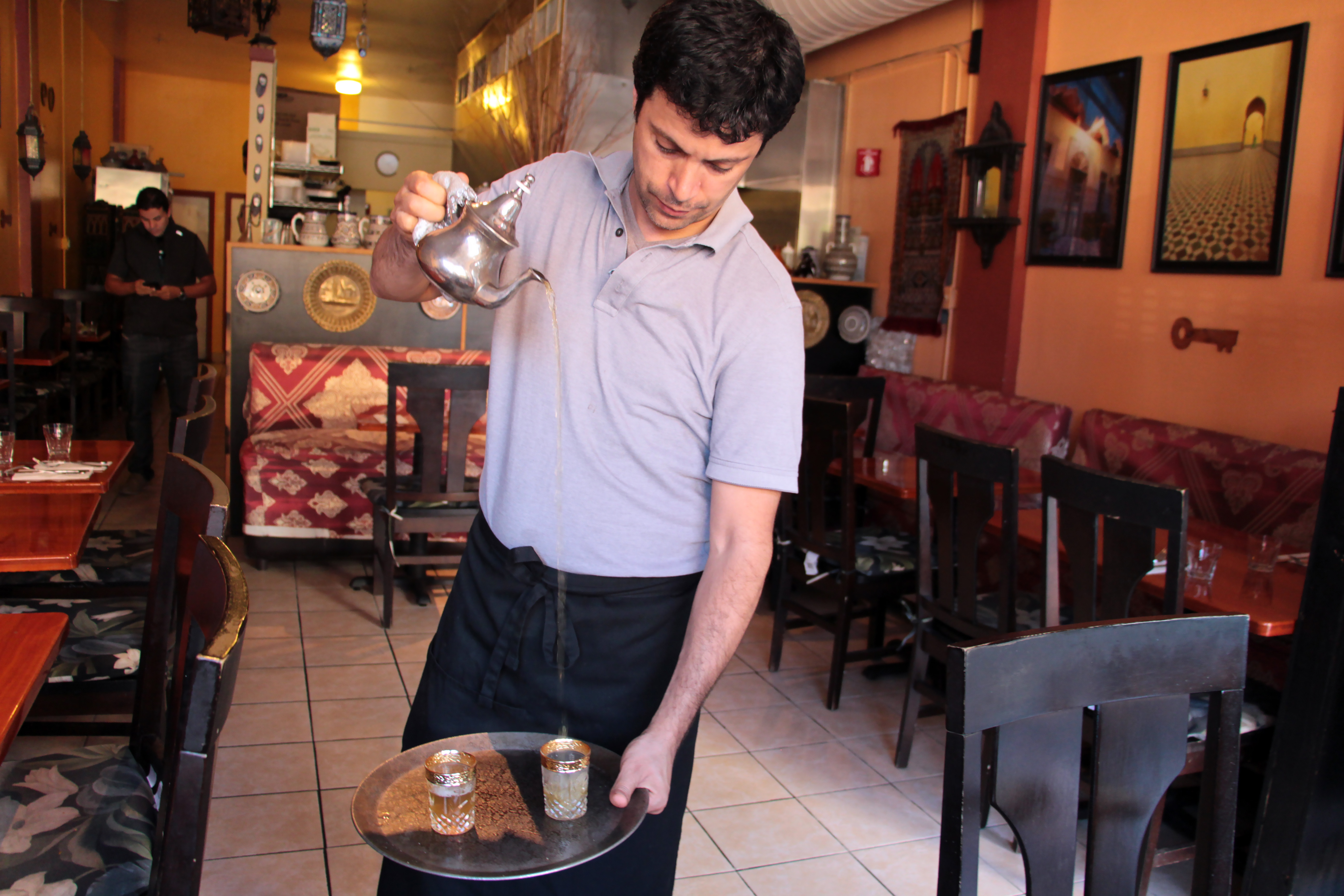
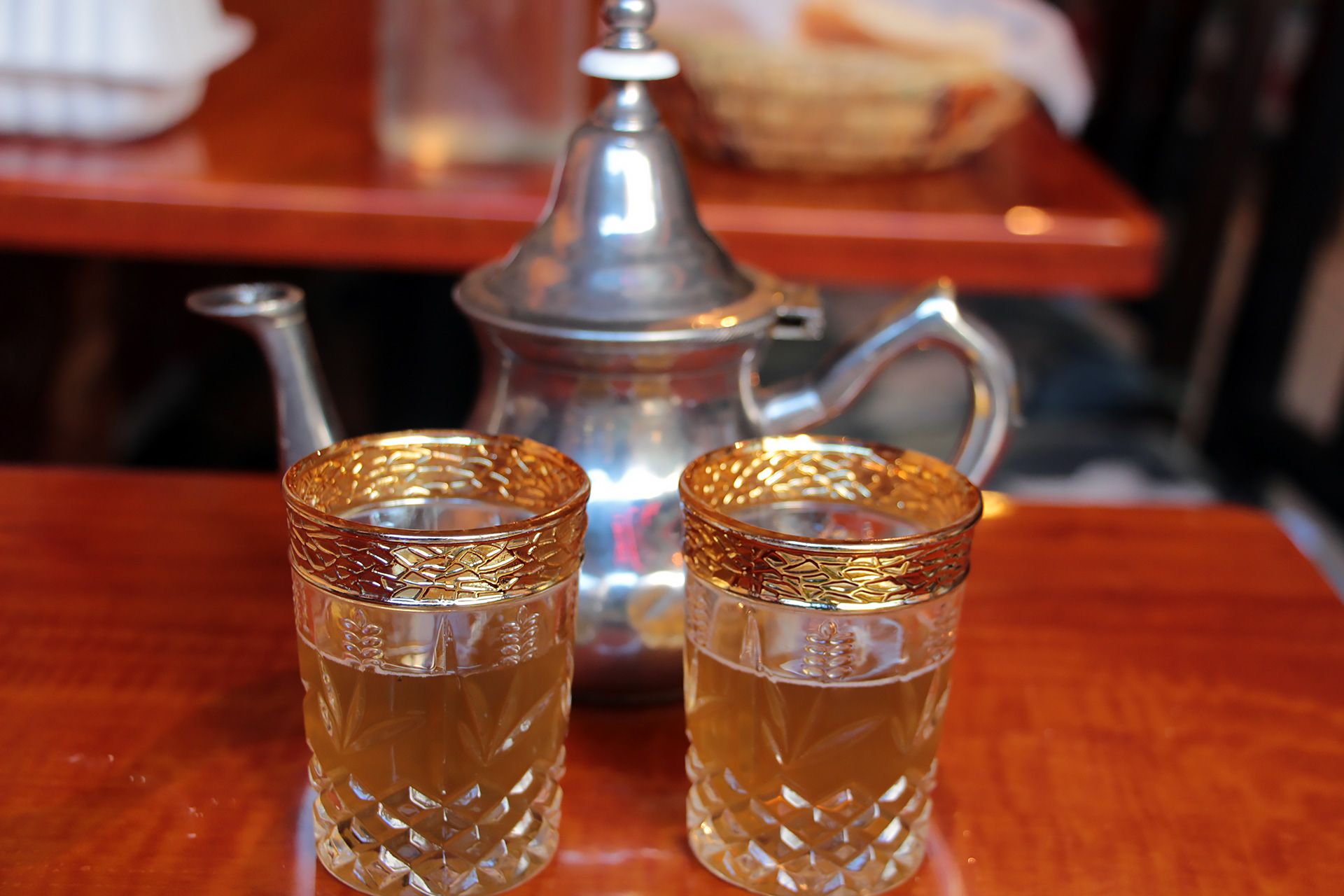
Everything was enjoyable but seemed a tick off in some regard. A lamb shank tagine had a subdued broth and the lamb itself a bit on the overcooked side, missing the hoped for gaminess and fork-tender flakiness (and I wish the tagine itself was at least presented tableside). Bread with the tagine is limp and pale, like a cake-textured white bread (compared to the baguette at Cafe Zitouna mentioned below). The plump prunes on the tagine plate were the best part of the dish — not exactly what you’d hope for. A royal kebab platter provides an assortment of various meats that vary from being a juicy, rewarding kefta (ground beef and lamb) to fine but uninspiring (merguez and chicken) to being clearly left on the grill too long (beef). We should mention the accompanying rice and salad (with craisins and olives!) were a step above the norm. However, even the tea just didn’t have the mint intensity that often is found at similar establishments.
Royal kebab platter. (Wendy Goodfriend)
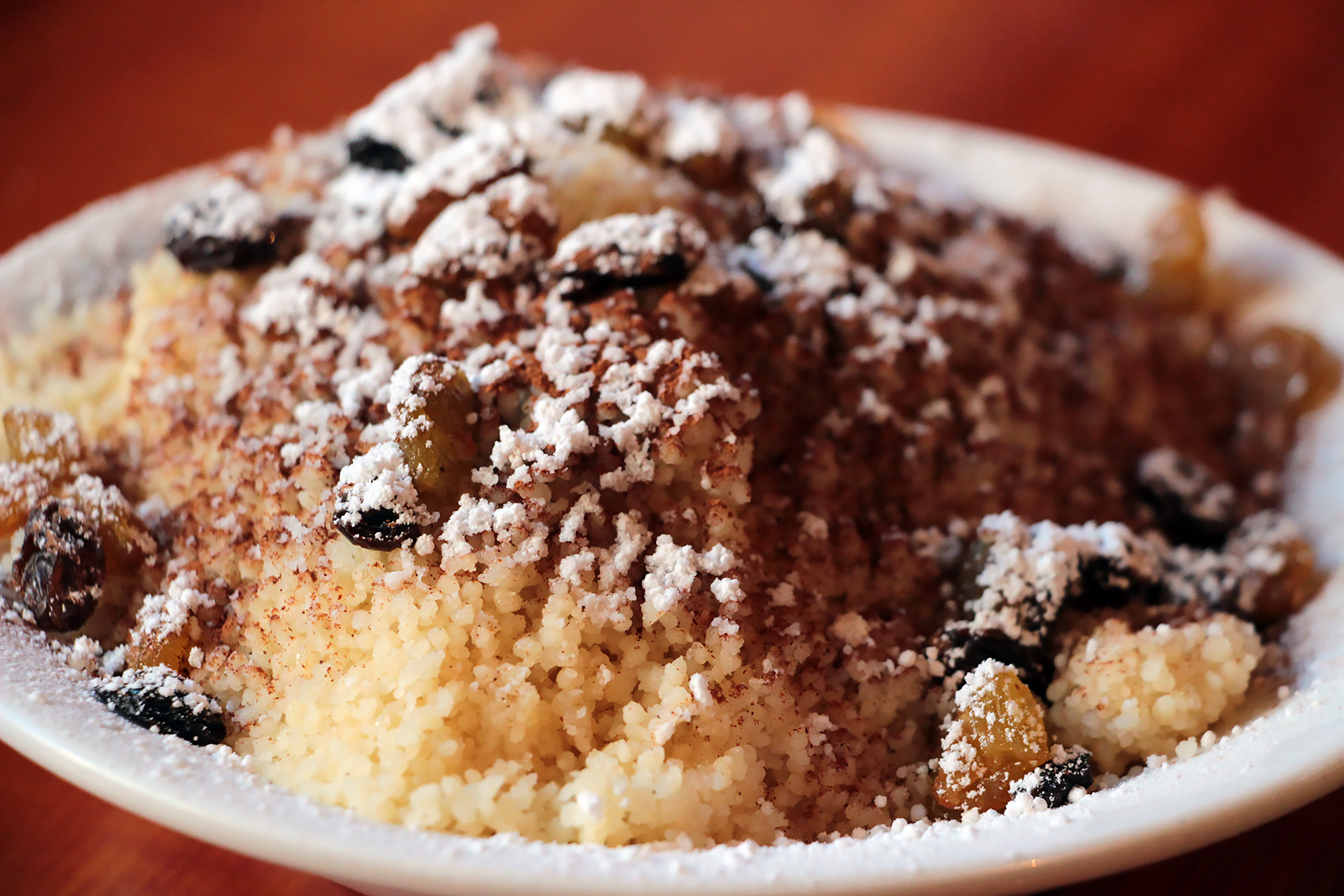
The reasons to highly recommend Aicha are how the dishes that show Moroccan cuisine’s classic intense sweet meets savory contrast are the ones that thrive. Do you like Cinnamon Toast Crunch? Then don’t think twice about a side order of the cinnamon and sugar dusted couscous with regular and golden raisins. This is not a subtle dish in any way and it’s hard not to love its sweet-edged rustic sensibility.
Cinnamon and sugar dusted couscous with regular and golden raisins. (Wendy Goodfriend)
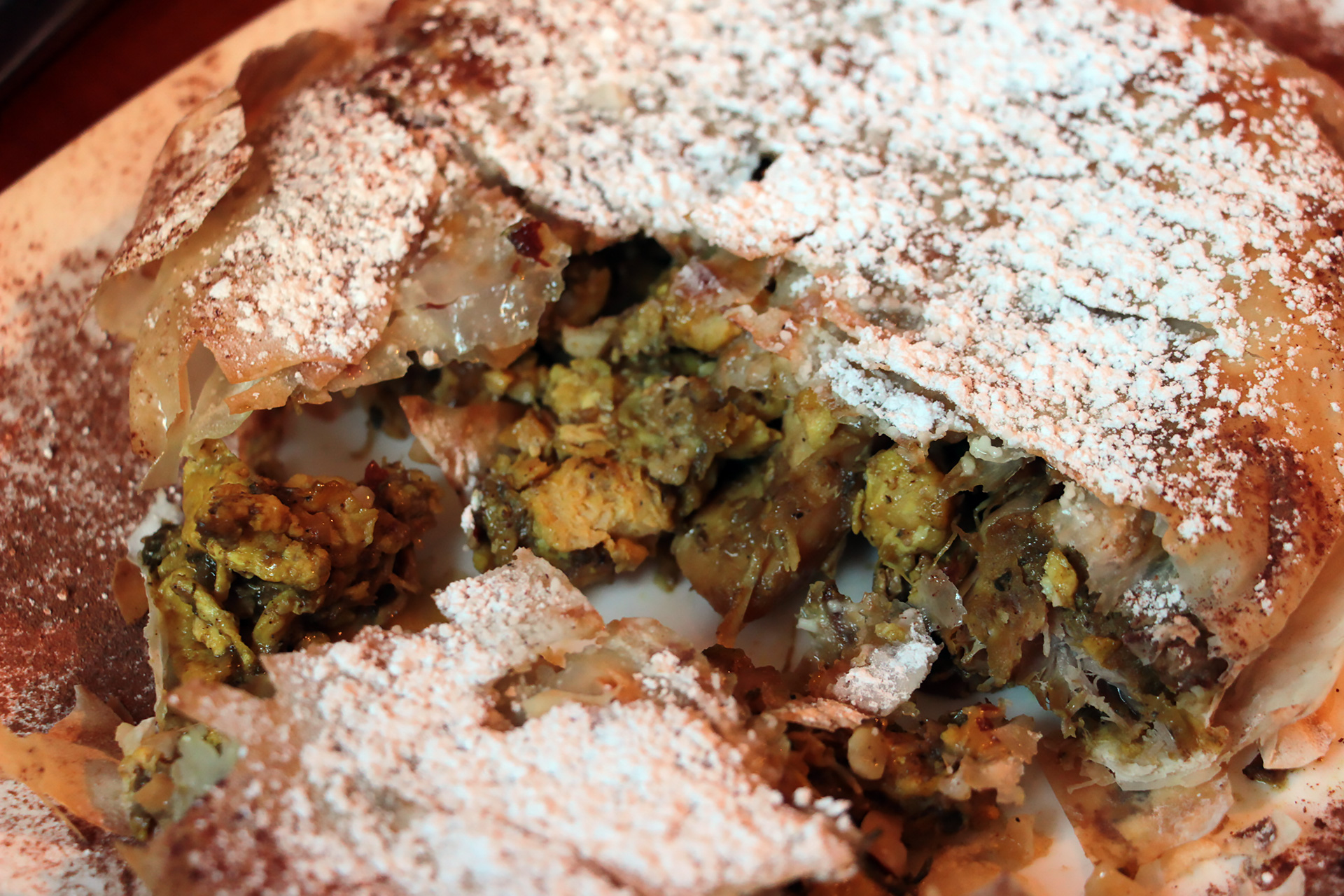
Whatever you’re main part of the meal is, start with the basteeya, Morocco’s version of a warm protein-filled pastry coated with cinnamon and sugar. Aicha’s version is right on par with the best that Mourad Lahlou has offered at Mourad and Aziza. Saffron, turmeric and ginger come billowing out with the smoke when you crack the flaky phyllo crust and have a first bite of the moist chicken. There’s a lot going on. And, the portion is generous (keep in mind it’s an appetizer!). Each bite is a thrilling moment. Of course, couscous, tagines and kebabs get all the attention. Heck, Moroccan mint tea even is more talked about in most dining circles. This basteeya will remind you that it deserves a place on the table, as well. Just make room for the main courses because Aicha’s small tables’ space gets filled up really quickly.
Basteeya at Aicha. (Wendy Goodfriend)Moroccan mint tea served tableside. (Wendy Goodfriend)Moroccan mint tea. (Wendy Goodfriend)Aicha Moroccan Cuisine exterior. (Wendy Goodfriend)
Aicha Moroccan Cuisine
1303 Polk St.
San Francisco, CA 94109 [Map]
Ph: (415) 345-9947
Hours: Mon, Tue and Thu, 11:30am-9:15pm; Wed, 4:30pm-9:15pm; Fri-Sat, 11:30am-9:45pm; Sun, 11:45am-9pm
Facebook: Aicha Moroccan Restaurant
Price Range: $$ ($15-$20 per diner)
Yelp: Aicha
Cafe Zitouna
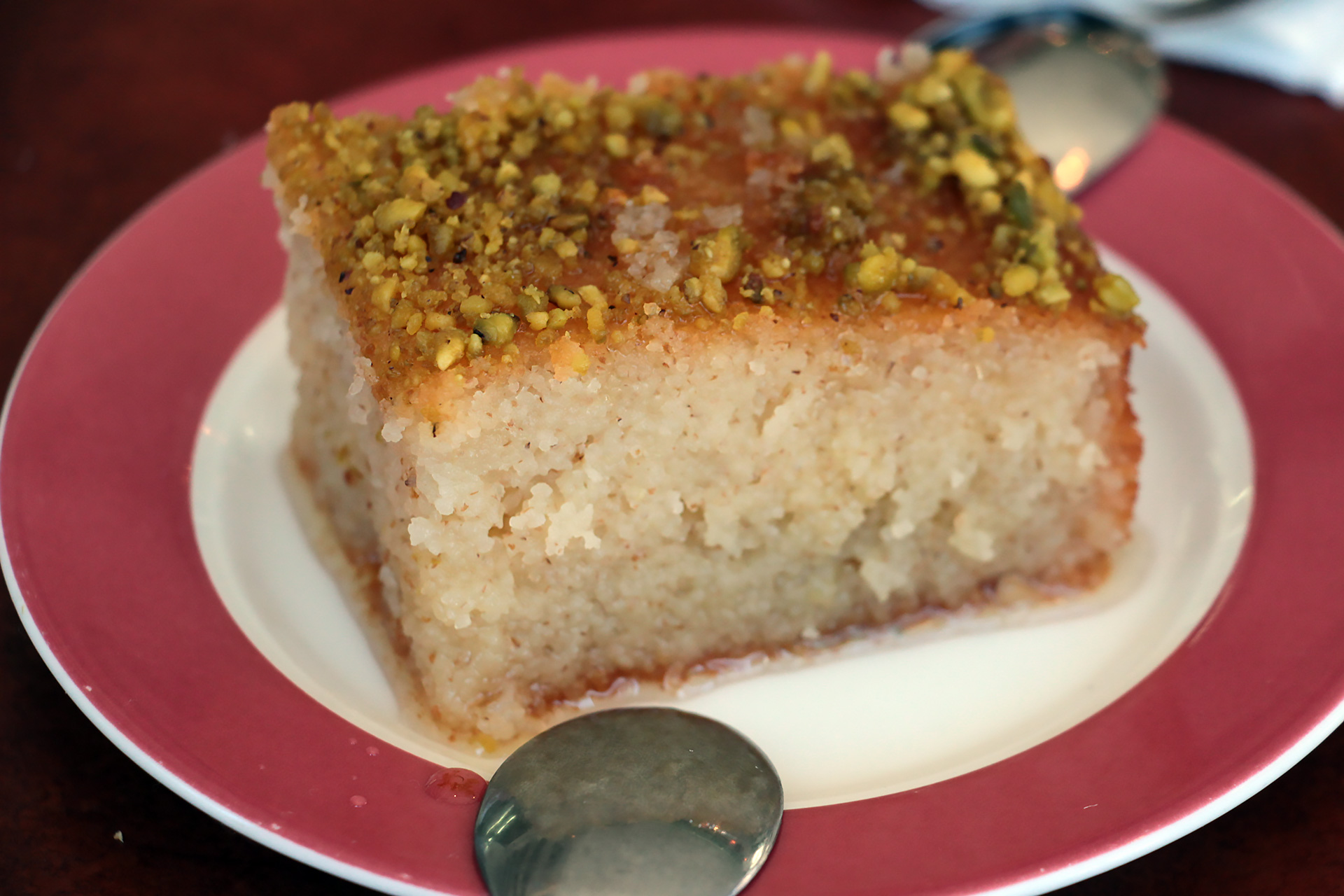
The dessert is called basboussa, an orange blossom water spiked semolina cake topped with pistachios that ultimately tastes like a floral-tinged baklava with the texture of a syrup-soaked Belgian waffle. (Wendy Goodfriend)
It was almost fate. Just a few moments after discussing why restaurant writers never start reviews with dessert, here came a complimentary dessert that sounded humble and seemed like a nice gesture that will usually end in a ceremonial couple of respectful bites. It proved to be one of the essential dishes of any African cuisine in the Bay Area. The dessert is called basboussa, an orange blossom water spiked semolina cake topped with pistachios that ultimately tastes like a floral-tinged baklava with the texture of a syrup-soaked Belgian waffle. After a series of tagines and couscous platters, it’s hard to imagine diners yearning for dessert. Well, please take our advice — save room. Or, eat dessert first. Trust us. This is why dessert is mentioned first for this Moroccan-Tunisian restaurant in Lower Nob Hill.
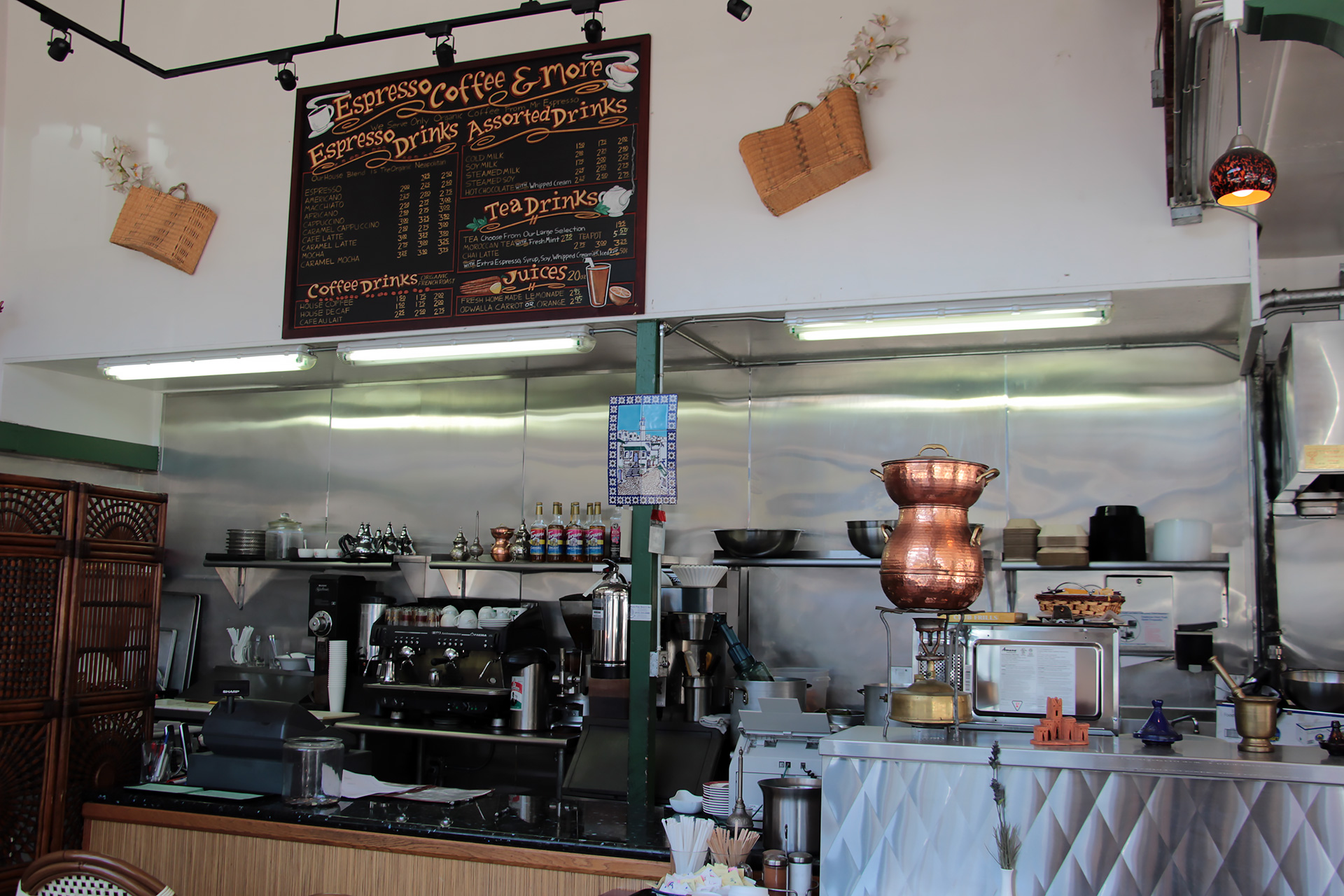
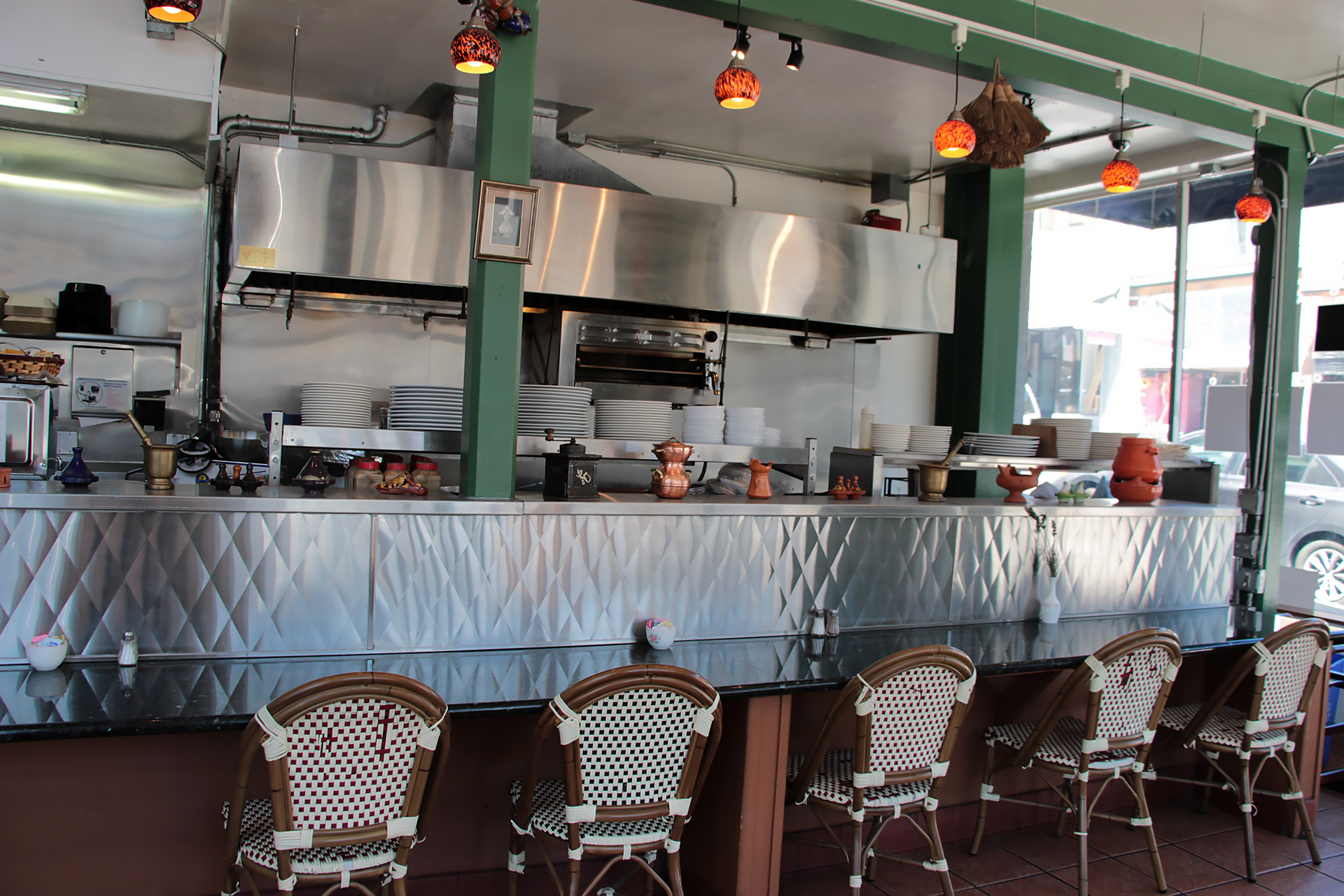
Cafe Zitouna beverage area. (Wendy Goodfriend)Counter with open kitchen at Cafe Zitouna. (Wendy Goodfriend)
With spartan white walls, bare topped utilitarian tables, Paris bistro wicker chairs and a diner-style open kitchen running the length of the room with a counter of a couple antique Moroccan cooking vessels serving as the lone decoration, Cafe Zitouna can’t exactly be called a grande dame in anything but age. The main design point is the abundant sunlight streaming in from the windows along Polk Street.
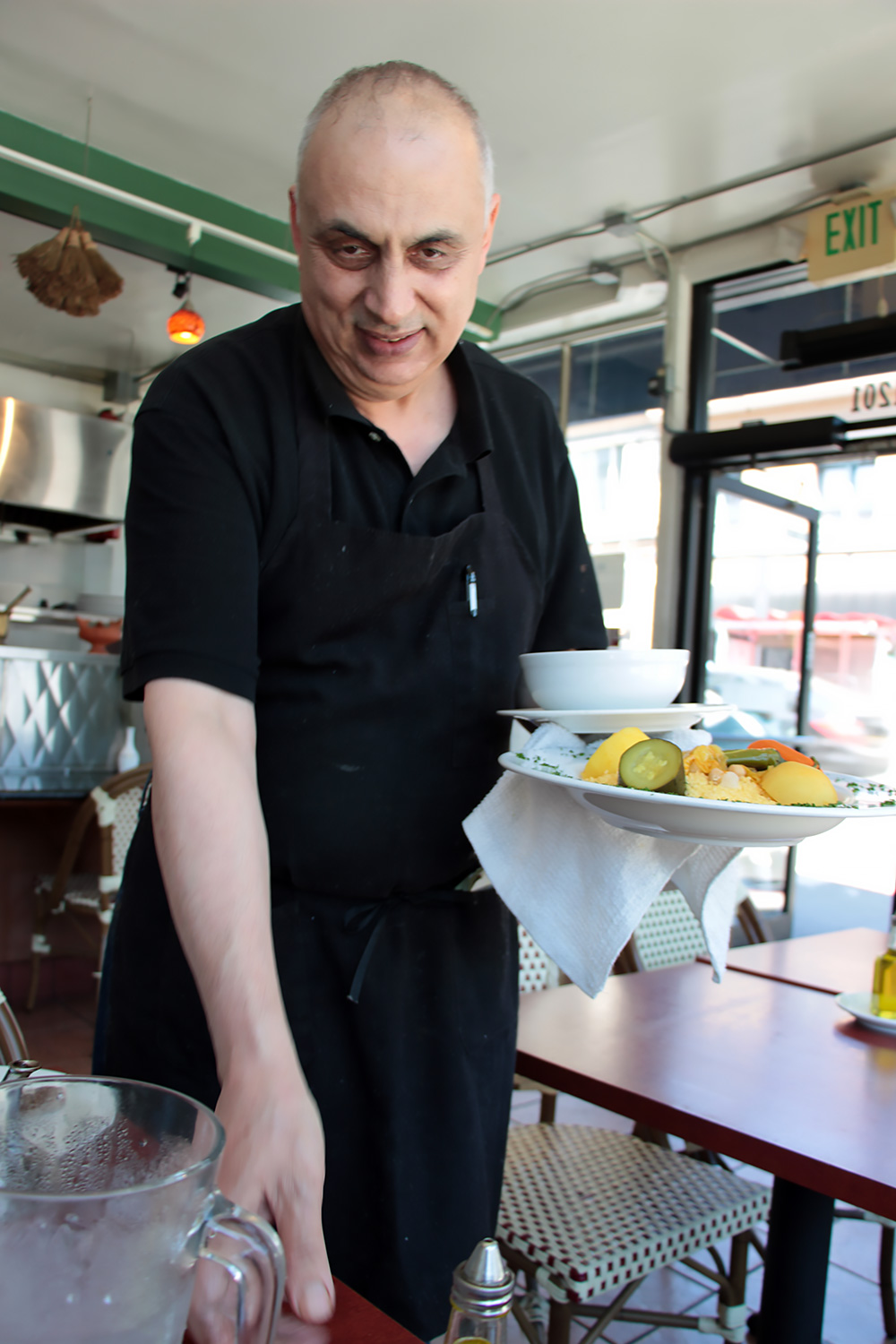
The owner of Cafe Zitouna, Najib Rebia. (Wendy Goodfriend)
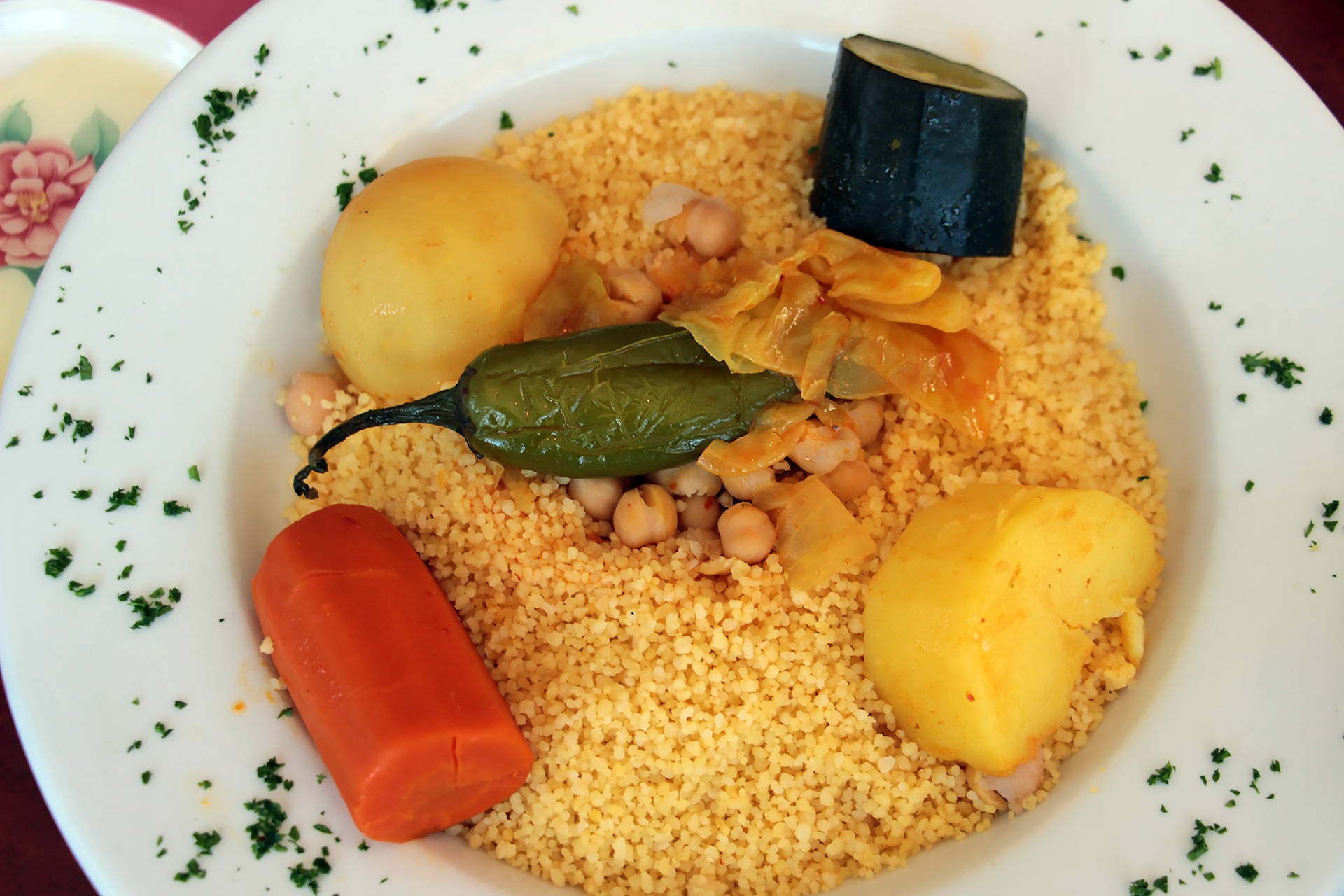
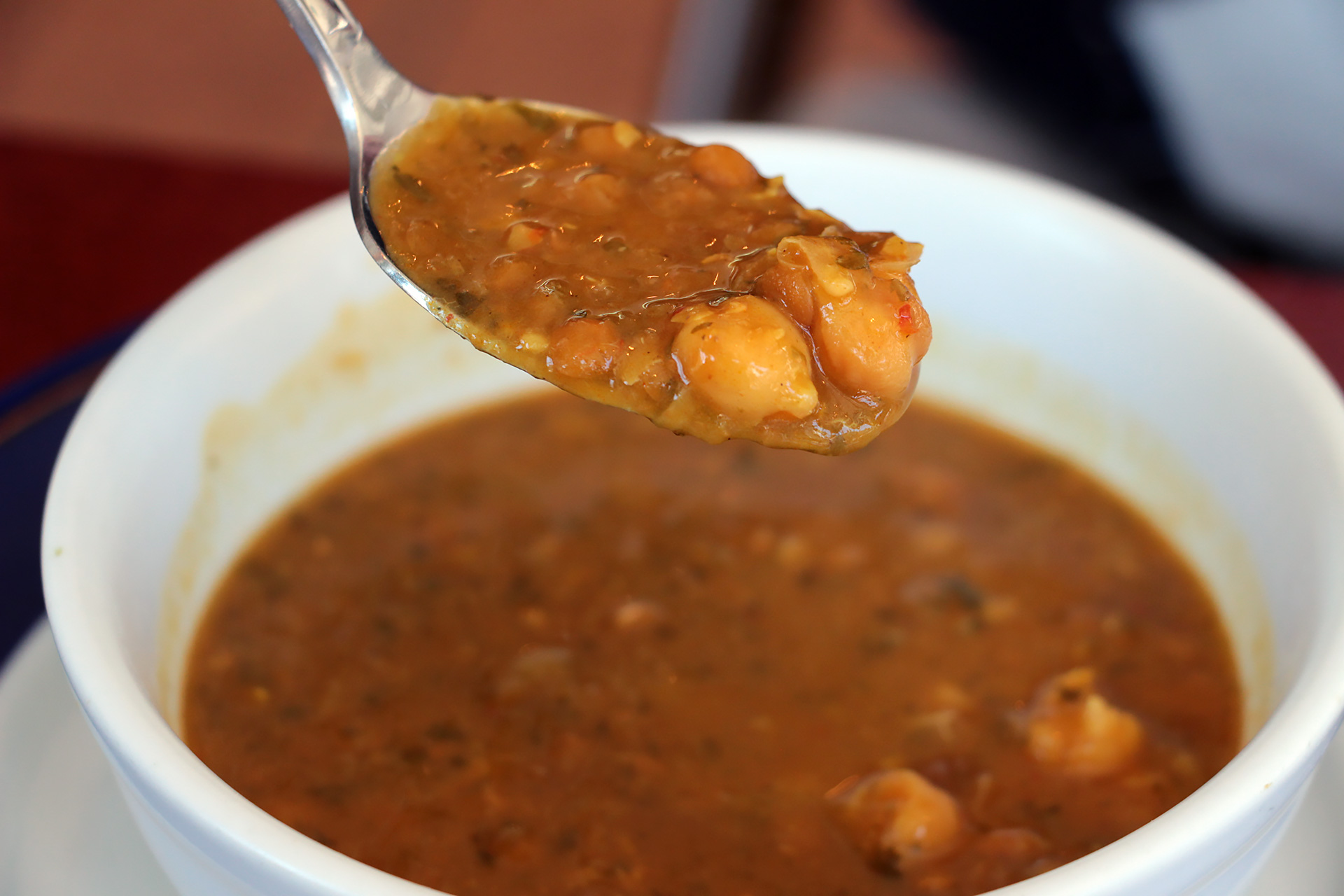
Design doesn’t matter here. There are no belly dancers here, either. Cafe Zitouna is one of the longtime stalwarts of Northern African cooking in San Francisco and screams if the confidence that only a longtime neighborhood fixture can boast. You’ll find many of the classic Moroccan standards, like the soothing lentil soup, harira, that soothes upon first scoop but needs a few dashes of the housemade harissa condiment to become fully realized. In the daytime, the owner Najib Rebia is busy making couscous himself in giant bowls at a table on one side of the restaurant. That is your cue that couscous is mandatory and indeed it is — fluffy to the point of almost dissolving on the palate. A host of soft, almost velvety vegetables (carrots, turnips, zucchini, potatoes, bell peppers) sit in a thin tomato-like broth and get ladled into the couscous on individual plates. Again, harissa is needed to add some pizazz but most importantly, try the couscous on its own. Couscous comes with all sorts of meats and fish, as well, like a housemade merguez that has the right perky texture but lacks the smoke-spice balance of its peers in the city (most notably at 4505).
Traditional Vegetarian Couscous with chickpeas and vegetables. (Wendy Goodfriend)
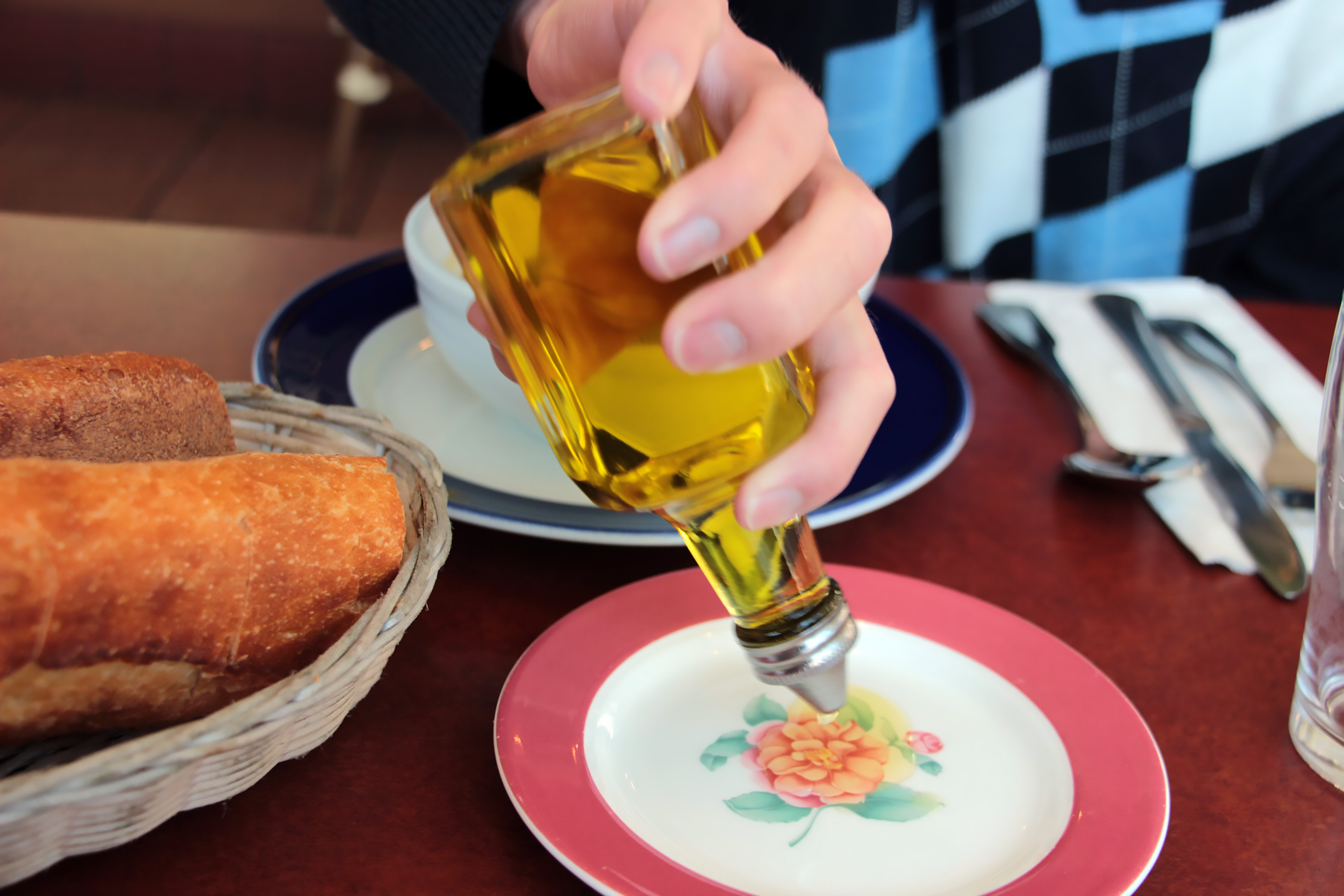
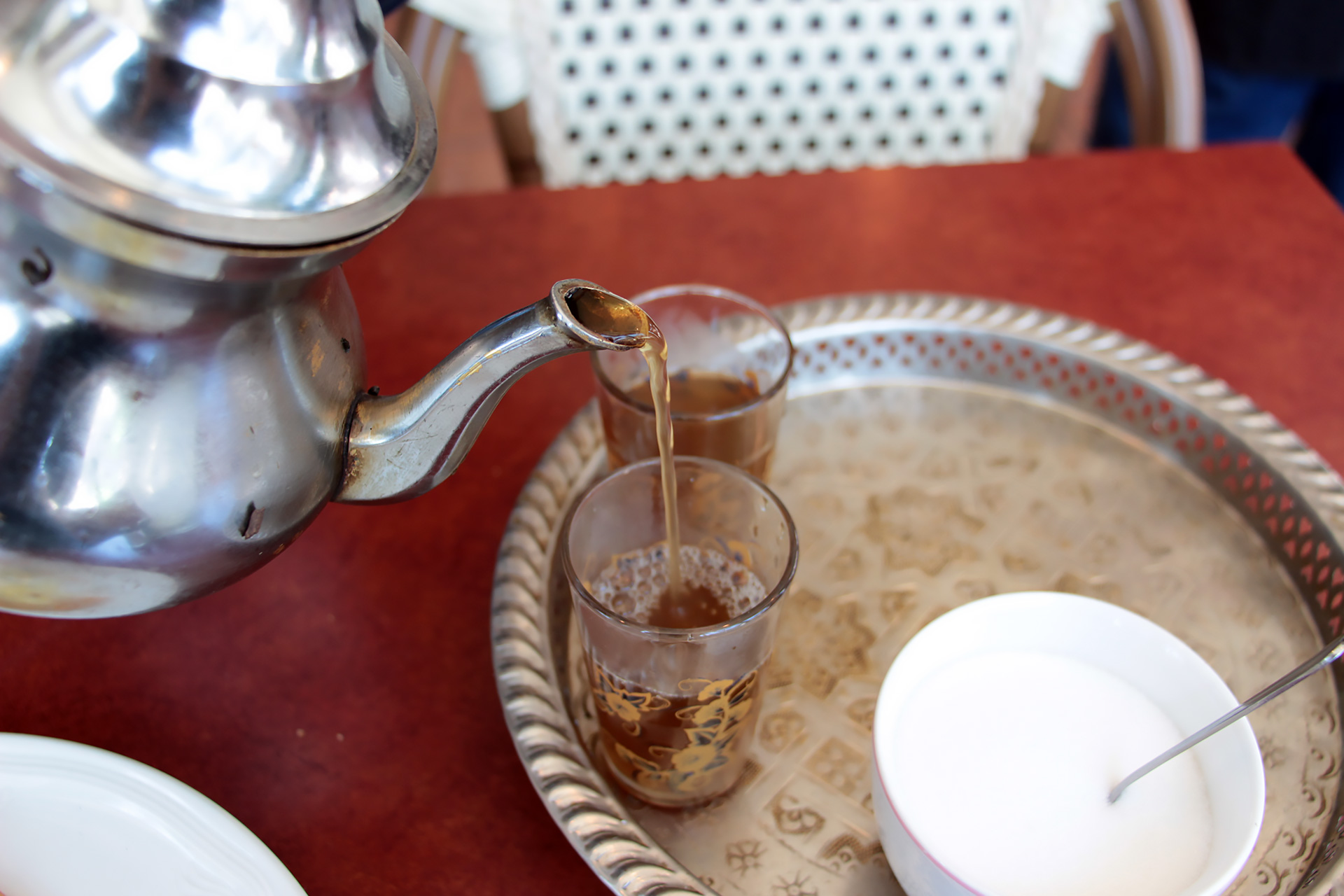
While Aicha missed on some details, every corner seems to be thought out by Cafe Zitouna — remarkable for a restaurant staffed by Rebia in the front-of-house and a single chef in the kitchen when we visited and are told that is usually the case. The mint tea here comes with sugar and is already lightly sweetened right at the perfect level. You’ll be flying off the walls but not getting a sugar-induced toothache. Every table gets crusty fresh baguette, first for dunking in olive oil, then the harira and finally the tagine sauces. Between the couscous and this baguette, don’t even dream of bypassing carbs at this place.
Every table gets crusty fresh baguette, first for dunking in olive oil. (Wendy Goodfriend)
Like Aicha, Cafe Zitouna is a strictly Halal restaurant. There is a wide range of diners who visit Cafe Zitouna, from older regulars coming to tote several doggy bags for subsequent meals to the exploring types curious what this version of basteeya (with egg) is like to guests coming directly from the neighboring mosque on Sutter Street.
But what makes Cafe Zitouna stand out are the half dozen items from Tunisia, Rebia’s homeland, that lean heavily on aggressive, brighter spices. Oh, and, everything seems to have an egg on it. Mediterranean and French colonial flavors, so there are lots of bell peppers, tomatoes and capers, along with lighter spices like parsley and thyme instead of the darker berbere spice blends. Note the olive oil on tables and how it’s used for cooking meats. Tunisian salads are bright and light, like in taktuka boasting the abrupt anise notes of caraway seed with bell peppers, tomatoes and onions. For something hearty from the Tunisian repertoire, look to the tomato-based tagines with kufta meatballs or merguez that are nothing like the sweet and savory tagine combination so popular in next door Morocco.
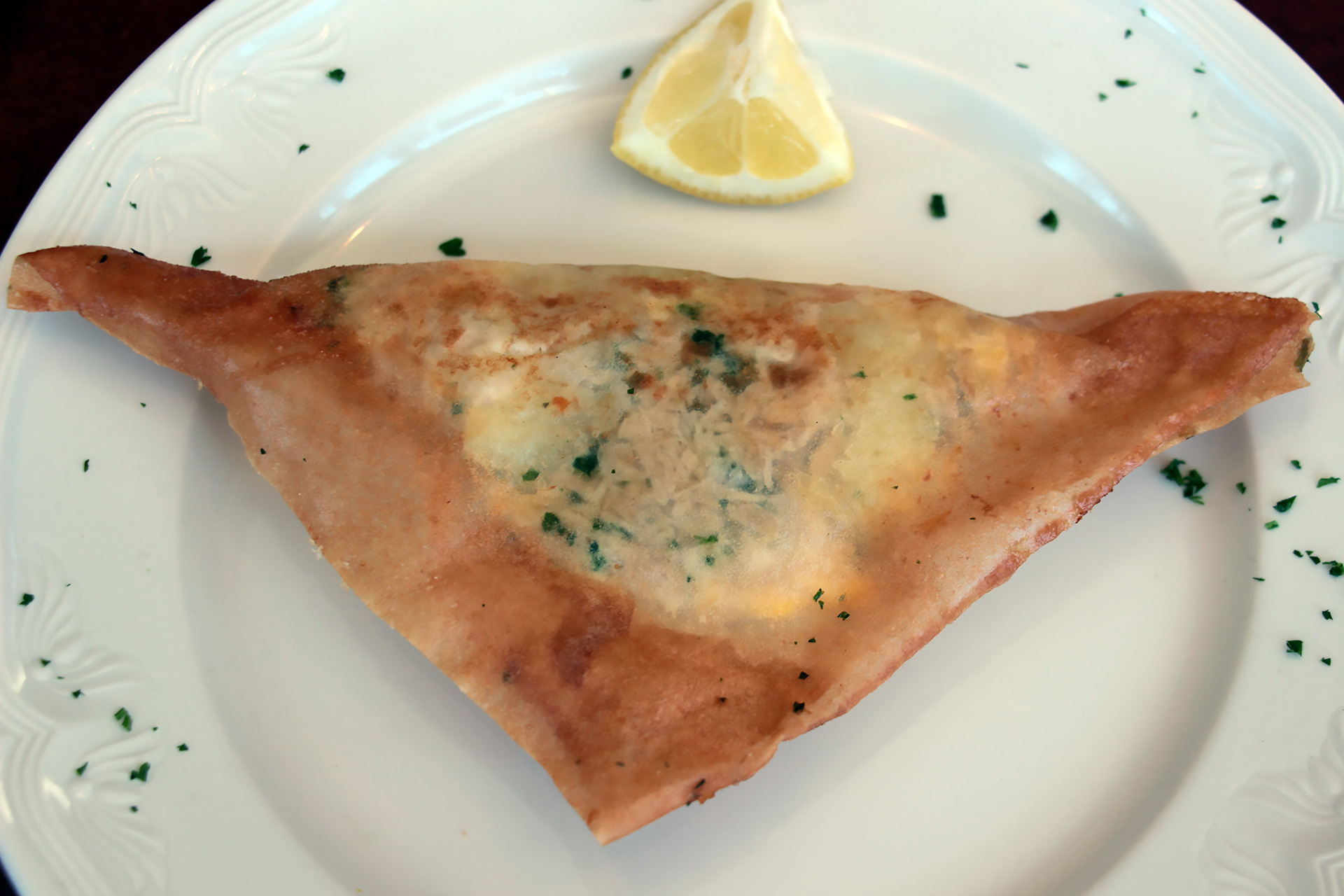
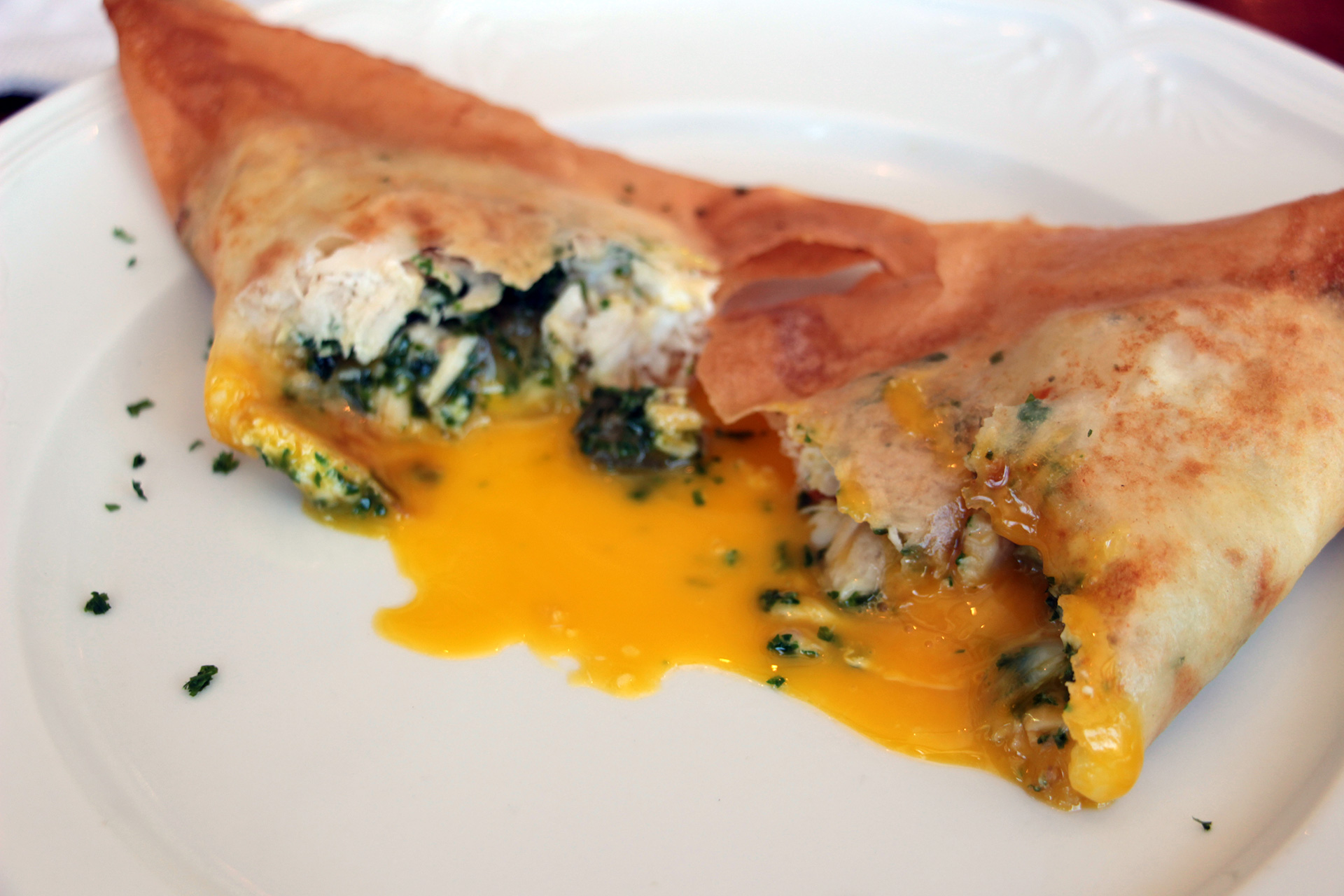
A crepe called breek. (Wendy Goodfriend)The inside of breek. (Wendy Goodfriend)Traditional Harira, Moroccan lentil soup at Cafe Zitouna. (Wendy Goodfriend)
If you’re thinking this seems a little like ground meat and marinara, well, you’re not far off. The quirky Tunisian specialty that can only be found here is a crepe called breek with a ready for Instagram soft yolk egg in the center. It’s filled with tuna, potatoes and capers, a nod towards the Mediterranean coast Tunisia borders. A finishing squeeze of lemon is yet another warm weather, coastal element and a necessary one to round out the breek. Start with breek, have some lively conversation over couscous and tea, then finish with basboussa, and get lost in a meal of Morocco, Tunisia and warm hospitality. You’ll be full, you’ll have had a great time and you’ll have learned a lot about new flavors and places. Isn’t this what dining out is all about?
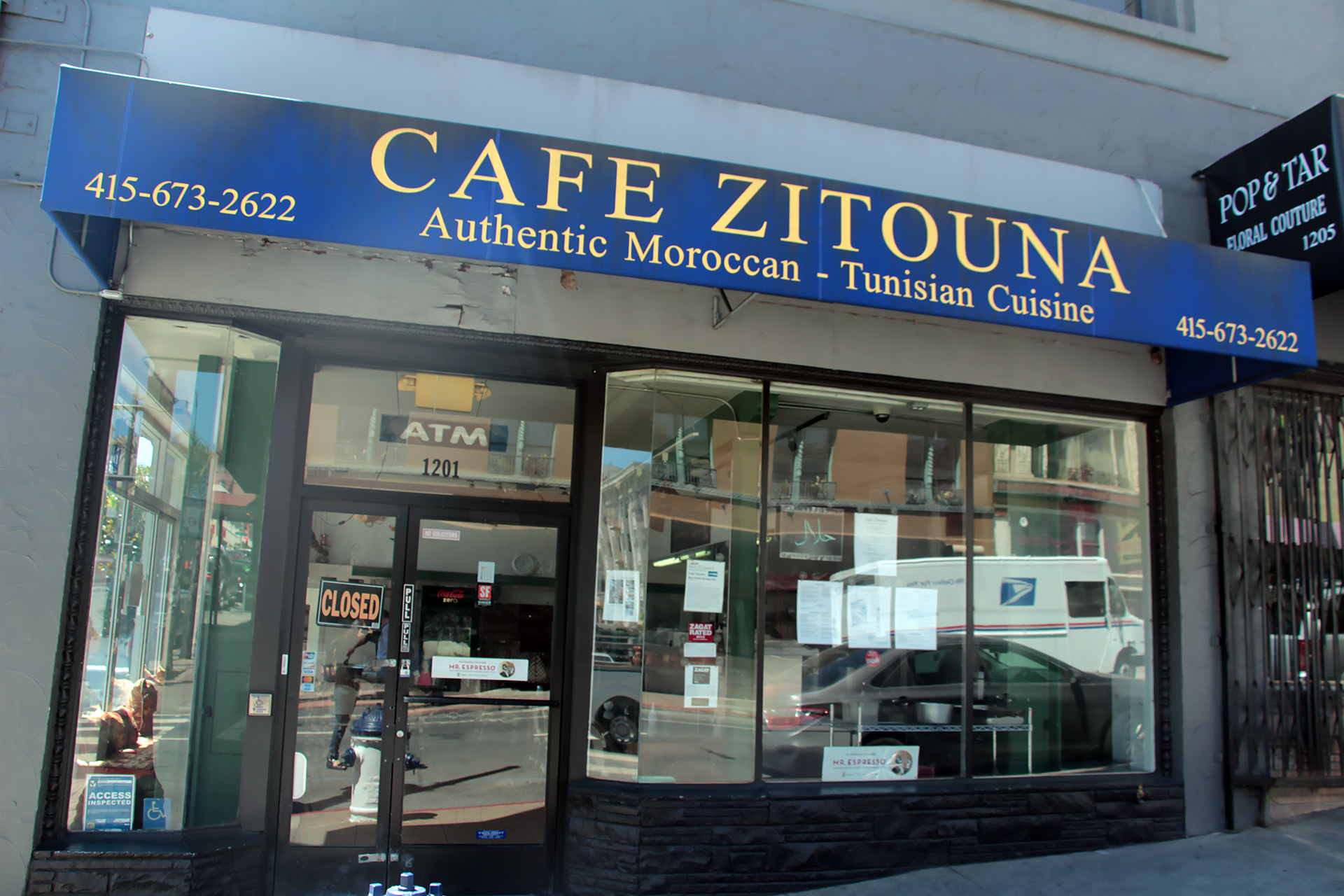
Moroccan mint tea at Cafe Zitouna. (Wendy Goodfriend)Cafe Zitouna in San Francisco’s Lower Nob Hill. (Wendy Goodfriend)
Cafe Zitouna
1201 Sutter St.
San Francisco, CA 94109 [Map]
Ph: (415) 673-2622
Hours: Tue-Thu and Sat-Sun, 11:30am-9pm; Fri, 2pm-9pm
Facebook: Cafe Zitouna
Price Range: $$ ($15-$20 per diner)
Yelp: Cafe Zitouna
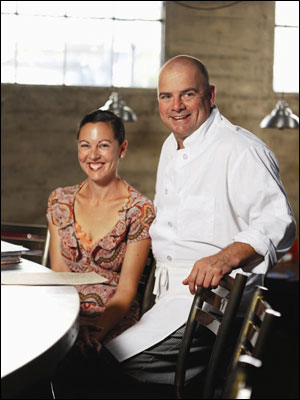
SOMA resident Joseph Manzare is a native of the Bronx, NY, and started working in restaurants in his early teens. By 17, he was telling people he was getting ready to open his own place, and got a college degree in business. After that, he cooked at the five-star, five-diamond Hilton in Woodcliff in New Jersey. Then he moved to Los Angeles to apprentice with Jean-Francois Mettigner at L’Orangerie. Manzare spent all his spare time working at Spago, and came to the attention of Wolfgang Puck, who brought him on full-time. After two years at Spago, he traveled to Italy and spent ten months working at San Domenico in Imola. Returning to the States, he again joined with Wolfgang Puck to be opening Sous Chef at Postrio in San Francisco, where he met his wife Mary Klingbeil, who was working as a waitress. Manzare explained, “I was kind of a loner chef that Wolfgang sent up to help get Postrio started. Mary and I met there 23 years ago.”
Soon, he was offered the position of Executive Chef at 44 at the Royalton in New York, where he was nominated “Rising Star Chef of American Cuisine” for the James Beard Awards. He was Chef at Granita in Malibu when he decided the time had come to launch his own restaurant. In 1997, Manzare and his wife and partner, Mary opened Globe in San Francisco, serving up American-Italian food. The couple then opened Globe Venice Beach in 2000. He and Klingbeil opened the Italian spots Zuppa and the (now shuttered) Joey & Eddie’s. Pescheria was their seafood spot that had a brief run in Noe Valley. Hecho, is their latest venture, a Tokyo style sushi and robata with a tequila bar and mariachi bands.
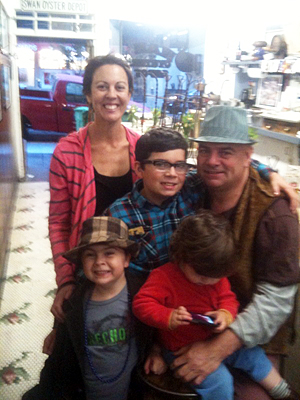
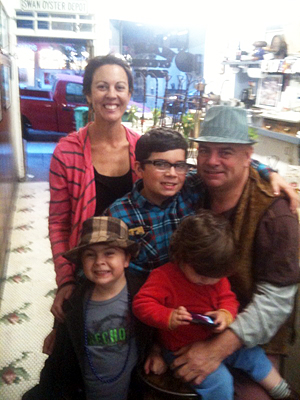
What sort of food experiences have your three sons had growing up around your restaurants?
Max (age 10) likes sushi, just like me. That’s probably because we’ve been going out together since he was a kid. I started taking him to Nobu’s original restaurant in L.A. when he was 2 yrs old. It was the start of our boys night out tradition. He has been to every restaurant in NYC, L.A. and all over the world. He comes into Hecho. Friday is still our boys night out. First, we’ll have sushi and then he’ll help me do skewers at the robata station. He’s done a lot of events, benefits, and comes to L.A. We do 1000s of the robatas, and it adds up to a lot of yakitori little skewers.
Mary was more protective when Wiley was born five years ago. We didn’t take him out as much, so he’s still a little amazed and looking around when we go out to eat these days. August is 1 1/2 and with three boys, you can imagine what it’s like trying to get out.
Hecho is where you spend most of your time these days. What’s new there?
We have chef Sachio Kojima, who is the main guy. Sachio has a kind of infamy among chefs and the Japanese community. When he owned Kabuto A&S, on any given night, you’d probably be eating with five other chefs. He gets up at 6:30 and starts texting me and is usually there at Hecho ‘til 11 or so each night. I try to get him to take a day off, but he won’t. That means that if he doesn’t take a day off, I don’t either (laughs). We talked about me giving him some ownership of the restaurant, and for now we’re taking it step-by-step.
What are your favorite spots to shop for food?
I like the Marin market on Sundays. A lot of farmers don’t come to the city, so I can do some shopping with them in Marin. There’s always a ton of interesting things to see like nice greens, with all their individual heads and leaves. I like that the market always has the rotisserie truck and that porchetta sandwich. If I’m with the kids we’ll get a loaf of bread and some chicken, and hang out by the lake.
New May Wah Market is great because they have live things like Monterey spot prawns, fresh out of the tank. They’re less expensive than we can buy from our wholesale fish retailers. The other side of the market has so many kind of fresh noodles from udon, ramen, and lo mein. There’s probably a hundred kind of fresh noodles in there. It’s all fun to learn and play around with. On the dry side of the market, there’s every other kind of Asian ingredient you can imagine.
What are your favorite date night spots?
I like to go to Fisherman’s Wharf and get live crab. All those little stands where they crack ‘em for you. It’s great, if you don’t mind waiting 20 minutes. I always go to Alioto’s because the guys there are really cool. Plus, it’s clean. We get two whole crabs and a couple cold cans of beer.
What are your favorite meals to have with your family?
We like to pack up and BBQ at Crissy Field. I have a set up in the car with a knife and cutting board. We’ll put table cloths out, make some salad, and bring all the grill stuff. You can look out at the Golden Gate bridge and Alcatraz. It’s the greatest place to have a family dinner.
We usually go to Swan’s if we have time and went there recently for my birthday. All the guys know us there. They’ve known Max since he was born. If they see Max and it’s the end of the line, they let him get in line to let us in, too. That’s a lot of fun. We get oysters, clams, crab salad. Wiley loves raw fish, oysters, clams, uni live in the shell; he’s the most adventurous eater.
What is your guiltiest food pleasure?
A banana split. When I was growing up, I always loved Dairy Queen. Here I go to Ghirardelli because they have huge ice cream dishes.
What do you have planned for this year?
I’ve thought about maybe doing a book. Maybe when Sachio gets situated at Hecho, that’ll happen. For travel, we’re going to try and plan a trip to Italy for a week or ten days. My true roots are Italian and I’ve worked in Italy in a lot of nice restaurants.
If the kleig lights circling out front didn’t show you the way to the Contra Costa Festival of Greek Food & Wine at St. Demetrios Greek Orthodox Church in Concord, the smell of spit-roasting lamb surely would.
Autumn, it seems, is the time for the Bay Area’s moussaka-loving, retsina-toasting, fisherman-cap-wearing lovers of all things Greek to wander from booth to booth in church parking lots, dusting their shirtfronts with buttery shards of phyllo, munching souvlaki and sampling olive oils.
And while most street fairs start breaking down and sweeping up at 5 or 6 pm, the Greeks keep partying through dinnertime and beyond. At 9:30 last night in Concord, you could still get a paper plate of baklava or syrup-drenched loukoumas, a glass of red wine, a lamb sandwich or some garlicky Greek potatoes. The band was still playing, and a loose circle of dancers, hands joined, were revolving around the floor. Someone was doing a brisk business in glow-stick light sabers, seen waving from the hand of every child under 10.
There were tchotchkes for sale, carved wooden items, bits of painted pottery, t-shirts, the ubiquitous Zorba-style black fisherman’s caps, but, judging by the vast sea of white plastic tables set up under the tent, food (and wine) was the point here.
A whole lamb was roasting on a spit next to one booth, ready to be turned into plates of lamb, lamb sandwiches, lamb dinners with rice and salad. There were booths for fried calamari, for gyros, for souvlaki on a stick. Several bars offered a selection of Greek wines, along with a few local wines made by Greeks. Made from the Assyritko grape, the Hatziyiannis white wine from Santorini was beautifully golden, with notes of honeysuckle and peaches.
The place to get the real deal, though, was inside, where the ladies of Philoptochos, the church’s good-works organization, were earning their place in heaven by dishing out generous platefuls of roast lamb, moussaka, pastitsio (baked macaroni), baked chicken, stuffed eggplant, stuffed peppers, dolmas (stuffed grape leaves), green beans with tomato, and more. For under twenty bucks, we got a cup of feta cubes, a cup of kalamata olives, a hefty square of moussaka, cinnamon-scented ground beef layered with eggplant and potatoes under a thick layer of creamy bechamel sauce, some sesame bread, and an enormous lamb shank braised with tomato.
We cleaned up the moussaka, feta, and olives in no time; the lamb shank we picked at, then realized that what it really needed was to go home with us, destined to be the centerpiece of a thrown-together rainy-day soup. The next day, into the pot it went, with sauteed onions, celery, carrots, and garlic, some tomatoes from the garden, sage and thyme, some soaked and parboiled white beans, a few chunks of potato, a glug of wine and just enough water to cover. A long, slow simmer, and last night’s dinner becomes tonight’s, and probably tomorrow’s, too.
As we paid for our plate, I asked the woman making change if all the food was made here. Oh yes, she told me, they’ve been working for months, chopping, cooking, and freezing. It’s the church’s 32nd annual festival, and by now they’ve got it down. “I call us the YaYa Sisterhood, you know, because “yaya” means grandmother in Greek,” she said.
Over at the pastry stall, we hear the same thing: all volunteers, working for months. I ask the woman handing us our baklava and kataifi if she was one of the bakers. “No, I’m a runner!” she laughed. “The bakers are these 85-year-old women. I call them ‘the machines’–their hands move boom-boom-boom, so fast! Me, I run for them–I run to get the butter, I run to put the trays in the oven, I run to take them out. It’s exhausting, but it’s easier.” She’s working on her own baklava, though. First try, the nuts–too big. Second try–too small. So she’s getting up her courage for round three, sure to be the charm.
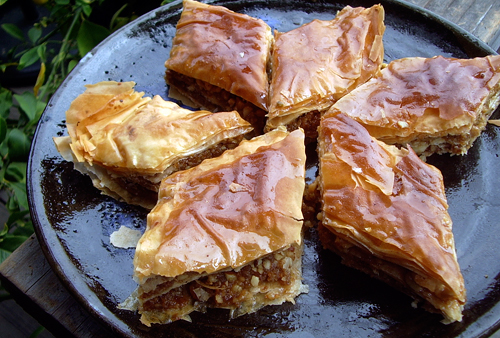
Now, I don’t know if my own baklava would pass the yaya test, but I can tell that there’s nothing like freshly made baklava, made with lots of nuts, honey, and butter, the pastry crackling and shiny with syrup infused with cinnamon or orange.
The best way to get the consistency of the nuts right is to chop them by hand, handful by handful, on a heavy cutting board with a big knife. You want them rough and nubbly, and even one pulse too many in the food processor will turn them to powder. If you don’t already have a pastry brush, get one before you start. There’s a lot of buttering that needs to happen, and while you could use your fingertips or the back of a spoon in a pinch, a pastry brush is neater and does a much more consistent job.
Baklava
The trick to getting the perfect balance of sticky and crisp (rather than stolid and soggy) is to have the syrup and pastry at opposite temperatures when they meet. Either pour hot syrup over cold pastry, or pour cold syrup over hot pastry. Let the syrup soak into the pastry for a few hours before serving. The baklava is best on the day it’s made, but it will keep for a few days, if you can possibly resist it for that long.
You can find frozen phyllo dough in the freezer aisle of most supermarkets, usually next to the puff pastry and frozen cakes. Let it defrost a little before you use it. Unroll the sheets carefully, and always keep a clean, barely damp dishtowel draped over the sheets while you’re using them, to keep them from drying out and becoming crackly and hard to use.
Ingredients
For pastry:
2 1/2 cups walnuts, almonds, and/or pistachios, or a combination, finely chopped
2 tablespoons sugar
2 tablespoons honey
pinch salt One of the following flavorings: 1 tsp grated orange or lemon peel and 1/2 teaspoon ground cardamom; 1 teaspoon cinnamon and a pinch of ground cloves; 1 teaspoon rosewater; 1 teaspoon orange-flower water
1/2 lb phyllo dough (half a standard package)
1/2 cup butter, melted
Syrup:
1/3 cup sugar
1/2 cup honey
2 tsp lemon juice
1/3 cup water One of the following flavorings: 1 tablespoon grated orange rind; 1 cinnamon stick; 1 tablespoon rosewater or orange-flower water
Preparation:
1. Preheat oven to 325F. Lightly grease an 8-by-8-inch baking pan.
2. In a small bowl, mix nuts, honey, sugar, salt, and your choice of flavoring.
3. Unfold phyllo dough and trim into 8-by-8-inch squares. Spread a sheet over the bottom of the baking pan. Using a pastry brush, lightly brush sheet with melted butter. Repeat with 5 more sheets, lightly buttering each sheet before adding the next.
4. Spread half of the nut mixture over the top phyllo sheet in the pan. Top with another four sheets, lightly buttering each sheet before adding the next. Rewarm melted butter slightly if it gets too thick.
5. Spread remaining nut mixture over the top phyllo sheet. Top with another 6 sheets, lightly buttering each sheet before adding the next. Lightly butter the top sheet.
6. Using a sharp knife, make four equal vertical cuts (about 1 1/2 inches apart) through the top layer of pastry. Then, make eight equally-spaced diagonal cuts (about 1 inch apart) across these strips to form 18 diamond shapes. There will be a few triangular pieces left over along the edges –perfect for the cook to snack on before serving!
7. Bake for 30 to 35 minutes, until pastry is crisp and pale golden.
8. While pastry is baking, make the syrup. In a small, heavy-bottomed pan, bring sugar, honey, water, and lemon juice to a boil. Keep a close eye on it, as it will tend to froth and foam up. Add orange rind or cinnamon stick if using. Over low heat, simmer for 5 minutes until syrup has thickened slightly. Remove from heat. If using rosewater or orange-flower water, add now. Pour into a pitcher and let cool.
9. When pastry is baked, pour cooled syrup over hot pastry. Alternately, let pastry cool to room temperature. Reheat syrup to almost boiling, then pour hot syrup over cooled pasty. You may not need all the syrup; you want the pastry to be glossy and sticky but not drowned.
10. Following the previously made cuts, cut the pastry all the way through into diamonds. Let syrup soak in for at least 3 hours before serving.
The Contra Costa Festival of Greek Food & Wine continues through Sunday at the St. Demetrios Greek Orthodox Church, 1955 Kirker Pass Road, Concord, across from the Concord Pavilion. Sat., 9/18, Noon-11pm; Sun., 9/19, noon-8pm. Admission $5 adults, $3 seniors (55+), children under 12 free.
In San Francisco, the Annunciation Cathedral at 245 Valencia St will be hosting its annual A Taste of Greece festival Sept. 24-26th. Fri., 9/24, 11am-10pm; Sat., 9/25, 11am-10pm; 12pm-9pm.
In celebration of our most patriotic holiday, I am declaring my own independence from what I consider one of the most irritating sites on the internet– Yelp.com. Even the name causes me to chafe.
According to the Merriam-Webster dictionary, the word “yelp” means:
1. Noun: a sharp shrill bark or cry (as of a tog or turkey); (see) also squeal.
2. Intransitive verb: To utter a sharp quick shrill cry.
At least. they’ve given themselves an accurate name.
Perhaps it is my own, personal distaste for democracy, especially in terms of voting for, say, restaurants (think Zagat), pop singers (think American Idol), or even presidents (think about whomever you wish) that makes me dislike sites such as Yelp. Before your underwear gets anymore bunched in places, I am hardly un-American. I am a firm believer in our particular form of government, which happens to be republican, rather than democratic. And before your y-fronts become irretrievably lodged, I am referring to systems of government, not political parties. For the sake of argument today, I shall limit my discussion to restaurant commentary.
It seems that anyone with access to a computer today can write a restaurant review, myself included. But is everyone’s opinion worth reading, let alone writing? That is certainly debatable. I for one, don’t think so.
Call me a snob. Call me an elitist pig. I’ve been called much worse.
Of course, I believe that everyone is certainly entitled to his or her opinion, but many opinions expressed on sites like Yelp are neither well-informed nor, as is more often the case, well-written.
For example, I’ve chosen three reviews of Brenda’s French Soul Food on Polk Street, which has, as of this posting, 338 Yelp reviews. This is from a four yelp star rated piece:
“I enjoyed this place a lot. We found parking right on Vaness. Our wait was about 20 minutes. We arrived at 11am I think. It will seat about 20 people-30people. I did not see Brenda though.”
“My first time eating beignets — I did not know it came in threes, I should of ordered one of each. We got three apple ones. It was gooood and fattening.”
“I ordered the bowl of gumbo (dark gumbo). I am use to the tomatoey colored gumbo but it was pretty good.”
“Also got an entree of the Harrytown special which includes oysters, grits and biscuits.”
“I loved the biscuits.”
“Cute little place to revisit or bring out of towners.”
Harrytown Special? I can only assume she meant Hangtown Fry. With testimonials like this, it’s not surprising the restaurant sustains such long lines out the door. Are reviews such as these typed on a texting keypad, rather than at a keyboard? That would be a charitable explanation of such short sentences. It’s like some unevocative, bastard form of haiku. It horrifies, but that’s just fine, since I tend to savor crappiness. The only point it serves, in my book, is as the object of mockery.
Now here is an excerpt from a not-so-good (two yelp star) review:
“Just before we passed out from hunger, they brought over our beignet flight which was good, our favorite beignet was the crawfish. The only other compliment I have is for the coffee. The breakfast plates were mediocre. My friend, who was starving, took 5 bites of her omelette and left the rest.”
She certainly has a flair for the dramatic. If one decides to set out and review a restaurant, whether one has enjoyed the experience or not, one should, to the best of one’s ability, explain why. What made these crawfish beignets good? What could possibly compel a starving woman to take only five bites of an omelette? These are things I want answered. If a reviewer cannot accurately describe her experience– the food she ate, the service she received, or her surroundings– she has no business wasting anyone’s time with her fourth-grade writing skills. Make that third grade– I know a couple of nine year-olds who write much more vividly.
And, finally, here’s a rather terrible (one yelp star) piece:
“I am as honest as a heartbeat, so believe me when I say that this spot is highly overrated. I just have no desire to come again– wait or no wait.”
“I had a bit of all four of our plates and the sampler benettes, so here goes my opinion…”
“My dish– The Shrimp and Goat Cheese Omelet Grits and Cream Biscuit– The shrimp was not devianed and thus flavorless. I opted not to have the bacon relish on top so I will be fair and refrain from further commenting about it. I like my gritts creamier than it was but it was tastey and the buiscutt was pretty good.”
“Watermelon Sweet Tea– Free refills, but they don’t really tell you that. liked it because it was not sweet, and I like water. It was also luke-warm.”
“The Chalkboard Special, Shrimp Pot Pie- The shrimp was overcooked and rubbery, and the veggies were overcooked and mushy. Boo Hoo!”
Honest as a heartbeat. Perhaps she should have her cardiologist examine her for arrythmia. I don’t trust anyone starts off by telling me how honest she is. It was a bad review on a number of levels, star ratings aside. I do, however, admire her creative spelling, the fact that she feels shrimp proto –intestines are where all the flavor is, and that she can’t tell the difference between a mirror and a chalkboard. I read the bit about why she likes the Watermelon Sweet Tea about ten times.
If you’re interested in reading about her bikini waxing at the Pink Cheeks Skin Salon in Sherman Oaks, I will happily email you her yelp profile.
I had hoped the members of Yelp Elite might be a little more helpful or, at least, better writers, since the elite page states:
“…Yelp members who get in are known for having reviews that are insightful, irreverent and personal (aka useful, funny and cool!).”
Of course, it also requests that Elite members have:
“Personal pizazz! Even after all this, we look for a certain je ne sais quoi—we call it Yelpitude. To paraphrase Supreme Court Justice James Stewart when defining pornography in a case about obscenity, ‘Yelp Elite is hard to define, but we ‘know it when we see it.’“
Perhaps I should have sensed trouble when I realized the Yelp Elite squad (or, at least, the person responsible for writing the copy) had mistaken a much-beloved Campbell’s Soup-hawking actor for Supreme Court Justice Potter Stewart.
The first elite reviewer I read was a young lady named Beverly. She went on and on about her experience with a DAT date to Frisée Restaurant in the Castro. I hope that by DAT she meant “Dine About Town”. Please read:
“Sidenote: It was cramped as s**t. We sat upstairs and the ceiling was like 6 feet high and we sat at a tiny itty bitty table next to a tiny itty bitty walk way. Oh and the service. SLOW AS S**T. I want to minus stars for the service but the food was so good I just can’t bring myself to do it.”
What is it about her personal writing style that led her to become part of the Yelp Elite? Was it her penchant for using fecal terms when describing her experience? Perhaps it was her photos (which are required of all Elite members). Maybe her two lip rings at the right-hand corner of her mouth catch enough food so that she might savor it more thoughtfully upon her return home from dining, quill pen in hand and that deep-in-thought dreamy look that only fake, blue-tinted contact lenses can properly convey. Does she have “that certain je ne sais quoi”? I’m thinking it’s more like elle ne sait rien.
Well, I’ve had my fun at Yelp’s expense today, but to be fair(ish), I must say that, in browsing the site for several hours this week, I have come across some people who do offer thoughtful– and fairly well-written– reviews. Case in point: Kerry “Tempura Assassin” K in describing her experience at Burritoville in San Anselmo:
“[My husband] was a little more offended at the sight of iceberg lettuce on his carne asada taco ($2.95) than I was. Granted, yes, iceberg lettuce in a Mexican restaurant is an insult to my intelligence, I was able to forgive. This was largely due to the chips, which were thick, crisp, and toasty as well as a lovely salsa bar, friendly and welcoming service, a clean environment, and a buy 9 get 1 free taco card.”
“Caveat lector: on the back of the frequent buyer card, it spells out the number of tacos in spanish, “uno, dos, etc.” After the 9th one it says “bingo gringo”. Gringo eh? That must mean that either Latinos and Chicanos don’t eat here or the food isn’t real Mexican. So perhaps my taste can’t be trusted with this review. If you keep reading, read on with that in mind.”
Finally, someone who notices and describes those little details that make a review worth reading. That, and the fact that she used the term caveat lector correctly (or at all). A bright, shining tablet of antacid to save me from so much Yelping bile. I’d really like to hug her. If elite membership could be limited to the likes of Kerry, I think I might have a little more faith in the website. Otherwise, what is the point of creating an elite class, if it is open to, well, everyone?
If you accused me of elitism, you’d be absolutely correct in doing so. Why should I waste my time reading the average person’s average review? I don’t want an average guy running my country, building my home, or giving me a colonoscopy. I want experts. I want smart people. Same goes for my restaurant reviewers. If all you can give me in describing a gumbo is “OMGITSAWESUM!!!”, perhaps you should just keep it to yourself. The world beyond your Myspace friends list is not ready for you.
While on vacation in Hawaii I did not indulge in one of my addictions, watching food programs on TV. In fact, I watched very little TV at all on my trip. Vacation is my big chance to catch up on my reading. This time around I brought two books I had received review copies of–Best Food Writing 2007 and Service Included. I was thrilled to see that my friend and Bay Area Bites colleague Shuna Fish Lydon was included in the book. Past Bay Area Bites writers to make the cut include both Catherine Nash and Stephanie Lucianovic. The book seems to be equal parts angst and humor with some thoughtful and sentimental pieces thrown In for good measure. It’s a good vacation read, and provides an interesting snapshot of the food issues and obsessions of the day. Some of my favorite pieces were Cast Iron Skillet by Andrea King Collier, and A Grandchild of Italy Cracks the Spaghetti Code by Kim Severson.
The other book I read Service Included, is really a gem. It gives us the flipside to Bill Buford’s Heat. It’s the story of being a waiter at Per Se in New York. Phoebe Damrosch is a fantastic writer with humor, wit and a great sense of irony. She is brutally honest about just about everything, herself included. Throughout the saga of the opening of Per Se in New York are little tidbits about service and how to be a good diner. The book reads like a guilty pleasure. I have even less desire to be a waiter than to be a chef, but to be a fly on the wall is just plain yummy.
There are some days you just want to escape. My favored escapes are a beach in Hawaii, a walk along the Seine in Paris, or a little day trip somewhere, anywhere in Italy. I had the pleasure of living in Italy for six months and it was truly a pleasure. I spent a couple months studying the language, at a leisurely pace mind you, and the rest of the time was spent working and traveling. But whether studying or working, every spare moment was spent exploring–museums, ruins, shops, cathedrals, markets, you-name-it and meeting various characters along the way.
Adventures of an Italian Food Lover definitely takes me back to the days I was living in Italy. It is a cookbook that features recipes from all regions of Italy, mostly fairly uncomplicated ones. More importantly it is a book of stories about all the characters that author and Italian food expert Faith Heller Willinger has met and gotten to know. The watercolor illustrations done by Willinger’s sister Suzanne Heller put faces to the names and stories behind each of the 254 friends profiled in the book.
In my experience Italians can sometimes be cagey about sharing recipes, but Willinger has managed to get the best out of almost everyone she meets. After reading this book, I wish for just one day, I could trade places with her, and so will you.
Leek and Sausage Orzotto Serves 4-6 1 cup pearl barley 4 leeks Sea salt 6 – 8 ounces fresh sausage, casing removed 1/4 cup unsalted butter (or extra virgin olive oil, if you’re like me) 2 tablespoons dry white wine 1/2 cup freshly grated Parmigiano-Reggiano cheese 2 teaspoons minced fresh parsley Freshly ground black pepper
In a bowl, cover the barley with about 4 cups of cold water and soak for 3 to 6 hours. Drain in a colander. Clean the leeks, saving the tough ends and outer leaves for the vegetable stock. Chop the tender parts of the leeks. Combine the leek trimmings with 8 cups water and 2 tablespoons sea salt, and simmer for 30 to 45 minutes.
Saute the sausage in a nonstick skillet, breaking it up, until it loses its pink color and renders its fat. Drain the fat and reserve the sausage.
In a 5-quart saucepan, saute the chopped leeks with 2 tablespoons butter or oil over low heat until wilted. Add the white wine, raise the heat to evaporate the wine, then add the barley and 2 cups simmering broth. Cook over moderate heat, stirring frequently, until thickened and most broth has been absorbed. Add more simmering broth, 1 cup at a time, until the broth is absorbed.
When barley is almost done, in around 10 minutes, add the drained sausage and begin adding broth 1/2 cup at a time. Cook until the barley is tender, probably an additional 10 minutes. You may not need all the broth. Stir in the Parmigiano-Reggiano, the remaining 2 tablespoons butter (or oil), the parsley, and pepper until well mixed, and remove from heat.
Barley should be slightly soupy, a consistency that will slip across a plate. Let the orzotto stand for 5 minutes before serving.
Recipe reprinted from Adventures of an Italian Food Lover copyright 2007 by Faith Heller Willinger
This week I scored big. In addition to finishing off a pint of burnt caramel ice cream I found a dusty but still strongly bound first edition of Laughter on the Hill, a book about a young woman who moved to San Francisco alone in the winter of 1940.
For others who have adopted this city as their home, who have looked over the Bay and its bridges with awe, lived in a drafty dump of a flat that’s very well stocked with wine, or danced in the streets with strangers, this memoir will also strike a chord. It reminded me of other books that capture a special, specific time in the City’s history.
During the spring of 1848, as reports of gold began transforming the City, young William Tecumseh Sherman was still stationed under General Kearny in California. Later in his life, he remembered accompanying Governor Mason from San Francisco to Santa Cruz on one particularly difficult journey.
The house was of adobe, with a long range of adobe-huts occupied by semi-civilized Indians, who at that time did all the labor of a ranch, the herding and marking of cattle, breaking of horses, and cultivating the little patches of wheat and vegetables which constituted all the farming of that day. Every thing about the house looked deserted, and, seeing a small Indian boy leaning up against a post, I approached him and asked in Spanish, “Where is the master?” “Gone to the Presidio” (Monterey). “Is anybody in the house?” “No.” “Is it locked up?” “Yes.” “Is no one about who can get in?” “No.” “Do you have any meat?” “No.” “Any flour or grain?” “No.” “Any chickens?” “No.” “Any eggs?” “No.” “What do you live on?” “Nada” (nothing). The utter indifference of this boy and the tone of his “Nada” attracted the attention of Colonel Mason, who had been listening to our conversation, and who knew enough of Spanish to catch the meaning, and he exclaimed with some feeling, “So we get nada for breakfast.” I felt mortified, for I had held out the prospect of a splendid breakfast of meat and tortillas with rice, chicken, eggs, etc., at the ranch of my friend Jose Antonio, as a justification for taking the Governor, a man of sixty years of age, more than twenty miles at a full canter for his breakfast. But there was no help for it, and we accordingly went a short distance to a pond, where we unpacked our mules and made a slim breakfast on scraps of hard bread and a bone of pork that remained in our alforjas.
Back when celery was a rare and refined delicacy, displaying its long green stalks in a crystal celery vase was a mark of high society. The tenderest, palest stalks would appear in a creamy soup. This version comes from the kitchen of San Francisco’s self-proclaimed Bohemian and epicurean, Joe Tilden.
Celery Soup
Boil one small cupful of rice in three pints of milk, or two pints of milk and one of cream, until it is tender. Then rub it through a sieve and add one quart of veal stock, salt, cayenne, and three heads of celery (the white stalks only) which have been previously grated. Boil until the celery is tender.
This slim volume recounts the quintessential San Francisco experience: the ripeness of youth, rebellion amidst soul-searching, parties with poets and much, much red wine. Before she became a reporter and correspondent for the New York Herald Tribune, Parton lived for a year in a tiny, walk-up on Telegraph Hill.
It was autumn now in San Francisco, and wine-making time on the Hill. As I walked down Union Street toward the streetcar I could smell the purple grapes hanging rich and heavy in the hidden arbors behind the bare white fronts of the Italian flats. Great wooden barrels, scoured for the wine to come, began to appear in front of every doorstep, and one day there was the stained old wine press starting its yearly journey from the houses at the top of the Hill down to the late harvesters at the bottom. Each day as I passed it would be moved a little farther down, its heady smell mingling with the warm air from the basement bakeries, the odors of Provolone, salami, and black olives from the dim Italian groceries, the acid reek of the dark, male-frequented alleys, the salt wind from the Pacific.
For catching the City in its many moods, there’s no better than Robert O’Brien’s street-by-street study. He trained his eyes and ears onto the quirky characters who flocked to the “City of Second Chances,” and his book, recently reprinted, remains one of the best portraits we have of the City.
Cross Broadway, and you leave behind the kingdom of chow mein and jow won ton and jasmine tea, and enter the realm of ravioli. The vowels you hear now are soft and liquid, and the music is something from La Tosca.
In fact, a step from the corner of Grant Avenue and Broadway is a cafe called “La Tosca.” Scenes from the opera are painted on the walls; Caruso sings from the juke box, and you drink a cappuccino, gray, like the robe of a capuchin monk, and made of chocolate that is laced with brandy or rum, and heated by steam forced through coffee.
This is a world of round brovolette cheeses hanging in store windows, and garlic sausage, and capretti at Easter time. Of the lovely smells of baking bread coming from ovens beneath the sidewalk, of picturesque and brightly colored family washings on clotheslines strung high over narrow alleys, of flowers in window boxes and canaries singing. Of Tony’s Shaving Parlor, and the Panama Canal Tagliarini and Noodle Factory and the Roma Macaroni Factory. Of steep lanes on the side of Telegraph Hill, and fat Italian housewives leaning on the their window sills and laughing in the sunshine, and wiry Italian boys playing ball in the street.
After settling comfortably for years in France, Gertrude Stein and Alice B. Toklas returned to the U.S. for a lecture tour that stretched from New York to California. They weren’t impressed with what they ate during much of their journey across the nation but were delighted at last to reach the West Coast. (I’ve been searching for the tarte Chambord recipe for years, so if anyone knows how to make it, drop me a line!)
In San Francisco, we indulged in gastronomic orgies–sand dabs meuniere, rainbow trout in aspic, grilled soft-shell crabs, paupieres of roast fillets of pork, eggs Rossini and tarte Chambord. The tarte Chambord had been a specialty of one of the three great French bakers before the San Francisco fire. To my surprise in Paris no one had ever heard of it.
At Fisherman’s Wharf we waited for two enormous crabs to be cooked in a cauldron on the side-walk, and they were still quite warm when we ate them at lunch in Napa Country. Gertrude Atherton took us to lunch at a restaurant were the menu consisted entirely of the most perfectly cooked shell-fish, to her club where the cooking was incredibly good, and to dinner at a club of writers where conversation excelled.
This is one in a long series of books written and illustrated by Yee as he explored cities throughout Europe and the U.S.
The crab-sellers of San Francisco’s Fishermen’s Wharf offer a sharp contrast to my mind from the lobster-seller in Bar Harbor and all the coastal towns of the State of Maine. There every lobster is kept alive as long as possible and there is no sign of any being cooked on the spot. It is the general belief that a lobster should be eaten straight after being cooked, for it tastes best then. Does not this belief extend to crabs? Or perhaps crabs cannot live out of the sea for long? The most puzzling point for me is that Crabdom seems to lie in the bottom of the Pacific around the west coast covering San Francisco while Lobsterdom (if any) is in that part of the Atlantic covering the New England States. The Chinese proverb “Pai wen pu yu yi chien” or “Hearing (about a thing) a hundred times is not better than seeing it once” proves true. Had I not been in both places I should not have realised the existence of these separate kingdoms. Crabdom and Lobsterdom!
…
Eating a whole freshly-cooked lobster or crab, though some small forks are usually provided, involves some action with the fingers from time to time, which in turns involves “table manners.” This brings to my mind many little problems concerning Chinese eating manners….We Chinese have two definite styles of eating: formal eating and eating for pleasure. At a banquet it is all formality and good manners; at other times we just enjoy ourselves, and then there is no question of etiquette. That is why some of the typically Chinese restaurants in San Francisco have a number of partitioned rooms, unlike the modern fashionable restaurant with many tables neatly arranged all together. Within these partitions, one can enjoy a meal with one’s friends, and eat as unconventionally as one likes without being criticized. Unfortunately this kind of typical Chinese restaurant with partitioned rooms is beginning to disappear even in San Francisco.
Ruta Kahate is the Oakland-based author of 5 Spices, 50 Dishes. She teaches popular Indian cooking classes and leads tours of India. Check out Ruta’s Indian Kitchen to learn more.
1. Which do you love the most, teaching classes, writing cookbooks or leading tours to India? Oh dear, tough one. I do enjoy all of them equally! Ten years ago when I questioned myself as to what I wanted to do in life, the answer was “Indian food: research, teach, write and travel.” And I am incredibly lucky to have fulfilled that dream!
2. How did you come up with the idea to write a cookbook that features dishes with 5 spices? This cookbook was inspired by my students, many of whom simply didn’t have the time to create elaborate Indian recipes requiring numerous spices and steps. I wanted to write a cookbook that would simplify Indian cooking without compromising on the taste. And since many Indians cook like this at home, it wasn’t much of a stretch.
3. Did you consider including any other spices? If you had chosen 6 or 7 spices what would you have added? Actually, no. These five go together so well, any other selected at random would disrupt the harmony.
4. What are the biggest misconceptions about Indian food? That it HAS to be spicy. That it’s greasy. “Curry.”
5. How would you characterize the Indian food available in Bay Area restaurants? It’s typical “restaurant” food i.e food that for generations has been served only in restaurants, like Tandoori chicken. But things are definitely changing and there is a crop of new places that’s serving up more regional fare.
6. What are the most important techniques for students of Indian cuisine to learn? Tadka — the technique of infusing hot oil or ghee with spices is one of the cornerstones of Indian cooking. And it is essential that one learns to do it just right. I’ve attempted to make it very straightforward in the book. There are others — like, just how much to brown the onions for a curry, or how to toast spices correctly, but the tadka to me is foremost.
7. What’s your favorite dish in the book? Another tough one, there’s several. The Mild Fish Stew with Potatoes because it has one spice — an Indian dish with ONE spice?! Thalipeeth — because it showcases a different bread other than Naan. Crispy Okra Raita because I make okra haters into okra-lovers with it…. I could go on and pretty much I’d be at all 50! Just goes to show these 50 were really chosen with much care… so many things I want to convey to people with this collection.
Next week we’ll have a review of Ruta’s book and a recipe.
Which newspaper food sections do you read? I subscribe to the San Francisco Chronicle, so I always check out that food section, but I also like to peruse several others online. Here’s what you’ll find this week. Note: Each require registration, which is free.
The New York Times My first stop on Wednesday is usually the New York Times. There is often some provocative article there. This week it’s about a chef suing over intellectual property. Apparently a past sous chef at one restaurant has opened a restaurant that may have copied everything from the interior style to the recipes of his past employer. This week there are also articles about the sexy look of women chef on television, a report on Thai fruits that are no longer banned in America and The Minimalist column by Mark Bittman. In the current column he takes on tuna, explaining the differences between bluefin and yellowfin and sharing cooking techniques and a recipe.
The Los Angeles Times This week there is an article about the chocolatiers of Barcelona that caught my eye and brought back memories of my trip and chocolate excursions just a year ago. The incomparable Russ Parsons writes about this years crop of stone fruit. He also includes a recipe for cobbler, which sounds more like a crumble to me. There are also some paella recipes that make me think I need to run out and buy a paella pan, like today.
The Washington Post An article on how Pinot Noir pairs with salmon is timely now that wild salmon is showing up in markets. Also worth checking out are the recipes from the Smithsonian Folklife Festival for Brunswick Stew, Buttermilk Pancakes and Yunnan Style Cold Rice Noodles.
If you have a favorite food section, let me know in the comments section.
Bonjour mes amis — my apologies for the delay in posting this today. I’ve had an enfer (hell) of a time getting Blogger to upload my pics but I think all is well in cyberspace. Nothing a mid-afternoon glass of wine can’t resolve 🙂 A little culinary bird told me that Jacques Pepin was going to be in town. One of his stops was an informal sit down with the SFPFS (San Francisco Professional Food Society) moderated by Laura Werlin, artisanal cheese aficionada, at the Fairmont Hotel atop Nob Hill.
Mother Nature must be a Jacques Pepin fan because we were treated to some of the most gorgeous views imaginable set against a screaming blue sky. Jacques was in town promoting his latest book, Chez Jacques, which means “at Jacques’ home”. He did a meet and greet for a good hour then had a sit down interview followed by a reception where the Fairmont culinary team treated us to some of Jacques’ recipes from this book. Here are a few of his words of wisdom, snippets, quotes and delightful humor.
• In this book, Jacques focused on recipes from his home, hence the title, recipes that he cooks for himself and his wife or a big group of friends. He states, the point of eating is sharing food with family and friends, with sharing comes conversation, talking around a table. He quotes anthropologist Levi Strauss who claims that cooking food is nature transformed into culture.
• Jacques claims he is egocentric, egocentric to the food he loves. He goes on to explain that this is natural because you can’t escape yourself because you are unique. If you like a restaurant, it is more a reflection of your tastes, aesthetics, preferences, palette, experiences than on the restaurant itself.
• Laura posed the question: “How far should we go to buy our food?” Jacques replied, the best food is always going to be the closest food, similar to the best table in a restaurant being the one closest to a waiter.
• Another question asked about food trends in restaurants such as molecular gastronomy. His response was that chefs are thinking too much, turning it into fashion vs. trend. For example, Il Bulli is breaking new ground but locally no one would know what the dish is. If he took a dish out into the street of the town, no one would be able to identify it. He compares it to a haute couture Parisian fashion show. When you see thee crazy fashions, you think no one would ever wear it but eventually the techniques, such as the foam phenomenon, will trickle down and morph into mainstream dining.
• When asked about the Food Network and how chefs are now superstars, Jacques humbly refutes that chefs shouldn’t take themselves so seriously, that we are all just soup merchants. Most chefs are basically craftsmen and technicians and some have extraordinary talent such as Thomas Keller. Jacques is also concerned with the lack of actual information on the Food Network – 24 hours a day of food shows but not one minute on actual factual information tackling today’s culinary issues such as childhood obesity, diabetes, etc. There is no nutritionist, no investigating, we don’t know anything about anything and the Food Network needs a show such as 60 Minutes that investigates and reports on food issues that are so prevalent in this country.
• An audience member asked Jacques the qualities of a good chef. He immediately fired off the following: hardworking, prompt, always there, attentive, fast, a good technician, and can work and get along with other people. These, he states emphatically, are more important than anything, even creativity. Once a chef is a master technician and if he has talent, then he can become an artist. Only then can he take everything he’s learned, all his knowledge and experience and his own sense of aesthetics and start creating.
• Jacques tests all his own recipes along with his very discerning wife and assistant Norma. If they don’t like it, the recipe doesn’t go in the book! His collaborator on most of his books and shows, Susie Heller, also tests all his recipes in her home kitchen to ensure consistency.
• Jacques’s next project is called The Artist’s Table where he interviews accomplished artists, musicians, etc. to discover how their specific art translates to food and wine. He recently sat down with Itzhak Perlman who discussed the importance of food, using food synonyms to discuss how his music will sound and his love of cooking. When talking about the marriage of art and science, Jacques claims that you can’t reduce a recipe to a scientific formula because every recipe incorporates that one chef’s techniques, imagination, instinct and talent. If he gives the same recipe to 10 different people, he will get 10 different versions of the same dish because each person will naturally incorporate these traits.
• When asked about his favorite memory of Julia Child, Jacques smiled and laughed. The first show they did together had no recipes so it took them 2 years to write the follow-up book because the editors would have to replay the shows over and over to get exactly what they were putting into the dish. Another memory involves a visit to the set by a local sponsor, Kendall-Jackson. The producer Goeff Drummond, before the taping, confirmed with Jacques that they’d pour a glass of wine at the end of the segment. When the time came, Jacques poured himself a glass of wine and offered one to Julia. She graciously declined, declaring that she preferred a beer! The same thing happened when the Land O’Lakes sponsors were on the set. Jacques and Julia were making a pie crust and Jacques took out the butter. Julia announced she was going to make her pie crust with Crisco!
• A poignant ending to the evening came when Jacques talked about how blessed his life is, how he is able to do what he loves for a living and if he could come back in a second life, he would come back as Jacques Pepin. The audience burst into applause in heartfelt agreement.