The holidays are the perfect time to merrily combine two of your favorite things: art and shopping. We know you love supporting artists and independent retailers, so we contacted local shop curators for creative holiday gift ideas: one from their own establishment and one from another neighborhood shop. Here are their picks.
Lauren Smith and Derek Fagerstrom from the Curiosity Shoppe made selections for the holiday traveler who needs a little reminder of home. Their SF Zipper pouches are “perfect for all the little things in your life—great for pocket electronics, art supplies, toiletries, etc.”
Jamie Alexander from Park Life has another idea for outdoorsy types, a handmade wooden flashlight by Gad Scot Tal that was created to benefit the Headlands Center for the Arts. It’s charming and “built of reclaimed wood from local dismantled dwellings.”
From his own shop, Jamie suggests a canvas tote by Farm Tactics, which is made from recycled climbing nylon and is available in several colorways. For your fashion-conscious (or hoarding) friends, a bag is always the right answer when it comes to gift giving.
We contacted the good folks at The Thing Quarterly because a subscription to the “object-based publication” is high on our list for art lovers. Four unique art editions created by blue chip artists are delivered throughout the year, and nothing sounds more delightful than free, surprise art. The Thing’s Holiday Special subscription includes a bonus: their best selling edition, a Dave Eggers shower curtain, “or any amazing back issue of your choice.” It will arrive at your art lover’s door in time for the holidays, dressed up in Macfadden & Thorpe-designed wrapping paper.
Jonn Herschend and Sarah Simon from The Thing also recommend stoneware mugs by Albion, Calif. artist Cliff Glover, available at Gravel & Gold, which sounds like a good gift for your boss. It will hold her coffee each morning, reminding her to give you a raise next year.
Andrew Martin Scott, proprietor of local zine shop, Needles & Pens, recommends a recent publication called PUBLIC NOTICE by Nathaniel Russell. He says, “It’s hilarious, and everyone who picks it up laughs out loud.” It’s filled with fictional flyers that “run the gamut from Found Dog and Idea Party…all the way to an ad for Grampa’s Waterfall Skate Jam.”
He also recommends Curator’s 2013 songwriter calendar “because everyone loves Stevie Nicks, right?” You’ll also find portraits of Nina Simone, Bob Dylan, David Bowie, and Johnnie Cash.
Julie Cloutier from General Store has ideas for the chef and the jewelry junky in your life. For the kitchen, Luke Bartels’ handcrafted, “elegantly shaped wood cutting boards,” would make a gorgeous addition to any countertop. Plus, double as a classy surface on which to serve cheese, or perhaps some bootleg foie gras.
Available in different sizes in silver or gold, Julie also suggests the Pt. Reyes Hoops from Gravel & Gold, because everyone knows that the fastest way to a woman’s heart is through her pierced earlobes.
Jamie Kidson and Adrienne Armstrong of Oakland’s Atomic Garden have chef suggestions that pair nicely with The General Store’s cutting boards—a nice bottle of Katz and Company’s Organic Artisan Olive Oil from Market Hall in Rockridge.
Atomic Garden’s Teak Pie Server comes sweetly wrapped with a 100% linen dish cloth and is one of many lovely kitchen and home items available at this Rockridge shop.
For the San Francisco expat (who mostly likely moved to New York or LA), Giselle Gyalzen of Rare Device suggests a print of Jennifer Maravillas’ San Francisco Map, a colorful addition to any ex-local’s (or local’s) art collection.
Giselle also suggests the Anchor Denim Duffle Bag from San Franpsycho, a shop that showcases local artists’ work through hand-screened items from clothes to dog wear. The cool anchor makes this bag perfect for hard-to-please teenagers.
Now that you’ve checked the chefs, bosses, nature and art lovers, travelers, jewelry junkies, expats, and moody teenagers off your list, it’s time to treat yourself. You need a new bag to cart around all those gifts, don’t you? Happy holiday shopping to all, and to all a good bag.
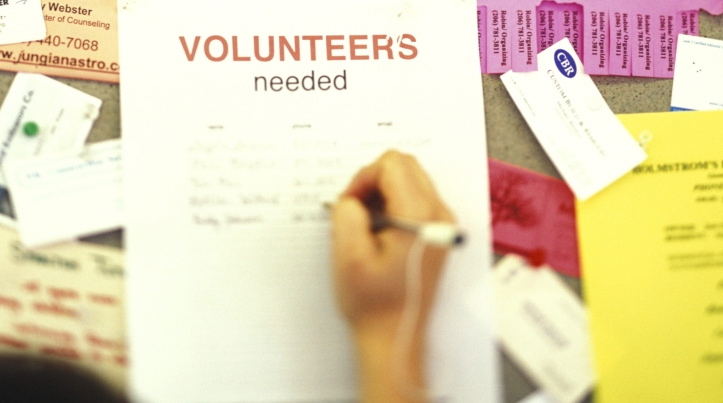
Here in the Bay Area we have a lot to be grateful for. We don’t need air conditioners, we’re surrounded by stream of cultural events and stunning landscapes on all sides, we have Sergio Romo and Buster Posey. With so much to be thankful for, why not give back to the community by volunteering this holiday season? For those who want to get out there but aren’t sure where to start, here are nine great places you can volunteer. And don’t forget to sign up with friends!
Project Open Hand was launched in 1985 by Ruth Brinker, who realized that many people suffering from HIV/AIDS were dying from malnutrition. Her home-delivered meals program grew and grew and now serves people in San Francisco and Alameda Counties with many different serious illnesses that cause them to be homebound. It has also expanded to serve seniors. Volunteering with Project Open Hand is not just about giving food to people who can’t feed themselves, but it is about getting out in the community and talking to people who may not have any other visitors all day.
Glide Memorial Church is a San Francisco institution that welcomes people of all races, faiths, and opinions. Through their many programs, they try to break cycles of poverty and addiction and create a community that’s open and supportive of everyone. A great thing about Glide is that a large part of their work is done by volunteers and by getting involved, you can have a great impact and meet a lot of awesome people. Also, they have a bunch of holiday volunteer opportunities, serving meals, sorting toys and giving away grocery bags, so no excuses! Grab your friends and start helping out!
Since 1977 MCCLA has been working to promote Latino cultural expression in the Mission District of San Francisco through programs and activities representative of Latin American traditions. Since its inception, it has been driven by volunteers and community support. This year, you could be part of that community by leafleting, setting up or working as an usher for one their many events, maybe even their Holiday Youth Mariachi Concert on December 14 or Navidad Negra on January 5!
Want to do your volunteering outside? The California State Parks need you! With so many cuts to funding, our parks need volunteers now more than ever. Get out in the woods and help as a volunteer docent, helping visitors understand the cultural, natural and recreational resources of the parks, or get dirty maintaining trails, removing exotic plants, enhancing native plants or cleaning up beaches. Anything you do in one of California’s beautiful parks is guaranteed to not only be rewarding but also, a lot of fun.
Volunteer at the Second Harvest food bank. From sorting food in the warehouse, to education and outreach, to working in the office, to food distribution, help the food bank out in the way that makes most sense for you. For many things, volunteers only need to be 14 or older! So bring your family and help your community eat well this holiday season.
Another way to get outdoors is by volunteering at the Bay Area Discovery Museum. If you love being creative, kids or just have a lot of extra energy, this might be the perfect opportunity for you. Over the holidays the museum has volunteer opportunities of all kinds, from greeting to guiding people through exhibits to working the store. Not to mention you get to be in beautiful Sausalito.
Most would agree that we owe a pretty big debt of gratitude to the men and women who fight for us overseas. During the holidays this year, why not help the Veterans Administration make the lives of wounded, ill and elderly veterans a little easier by taking one of their many volunteer assignments? Whatever your skills or area of interest, there is always something you can do. From playing music to escorting patients to appointments to driving vans, there are a million ways you can serve those who served you.
Okay, what you really want to do is play with cute animals, right? Then join the SF SPCA in its mission to find homes for homeless animals by being part of Macy’s Holiday Windows! Pets, helping out and the holidays: the perfect combination.
Supporting cultural institutions is important and the San Francisco Ballet needs your help! Their BRAVO program has many different ways you can help, from translations, to administrative support to helping out with the Nutcracker during the Ballet’s busiest time of year while getting to meet staff and dancers and learn what goes on behind the scenes that makes a ballet run. It’s not just a great way to serve the community — it’s also really fun!
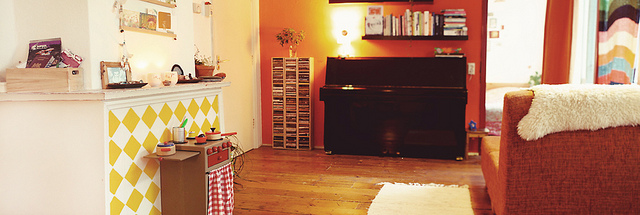
The San Francisco Board of Supervisors passed an ordinance allowing the building of apartments as small as 220 square feet. Whether those apartments get built or not, many Bay Area residents likely live in a small space — either a small studio, an in-law in the basement or one bedroom in a house divided among roommates.
Below are 10 tips for making the most of a small space, culled from Forum’s interview with Maxwell Gillingham-Ryan, founder of ApartmentTherapy and author of Apartment Therapy’s Big Book of Small, Cool Spaces and Miranda Jones, style editor for Sunset Magazine.
BE SELECTIVE ABOUT YOUR SPACE. “Not all spaces are created equally,” said Jones. “If you’ve got natural light, high ceilings, and natural materials in the apartment, you’re going to feel as though you’re living well even though you’re living small.”
EDIT, EDIT, EDIT. “Keeping your items very well edited” is one of the top things to keep in mind when living in a small or unusual space. That means when you bring something into your apartment, you bring something out. It’s about quality versus quantity.
TIDY UP! “In a way, large spaces just allow you to be lazy,” said Gillingham-Ryan, “and to not have to deal with stuff until much later when your space fills up. With most everybody, after about seven years they have a clutter problem. With a smaller space it just comes a lot quicker.” Jones also recommended keeping surfaces clean, because tabletops and countertops are usually not abundant in small apartments.
TAKE SOME TASKS OUT OF THE HOUSE. If you live in a small space, chances are you are going to have to call on your surrounding neighborhood to fill some of your needs. Nature and laundromats are a given, but even some tasks may just be better suited elsewhere. Gillingham-Ryan recalls that after married and became a father, he started doing bills and other paperwork at his office. “Your home doesn’t have to be everything, all the time,” he said.
MAXIMIZE EVERY INCH. “All unused space is fair game,” said Jones. “You’ve got to take your storage vertical, you’ve got to prop up your bed so you have extra storage under there. When space is at such a premium, Jones said you have to look at it differently. “Every door is a possible storage location.”
MULTI-TASK (OR BUY ITEMS THAT DO). “Because there is no room for anything extra, everything has to do two jobs,” said Jones. “Your dining room table is also your office space.” Indeed, this video tour through a small Airstream trailer and micro-apartment shows that multi-tasking is a key element to making small spaces work.
BUY BUILT-INS. Gillingham-Ryan is a fan of built-in features like shelves and drawers. “Spend your money on built-ins whenever possible because built-ins are wall-to-wall, they suck up all the space and you can use every inch,” said Gillingham-Ryan. “And visually, it creates a lot less busy space.”
LET THE LIGHT IN. “Light is what makes a space feel expansive,” said Gillingham-Ryan. “I always tell people, ‘Three points of light to every room.’ It doesn’t seem like a lot but every client I’ve ever worked with has had trouble getting to two.”
USE MIRRORS. “I’ve seen people over the years use mirrors in such incredibly inventive ways,” said Gillingham-Ryan. “They not only reflect light, they expand the space that they’re in. They can make the space brighter and just remove that sense of wall that is there otherwise.”
PLAY WITH PAINT. Light colors are key. “It doesn’t have to be white, it can be off-white,” said Gillingham-Ryan. “There’s still color in off-white.There’s a lot you can do between warm and cool colors. They can really change the feeling of a space.” In fact, Gillingham suggests that something as simple as a difference between off-white and regular white can make your room feel larger. “If you do a bright white on the ceiling and an off-white on the walls, there’s a separation between wall and ceiling,” said Gillingham-Ryan. “It will make your walls feel taller.”
Chances are that if you’ve lived in the Bay Area for a while, you’ve seen a sight or attended an event that you felt you just had to share the next time you had out-of-town visitors. Memorable adventures with out-of-towners can showcase our spectacular natural wonders, with holiday treks up to West Marin, from Limantour Beach to the Tomales Point Trail, from Lagunitas Creek to the Point Bonita Lighthouse in the Marin Headlands. But there are plenty of urban sights to take in, too. The truth is we have an embarrassment of riches to share with out-of-town guests at all times of year, though the selection during the holidays seems especially rich. Here are a few suggestions for impressing visitors. But be warned, after showing them the sights, they may want to keep coming back.
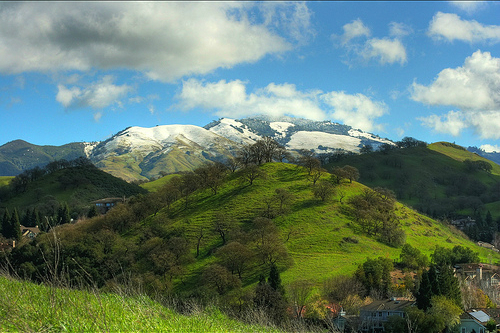
1. THE HEIGHTS AND THE SIGHTS. The best things about the hills and mountains in the Bay Area: the view from the top. Dazzle your guests with the area’s famous vistas, most of which you can drive to: UC Berkeley’s Lawrence Hall of Science, Oakland’s Mormon Temple, and San Francisco’s Twin Peaks. The best of them all is Mount Diablo, elevation 3,849 feet above sea level, with what’s reputed to be one of the most expansive views anywhere: from the Pacific Ocean in the west to the Sierra Nevada in the east.
Mount Diablo
And here are a couple of world-class vistas that are knock-outs even if you’ve seen them a thousand times before: the view of the Golden Gate Bridge and San Francisco from the Marin Headlands (there’s lots more to see there if you have time to drive out to the beach at Fort Cronkhite) and the view of the city from Treasure Island (accessed by the Bay Bridge).
For those in a mood to stretch their legs, here are a couple of favorite vistas you need to walk to: the southern end of San Francisco Bay from Mission Peak in Fremont—a trail that’s steep (a climb of over 2,000 feet), long (five miles round trip), and popular; the Richardson Bay view from the West Point Inn on Mount Tamalpais (refreshments available for weekend hikers), and the 50-mile bay view from the top of the Stonewall-Panoramic Trail (steep, and muddy in wet weather) in the Claremont Canyon Regional Preserve on the Oakland-Berkeley border.
2. EAT SOUP. The little town on the San Mateo County coast south of San Francisco called Pescadero (just east of Highway 1, just south of Highway 84 is so small that once you’re there you’ll have no problem spotting a little restaurant and tavern called Duarte’s. Among other delicious fare, the establishment serves a specialty — cream of artichoke soup—artichokes being a specialty crop down along the San Mateo and Santa Cruz coasts. But you don’t have to drive all the way to Pescadero just to have a bowl of Duarte’s cream of artichoke soup (although it’s not a terrible idea). But you might want to take your guests on a leisurely tour of the parks or state beaches in the area—maybe even Año Nuevo State Park, where you can sign up for a guided walk to view mating elephant seals (reservations required; book early if you plan to go). Or Pescadero Creek Park. Or Pigeon Point Lighthouse. Then, once you’ve partaken of nature and gotten lots of outside air in your lungs, go to Duarte’s and eat soup.
Flickr: LisaW123
3.HANG WITH TULE ELK. If you want to get out of urban landscape and see some spectacular nature, and you have all day—really, all day–here’s what you do: Drive up to Marin County, head out to Point Reyes National Seashore. The land- and seascape here is reason enough for your visit, but here’s something extra: the area is a tule elk reserve, and it’s common to see some of the large ungulates grazing along the road before you get to the ranch or out along the trail. One tip for the trail: It’s long, with lots of up and down after the first mile or so. The northern section is sandy and windy and can be heavy going. So wear layers for changeable weather and sturdy walking shoes. Bring water and a snack and prepare for a minimum of four hours out on the trail if you walk all the way to the end and back.
How to get there: When you get to Pierce Point Road, past Inverness, bear right, and stay on the twisting, rising, falling ranch road for 9 miles, past the signs for Abbotts Lagoon and Kehoe Beach. Eventually, you’ll arrive at the historic Pierce Point Ranch—also the start of the Tomales Point Trail, a 4.75-mile fire road and path to the northern tip of Point Reyes (that’s 9.5 miles round trip). Here’s the map.
Nearby attractions: All of the Point Reyes beaches have their own beauty, and there are many excellent trails in both the seashore and adjacent federal and state lands. Visit the Point Reyes Visitor Center, off Bear Valley Road just outside the village of Olema, for information. You can find food and refreshments in Inverness, Inverness Park, Point Reyes Station, and Olema.
Flickr:Jamie in bytown
4. HAUNT A HOTEL ATRIUM. Here’s a favorite vicarious-luxury experience that can provide a break from traipsing around the city: Hanging out in one of San Francisco’s grand hotel lobbies and atriums. The drill is simple: Go in, look around, be impressed, then maybe grab a (yes, expensive) drink at the lounge. The Hyatt Regency, at Market and California streets, plans artificial snowfalls in its soaring atrium. Another favorite: The Palace Hotel and its Garden Court (New Montgomery and Market). The Palace is self-conscious enough about its history—a sitting U.S. president died there—that it offers tours. At the top of Nob Hill is the grand Fairmont Hotel, which features a Gingerbread House and a holiday-themed afternoon high tea.
Cal Academy of Sciences
5.EXPLORE INDOORS. It’s conceivable that your visitors don’t want to jump in the car to take in the sights or tramp through our magnificent scenery — especially when the weather isn’t cooperating. Maybe they’d like to spend the day at one of our world-class museums instead. Throughout the holidays, the California Academy of Arts and Sciences in San Francisco’s Golden Gate Park is hosting ” ‘Tis the Season for Science,” a program featuring winter-themed exhibits and activities, complete with indoor snow flurries every half-hour. If we were making the call, we’d tell our visitors we were going down to The Tech Museum in San Jose for its “Mythbusters: The Explosive Exhibition,” which promises to unravel mysteries like, “Do you get wetter if you walk or run through the rain?”
6. WALK A NEIGHBORHOOD. San Francisco is full of great walking neighborhoods— a combination of engaging human and physical topography. Most of our neighborhoods have a colorful main street and plenty of bustling activity: Chinatown; North Beach; Potrero Hill; Bernal Heights; Mission Bay; Clement Street in the inner Richmond; Union Street; Chestnut Street; the Upper and Lower Haight; Hayes Valley; SOMA and NOPA; Noe Valley; the Castro. You get the idea—they’re everywhere.
And perhaps tops for pure constant surprise: the Mission. The food, the murals, the parks, the people, fun shops like Paxton Gate and 826 Valencia Pirate Supply, and the ease of getting there for a walking trip on Muni or BART, makes this a favorite in-town/out-of-town excursion that can be as quick as a lunch stop or an all-day expedition.
Flickr:Ingrid Taylar
7. TAKE THE FERRY. This is one of the cheapest, quickest, most accessible, and spectacular ways to show visitors some of what makes the place we live unique. You can choose from dozens of routes, but one of the most scenic is the San Francisco-Alameda-Oakland ferry, which sails from San Francisco’s Pier 41 or the Ferry Building at the foot of Market Street and makes stops in Alameda and at Oakland’s Jack London Square. On the way, it passes under the Bay Bridge and cruises up the Oakland Estuary between the Port of Oakland and the old Alameda Naval Air Station. The basic one-way fare for the 25-minute trip is $6.50, with discounts for kids and seniors. On the San Francisco end of the voyage, both Pier 41 and the Ferry Building feature a wide array of dining and shopping choices and ready access to transit for further travel (including connecting ferries to Sausalito, Tiburon, and Vallejo). There’s plenty of dining and entertainment at Jack London Square, too, along with a schedule of holiday events kicking off with a tree lighting and pop-up holiday market on November 30. Both the Ferry Building (on Tuesdays, Thursday, and Saturdays) and Jack London Square (Sunday) host farmers’ markets.
To explore the North Bay, take the ferries to Sausalito and Tiburon, both of which offer views of Alcatraz and the Bay Bridge. And there are plenty of opportunities for sightseeing, shopping, and dining within walking distance of the docks in both towns.
8. RIDE THE CABLE CAR. Ding ding! What a cliché! Ding ding! And priced to gouge out-of-towners ($6 for a one-way ride, except early in the morning and late at night; if you’re a Bay Area resident, you may use your Clipper card on the cable car if you have a month Muni pass or cash value loaded onto the card). But you know, San Francisco’s hand-crafted, steel-wood-and-glass transit antiques really are unique. There’s nothing quite like hanging on to the side (or hanging out on the rear platform) as that little car crawls up or clatters down San Francisco’s steep, steep streets. From the Powell Street turntable, you can ride from one pole of the city’s retail wonderland–the greater Union Square/San Francisco Centre/Bloomingdale’s sector—to the other—Fisherman’s Wharf and Pier 39 (via the Powell-Mason line) and Ghirardelli Square (via the Powell-Hyde line). If you and your guests want to delve into cable car lore, then you need to alight at Muni’s Cable Car Museum, at Washington and Mason streets (both Powell Street routes pass the museum.)
It’s true the cable cars may be crowded with holiday tourists. If you want to avoid them the same way they want to avoid you, here are a couple of tips: Take the short California Street line (starts at Market Street outside the Hyatt Regency, goes west up over Nob Hill, turns around at Van Ness Avenue). Or ride after 9 p.m., when the fare falls to $3 and the crowds thin out. The cars run until nearly 1 a.m. every night of the week.
9. VISIT THE ROCK:Alcatraz! Yes, here’s another San Francisco cliché. But hear me out: the story of the former fort/military prison/federal penitentiary/Native American rebellion headquarters is captivating, and the setting is both beautiful and grim. A ticket to Alcatraz these days gets you a boat ride out to the island and back and an excellent 45-minute audio tour of the cellhouse. Concessionaire Alcatraz Cruises also runs a night tour, which includes special programs on the island. Note: reservations are required for all Alcatraz tours.

 SF Zipper Pouch, $16
 Wooden Flashlight, $85
 The Thing Quarterly Subscription, $220
 Stoneware Mugs from Gravel and Gold, $24
 2013 Songwriter Calendar from Curator, $30
 Wood Cutting Boards, $90-$160
 Pt. Reyes Hoop Earrings, $75-$85
 Katz and Company’s Organic Artisan Olive Oil, $25
 Teak Pie Server, $38
 San Francisco Map, $50