Tag Archives: Policy

Prop 23: The Statistical Maze

How long would California’s climate law be frozen under the ballot measure to suspend AB 32? It depends on how you read the state’s labor statistics.

There were moments during Monday’s Forum program on KQED when I thought I’d stepped through the Looking Glass.

The two principal guests were, by design, on opposite sides of the campaign for Proposition 23, the upcoming ballot measure to suspend California’s 2006 greenhouse gas law. So I didn’t expect the “Yes” campaign’s Anita Mangels and Solaria VP David Hochschild to agree on much.  But I never expected a dust-up over California’s historical unemployment rate. I mean, that’s a pretty easy one to settle — a matter of public record, right? Nevertheless, the two duked it out over just that. Continue reading Prop 23: The Statistical Maze

Rumblings of Another Attack on AB 32

More than a little interested in California’s Global Warming Solutions Act of 2006 (Credit: Wikimedia Commons)

Here’s proof positive conferences put on by the Minnesota Rural Electric Association are can’t-miss events. Mark Schapiro of California Watch attended last month, and got a scoop (and I’m not talking about a scoop of Minnesota’s famed butter.)

Schapiro learned the attorneys general of Alabama, Nebraska, Texas and North Dakota are preparing to sue California if the golden state’s landmark law limiting greenhouse gas emissions survives a challenge at the ballot box this November from Proposition 23.

The grounds? AB 32 interferes with interstate commerce, according to Wayne Stenehjem, attorney general of North Dakota (pop. 642,200), giving new meaning to old phrase “the long arm of the law.”

“We are going to test the limits of how much you can constrain interstate commerce in the name of climate change,” Stenehjem told Schapiro.
Continue reading Rumblings of Another Attack on AB 32

How to Save 890 Million Gallons of Water a Day

A new study out of the Pacific Institute in Oakland finds that California can save more than a million acre-feet of water each year — or 890 million gallons a day — through conservation and improved water efficiency.  That’s close to 12 times the annual water usage of the city of San Francisco, and it’s roughly equal to the water required to grow all the grain produced in California.

The report’s lead author, Heather Cooley, says the strategies outlined in this report can help the state achieve its goal of a 20% reduction of per capita urban water use by 2020.
Continue reading How to Save 890 Million Gallons of Water a Day

Republican Candidates Ambivalent About Prop 23

The e-mail from the Fiorina campaign Friday didn’t exactly sound like a ringing endorsement:

“Proposition 23 is a Band-Aid fix and an imperfect solution to addressing our nation’s climate and energy challenges. The real solution to these challenges lies not with a single state taking action on its own, but rather with global action. That’s why we need a comprehensive, national energy solution that funds energy R&D and takes advantage of every source of domestic energy we have – including nuclear, wind and solar – in an environmentally responsible way. That said, AB 32 is undoubtedly a job killer, and it should be suspended.”

Political reporters are reading that as a “Yes” on Proposition 23, the state ballot measure intended to freeze the state’s greenhouse gas regulations under AB 32.  But you could be forgiven for thinking she’s not really hot for the prop. Coming out against the state’s 2006 climate law isn’t necessarily an endorsement of Prop 23, since the former can be suspended — at least temporarily — without a referendum. Republican gubernatorial candidate Meg Whitman has vowed to suspend AB 32 by executive order, if she’s elected governor. Whitman has said she is leaning toward voting against Proposition 23 but has not taken an official position (Democratic candidates in both the senate and gubernatorial races oppose the measure). Continue reading Republican Candidates Ambivalent About Prop 23

Reducing Emissions with Inflated Tires

The state Air Resources Board passed a new regulation this week designed to increase fuel efficiency and reduce the state’s greenhouse gas emissions.  It requires auto shops to check the tires on their customers’ vehicles and to inflate them to proper levels whenever they are doing an oil change or providing any other service.

CARB estimates that if every car in California had properly inflated tires, the state could save 75 million gallons of fuel and reduce emissions by 900 metric tons. Continue reading Reducing Emissions with Inflated Tires

California Fails to Pass Renewable Energy Bill

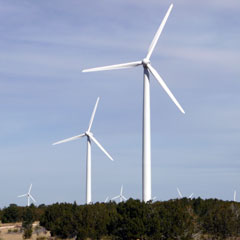
California wrestles with its clean energy goals. (Photo: Lauren Sommer)

It came down to the final minutes before midnight last night for SB 722, the bill that would make law California’s 33% renewable energy goal by 2020. But as the bill’s author State Senator Joe Simitian says, “The clock just ran out. It’s as simple and painful as that.” Continue reading California Fails to Pass Renewable Energy Bill

US EPA Official Says “No on 23”

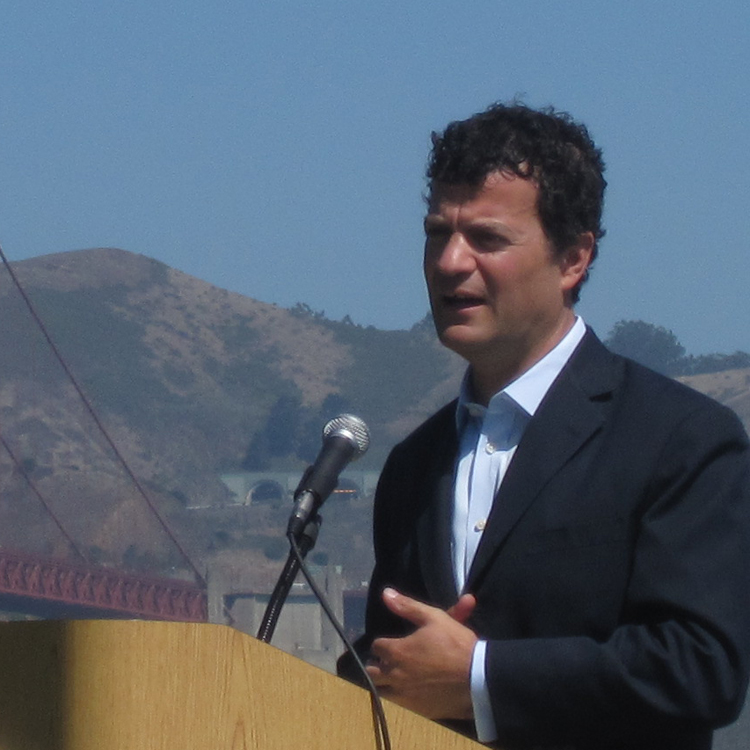
US EPA Regional 9 Administrator Jared Blumenfeld, at Crissy Field in San Francisco on August 25th. (Photo: Gretchen Weber)

The ranks of officials publicly opposing Proposition 23 seem to be growing.  Earlier this month we reported that Energy Secretary Steven Chu said passing the measure would be a “terrible setback” for California’s clean energy leadership and that the state’s Air Resources Board Chairman Mary Nichols called Prop 23 a “very serious threat” to the core programs of AB 32 and related regulatory programs.

Today, at a meeting of the California Air Pollution Control Officers Association in San Francisco, federal EPA Administrator Jared Blumenfeld urged attendees to vote against the measure.

Doing so, he said, “is certainly what you should do.”
Continue reading US EPA Official Says “No on 23”

Feds to States on Global Warming Suit: Back Off

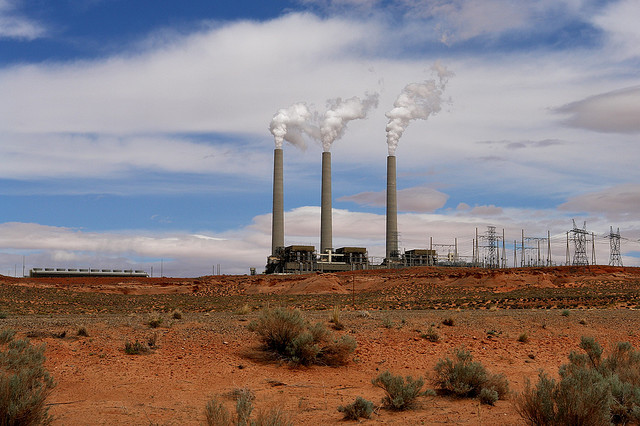
Navajo Generation Station. The place of coal in California’s energy diet is shrinking, but that’s not necessarily true for the rest of the country. (Credit Alex E. Proimos via Flickr)

Bit by bit, the US Environmental Protection Agency is moving to limit the gases that scientists say cause global warming. Over five years, the agency is limiting auto emissions and is also requiring new industrial plants to use improved pollution controls

Sooooo, US Justice Department lawyers argue, California, seven other states, New York City and three land trusts should not be suing major utilities, demanding that they reduce global warming emissions.

In papers filed with the US Supreme court this week, Justice Department lawyers argue the authority to curb emissions that cause climate change belongs to the Environmental Protection Agency and to Congress. Continue reading Feds to States on Global Warming Suit: Back Off

Another Mountain Critter Confronts Climate Change

The San Bernardino flying squirrel is a subspecies of Northern flying squirrel, pictured here. (Photo: US Fish and Wildlife Service)

The San Francisco-based Center for Biological Diversity (CBD) filed petitions with the US Fish and Wildlife Service today to protect four mountaintop species from climate change, including the San Bernardino flying squirrel.  The CBD is requesting that the species be listed as threatened under the federal Endangered Species Act and that critical habitat be designated.

The San Bernardino flying squirrel is a subspecies of the northern flying squirrel. Historically it has thrived in the high-elevation conifer forests of Southern California, in just two locations: the San Bernardino and San Jacinto Mountains.  But according to Shaye Wolf, a biologist at CBD, the species has likely disappeared from the San Jacinto Mountains in the past few decades. Studies indicate that the remaining population is isolated in the San Bernardino Mountains, which is bordered on the north by the Mojave Desert, a formidable barrier to migration. Continue reading Another Mountain Critter Confronts Climate Change

The Overspray from Prop 23

On Monday, US energy secretary Steven Chu became the latest high-profile voice against California’s Proposition 23, the statewide initiative to suspend AB 32, the state’s four-year-old climate strategy.

“AB 32 was a good bill and continues to have California in a leadership role in developing clean energy and the efficient use of energy,” Chu told reporters at a dedication in Menlo Park. “From the middle 1970s California played that role and it would just be a terrible setback.”

Last week the trend was given full voice by Mary Nichols, who, as chair of the California Air Resources Board (CARB), is charged with getting AB 32 fully implemented in the next two years, called Prop 23 a “very serious threat,” not just to the core programs of AB 32, but to an array of regulatory programs that support the state’s attack on greenhouse gases. Continue reading The Overspray from Prop 23