Category Archives: Government & Business

What’s brewing in Sacramento, Silicon Valley, and beyond

Lonely Road for Cap and Trade

California is the lab rat in the cap & trade maze
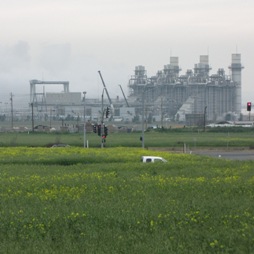
(Photo: Craig Miller)

One day after the midterm congressional elections, President Obama was already talking about cap & trade in the past tense: “Cap & trade was just one way of skinning the cat. It’s not the only way,” the President told reporters. “It was a means, not an end. And I’m gonna be looking for other means to address this problem. Senator Joe Lieberman put it more bluntly. “Cap and trade is off the table,” Lieberman said. “We have to start on the presumption that the table is clean, that nothing is on it.”

But while Washington is “looking for other means” to reduce the carbon emissions that cause global warming, the table is set for cap & trade in California. By day’s end Thursday, the state will likely have the nation’s first system that covers more than electric utilities. Continue reading Lonely Road for Cap and Trade
Californians Who Rely on Delta at “Severe Risk”

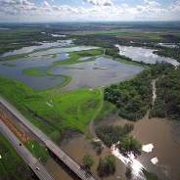
Here’s a shocker: Yes, action is necessary on the San Francisco Bay Delta

(Photo: US Fish & Wildlife)

State and federal authorities provided an update Wednesday on the Bay Delta Conservation Plan (BDCP), which is tasked with restoring the damaged ecosystems of the Sacramento-San Joaquin Delta and safeguarding California’s water supply.

“The 25 million Californians who rely on the Delta for clean drinking water are at severe risk,” said Secretary of the Interior Ken Salazar, on a call with reporters. Continue reading Californians Who Rely on Delta at “Severe Risk”

Antidote for Urban Heat: More Trees

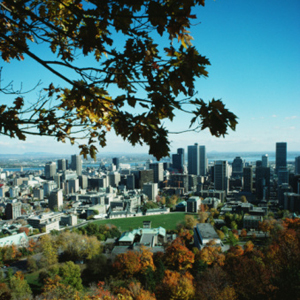
When the temperature shoots up, cities usually feel the heat the most. But some cities feel the heat more than others.



Scientists studying urban heat islands in 42 cities in the Northeastern U.S. have found that the greatest temperature differences between urban areas and the surrounding environment are in places you might not expect. Continue reading Antidote for Urban Heat: More Trees

Carbon Storage Could Be Shaky Proposition

Underground storage of CO2 could trigger earthquakes

Some say storing carbon underground as a way to curb greenhouse gas emissions is risky. The container has to last essentially forever, and what if an earthquake rips through the seal? But new research is showing that pumping CO2 underground could itself trigger earthquakes. Continue reading Carbon Storage Could Be Shaky Proposition

Cancun Postscript: Leadership Key For Climate Progress

In this guest post: Some reflections on the recently concluded UN climate talks  from Louis Blumberg, who heads the California Climate Change Team for The Nature Conservancy.

Cancun provided glimmers of what could be if nations put their minds to it

By Louis Blumberg

Cancun, Quintana Roo, Mexico – I stood up – every one stood up – and applauded loudly for three minutes – twice!  Patricia Espinosa, President of the UN Climate Change Conference walked into the cavernous hall Friday night, calmly took her place at the head table and the place went wild.  The 1500+ people (it could have been 2500) spontaneously gave her a standing ovation and there were still about six  more hours of work to come.

Joining colleagues from the Nature Conservancy and about 9,000 others from 194 countries, we were in Cancun to shape the foundation of what could become a comprehensive, legally binding treaty to keep global temperature rise below 2 degrees Celsius and avoid major climate disruption.  Last year’s effort in Copenhagen had provided little success and expectations for Cancun were low.  However after two weeks of talks, a balanced package of decisions was reached for a few key issues – like the role of preventing deforestation – and set the stage for completion of the treaty next year in South Africa, potentially. Continue reading Cancun Postscript: Leadership Key For Climate Progress

“Tangible” (if Minor) Progress in Cancun

Photo: Gretchen Weber

The UN climate talks in Cancun finally closed in the wee hours of Saturday morning with an agreement that doesn’t set new limits on greenhouse gases, but does move the discussion forward in key areas, such as funding to help developing nations deal with climate change and broad plans to reduce emissions by slowing deforestation in tropical areas. Continue reading “Tangible” (if Minor) Progress in Cancun

Poll: Californians Still Support Cap-and-Trade

A new poll shows Californians holding firm to their support of California’s climate strategy, including cap-and-trade provisions likely to be approved next week. The poll accompanies a sheaf of new studies commissioned by the pro-clean-tech think tank known as Next 10.

(Photo: Craig Miller)

The Field poll of about 500 Californians, taken right before Thanksgiving, shows two-thirds (66%) of respondents still favor (either “strongly” or “somewhat”) the 2006 climate law known as AB 32, including the cap-and-trade provisions (64%). About one in four oppose both.

The studies released with the poll point to an economic anticlimax under the cap & trade regulations of AB 32, with net benefits in the long-term. One of the lead investigators, David Roland-Holst, calls it a “small ripple in a giant teapot,” the teapot representing the massive California economy. A “synthesis of the findings” released by Next 10 shows a “very small” impact on the state’s economy, and “very small” changes in retail electricity rates. It also concludes that so-called “leakage” — the regulation-induced exodus of business from California is “likely to be small.” That’s not to say there are no losers. “We’ve got to be honest and say there will be trade-offs,” said Roland-Holst. Continue reading Poll: Californians Still Support Cap-and-Trade

Climate Battle Takes to the Streets

In Cancun and San Francisco, a call for climate solutions from the ground up.

Photo: Gretchen Weber.

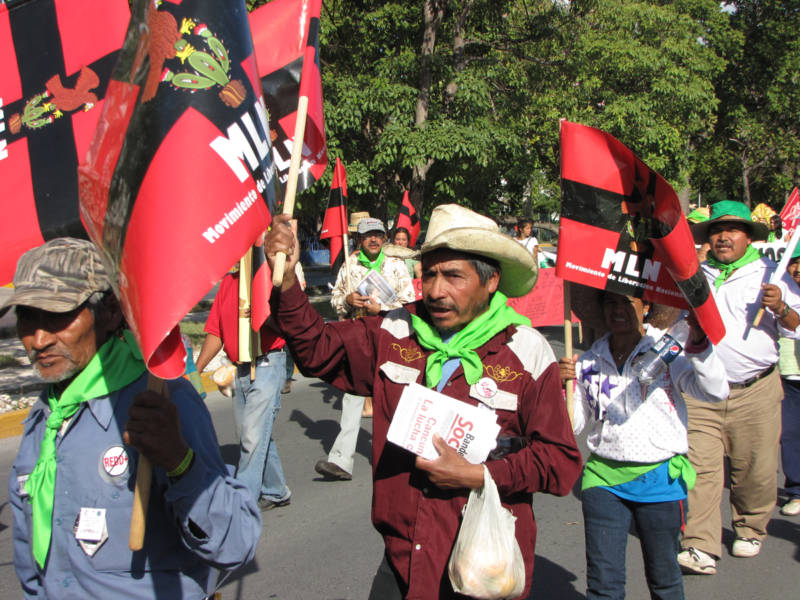
Chanting the Spanish equivalent of “The fight continues!”, hundreds of protesters made their way through the streets of downtown Cancun Tuesday, to call for dramatic action on climate change.  Located about an hour by bus away from the Moon Palace where the UN talks are being held, the procession brought together climate activists from around the world, members of Mexico’s indigenous communities, and dozens of journalists eager to report on one of the few major protests at COP16.

Coordinated by a network of climate groups who dubbed Tuesday a “Global Day of Action – 1,000 Cancuns,” the march was timed with demonstrations around the world, including one in San Francisco.  In Cancun, the marchers chanted, sang, beat drums, and danced in the streets, called for workers’ rights, protested inaction on global warming, and in some cases, denounced capitalism. Continue reading Climate Battle Takes to the Streets

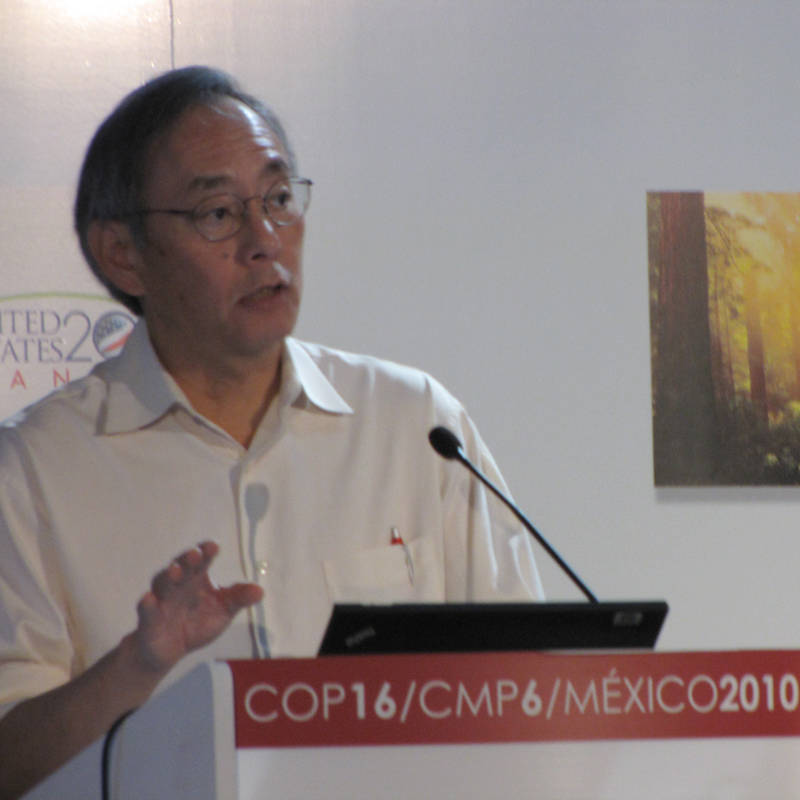
Chu Tones it Down for Cancun

Energy Secretary takes the cautious route in Cancun; just part of the sideshow at COP16.

US Secretary of Energy Steven Chu adhered to COP16’s more casual dress code when he spoke at the US Center in Cancun on Monday. (Photo: Gretchen Weber)

The UN climate negotiations in Cancun may be the official attraction, but in many ways, there’s just as much happening at the “side events” here at COP16.  There are dozens everyday — last week there were more than 150, and that number is increasing this week as more people arrive for the final days of the talks.  While the negotiations are limited to representatives from national governments, the side events provide a stage for non-governmental organizations (NGOs), scientists, business leaders, and local and regional government officials, many of them, it turns out, from California. Continue reading Chu Tones it Down for Cancun

New Google Tool Helps Monitor World’s Forests

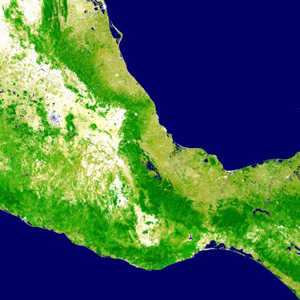
Map of Mexico created with Google Earth Engine by scientist Matthew Hansen and CONAFOR. Google says this is the finest scale forest cover map produced of Mexico to date.

This week in Cancun, in a jungle-themed conference room with green lighting and an audio track of rain forest sounds, Google launched a new technology platform designed to help scientists — and ultimately developing countries — monitor deforestation. Google Earth Engine combines LandSat satellite imagery from the last 25 years (much of which was not previously available online) with analytical tools provided by scientists, which will allow users to make fine-scale maps.

Greg Asner of the Carnegie Institute at Stanford is one of Google’s partners in the project. His lab provided some of the algorithms built into the Earth Engine that will allow users to analyze the satellite data online.

“There have been two major bottlenecks in helping people to map and keep track of deforestation and degradation: getting access to the satellite data and making it user-friendly,” said Asner. Continue reading New Google Tool Helps Monitor World’s Forests