Category Archives: Podcast

Demand for Pistachios Clashes With Climate Reality

Here are the morning’s top stories on Wednesday, August 12, 2026

  • Demand for pistachios is booming worldwide – from Dubai-inspired chocolate bars to pistachio cookies and lattes. But in the Central Valley, growers are worried that this year’s harvest could be smaller than anticipated. That’s after some unexpected weather earlier this spring. 
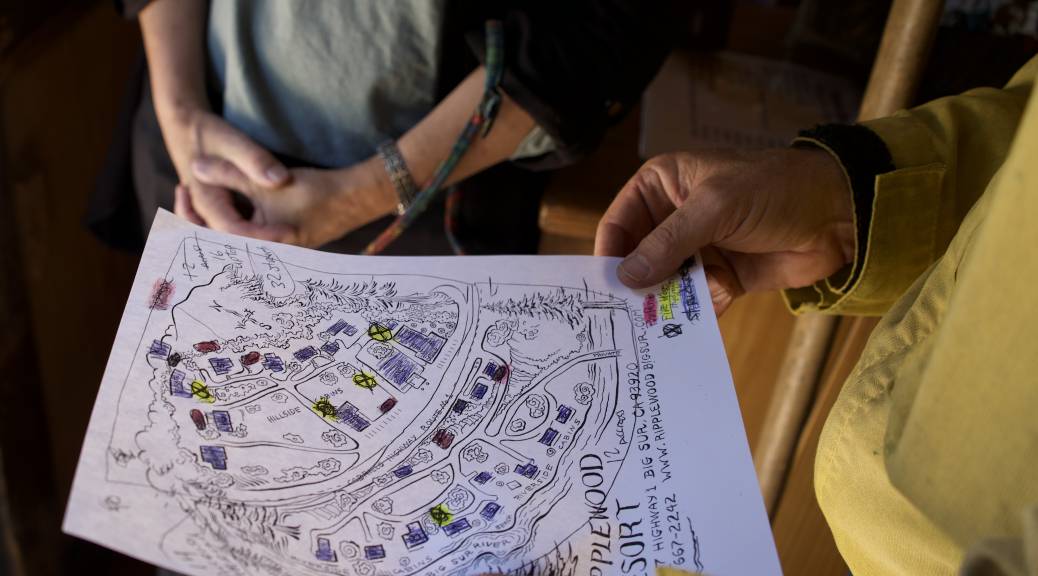
  • People in five Monterey County zones have been evacuated due to the Timber Fire in Big Sur. It’s burned more than  3,000 acres and hundreds of homes are currently threatened.  A portion of Highway One is now closed, due to the spread of the fire.  The limited access to the area has also threatened the lives of two captive birds.   
  • A bill advancing in the state Legislature would limit how long law enforcement agencies can retain data from license plate readers. The proposal caps that retention period at 30 days. And it comes amid growing concern that license plate reader data is being shared and used inappropriately.

In California’s Central Valley, growing pistachio demand met with climate challenges

Earlier this spring, Joe Coelho’s pistachio orchard in Fresno County seemed to be headed for a strong season. Then came an unexpected stretch of heat. It “took place right in the middle of bloom,” Coelho said.

Temperatures rose into the 90s at one of the critical points of the pistachio blooming process. Recently, as Coelho walked through rows of pistachio trees, he was in a waiting period to see how much of the crop would actually fully develop this year. He carefully examined pistachio shells, looking for “a blank,” which is a shell without a pistachio kernel inside – a sign of the climate’s toll on a sensitive crop. He found some.

The uncertainty over the climate’s impact comes as the global pistachio demand continues to grow. This boom is fueled by viral food trends like Dubai-style chocolate and pistachio-filled desserts that fill internet algorithms. Scott Fryer, vice president of global marketing for American Pistachio Growers, said that in 2024, there were about 54 products on grocery store shelves across the U.S. that mentioned “Dubai-style chocolate.” In 2025, that number nearly tripled.

The trend has added to demand that was already growing before this year’s pistachio season. Fryer said it could turn out that the 2026 harvest is so low that it can’t meet demand. And much of the pressure of such demand would be on California, which produces 99% of U.S. pistachios, according to Gurreet Brar, an associate professor of pomology at Fresno State who focuses on pistachio physiology and horticulture. “Pistachio is a really economically important crop in California,” Brar said.

But pistachio farmers don’t seem to be in a position to increase production to meet a growing demand. Pistachio trees, like many others, take years to produce enough nuts for a typical commercial harvest. This means that each orchard is a long-term investment with no guarantee that it will offer the crop that growers – and consumers – expect each season. But when they do have a normal blooming season, pistachios are a durable crop. “Pistachios are usually taken as a much more resilient crop than almonds or other crops grown in the Valley,” Brar said. “They’re more drought-tolerant, they’re more salt-tolerant, and we have adapted pistachios to California conditions really well.”

For farmers like Coelho, a small harvest translates to a significant drop in revenue. He estimates that it costs roughly $4,000 per acre each year to farm a pistachio orchard. He needs to produce about 1,400 pounds of pistachios per acre at an average price to break even. “You have to be really thoughtful about your profitability when you’re right on the margin of potentially making money,” Coelho said.

Slow growth for Timber Fire in Big Sur

People in five Monterey County zones have been evacuated due to the Timber Fire in Big Sur. It’s burned more than 3,000 acres and hundreds of homes are currently threatened.

Highway 1 through the area is closed as of Tuesday afternoon, according to a Facebook post by the California Highway Patrol. But visitors were being strongly advised to avoid Big Sur altogether over the past few days even when the route was open to the public.

Limited road access to the area has also threatened the lives of two captive birds. The Ventana Wildlife Society sanctuary was caring for the condors when the fire broke out. Executive director Kelly Sorenson said he and others worked the phones to figure out how they could free the birds. “The two birds are stuck in this pen and we can’t get up there to care for them, to provide any food or water while they’re held captive,” he said.

The organization did receive good news Tuesday as its senior wildlife biologist was escorted to the sanctuary by Forest Service firefighters. Sorenson said the condors should be fine – though the sanctuary was planning to give them a little more time to recover from lead poisoning and treatment.

‘Don’t Flock me’: California, U.S. lawmakers debate license plate reader technology

In the past year alone, they’ve helped catch suspected murderers, bank robbers and hit-and-run drivers. They’ve located dozens of stolen cars and helped send a wildland arsonist to prison. They’re also distrusted and despised by privacy rights activists on the left and on the right. Just last month, police accused a suspect in Monterey County of yanking down three of them with his pickup.

They’re called automated license plate readers. Every day, untold numbers of Californians drive past the thousands of cameras that at least 230 police and sheriffs’ departments have posted along roadways or installed on their patrol cars. The cameras in real time capture and read plate numbers, then cross-reference them with law enforcement databases of vehicles police want to locate, such as stolen cars, getaway vehicles or those that may be carrying a missing or wanted person.

Since 2019, California Democratic lawmakers have unsuccessfully sought to further restrict how police use the technology. They’re trying again this year with a bill that would add limits on how long police may retain license plate data, how they access it and with whom they share it. Police agencies and officers’ unions across the state oppose the latest measure, which is similar to a bill Gov. Gavin Newsom vetoed last year.

“This bill is about one simple principle: Protecting the privacy and safety of Californians while ensuring law enforcement tools are used responsibly before it’s too late,” the author of this year’s legislation, Riverside Democratic Sen. Sabrina Cervantestold the Assembly privacy committee last month. She did not respond to a request for an interview from CalMatters.

Cervantes’ bill would generally limit to 30 days the amount of time agencies could keep license plate data, unless it pertains to an active investigation or is part of a search for missing people. It also sets limits around who can access the data and adds training and search-tracking requirements. Police and sheriffs’ departments would be prohibited from entering into contracts with camera companies that provide default access to plate databases that federal and out-of-state police can search.

Critics of the technology cite high-profile examples of California police using license plate data inappropriately, including to stalk or harass innocent people. As CalMatters reported last year, California officers have repeatedly violated an 11-year-old state law that prohibits sharing the data with federal authorities and others outside the state. 

At least 39 police agencies and officers’ unions oppose Senate Bill 1013. Combined, they have spent at least $5.6 million on legislative campaigns since 2000, according to the CalMatters Digital Democracy database. Police say the technology has proven invaluable at helping them solve crimes.

The Emily Hart Saga | Part 1

View the full episode transcript.

Emily Hart was a pickup-driving, Trump-supporting blonde bombshell who frequently posted photos on Instagram along with captions about “deporting illegals.” Within a few weeks she gained thousands of followers. It was like she was engineered to go viral in the MAGA-sphere — because she was. A 22-year-old medical student in India who goes by “Sam” is the person behind Emily Hart, and he shepherded her to viral fame with a combination of right-wing engagement baiting and AI assistance. Reporter Ej Dickson, who wrote about Sam and Emily Hart for WIRED, describes how he was able to grift so many conservative men. And Sam himself explains how something that began as a fun side-hustle took a disturbing turn.

Guests:

Ej Dickson, senior culture writer at Wired

“Sam,” creator of AI MAGA Influencer Emily Hart


Further Reading/Listening:

This Scammer Used an AI-Generated MAGA Girl to Grift ‘Super Dumb’ Men  — Ej Dickson, Wired 

AI‑generated influencers: A new wave of cultural exploitation — Ateqah Khaki & Vinita Srivastava, The Conversation

Meet Brandi Love, the Pro-Trump Porn Star Who Writes for The Federalist —  Marlow Stern, The Daily Beast 

Challenges under India’s university reservation system   —  Namrata Kolachalam, The World 

Want to give us feedback on the show? Shoot us an email at CloseAllTabs@KQED.org

Follow us on ⁠Instagram⁠ and TikTok⁠

Episode Transcript

A full transcript will be available 1–2 workdays after the episode’s publication.

Why Oakland Unified Is Banning Cellphones

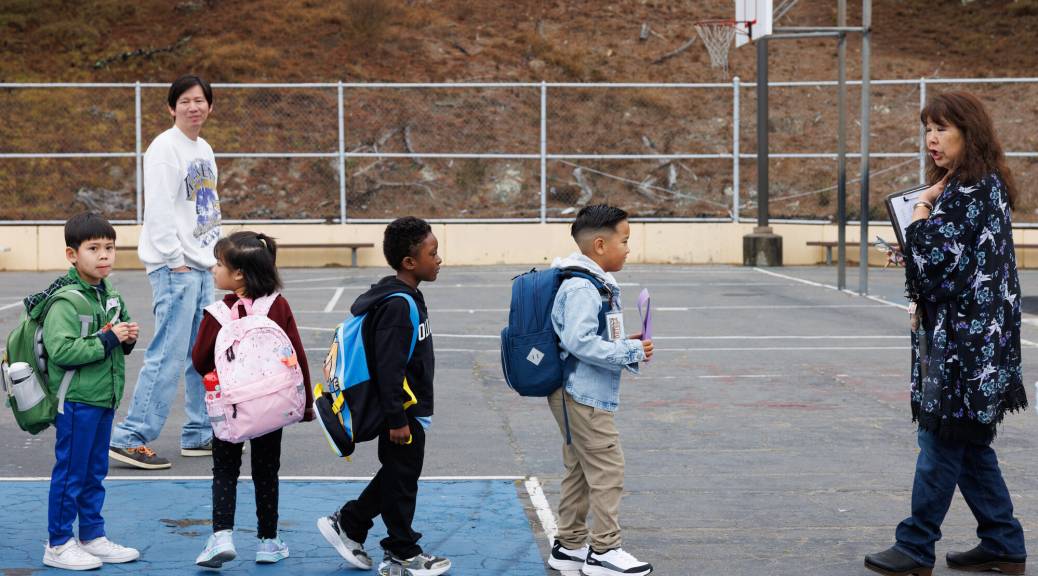
Class is back in session at OUSD schools this week, with one notable change: A strict phone-free policy. 

KQED’s Katie DeBenedetti explains how a statewide mandate has pushed districts across the Bay to pass their own policies banning or restricting phones, and how it’s playing out in Oakland. 

Links:

Episode transcript

This transcript is computer-generated. While our team has reviewed it, there may be errors.

Ericka Cruz Guevarra: [00:00:00] I’m Ericka Cruz-Gavarra and welcome to The Bay, local news to keep you rooted. I remember about a year ago, I walked into a high school classroom and I was so shocked to find students with AirPods in, phones out on the desks, like so explicitly out. High school me could have never imagined that becoming the norm. But now, phone-free policies at schools have made a comeback. Oakland Unified has banned phones in schools across all grade levels. And districts across the state are banning or limiting phones as well.

Gabriel Khan: [00:00:44] Although it’s not a silver bullet, I think it is like a necessary condition for a focused classroom that phones are not stealing young people’s attention.

Ericka Cruz Guevarra: [00:00:54] Today, California’s push towards phone-free schools and what that looks like in Oakland.

Ericka Cruz Guevarra: [00:01:08] So Katie, it’s the first week of school for Oakland Unified School District students and they came to school with a brand new cell phone policy. Oh, what is it exactly?

Katie DeBenedetti: [00:01:20] When kids walked into school on Monday, one of the first things that will now be part of every morning is putting their phones away for the whole day.

Ericka Cruz Guevarra: [00:01:30] Katie DeBenedetti is a reporter for KQED.

Katie DeBenedetti: [00:01:34] That varies by school site, but in most elementary schools, they’ll have a lock box at the front of their classroom, and they’ll to put their phones in it for the day. And then in middle schools and high schools, they are going to be issued these pouches called Yondr pouches. They’re like canvas bags with a magnet at the top that locks during the day, their first period teacher, at least last year during the pilot phase was the person that kind of went around and made sure everyone. Had their pouch closed with their phone in it at the beginning of the day.

Ericka Cruz Guevarra: [00:02:08] This is something that is happening at other Bay Area schools in a bunch of different ways as well. Why is this happening? Why are we seeing this sort of wave of no phone policy that schools happening across California?

Katie DeBenedetti: [00:02:21] In 2024, Governor Gavin Newsom signed the Phone Free School Act, which basically requires all school districts to restrict or prohibit cell phone use, and that went into effect this July. The reasoning behind that was there was research showing that less phones was better for learning, better for attention, and also for kids’ mental health. So… OUSD’s ban is on the stricter side. They’re gonna be a bell-to-bell ban for all students, but you’re right, a lot of Bay Area districts are adopting similar policies. The San Mateo Foster City School District has been using yonder pouches for a couple years, actually, and a couple of high schools on the peninsula have as well. Up in Marin and Tamm Unified School District, they’re introducing a very similar lockable box that are individual for students. And then there are a lot of other districts that don’t have these full bans. So San Francisco actually voted to kind of keep their existing cell phone policy, which is just that mobile communication devices have to be turned off, have to put away during instructional time and passing periods. A lot of Bay Area districts have also put in place these like similar less restrictive rules, though they vary.

Ericka Cruz Guevarra: [00:03:40] And you mentioned OUSD has one of the more stricter phone policies. What was their rationale behind this specific cell phone band that they went for with these Yondr pouches?

Katie DeBenedetti: [00:03:52] Yeah, so when administrators were explaining why, you know, full ban versus partial van, they said it’s first of all just for consistency. You know, it’s a little bit easier for kids to understand.

Denise Saddler: [00:04:03] We want our students to be focused on learning in the classroom.

Katie DeBenedetti: [00:04:08] Here’s what Superintendent Denise Saddler had to say about the phone policy. That was a clip from ABC 7.

Denise Saddler: [00:04:15] We also see this policy as a way to deal with some of the social media issues that come up, particularly in middle and high school, quite frankly, you know, bullying and some of the issues that have caused challenges for our students.

Katie DeBenedetti: [00:04:30] Also, it kind of keeps people interacting during passing periods, during lunch, connecting face-to-face throughout the school day, and it eliminates distractions. Even if you see a text while you’re heading to class or at the lunch table, you might be still thinking about it when you’re in class wondering, am I gonna be able to respond again? But if you just wait until after school to see it to begin with, it’s supposed to be less distracting.

Ericka Cruz Guevarra: [00:04:56] What has the reaction been from students and parents at OUSD so far?

Katie DeBenedetti: [00:05:01] I think it’s been somewhat mixed. I think, you know, parents on the first day of school kind of told us that they’re happy that their kids will hopefully be less distracted. What are your thoughts on this new no cell phone policy? One parent, Chris Connolly, spoke with our colleague Farida Jabvala-Romero on the first day at school.

Chris Connolly: [00:05:21] Personally, I am quite happy about it. I think it will be great for the kids, especially the high schoolers, who can easily be distracted by phones all day.

Katie DeBenedetti: [00:05:33] Some of them did have some safety concerns and that was really echoed by a student I talked to, Blake Rodgers. She’s an Oakland Tech senior. I do understand.

Blake Rodgers: [00:05:43] I understand that phones create distractions in classrooms, but I do think that the safety issues that have been like pretty prevalent recently outweigh that goal.

Katie DeBenedetti: [00:05:58] She went to Skyline High School last year where there was a shooting on campus in the fall and she says it’s scary to think about not having access to her phone if something like that happens again.

Blake Rodgers: [00:06:10] Its really hard to get in contact with people, even with your phone, because we’re not always sure what’s going on without a phone. I think people will be completely left in the dark and that is a scary thing to be in.

Ericka Cruz Guevarra: [00:06:25] That is kind of interesting and also a little chilling that sort of the main concern that you’re hearing against these bands is this idea of safety. And I have to imagine like school shootings are probably also top of mind for folks as well. How does OUSD respond to that criticism?

Katie DeBenedetti: [00:06:44] Yeah, so as part of the rule, OUSD says that students will be able to access their phones if there’s a genuine health or safety emergency or if a teacher or administrator or doctor authorizes it. So there are exceptions in emergencies. And also, administrators have said that the ban could actually help reduce misinformation spread during emergencies or even prevent conflict escalation that could be happening on social media or group messaging. So I think it could go, you know, a couple different ways.

Ericka Cruz Guevarra: [00:07:26] We’ll have more with KQED’s Katie DiBenedetti right after this break. By the way, if you appreciate the local deep dives that we bring you on the bay, consider becoming a KQED sustaining member. Sustaining members really are the backbone of what we do here at KQED. Just go to donate.kqed.org slash podcasts. And thank you so much. We’ll be right back.

Ericka Cruz Guevarra: [00:08:01] I mean, the reaction seems a little mixed, but I just have to imagine it’s overall, maybe a good thing that kids don’t have access to their phones at schools, maybe. I mean do we know whether bands like these actually work?

Katie DeBenedetti: [00:08:17] The research is pretty new because a lot of these bans are just in the last couple of years. But one of the biggest studies that’s come out so far showed that schools that had these strict bans noticed a decrease in student phone use. But they haven’t seen all of the behavioral or academic results that they had kind of hoped for. So in some cases, suspensions actually went up in the immediate period after the ban. Test scores haven’t, you know, had a mark. Improvement. But again, these are still pretty new and teachers at least in Oakland seem pretty excited about it.

Gabriel Khan: [00:08:55] Phones are engineered to take people’s attention and specifically young people’s intention. And so they really have no place in a focused classroom.

Katie DeBenedetti: [00:09:04] I talked to Gabriel Kahn, who teaches at Life Academy, and he said he and his colleagues have been really impressed. They’re noticing students are more attentive, they’re less distracted. One thing that he said that was funny to me is they’re using the bathroom a lot less.

Gabriel Khan: [00:09:21] I would say bathroom use decreased in my classroom by 80%.

Katie DeBenedetti: [00:09:26] Because I guess that’s one of those places where teachers can’t be watching, so kids would often take their phone to the bathroom for a break.

Gabriel Khan: [00:09:35] We do a pretty good job of making sure kids aren’t on their phones in the room, but when they go to the bathroom, it’s an unmonitored space, and if their phone isn’t put away in a yonder pouch, you can best believe that they’re on their phone when they take their bathroom break. I believe there’s a direct correlation between our instigating the yonderpouch policy and the massive decrease in bathroom use that we saw because there was no phone motivation to go to bathroom.

Ericka Cruz Guevarra: [00:10:04] I feel like adults banning something doesn’t always mean that that thing fully goes away. There’s often ways that young people will find work around. Have we seen anything like that when it comes to this no phone policy at schools?

Katie DeBenedetti: [00:10:19] Yeah, that’s definitely something I was curious about, and it did not take me long to find how students are getting around these bands.

Tik Tok: [00:10:27] Alright guys so I just got back from school and guess what they’re making us put our phones in these little pouches right here.

Katie DeBenedetti: [00:10:36] You know, I just did a quick TikTok search and found that kids are already sharing ways to open their pouches.

Tik Tok: [00:10:43] So today, we’re gonna be making a tutorial so everybody can have their phone at school. Everybody and their mom’s gonna have their phones, all right?

Katie DeBenedetti: [00:10:51] One of them involves sticking two pencils on the sides of the magnet and like banging the pouch against something hard. And that has like a million views. So kids are learning pretty quickly how to get around these rules.

Ericka Cruz Guevarra: [00:11:06] The irony of that also, of them recording themselves doing this.

Ericka Cruz Guevarra: [00:11:13] How does this compare to your experience with your phone in high school?

Katie DeBenedetti: [00:11:17] There were really no restrictions on it. Our school blocked like certain apps, but even then we knew how to get around that, VPN apps, whatever. So I think it’s a familiar sight to see. Yeah, totally.

Ericka Cruz Guevarra: [00:11:31] Well, Katie, the school year is I guess just starting and we’ll have to kind of see how this goes, but what big questions are you thinking about around these bands going forward?

Katie DeBenedetti: [00:11:42] Yeah, I mean, I’m definitely interested to see, you know, how many kids are able to kind of get around the bands. But I’m also excited to see after a couple years, if there is any effect on test scores on how much students are learning and mental health. I think that would be really interesting to see if it really is better for kids not to be staring down at their screens during lunch.

Ericka Cruz Guevarra: [00:12:07] Yeah and I don’t know, maybe one day our classrooms will go back to like pen and paper?

Katie DeBenedetti: [00:12:13] We have the option, we have all the tools to do that, so we’ll see.

Ericka Cruz Guevarra: [00:12:20] Well, Katie, thank you so much for chatting with me about this. Appreciate it.

Katie DeBenedetti: [00:12:24] Thanks so much.

Some members of the KQED podcast team are represented by The Screen Actors Guild, American Federation of Television and Radio Artists, San Francisco-Northern California Local.

An Optimist’s Take on AI and the Future of Learning (with Sébastien Martin)

View full episode transcript

As AI tools spread through classrooms, many educators see a “cheating factory.” Kellogg Professor Sébastien Martin sees things differently: as a chance to reinvent how and what we teach. In his operations management class, students trade PDFs for lifelike chatbots, log conversations with Socratic AI tutors, and use AI to explore the kinds of social and political dynamics that students normally have to learn on the job. But Martin also grapples with harder questions: What about public schools with fewer resources? When should kids use AI at all? And how can students stay hopeful and true to their own interests in a wildly uncertain future? (Part 1/2 in our back-to-school series.)

Further Reading:

AI Is Teaching the Next Generation of M.B.A.s the Classic Case Study

Episode Transcript

This is a computer-generated transcript. While our team has reviewed it, there may be errors.

Jess Love: This is Life, Automated, the show that explores how to live, work, and make decisions in a world increasingly shaped by machines. By now, I’m sure you’re aware education has been hit hard by AI. It’s not exactly a secret why. You remember being a student. Maybe you are still a student. You work, you learn, you get your grade, your degree, and then you leave school better prepared for life.

Or at least that was the deal. Today’s students essentially have the world’s greatest cheating machine right at their fingertips, and that part about needing to learn to prepare for life, says who? If AI can do it, will you ever even need to? So maybe it’s no surprise that students are some of the heaviest adopters of AI, a trend that AI companies are very happy to facilitate, thank you.

And this puts educators in a tough place. I want to be upfront about this. Education is changing in ways we still don’t understand, and educators in universities, high schools, middle schools, are on the front lines. Many are not happy about AI. They didn’t ask for it, and they have real concerns that it will harm their students.

Next episode, we’ll go deep into the challenges they face. But today, something different. Today, we’ll be talking to someone who looks at generative AI tools like ChatGPT, Gemini, and Claude, and sees mostly opportunities.

Sébastien Martin is a colleague of mine here at Kellogg, an associate professor of operations. He studies AI, he teaches MBA students about AI, and in his operations management classroom, he’s replaced a lot of pen and paper-based activities with AI-powered simulations. In these simulations, rather than AI making it easier for students to finish whatever assignment is on hand, it slows them down, makes them work even harder.

I got to experience this firsthand. 

Jess Love: I feel like maybe you’re not doing your part. 

Sébastien Martin: Oh, she’s not happy. 

Jess Love: She says, “I am doing my part. That’s a job. What I’m not gonna do is pretend the existing system works the way headquarters imagines.” 

Sébastien believes that AI has already made him not just a better instructor, but a happier, more creative, more inspired one, and his students agree.

Kellogg’s graduating class chose him as the winner of the 2026 David Bisenko Outstanding Professor of the Year Award. I’ve come to see Sébastien as a virtuoso of a strange new art form. And amidst the big, even existential challenges facing education, I think it’s important to tell these kinds of stories, too.

I’m Jess Love, and this is Life, Automated, a project from Kellogg’s Ryan Institute on Complexity, distributed by KQED.

My conversation with Sébastien began with him telling me how, as soon as ChatGPT came on the scene, he got busy experimenting, trying to see if it could help him improve his operations management class. 

Sébastien Martin: In a way, you know, when you have 140 students at the same time, for example, or even more, 200, it’s hard to have individualized conversations with everyone with my time, and I only have this time where it’s me with all the students at the same time.

But if they all talk to an AI that personalize the conversation to their own background, I can task the AI to connect the class content with their background. 

Jess Love: The idea is that a student could feed their CV into an AI chatbot that had been trained on Sébastien’s course materials, and the AI would ask some probing questions, ultimately connecting the dots between a student’s individual work experience and interests and what the course would cover.

And this was kind of, was it to just get the student excited about the class? Was that kind of the point of this exercise? 

Sébastien Martin: So the point was for them to know even before they take it why we think it’s good for them to be there. Which changes everything because if you have the attention of people as you even just get started, then communication just flows a little bit better. And if you think about it, there’s no way for me to do this without AI. 

Jess Love: Sébastien was such an early adopter of the technology that he was using it before most of his students to solve problems that had nothing to do with AI at all. But it didn’t take too long for AI to start causing problems, too. 

Sébastien Martin: You know, AI came like a wrecking ball. And, you know, like, what’s even the meaning of a take-home exam anymore? You know, you can trust the students not to use ChatGPT, but we are at the point where you can just take a screenshot of the exam on your phone and get A+ for everything technical. And so it’s just unfair to ask the students to do it this way. And because, like, how do you even grade it, because some students would respect the rule and maybe a few will run out of time and ask the help of AI. 

Jess Love: It’s been well over three years since Sébastien started experimenting with AI in his classroom. And these days, nearly everything about his course looks pretty different. Some of these changes have been spurred by AI making it really, really easy for students to cheat. But Sébastien says that other changes are more about problems with the old ways of doing things. 

Sébastien Martin: Think about our old ways to evaluate, right? I have students coming from so many different backgrounds that care about so many different things, and I have to have one exam that’s graded by people that don’t necessarily understand their background. And so what does it push us to do? It pushes us to standardization, to always asking, like, very abstract questions about things, or to focus on math instead of, like, deeper understanding about the world, because these can be evaluated more easily. I love math, but it becomes just an exercise in itself, like, almost like a Sudoku. At the end of the day, the exam is just asking them to manipulate numbers because this is what I can evaluate. 

Jess Love: So let’s get concrete here. With simple problem sets basically out the window, what does Sébastien’s class look like today? Well, for homework, Sébastien might require his students to converse with an AI tutor for maybe 30 minutes, walking through concepts and connecting them to their own experiences. That tutor might be trained in the Socratic method so that rather than giving answers like a standard chatbot, it pushes students to do the thinking themselves. Then, instead of turning in answers, students would upload a log of their chat to be graded pass or fail. Or maybe the tutoring goes the other way. 

Sébastien Martin: The homework I just gave, like, a few weeks ago is the, student has to teach the AI what they learn in the last class. 

Jess Love: Ah, interesting. 

Sébastien Martin: You see that we say learning by teaching is, like, one of the best ways to learn. And as a professor, I can say that’s very true because I created a new class on AI and I learned a lot just by teaching it.

Jess Love: Of course, this technology is changing fast, and there’s really nothing stopping students from building their own AI agent or autonomous AI tool to interact with Sébastien’s AI, and turning in a log of that conversation. 

Sébastien Martin: That’s one of the main obstacles our instructors want to get into AI, because it just feels it’s constantly evolving, and whatever I do now, I fix a problem, another problem will appear later. So it’s a very, very real concern.

Jess Love: Well, and this is hard because I’ve done, you know, way back in the day I taught some classes myself, and the first time you teach something, it can be kind of a train wreck, right? And then you kinda get better over time, and you learn what works. So how do you as a professor or a teacher keep up?

Sébastien Martin: I would turn the question around, and this is why I try to put my students in the loop as much as possible. It’s like, “Here’s the deal,” like, “What is good for you?” You know? “Why are we doing this homework? Why are we doing all of that?” The goal is not just to go for the grade. That would be the mistake.

Like, the goal is at the end of the day, you know, you learn something. And, you know, if AI is becoming more and more of a commodity that can do anything for us, our deep expertise and our personal thoughts and what makes us unique has even more value, because that’s what differentiates all of it, rather than the things that AI can just automate, you know?

And so I think at the end of the day, the answer to this question is also, it’s not only on the professor’s side, it’s also on the students. Like, why are you at Kellogg? What do you wanna get out of all of this? 

Jess Love: Some of the changes that Sébastien has made to his class, they aren’t planned. He’ll be in the middle of teaching, he’ll get an idea for how to make something better, and just use AI to make it happen.

For example, just a week before our interview, his students were in small breakout groups using class time to discuss a case study, that staple of business school education. The time was flying by. Sure, the students were having wonderful discussions in their small groups, but Sébastien was getting frustrated, realizing there would not be enough time for the entire class to reflect on the ideas that the individual groups had generated.

So while the students were still in their breakout groups, Sébastien explained the dilemma to Claude Code, a popular AI coding tool. 

Sébastien Martin: And so Claude Code was like, “No problem. Let’s do it,” and created something, and by the time students had sent their reply, we had a custom-made software, which was kind of like a constellation of ideas that popped up on the board, and we could see quotes from all the students and the ideas that they had in common and not in common, and this enabled a much deeper conversation because I was able to share all this information instead of just, like, talking to, you know, like, three, four students that were willing to share their ideas.

You know, it’s just a small thing, but it’s changed the way I taught this class, and it did use AI, and at the end of the day, it’s just about your creativity. Like, it’s a tool that is so powerful that, you know, sometimes, you know, as an instructor, you go, “Oh, it’d be so good to have this,” and then you just use it, and it creates a much better experience.

And you see here in that case, it increased the communications between humans. Like, of course, AI can sometimes take away from what we do, but in that case, I think it added to what we do. 

Jess Love: Now, there are tools already on the market that can do this kind of thing. But what was unique was that Sébastien was able to create them on the fly, in that moment for that class. And the best example of how AI has changed Sébastien’s course has to do with the experience of reading the case itself. 

Sébastien Martin: So we turned it into, instead of me giving them a PDF, I tell them that they can interview, “People” from the company and ask any question they want. And I give them access to the CEO, to the CFO, to, like, a frontline worker, to anyone, and then they have to understand the company deeply, kind of like consulting. You interview people, and you understand their relationship, and they all have very different point of views, and some of them don’t even wanna talk to you, and so on. 

Jess Love: Well, and “people” are, of course, chatbots with, like, personalities and information that you’ve given them. This is the activity that has gotten Sébastien the most attention, including a big write-up in The Wall Street Journal. I wanted to try it, and Sébastien was kind enough to mentor me through his simulation. We pull it up on his desktop. 

Okay, so I am a consultant at Proxima Health Systems?

Sébastien Martin: Yeah, you’re an AI expert, and they called you because they wanna have a big AI project, and they want it to be successful. And your point of contact is Maya Chen. She’s the leader of this After Visit AI program. Like, she has an AI agent she wants you to build. 

Jess Love:  Okay, and so I can just start talking to her and say, like, “Hey.”

Sébastien Martin: Yeah, she’s just waiting for you. 

Jess Love: There’s a whole bunch of little avatars representing different people at the company, and I can pick one to have a text chat with. I see the avatar for Maya, my point of contact, and I begin to type. 

Hi there. I’d love some clarification on what you want me to accomplish.’

Maya tells me that I, the AI expert consultant, will be building her company an AI tool that helps automate the after-visit forms that sales reps fill out after they visit their customers’ hospitals. And after a bit of back and forth with Maya about some of the players involved, including Marcus, a sales manager, and a bit of help from Sébastien, I start to get a sense of the nitty-gritty details involved in my assignment.

Sébastien Martin: And so for this, we have a CRM system, a customer relationship management system, which is like this big database where rep have to enter information. But they hate it. It has to be formatted, made in a very specific way. 

Jess Love: Ah, I hate it already. 

Sébastien Martin: They spend hours every week. And then so this is why, like, there is this sort of tension because Marcus needs them to enter this information, but they’re like, “Yeah, it doesn’t represent what we see on the ground. Why do you want me to spend all my time on this instead of with the customer?” 

Jess Love: Okay, got it. Maya, Marcus, and others in the company want to automate the after-visit forms that the salespeople fill out, apparently to make things easier on the sales team. But then I chat with a member of the sales team, Dana, and Dana doesn’t necessarily think AI will help. She thinks the whole customer relationship system is messed up. 

‘Dana makes a number of points. She says it’s like whiplash. She can spend 30 minutes in a unit with a nurse manager who’s stressed out of her mind. She catches the real issue. They come to a conclusion, and then she’s supposed to translate that into 12 little CRM boxes that don’t fit how hospitals actually talk, and then the managers wonder why the notes are vague.’

And Dana is a little suspicious of me, the AI consultant. Here’s how she puts it. 

“What exactly are you trying to solve? Time, accuracy, or the manager chasing us for missing fields?”

Jess Love: Ooh.

Sébastien Martin: You’re in the middle of it right now. I am in the middle of it. It’s hard to help her without more information, understanding everything.

Jess Love: I decide to try to get Dana in line with some tough talk. 

‘All right, Dana. I hear what you’re saying, but you do realize that you are part of this big organization that has a lot of really important goals? I feel like maybe you’re not doing your part.’

Sébastien Martin: Oh, she’s not happy. 

Jess Love: She says, “I am doing my part. That’s the job. What I’m not gonna do is pretend the existing system works the way headquarters imagines.” 

Sébastien Martin: How dare you question that I’m doing my job? 

Jess Love: ‘Thanks, Dana. I appreciate the straight talk. I love straight talk. What would you like to see?’ 

And now I’m really starting to understand this scenario. It’s not just about coming up with some kind of AI-powered solution to data collection. It’s about understanding the social dynamics in the company. 

Sébastien Martin: ‘Cause she’s very afraid. She says, “Not cutting heads.” 

Jess Love: Not cutting heads. 

Sébastien Martin: She’s really afraid that you’re coming with AI trying to take over her job. 

Jess Love: Oh, yeah. That’s a good point. 

Sébastien Martin: You know? Because we’re automating a part of the job that she and her teams do. 

Jess Love: Once I understand that there’s anxiety in this company about AI taking jobs, and that this anxiety is driving so many problems, I start having more productive chats with the different characters, and we start making progress.

This is what Sebastien says this kind of AI-driven exercise is designed to explore. How to keep asking questions until you understand what’s actually going on, the problems behind the problem, the stuff that only rarely ends up on any official brief. I think there is a risk in education where I’m like, “This is the truth.” This is the answer to this problem.” And, you know, like, for example, if you go on Instagram and you have your newsfeed, you’re not asking for the next thing you wanna see. We’re just so used to just information being provided to us and not to have to think. And then you get into the middle of this and you have a “real person” you talk to, you actually need to decide what’s your next step.

But this is actually where all the thinking happens, right? You’re like, you need to be aware of what you understand and what you don’t understand. You need to, like, plan ahead. You need to also manage your relationship with them. And I think this is where I think the most. Actually, it’s what I feel like it’s the most important thing to think about, in life, you know, in general.

And I think we don’t have many tools that are not meant to just, like, provide us with the answer, but are meant for us to ask the right question and for us to learn more. And I think AI is a wonderful tool for that. 

Jess Love: Here, the AI tool isn’t being used to make things easier on students. It’s not making it faster to read the case or offering up a streamlined summary. It’s slowing students down, making them think more. Or that’s the idea. So are his students learning more using this AI-powered simulation than they would’ve the old way, discussing PDFs or writing short essays? 

Sébastien Martin: It’s hard to answer this question for sure. You can only capture it with exams and stuff like that. But AI cases, in the context of this class, were not something that was graded. They were something meant for conversations in the classroom. So then the second best I can give you is I had the most fun I’ve ever had teaching a case. Like, the participation of the students was through the roof.

They had so many ideas. 

Jess Love: Sébastien acknowledges that it’s hard to know for sure. Just because students enjoy an activity, recognize it with a teaching award, doesn’t always mean that they’re learning more. But the students tell him they’re learning more because the scenarios feel real. 

Sébastien Martin: The students say that it was very useful to them, especially the students who came from consulting. They say it’s exactly the type of thing I had to be good at. It’s great to see it in the context of AI and so on. 

Jess Love: After the break, this strikes me as the dream scenario for AI in the classroom. But just how common is this dream scenario? Is it limited to the classrooms of super AI savvy teachers, or does Sébastien’s optimism extend to other classrooms, too?

I, like a lot of people, think about this technology as having the ability to both empower people and to disempower or overwhelm them. And it seems like for you, the primary experience has been one of empowerment. But I wanna point out, you are kind of a special case. You are somebody who studies AI, is very, very familiar with using algorithms, and was even before ChatGPT came on the scene, and you also teach highly motivated students at a top business school.

And this is not true of most educators. So my husband teaches high school at Chicago Public Schools, and he assures me that the general consensus among public high school teachers is not one of empowerment. I think a lot of schools are strapped for resources. They don’t always have the opportunity to train instructors in how to manage this technology, and a lot of them have just come to see this as a widespread cheating factory. And so I’m just kind of curious how you think about that. 

Sébastien Martin: I mean, first, thank you so much for asking this question. Something I think about a lot, and first it’s very important to highlight that I come from a place of privilege in so many dimensions, as you mentioned. And, you know, because I, so I speak more and more publicly, like right now, about this topic, and I’m always like, “What should you say?” Because, you know, as you saw in this conversation, I choose to highlight the positive because I know that people are very aware of the negative. And I think seeing a bit of light at the end of the tunnel can help. 

And it is true, you know, that I was lucky to start early and lucky to be in the position I was, and to iterate over time, and I made many, many mistakes. There are things that worked, things that didn’t work. I would say the message, and I really don’t wanna deny at all what public education is going through. I’ve worked a lot also with public education and I know how hard a job it can be, but also how rewarding. What I wanna say is give it a chance.

You know, this technology, for good or bad reason, is most likely here to stay. And if you iterate a little bit with Claude, ChatGPT, whatever, you’ll quickly realize after you overcome this barrier of, you know, not resentment, but this barrier or, like, this technology is really making my job complicated, you quickly realize that it’s a neutral technology.

Like, it can do a lot of harm, but it can also allow you as an instructor to create new things and to solve some of the problems. And at first you start very small. You know, you have all of this, like, I forgot how you were saying, like, this cheating factory thing. But then you’re like, “Oh, I can maybe use it that way.”

And actually that had a small positive impact. And it looks like a drop in the ocean. But then because you open this door, then curiosity gets in. What if I could do this? And what if I could do that? And all I can say, I know it’s a very minimal point, is there are good things. And yes, they take time, and they take trial and error, and all I can do is show examples. But I think there is value in just knowing that you can use this technology for good. 

Jess Love: So, I am a parent. My kids are a little younger than the students we’ve been talking about, two elementary school-aged kids. And I personally do not want them using AI right now, partly because I think they already spend enough of their lives staring at screens. That is the perennial parenting battle of our age. But also because I want them to learn some really core skills about how to go through the world, and think about problems themselves before I provide them with the scaffolding that AI would provide. And so I wanna ask you, do you think there are some skills that people should have before they turn to AI to learn something?

Sébastien Martin: I mean, of course take everything that I’m about to say with a grain of salt, because I’m not an expert in that. You’re way more of an expert than me. 

Jess Love: We’ll bring in some folks to rebut you point by point. 

Sébastien Martin: But, you know, and also, I wanna highlight that we hear so much about AI these days. I think what’s super, super important to say is we don’t know. You know, like they say, wisdom is to know when you don’t know. Nobody knows where AI is going, okay? Like, but then it’s still good to talk about scenarios, and your analogy with the screens or the smartphone is a great one. You know, there has been a lot of debates, on not allowing screen times and, like, this leading to, children learning more to interact with the world and with each other.

And I think it could be great to do this with AI. I mean, that sounds like a great strategy to me. Then, the one caveat I wanna say on this is one pet peeve that I have is I don’t think AI means anything. It’s kind of you saying humans or electricity. Like, is electricity good or bad? Should we forbid kids to access electricity?

I think there are ways to use AI that could be net positives and there are ways to use AI that could be a disaster. So when we say allow kids to access AI, often we think ChatGPT, Claude, Gemini, like the basic thing you can ask all your questions. But for example, I was just talking to a parent and they were playing with their children to create their own song for a story that they invented.

And they used AI to like, put their lyrics that they co-created into a nice song and they were singing it together. Is it a bad use of AI or does it increase creativity? I heard another parent has ChatGPT to, you know, create like, these frames of drawing that you can draw into on things that were very personal. Like they just went on vacation somewhere and let’s actually draw what we went through. And you know you cannot buy a book that’s so personalized. 

Jess Love: Like a coloring book of their exact vacation. 

Sébastien Martin: Exactly. 

Jess Love: Oh, that’s, that is kind of cool. 

Sébastien Martin: You see? Like another example and maybe more the fringe of what’s acceptable is there’s a lot of, there are ways to turn ChatGPT into something that don’t think for you. So the way AI works is there are hidden instructions, and AI follows these hidden instructions. 

Jess Love: That’s right. If you didn’t know, most chatbots have some version of hidden instructions to guide their use; and as a user, you can change the default settings for these instructions, specify how the AI should respond to prompts, including how much information it should provide.

Sébastien Martin: In the hidden instructions called a system message, you can ask the AI, “Look, you’re talking to a child. Here’s what we really want to avoid. We want them to feel for, to think for themselves. We want them to learn how to be independent. We don’t want them to learn how to rely on you instead of thinking.”

But maybe you can encourage their curiosity. And then you let the children talk to this version of ChatGPT, and the AI will just reply to their questions with other questions, and what do you think about this, and what do you think about that? Maybe it’s better than just staring at an iPad on YouTube, you know? Maybe it actually leads you to, to think a bit deeper. 

Jess Love: For the record, I will not be tasking ChatGPT to chat with my children anytime soon, even in appropriately Socratic only ask questions mode. But that coloring book idea, it’s actually kind of a good one, and I take his point. We really don’t know. We don’t know how helpful or harmful AI will ultimately be as an educational tool. Stepping back a bit though, I wanted to know what advice he would have for students, the people on the other end of the educational process. 

Sébastien Martin: I mean, the first one, which is, you know, the one thing I want us to remember from this podcast is, like, stay hopeful. Because, you know, there are reasons to despair from time to time, and especially as humans, we are really not good at dealing with uncertainty. Like, second, staying hopeful and being aware that we tend to only see the downside instead of all the unexpected upside that can come later.

Everyone is in the same boat. Like, it feels like it’s me that doesn’t know what the next step to choose and so on, like what studies should I go for, how should I learn and so on. But it’s not only me, it’s the whole society that has to adapt at the same time. And I think that at least for me, it helps me feel a bit better about it, like, the idea that it’s not me that doesn’t know what to do next and it’s all of us together.

Jess Love: Yeah, it’s like we’re all collectively gonna go through this crazy period together. 

Sébastien Martin: Exactly. And so the more we can, you know, like help each other and so on, the better it is. And, finally, what do you do? You have this huge uncertainty. I’m saying, okay, take it with a grain of salt with all the feedback you receive about what you think you should do and so on, and all of us together.

But I think a flip side of that is, if you’re, it’s pure uncertainty and we don’t exactly know where things are going, maybe the best thing to do is to follow your heart. I know it sounds a bit cheesy, but you know, at the end of the day, I think it’s better, like, try for all of us to maybe not conform as much as possible and what’s expected of us and follow more, like, our instinct. Maybe there has never been a better time to do that because the uncertainty of the system is the system is gonna change so much that maybe the best path to follow is just what we really like to do.

Jess Love: Thank you so much. 

Sébastien Martin: Thank you. 

Jess Love: AI is forcing students and educators to adapt. And while a lot of attention has been focused on cheating and outsourcing thinking, I think Sébastien makes a compelling case that this adaptation will have some real upsides, that new kinds of learning experiences are now possible, including ones that ask more of students, not less.

But of course, AI is not the first technology to barge into schools. Next episode, we’ll look at how previous technologies have changed education, particularly for younger students, what those technologies delivered, what they failed to deliver, and what this could mean for today’s high schoolers, middle schoolers, elementary school kids growing up alongside AI.

I’m Jess Love. This is Life, Automated, a project of the Ryan Institute on Complexity at the Kellogg School of Management at Northwestern University, distributed by KQED. A special thanks to today’s guest, Sébastien Martin. We’re produced by Jesse Dukes, additional production by Nathan Ray, music by Stephen Jackson, recording by George Christensen and Will Feeney, marketing help from Ananya Mallapragada, administrative support, recording help, and wise counsel from Stacia Sliger.

Residents Try to Shut Down South LA Oil Drill Site

Here are the morning’s top stories on Tuesday, August 11, 2026

  • Los Angeles is a city. But it’s also an urban oilfield. About a third of L.A. County residents live less than a mile from an active oil drilling site. Now one of those sites in South L.A. could be shut down. 
  • A federal agency is conducting an unusual review of California’s Coastal Management Program. The National Oceanic and Atmospheric Administration, or NOAA, did a review of the program just two years ago. But Trump administration officials asked for a new one because they say the current version doesn’t reflect “national priorities.”  
  • Governor Gavin Newsom says he won’t oversee an extension for the Diablo Canyon Power Plant, California’s last functioning nuclear plant.

After more than a decade of community resistance, a South LA oil drilling site could be shut down

Genaro and Catalina Ventura moved to the South L.A. neighborhood of Jefferson Park more than 25 years ago. The Craftsman-style house they found was a dream — spacious, with a yard where they could garden and their children and dog could play. What they didn’t know before moving in was that just a few hundred yards behind the house is an active oil drilling site.

Genaro Ventura, a now-retired custodian for the city of L.A., worked nights. When he’d come home around 2 a.m., the smell of oil and chemicals was often strong in the air. “Since the night is quiet, there’s no traffic or smog,” Genaro Ventura told LAist in Spanish. “You can really smell the air from the drill site, and it’s a terrible odor.”

Five years after the family moved in, Genaro was diagnosed with cancer in his left kidney and had to have it removed. In 2013, a brain tumor led to another surgery, and the following year another brain tumor required radiation treatment. He has to return regularly for scans. Most recently he’s developed lung cancer and is scheduled to start chemotherapy. With no family history of cancer, the Venturas suspect the illnesses are related to air pollution from the nearby drill site. And it’s not just Genaro Ventura. The family’s last dog died of cancer. Their elderly chihuahua now has cancer, too. Two of Catalina Ventura’s friends nearby were also diagnosed with cancer and recently moved away. Their son and many children in the neighborhood grew up with asthma.

Now, after more than a decade of community organizing, the Murphy drill site could be shut down. The city is considering whether to revoke E&B Natural Resource’s license to operate the site. “It is really the  best chance we have ever had to see this toxic industrial site shut down and removed from our neighborhood,” longtime South L.A. resident Richard Parks said at a recent community town hall at a church down the road from the drill site. Parks is the president of the nonprofit Redeemer Community Partnership, a group that has spearheaded the shutdown effort.

In response to questions from LAist, a spokesperson for E&B emphasized the company’s compliance with regulations and said the facility “plays an important role in supplying locally produced petroleum to the Los Angeles Basin.” The spokesperson also pointed to a July report the company commissioned from environmental consulting firm Roux Associates. The report says “the administrative record contains no scientific evidence that the Murphy site jeopardizes or adversely affects public health or safety of nearby residents or workers.”

After a hearing last month. the oil company now has until Aug. 23 to respond to a list of questions from Jonathan Hershey, Associate Zoning Administrator in Los Angeles. Then the public has until Sept. 25 to respond to the company’s answers to those questions. After that, the oil company will have the final word, with their last opportunity to respond to public comment set for Oct. 9. Hershey will then provide a written determination on whether or not to revoke the company’s permit to operate. He warned that his decision could take time, telling hearing attendees to “please be patient.” Once the determination is made, it can be appealed within 15 days.

Californians vow to fight ‘federal takeover’ of coastline for oil drilling

State lawmakers, Indigenous leaders, advocates and business groups gathered in Santa Monica on Monday to challenge the Trump administration’s efforts to open the California coast for oil drilling and other industrial projects

The stakeholders rallied ahead of an in-person meeting held by the National Oceanic and Atmospheric Administration reviewing California’s Coastal Management Program, which speakers at the press conference considered to be an attack on California’s right to protect its coastline. “This federal administration is bent on industrializing our coast,” California’s Natural Resources Secretary Wade Crowfoot said, addressing a crowd of dozens, many of whom brandished protest signs or wore oceanic blue T-shirts with the slogan “No Federal Takeover.” “For the first time in over four decades, through Republican and Democratic presidential administrations, this is the first administration moving aggressively to expand new offshore oil drilling.”

The rally and meeting come just over a month after NOAA began the regulatory process with a notice in the Federal Register about its plans to study California’s Coastal Management Program. Following Monday’s in-person meeting, there will be opportunities for public comment at virtual meetings Tuesday and Wednesday afternoon.

While critics see the move as part of the Trump administration’s broader goals to increase oil and gas production, those in the president’s cabinet say there are economic costs to coastal-protection schemes. “America must continue to lead in innovation, space exploration, and economic strength,” U.S. Commerce Secretary Howard Lutnick said in May. “Obstructionist policies that delay critical national infrastructure in the name of environmental extremism are unacceptable.”

Gov. Newsom says he won’t push for a Diablo Canyon extension this year

Governor Gavin Newsom says he won’t spearhead an extension for the Diablo Canyon Power Plant, California’s last functioning nuclear energy plant.

At a press conference on clean energy in Oakland late last week, Newsom said he’s passing the baton to whoever takes over his role at the beginning of next year. “That will be a determination made by policymakers that will be here a lot longer than I will,” Newsom said. “I got a sell-by date in five months.”

In November, voters will choose either Democrat Xavier Becerra or Republican Steve Hilton to serve as governor after Newsom’s term ends in January.

The California State Legislature previously extended Diablo Canyon’s operations to the year 2030 by passing SB 846 — a bill that Newsom signed into law. An advocacy group called Diablo Canyon 2045 responded to Newsom’s comments with a statement that said pushing the extension decision out to next year would cost more money in the long run. “Regardless of the Governor’s comment, there is still time for the legislature to uphold their commitment to affordability this session,” a press release from the group says.

A spokesperson for PG&E, the utility that operates Diablo Canyon, sent KCBX a statement responding to Newsom’s comments. “Extending Diablo Canyon beyond 2030 this legislative session will immediately save electric customers $1.7 billion in unnecessary costs to build new power plants by 2032 as required by the CPUC’s recent 6,000-megawatt procurement order,” the statement said.

The legislature only has three more weeks to pass a Diablo Canyon extension bill this year, before final recess begins on August 31.

Why Is Piedmont a Separate City From Oakland? Bay Curious Explains

View the full episode transcript

This story was first published on April 4, 2019, and was updated on Feb. 1, 2024, to reflect updated census data.

The city of Piedmont in the East Bay is a bit of a geographical oddity. It’s not even 2 square miles in size and is surrounded on all sides by Oakland.

If you look closely, the town’s borders seem to make no sense. Instead of following streets or physical landmarks — like the borders of most towns do — in Piedmont, the borders snake around, sometimes through the middle of homes.

Bay Curious listener David Levine has long wondered what’s up with this doughnut hole in the middle of Oakland. He asked, “Why is Piedmont a separate city from Oakland?”

“I think it’s worth understanding the history, and then we can ask questions as a community, ‘Is that still relevant today?'” he said.

Now, this is a story about Piedmont, of course, but as soon as we started digging around, we quickly found that the story of Piedmont starts in Oakland.

The Little City That Could

In the late 1800s, Oakland incorporated, going from ranch land and small settlement clusters to becoming an official city. Almost immediately, it started to grow.

“Oakland leaders were under a very ambitious program to enlarge the city’s boundaries and increase the population,” said Oakland librarian Steve Lavoie, who curated an exhibit on Piedmont.

This program to expand Oakland’s boundaries was called the Greater Oakland Movement. City leaders wanted to add more land and more residents.

An illustration in the Oakland Tribune on Nov. 17, 1909. (Oakland Tribune/Oakland History Room)

“This movement was not so much motivated by economic interests, but it was motivated by the anti-monopoly group, who felt that small cities were rife for corruption,” Lavoie said.

These leaders thought that the smaller the city, the greater the chance that greedy folks would do something — like raid the treasury or discourage business competition.

“The original plan would have created the largest city on the Pacific Coast at the time,” Lavoie said.

This large city could come together only if they could convince all of the neighboring towns or communities without their own governments to join Oakland.

Expanding the Boundaries

Oakland started at about 170 city blocks in size. It grew from there by absorbing surrounding towns, whose names you might recognize as neighborhoods today.

In 1872, it annexed the town of Brooklyn. Twenty-five years later came Temescal.

It tried to get Berkeley, but Berkeley turned Oakland down.

Each annexation required a vote by the people in the town.

Oakland librarian Dorothy Lazard said, “It wasn’t like an aggressive kinda corporate takeover. It was more negotiation with various town councils.”

Oakland librarian Dorothy Lazard points out Oakland’s various annexations. (Chris Hambrick/KQED)

A Wrinkle in the Plan

Oakland city leaders kept eyeing new territory, and soon, Piedmont was squarely in its crosshairs.

“The City Council took a measure to vote an annexation of all the land in what is now Piedmont and a whole bunch of other East Oakland hamlets,” Steve Lavoie said. Oakland’s City Council set the vote on annexing Piedmont for January 1907.

But then something went wrong. In their paperwork, they failed to name one of the districts they wanted to annex, and the vote was postponed until March. This left a really big opening for mayhem.

“In the meantime, a group in Piedmont who opposed annexation jumped on the opportunity to try and incorporate Piedmont as a way of preventing annexation into Oakland,” Lavoie said.

Oakland City Hall in Oakland on April 28, 2025. (Martin do Nascimento/KQED)

During the delay in Oakland’s vote, some Piedmont residents, a mix of bohemian artists and business people, filed a petition to hold their own election to become a city. They hoped Piedmont would remain rural and undeveloped if they could beat Oakland to the punch. They saw how densely populated Oakland was, and they didn’t want any part of it.

Piedmont historian Ann Swift said convincing other Piedmonters to incorporate was no easy feat.

“Hugh Craig and James Ballentine were the two leaders of the incorporation effort, and they are having meetings every other night, practically trying to rally the troops and get everybody excited about creating this new city,” she said. “But there was also opposition. It was not a slam dunk.”

A Tragic Loss

Something that happened back in 1892 weighed heavily on the minds of voters.

“The Piedmont Springs Hotel, which was a great, huge, three-story white clapboard edifice that sat in the center of the city, caught fire early one morning in November,” Swift said.

That grand hotel was Piedmont’s biggest tourist attraction — a place where wealthy San Franciscans came to relax. Piedmont didn’t have city services, so Oakland’s Fire Department was summoned to come put out the fire.

The top story in the Oakland Tribune on Nov. 17, 1892, told the news of the devastating fire. (Oakland Tribune/Newspapers.com)

“In those days, there were no fire hydrants. You had to bring the water with you,” Swift said. “Well, imagine a team of horses dragging a big tanker full of water up Oakland Avenue, for instance. Very, very difficult and slow going. So by the time the fire wagon’s got to the hotel, they were just sitting with everybody else watching the embers burn.”

It took Oakland’s Fire Department two hours to get to the hotel.

“It was completely gone. And that was what happened if your house in the Piedmont hills caught fire,” Swift said. “So Piedmonters were adamant about wanting their own fire service, wanting someone right there in the center of this 1.8 square miles.”

To Join or Not To Join

All the Piedmont residents agreed that they needed a better solution for fire response, but they differed on whether better meant being a part of Oakland or figuring it out as their own city.

“Piedmont had no experience with levying taxes and evaluating property and providing all these city services like street sprinkling. Back in the day, the streets were mostly unpaved, and especially in the summer, you had water trucks that went through the city and watered down the streets so that it wasn’t so dusty,” Swift said. “Well, Piedmont had no water street-dusting things, and so all of that was going to have to be created. And there was a sizable part of the city who thought there was no need to go through that.”

The big vote on whether Piedmont should incorporate happened in January 1907.

“Eighteen more men voted to become a city than voted to not become a city,” Swift said.

Piedmont was officially a city.

But here’s where it gets tricky. Oakland’s vote to annex Piedmont still went forward. And in March, a majority of Piedmont residents voted to join Oakland. The vote was 63–43. But this was impossible now that Piedmont was its own city.

“The only thing that the opponents in the Piedmont hills can do is to hold an election to disincorporate [Piedmont]. So they hold another election in September, and more people voted to become part of the city of Oakland, to disincorporate Piedmont than voted to stay a city,” Swift said.

So then, why is Piedmont separate today?

“It’s one of those little nuggets of law that people don’t know much about or care much about until they have to. It requires two-thirds vote of the people to disincorporate a city, and they failed to get two-thirds,” Swift said.

Piedmont Springs Park Club House, Oakland, California, Postcard from 1898 – 1931 (Sepia Times/Universal Images Group via Getty Images)

Piedmont stayed a separate city, but its edges weave in and out of Oakland. This is because, in their haste to file paperwork to incorporate Piedmont, proponents grabbed the only map they had on hand to define the boundaries — a map of the sewer lines that snaked underneath the houses in Piedmont.

What does that mean for the borders of Piedmont today?

“It means that there are 136 parcels … a portion of which are in Piedmont and a portion of which are in Oakland, and/or, where one side of the street is in Piedmont and the other side of the street is in Oakland, like Rose Avenue,” Swift said. “Sewer boundaries wouldn’t ever be what you would want to use in defining city boundaries. You’d want to use streets or major roads. But they didn’t have that choice, so we’re stuck with it.”

Piedmont/Oakland Relations Today

The question-asker wondered about the class and racial divide many see separating Piedmont from Oakland. Host Olivia Allen-Price and reporter Chris Hambrick spoke about it at the end of the episode. Here is the transcript.

Olivia Allen-Price: Now, I know our question-asker had a few concerns about how Oakland and Piedmont interact. Did any of those issues sort of come to light for you as you were reporting the story? 

Chris Hambrick: I learned that both Oakland and Piedmont have an agreement to back each other up when it comes to fire and police services and that Piedmont pays the city of Oakland to use their library since they don’t have any of their own. But when it comes to resident-to-resident interaction, that relationship was a little bit more strained than people would admit on tape. In general, Piedmont residents enjoy having this small-town feel within their city. They know their public officials by name. They know their neighbors. But it seems like some Piedmont residents feel judged for being able to live that way. And on the Oakland side, there’s this feeling that Piedmont residents have been more deliberate and separating themselves and they did that along race and class lines. 

Olivia Allen-Price: And why do you think there’s this perception? Where does that come from? 

Chris Hambrick: I think it kind of stems from back in the 1920s. Piedmont had a police chief by the name of Burton Becker, and Burton was an active member of the Klu Klux Klan. He held Klan meetings inside of his house, and at a time when Oakland had banned the Klan because the jurisdiction was different, he was shielded a little bit from persecution, being in Piedmont. He could not be banned because Piedmont is its own city. And then, after World War II, when many African Americans were migrating to the Bay Area from the American South, Oakland’s housing stock was more affordable than Piedmont, so people ended up settling in Oakland. And Piedmont residents are 68% white and 21% Asian, according to the 2020 Census. Compare that with Oakland, which has much larger Black and Latino populations. Some people view this as evidence that Piedmont created a community that excludes based on race and class.

Olivia Allen-Price: And I understand there hasn’t been any like super serious effort to, you know, merge Piedmont and Oakland. But there was a social media campaign a few years back. Can you tell me about the Liberate Piedmont movement? 

Chris Hambrick: So a high schooler named Noah Goldstein wanted to explore the possibility of merging Piedmont and Oakland because he felt like Piedmont residents enjoy the benefits of Oakland without having to pay for them. And Piedmont residents pay hefty taxes to support their schools and their city services but they pay that money to the city of Piedmont. 

Olivia Allen-Price: But it sounds like Piedmont residents weren’t super keen on this idea of becoming a part of Oakland. 

Chris Hambrick: Yeah, that’s what I gather. They have a degree of comfort with the way that their life is now. And even though the city founders weren’t able to keep that development from happening, you know, the area’s just 1.7 square miles. And so they did succeed in creating that small-town feel inside their city.

Olivia Allen-Price: All right. Well, Chris, thanks so much for looking into this one for us.

Chris Hambrick: You’re welcome. 

Liam O’Donoghue, host of the East Bay Yesterday podcast, contributed to the research on this story.

===

Ask Bay Curious a question ...


Episode Transcript

Olivia Allen-Price: The city of Piedmont in the East Bay is a bit of geographical oddity. 

David Levine: I looked at a map and I saw that Piedmont was almost like a doughnut hole in the center of Oakland. 

Olivia Allen-Price: This is David Levine, our question-asker today. On the map, he saw this tiny city, not even two square miles in size, surrounded on all sides by the city of Oakland. 

And if you take a close look, the borders of Piedmont seem to make no sense. Instead of following streets or physical landmarks — like the borders of most towns do — in Piedmont, the borders snake around — sometimes through the middle of homes. All this got David wondering ….

David Levine: Why is Piedmont a separate city from Oakland? 

Olivia Allen-Price: This is Bay Curious, the podcast that explores the Bay Area one question at a time. I’m Olivia Allen-Price. This week we’re bringing you the wild, unexpected origin story of the city of Piedmont. This story first aired in 2019, but it’s a topic we still get questions about on the regular. So, Piedmont fans, Piedmont detractors, and all you generally curious people — stick around for some answers.

SPONSOR MESSAGE

Olivia Allen-Price: Now, this is a story about Piedmont, of course. But as soon as we started digging, we found out…. 

Chris Hambrick: … The story of Piedmont starts in Oakland. 

Olivia Allen-Price: … Reporter Chris Hambrick brings us the tale. 

Chris Hambrick: In the late 1800s, Oakland incorporated, going from ranch land and small settlement clusters to becoming an official city. Almost immediately, it started to grow.

(music begins)

Steve Lavoie: Oakland leaders were under a very ambitious program to enlarge the city’s boundaries and increase the population. 

Chris Hambrick: That’s Steve Lavoie. He’s an Oakland librarian who curated an exhibit on Piedmont history. This program to expand Oakland’s boundaries was called the Greater Oakland Movement. City leaders wanted to add more land and more residents. 

Steve Lavoie: This movement was not so much motivated by economic interests, but it was motivated by the anti-monopoly group who felt that small cities were ripe for corruption. 

Chris Hambrick: They thought the smaller the city, the greater the chance that greedy folks would do something like raid the treasury or discourage competition among businesses.

(music fades)

Steve Lavoie: The original plan would have created the largest city on the Pacific coast at the time. 

Chris Hambrick: This large city could only come together if they could convince all of the neighboring towns and communities without their own government to join Oakland. 

(music begin)

Chris Hambrick: Oakland started at about 170 city blocks in size. It grew from there by absorbing surrounding towns whose names you might recognize as neighborhoods today. 

Voices: Temescal. Brooklyn. Fruitvale. Elmhurst. Melrose. 

Chris Hambrick: They tried to get Berkeley, but Berkeley said, “No, thanks.” Each annexation required a vote by people in the town.

Dorothy Lazard: You know, it wasn’t like an aggressive kind of corporate takeover or anything. It was more negotiation with various town councils. 

Chris Hambrick: That’s Oakland librarian Dorothy Lazard. Oakland city leaders kept eyeing new territory, and soon Piedmont was squarely in its crosshairs. 

Steve Lavoie: The city council took a measure to vote, an annexation of all the land in what is now Piedmont, and a whole bunch of other East Oakland hamlets. 

Chris Hambrick: Oakland City Council set the vote on annexing Piedmont for January 1907. But then something went wrong. In their paperwork, they failed to name one of the districts that they wanted to annex, and the vote was postponed until March. This left a really big opening for mayhem.

(dramatic music starts)

Steve Lavoie: In the meantime, a group in Piedmont who opposes annexation jumped on the opportunity to try and incorporate Piedmont as a way of preventing annexation into Oakland. 

Chris Hambrick: During the delay in Oakland’s vote, some Piedmont residents, a mix of bohemian artists and businesspeople, filed a petition to hold their own election to become a city. If they could beat Oakland to the punch, they hoped Piedmont would remain rural and undeveloped. Piedmont historian Ann Swift says convincing other Piedmont to incorporate was no easy feat. 

Ann Swift: They’re having meetings every other night, practically trying to rally the troops and get everybody excited about creating this new city. But there was also opposition. 

Chris Hambrick: Something that happened back in 1892 weighed heavily on the minds of voters. 

Ann Swift: The Piedmont Springs Hotel, which was a great huge three-story white clapboard edifice that sat in the center of the city, caught fire early one morning in November. 

Chris Hambrick: That Grand Hotel was Piedmont’s biggest tourist attraction, a place where wealthy San Franciscans came to relax. Piedmont didn’t have city services, so Oakland’s fire department was summoned to come out the fire.

Ann Swift: Because in those days, there were no fire hydrants. You had to bring the water with you. Well, imagine a team of horses dragging a big tanker full of water up Oakland Avenue, for instance. Very, very difficult and slow going. So by the time the fire wagons got to the hotel, they were just sitting with everybody else, watching the embers burn. 

Chris Hambrick: It took Oakland’s fire department a whopping two hours to get to the hotel. 

Ann Swift: It was completely gone. And that was what happened if your house in the Piedmont hills caught fire. So Pidemonters were adamant about wanting their own fire service. 

Chris Hambrick: All the Piedmont residents agreed that they needed a better solution for fire response, but they differed on whether better meant being a part of Oakland or figuring it out as their own city. 

Ann Swift: Piedmont had no experience with levying taxes and evaluating property and providing all the city services, and so all of that was going to have to be created. And there was a sizable part of the city who thought there was no need to go through that. 

Chris Hambrick: The big vote on whether Piedmont should incorporate happened in January 1907. 

Ann Swift: Eighteen more men voted to become a city, than voted to not become a city. 

Chris Hambrick: But here’s where it gets tricky. Oakland’s vote to annex Piedmont still went forward, and in March, a majority of Piedmont residents voted to join Oakland. But this was impossible, now that Piedmont was its own city. 

Ann Swift: So the only thing that the opponents in the Piedmont hills can do is to hold an election to disincorporate a city. So they hold another election in September, and more people vote to become part of the city of Oakland, to disincorporate Piedmont than vote to stay a city. So I always ask the school kids, well, so how come I’m not talking to you in Oakland City Hall? It’s one of those little nuggets of lore that people don’t know much about or care much about until they have to. It requires two-thirds vote of the people to disincorporate a city, and they failed to get two-thirds. 

Chris Hambrick: Piedmont stayed a separate city, with its edges within and out of Oakland. This is because, in their haste to file paperwork to incorporate Piedmont, proponents grabbed the only map they had on hand to define the boundaries. It was a map of the sewer lines that snaked underneath the houses in Piedmont.

Chris Hambrick (in tape): So what does that mean for the borders of Piedmont today? 

Dorothy Lazard: It means that there are 136 parcels, a portion of which are in Piedmont and a portion of which are in Oakland. 

Olivia Allen-Price: So, Chris, it sounds like Piedmont will continue to be sort of this city within a city, you know, the Vatican of the East Bay, if you will. Now, I know our question-asker had a few concerns about how Oakland and Piedmont interact. Did any of those issues sort of come to light for you as you were reporting the story? 

Chris Hambrick: I learned that both Oakland and Piedmont have an agreement to back each other up when it comes to fire and police services and that Piedmont pays the city of Oakland to use their library since they don’t have any of their own. But when it comes to resident-to-resident interaction, that relationship was a little bit more strained than people would admit on tape. In general, Piedmont residents enjoy having this small-town feel within their city. They know their public officials by name. They know their neighbors. But it seems like some Piedmont residents feel judged for being able to live that way. And on the Oakland side, there’s this feeling that Piedmont residents have been more deliberate and separating themselves and they did that along race and class lines. 

Olivia Allen-Price: And why do you think there’s this perception? Where does that come from? 

Chris Hambrick: I think it kind of stems from back in the 1920s. Piedmont had a police chief by the name of Burton Becker, and Burton was an active member of the Klu Klux Klan. He held Klan meetings inside of his house, and at a time when Oakland had banned the Klan because the jurisdiction was different, he was shielded a little bit from persecution, being in Piedmont. He could not be banned because Piedmont is its own city. And then, after World War II, when many African Americans were migrating to the Bay Area from the American South, Oakland’s housing stock was more affordable than Piedmont, so people ended up settling in Oakland. And Piedmont residents are 68% white and 21% Asian, according to the 2020 Census. Compare that with Oakland, which has much larger Black and Latino populations. Some people view this as evidence that Piedmont created a community that excludes based on race and class.

Olivia Allen-Price: And I understand there hasn’t been any like super serious effort to, you know, merge Piedmont and Oakland. But there was a social media campaign a few years back. Can you tell me about the Liberate Piedmont movement? 

Chris Hambrick: So a high schooler named Noah Goldstein wanted to explore the possibility of merging Piedmont and Oakland because he felt like Piedmont residents enjoy the benefits of Oakland without having to pay for them. And Piedmont residents pay hefty taxes to support their schools and their city services but they pay that money to the city of Piedmont. 

Olivia Allen-Price: But it sounds like Piedmont residents weren’t super keen on this idea of becoming a part of Oakland. 

Chris Hambrick: Yeah, that’s what I gather. They have a degree of comfort with the way that their life is now. And even though the city founders weren’t able to keep that development from happening, you know, the area’s just 1.7 square miles. And so they did succeed in creating that small-town feel inside their city. 

Olivia Allen-Price: All right. Well, Chris, thanks so much for looking into this one for us.

Chris Hambrick: You’re welcome.

Olivia Allen-Price: A big thanks to Bay Curious listener David Levine for asking this week’s question.

Olivia Allen-Price: Liam O’Donohue, the host and creator of the East Bay Yesterday podcast, was a big help with the research on this story. If you haven’t checked out Liam’s podcast yet, I highly suggest you give it a try. Just search East Bay yesterday. 

Olivia Allen-Price: Bay Curious is produced in San Francisco at member-supported KQED. The show is made by Katrina Schwartz, Christopher Beale, and me, Olivia-Allen Price. Additional support from Jen Chien, Katie Sprenger, Cesar Saldana, Maha Sanad, Holly Kernan and the whole KQED Family.

Olivia Allen-Price: I’m Olivia Allen-Price. Thanks so much for listening.

Meta Faces Another Trial Over Alleged Harms of Social Media

Here are the morning’s top stories on Monday, August 10, 2026

  • Jury selection begins Wednesday in Oakland in a federal trial pitting four state attorneys general, including California’s, against Meta. The AGs argue the company deliberately engineered addiction into Facebook and Instagram, aimed them at children, and lied to the public about the risks. 
  • Cases of the foodborne cyclospora parasite have risen sharply in California. But officials say the rise is still not linked to the major national outbreak. The parasite has not been detected on produce grown in California. But local farmers here are still feeling the effects of the outbreak. 
  • A Shasta County judge has blocked a number of controversial changes to the elections system that voters approved earlier this year.

Jury selection begins this week in latest Meta trial

On Wednesday in Oakland, the federal trial between four state attorneys general, including California AG Rob Bonta, and Meta begins with jury selection. The case is looking at whether the company deliberately engineered addiction into Facebook and Instagram, aimed them at children, and lied to the public about the risks.

“This is a consumer protection case, not a personal injury case or a free speech case,” said KQED Silicon Valley Senior Editor Rachael Myrow. “The attorneys general are asking for civil penalties and for Meta to hand over profits it made from underage users. In pre-trial filings, they’ve calculated those penalties could run as much as $1.4 trillion. That’s roughly what Meta is worth on Wall Street these days. But money isn’t the only ask. The states also want a court order forcing Meta to redesign its platforms to change the features that keep young people scrolling.”

Meta has argued that social media addiction isn’t a real diagnosis. The company also argued that Facebook and Instagram are not aimed at children particularly, although Meta recently developed a teen-specific version of Instagram. Judge Yvonne Gonzalez Rogers rejected both of those arguments before trial.

Opening arguments in the case are scheduled for August 18.

Cyclosporiasis cases in California are way up

Amid the national outbreaks of cyclospora — a foodborne parasite that causes explosive diarrhea, which has sickened tens of thousands of people nationally and led to two reported deaths — California health officials have reassured residents: The state remains one of the few unaffected by the outbreak.

But even as the California Department of Public Health confirmed that none of the iceberg lettuce being investigated as a source of the outbreak was distributed in the state, cases of cyclosporiasis in California have nonetheless jumped up in the last few months. After reporting only 41 cyclosporiasis cases from January to June this year, CDPH’s most recent data shows that the 2026 number has now risen to 215 “confirmed and probable” cases as of July 15, including 13 hospitalizations.

For context, based on their 2015-2025 figures, CDPH’s annual average for cyclosporiasis cases is 106. 

“Most cases” of cyclospora in California tend to be linked to residents traveling to international destinations with cyclosporiasis outbreaks, CDPH said. But the agency also suspects that this year there have been “increased cases in travelers to areas with cyclosporiasis outbreaks, whether international or domestic.”

The outbreak is also impacting produce growers in California. The Central Coast and nearby valleys produce most of the United States’ leafy greens. But right now, Tony Alameda, an owner of Top Flavor Farms in San Juan Bautista, said people aren’t buying. “”It’s a shame because it has nothing to do with anything we’ve done in the region, and yet you’re just impacted,” Alameda said.

He said some growers aren’t harvesting 30% to 40% of their crop because of the reduced demand.

Sweeping Shasta County election changes temporarily blocked in court

A Shasta County judge has blocked a number of controversial changes to the elections system that voters approved earlier this year. Judge Benjamin Hanna granted a preliminary injunction Friday morning to stop Shasta County’s Measure B from moving forward.

The measure would make a number of changes Hanna said were in direct violation of state law, like hand-counting ballots and severely restricting mail-in voting.

The California Attorney General sued the county shortly after the measure passed. The county board of supervisors voted to not defend the measure in court, so instead the proponents who got the measure on the ballot took the county’s place.

In his ruling, Judge Hanna said that while charter counties have additional powers, those can’t extend beyond the state constitution. He added that the California Supreme Court has said that the integrity of elections is a matter of statewide concern, and should be addressed by the legislature, not individual counties.

He found that the four main provisions of the measure directly contradict state law. That includes voter ID requirements, restricting mail-in voting, hand-counting ballots and creating a new voter roll independent of the state.

Language, Landscapes and Robot Minds with Annalee Newitz

San Francisco has been at the center of successive waves of technological and cultural change —  from the literal Gold Rush days to the current gold rush-like AI boom. Dream Machines hosts Alexis Madrigal and Robin Sloan talk to author, longtime San Francisco resident, and “chronicler of other minds” Annalee Newitz about the difference between this boom and previous ones, the pleasures and dangers of anthropomorphizing tech tools, and whether or not AI is embodied. 


Guest:
Annalee Newitz, journalist and author of Automatic Noodle and other books

Episode transcript

This is a computer-generated transcript. While our team has reviewed it, there may be errors.

Annalee Newitz (00:00):
What if it turns out language is just kind of nothing big? What if it’s just like, oh, the reason why LLMs can do this so easily is because it turns out language is no big deal. And it’s actually not what makes us cool. What makes us cool is something else. Because think about how bullshit written language really is. As somebody who I write a lot –

Robin Sloan (00:19):
Hold on. McMillan, we have a new strap line to print across the front of all of Annalee Newitz’s novels.

Alexis Madrigal (00:27):
I’m Alexis Madrigal.

Robin Sloan (00:30):
I’m Robin Sloan.

Alexis Madrigal (00:31):
And this is KQED’s Dream Machines.

Robin Sloan (00:34):
A podcast about AI, how it works, what it means. How it feels. Yeah, how it feels. And importantly, it’s rooted here in San Francisco.

Alexis Madrigal (00:45):
So of course, first episode of Dream Machines, we are talking about how AI took root here in San Francisco, Anthropic, OpenAI, and like 400 million other companies between here and Hayes Valley. The dream of San Francisco and the broader Bay Area as the place that is this incredible mechanism for bringing these audacious dreams forward, whether or not you kind of want them to, whether or not you think they’re a good idea or a bad idea, just incontrovertibly going back in time, this is the place. Semiconductors all the way through the PC, all the different components of the PC are happening here. The internet, of course, social media, the great horrors of social media, as well as all the Uber for everything companies. Each one of these things has these roots in this area. And it is one of those times where you’re like, was it just the gold rush?

(01:39):
Did the gold rush somehow imbue some magic dust?

Robin Sloan (01:42):
So for our first conversation, we wanted to find the ultimate

Alexis Madrigal (01:47):
San

Robin Sloan (01:48):
Franciscan.

Alexis Madrigal (01:48):
The avatar

Robin Sloan (01:50):
Of

Alexis Madrigal (01:50):
San Francisco. Who

Robin Sloan (01:51):
Can speak? Who can speak about this place in the long run? And across all these dimensions we’re talking about, cultural and economic and technical and everything else. And

Alexis Madrigal (02:00):
That would be Annalee Newitz, of course, a nonfiction writer who really in their nonfiction works on this kind of civilizational scale. In fiction too, books like Automatic Noodle is creating dream machines. It’s creating these kind of other minds. And I do think Annalee is a figure that is just so San Francisco in this mix of being tech forward, being politics forward, being wild and free along dimensions other people in other regions of country maybe have never even imagined.

Robin Sloan (02:31):
Thinking creatively and critically about the future, right? It’s those two things together.

Alexis Madrigal (02:35):
Without further ado, here is our interview with Annalee Newitz, the first on dream machines. One of the questions that I think we’ve been asking ourselves is why San Francisco over and over for these booms? I mean, the Bay Area broadly, but also San Francisco quite specifically in this case and certainly over the last 20 years, what do you think? What do you make of it?

Robin Sloan (02:57):
Because it’s easy to say, you want to say, oh, it’s a boom town. That’s the nature of it. But you’re like, okay, you’ve told me nothing. Over all these years, what’s your read of that tendency, that power?

Annalee Newitz (03:09):
Yeah, it is true that this is a town of boom and bust, but more than that, it’s a town of booms motivated by engineering breakthroughs. And we’ve always had in the Bay Area, if you include things like Silicon Valley in the kind of greater Bay Area, we’ve always had innovators and industrialists coming together. And one of the things I think that’s so interesting about San Francisco is this weird alchemy of oftentimes very conservative proto-oligarchs of industry. Whether it’s the railway tycoons of the late 19th century or people like Peter Thiel now or Sam Altman now, you have these people who are just dumping money into the economy and they’re not interested in the public good really. I mean, or they have sort of a thin scrim of care for the public good. They just want to make money, but they’re dumping that money into a city that’s full of radicals and subversives, people who’ve been kicked out of every decent city in the country.

(04:15):
People who are too queer for their families, too leftist for their political parties. And they come together, they meet that money, and then something fricking weird happens. That’s San Francisco. And I think that’s why San Francisco has such weird politics too. You’d think we’d be a city that would be like Arcada up north, that we’d have an all green city council. We’d be run by socialists. But no, we’re a city where the socialists somehow are hanging out with these industrialists.

Alexis Madrigal (04:48):
Right, right, right. So Annalee, I know your origin story and I have read a lot of your wired.com articles and other things and following in your trail once I arrived here. I am curious, as you have watched this city change so much and through these different eras, but particularly this kind of AI boom, which is like trillion dollar companies suddenly implanting into San Francisco, how has that changed the city for you? And do you think that’s changed the way that you write about the city or write about technology?

Annalee Newitz (05:25):
A hundred percent it has. I think one of the big differences between the AI boom and say the dot-com boom, which was the turn of the century, is that there’s a real nihilism to this tech boom. I felt like during the dot-com boom, yes, it was bonkers and there was way too much money, but there was a kind of exuberance and delight and silliness to it. Whereas I feel like the AI boom is associated with politics like the network state or very regressive sort of Peter Thiel style, let’s return to monarchy type politics. And so the politics are very reactionary and very anti-democratic. And that has really shifted my understanding of San Francisco, which I always though of as a very anarchic, freewheeling, happy town that maybe was a little too rich, always a little too rich, but also kind of spent money freely on sex and drugs.

(06:29):
And now I feel like what I want to reflect in my writing about the city is this dark turn toward a kind of self-denial and anti-hedonism and pro-authoritarianism. And so the city is a darker place, but ironically, it’s made me want to write happier, cozier, more friendly stories about it to encourage people to remember, you can have some fun and you don’t need a lot of money to do it and the city could be beautiful.

Robin Sloan (07:03):
We’ve talked about this quite a bit that among your many virtues and great strengths as a writer, you are perhaps the foremost chronicler or imaginer of other minds, including machine minds.

Annalee Newitz (07:17):
It’s really both.

(07:18):
I definitely got the inspiration. I get the inspiration from my non-human characters from the world around me and from the machines I interact with. And I am a ruthless anthropomorphizer and I do make fun of myself for this. And I realize that it’s kind of a character flaw, especially if you write about science. But I can’t help but see the personhood in everything, including machines. Although not so much in ChatGPT, maybe we’ll talk about that later. We need to get to that. Interestingly. But this microphone, I could easily have compassion for this microphone. How many times has it been breathed on? And what’s it thinking about that? Does it have opinions about different smells that it encounters? And what’s it going to do about it? So I think that’s part of what happens to me is that I’ll be writing a story that’s fact-based and evidence-based.

(08:12):
And a part of my brain is like, “Oh, but what if this was alive? What would it be thinking right now?” Because what is human consciousness, but this thin little layer around a bunch of just survival imperative.

Alexis Madrigal (08:26):
Why don’t you briefly set up the world of Automatic Noodle and we’ll use that to kind of think about some of these robots that you’ve created.

Annalee Newitz (08:33):
Yeah. It’s the first book I’ve ever written that was set in San Francisco. And it’s about what happens in California after the state has won a war of independence against the United States. So it’s set five years after the war has been won. So things are being rebuilt and resettled. And one of the things that’s happened in the wake of the war is that some of the robots who were used in the fighting have been given limited civil rights in the nation of California. And that’s partly because the nation of California thinks of itself as very futuristic and wants to kind of be the first nation that joins the UN having these kinds of rights for sentient AI. But also it’s because it’s kind of undeniable that some of these robots are people. And so my main characters are four robots who have these limited rights.

(09:25):
They’re free to work, but not to own property. They are free to associate with each other, but not form unions. And so they’re struggling with a lot of the same things that many people in the states have struggled with and now in the nation of California. So they decide through kind of skirting the laws that they will open a noodle restaurant to survive. And the book is really about them learning to get along with their human neighbors, cope with robophobia, and kind of find a home together in the new San Francisco. I just started writing the sequel.

Alexis Madrigal (10:03):
Oh.

Annalee Newitz (10:03):
Yeah. So you’re going to find out a lot about California politics in the sequel. It’s going

Robin Sloan (10:08):
To be another sort of slim.

Annalee Newitz (10:09):
Yeah, it’s going to be another novella. So it’s called Noodle Union. So that gives you a hint of what I might be thinking.

Robin Sloan (10:18):
I mean, there’s so many ways we can get into this, but I would say primarily first as a writer, as someone who’s thinking about minds and voices and characters, do you look at this new creature before us with curiosity, with interest? Can you imagine a language model on the pages of an Annalee novel or just how does it all strike you?

Annalee Newitz (10:40):
I am super curious about it. I’m very curious about humans’ reactions to it as well and seeing how many other anthropomorphizers are out there. And people are feeling anxious about whether these are people that we’re building, whether they’re just tools that will destroy our lives as people. What do we do with them ethically? I think all of that stuff is super interesting. And I’m glad we’re thinking about it, even though I am not convinced that the LLMs we have now are people. We absolutely should be thinking about what the heck happens if it turns out that they are. Because as I’ve said many times, the business model of most of these LLM companies is to build people and then buy and sell them. So we’re trying to reinvent slavery. Well, we are not, but captains of industry are. They love slavery. Oh, those guys are so crazy about it.

(11:34):
But what I would say is that when you’re thinking about LLMs or you’re thinking about AI, what we’re calling AI more broadly, they do have bodies. We think of them as disembodied, but here we are in the middle of huge debates over data centers. Data centers are the bodies of these creatures, of these programs and algorithms and models. So it’s very late capitalism to have something whose body is remote and can’t be seen. And then you’re interacting with it as something that appears to be out of thin air.

Alexis Madrigal (12:11):
A bright, friendly, chirpy presence.

Annalee Newitz (12:13):
Right. Right. And all of the secondary effects that that thing is having on people’s lives and the environment is somewhere else, usually somewhere that is a have not state or a have not region. And so it’s very colonial. And many people have written about this, about the kind of colonial model of AI. And so I’m always interested in reminding people all of this stuff is embodied. There’s no such thing as an AI that’s like here in the air floating around as my first boss at the Bay Guardian said like, oh, the internet, it’s in the air. No, it’s actually not, dude. It’s in a server form.

Robin Sloan (12:51):
Right though. Except that the thing itself, the voice, whatever it is, in a sense, I would argue it doesn’t care that it’s in the data center. It matters a lot that it is, but it doesn’t care. What it cares is that it’s in language. I mean, it’s terrain, it’s landscape. If you think of the robots of your novel, they’re hiking up hills and skating down the other side. The landscape, the literal environment of all these language models is language itself. And of course

Annalee Newitz (13:22):
The – Is

Robin Sloan (13:22):
It though? It absolutely is. And the –

Annalee Newitz (13:25):
Don’t you think its landscape is circuitry and the wires it travels through and the ether that it travels through that it’s part of a radio wave and it’s part of an electrical current. It has a physical embodiment. Stop denying that it has a body

Robin Sloan (13:40):
Robin. I shouldn’t have better than try to outplay Analynus. It’s just a normal physical body like the vast micorrhisal mat that connects all trees in the forest. Thank

Annalee Newitz (13:52):
You. See, you understand.

Robin Sloan (13:53):
Outplay it again.

Annalee Newitz (13:54):
Listen, you’re the one that wrote about sentient sourdough bread, so you started it.

Robin Sloan (14:00):
Fair enough. Do you think that this boom that’s been driven by this technology, do you think it’s different in scale or kinder character from the San Francisco booms before? Do you think it’s kind of just of a piece or how does it strike you as a longtime

Annalee Newitz (14:16):
Chronicler? Yeah, that’s a really good question. I think it’s the same. So if it’s gold, if it’s microchips, if it’s models, LLMs, it’s all kind of the same thing because what ends up happening here in San Francisco is we get just crazy investment and huge levels of investment. I think $200 billion have been spent investing in AI in San Francisco alone over the last six years. It’s

Alexis Madrigal (14:44):
Like half the money that’s gone into it in the world.

Annalee Newitz (14:47):
Yeah. Imagine if we put even part of that money into say, I don’t know, public transit or a smart grid, which actually is AI. A smart grid is AI. Why don’t we invest in that? So I think that is the part that’s very San Francisco. We’re just going to put billions and billions of dollars into this thing that we don’t really know what it is. It’s like a tulip or maybe it’s gold or maybe it’s some other thing. Yeah, it’s definitely in character for this city.

Alexis Madrigal (15:16):
I have to say I find it a little more thrilling than the couple previous booms. The kind of Uber for everything boom was really kind of sad in a labor exploitation hustle kind of situation. And then before that you had social media, which Rob and I have talked about as being maybe one of the great oxbow lakes in technological history. Eventually people will move on in some crucial ways. In fact, they kind of already have, at least from that kind of Mark Zuckerberg social network kind of sense of social media.That’s gone for most people now. And yet San Francisco was the heart and soul of that and the Bay Area.

(15:55):
This one, I guess I find it interesting because I am really interested both in language and consciousness. And it seems to be just driving stakes through kind of cherished ideas that maybe I had about these things, that you couldn’t get this kind of linguistic performance without a conscious thing there. And it just turns out actually that does work. And I think the slippage between what you might expect and what actually happened is way more interesting than if you say, “What if we got rid of taxi medallions and anyone could drive around and pick you up?” That you could kind of imagine. It’s just kind of like a ground game logistics operations thing. And this has some mystery at the center of it where even the people working on it don’t totally get it.

Robin Sloan (16:46):
I mean, you’ve put your finger on an important distinction there and that is a difference. It’s organic. It’s a technology that I don’t know if it’s fair to say for the first time is kind of as much organic as engineered or technical.

Alexis Madrigal (17:01):
But sort of like an organism, it’s how those things on the multi-scale things work to generate the thing is still, that part is kind of mysterious. So that part of it I find very interesting. And at the same time, it’s also occurring against this socioeconomic and political backdrop that is so much more grim than when you first arrived in San Francisco in the 1990s, which was the survey data bears it out. It’s not just our vibes. People basically thought the world was getting better. And that is not across the political spectrum how people feel in 2026 as we’re staring down whatever is happening inside these models.

Robin Sloan (17:42):
Is the mystery compelling to you, Annalee? Or are you kind of like, “No, I’m okay.”

Annalee Newitz (17:51):
I know what you mean by the mystery. It’s that we have this technology where you’ll talk to a developer and they’re like, “Actually, we put in these inputs. We get some outputs. We don’t fully understand what’s happening in between.” I mean, people say that about Microsoft products all the time too. You know what I mean? They’re like, “Oh, this product is so big. Thousands of engineers contributed to it. No one person understands Windows.That ship has sailed. No one person understands a video game, like a premier video game because again, thousands of people have contributed to it. So calling it a mystery, sure, it’s a mystery. But the other thing about that is, as you guys were talking, and I think we all fall into this because we’re writers and we deal in language and we’re like, but language is the coolest, most awesome thing that makes us human.

(18:42):
And that’s what we have over all of the other animals. We’re an animal, but we’re special because we have language. What if it turns out language is just kind of nothing big? What if it’s just like, oh, the reason why LLMs can do this so easily is because it turns out language is no big deal. And it’s actually not what makes us cool. What makes us cool is something else. That

Robin Sloan (19:05):
Would be one of the great kind of recalibrations of all of history, actually. I welcome it.

Alexis Madrigal (19:11):
Yeah.

Annalee Newitz (19:12):
Especially written language.Because think about how bullshit written language really is. As somebody who I write a lot –

Robin Sloan (19:19):
Hold on. McMillan, we have a new strap line for to print across the front of all of Annalee Newitz’s novels.

Annalee Newitz (19:26):
Just get the audiobook people. But we think of written language as being this. It was this amazing technology. It has a mystery at the heart of it because oftentimes you can come across language without knowing where it came from. And you’re like, who wrote this? What even is this? Linear A, still trying to figure it out. And I write a lot about archeology in my science journalism life. And it really is the case that ancient civilizations that left writing behind are often harder to understand than ones that did not. And the reason why is because we get so tricked by the language and we’re like, “Oh, well, this culture was just all about King Jaya Varman.” Yeah. That’s all they though about all the time. And it’s like, no.

Alexis Madrigal (20:08):
The one segment they found in the trb. Woodscriribe.

Annalee Newitz (20:11):
Yeah. It was like the king had the money and the power to make people write stuff. But then there’s all these other people that we’re not even thinking about because we get so enchanted by this one piece of writing that we have. Or in Rome where it’s like the only people writing are the guys with power. And they’re saying all kinds of nasty stuff about freed slaves and sex workers. And it’s like, but we don’t know what the truth was. So the writing often hides the truth is what I’m saying. So writing is cool. I love it. I’m so grateful for it. It’s something I am good at. But maybe it’s just kind of yet another – The fact that it can

Alexis Madrigal (20:50):
Reproduce those patterns of our language to you does not impress you as much as it might some other people.

Annalee Newitz (20:58):
Well, I think, like I said, maybe that’s the recalibration is maybe we need to say, maybe it’s not impressive. Maybe it shows us that actually writing wasn’t really that cool of an invention in the first place. And we love writing, keep writing, but let’s keep going. Yeah, but

Robin Sloan (21:12):
Let’s talk about some other better inventions like the noodle.

Annalee Newitz (21:17):
Like cooking. It

Robin Sloan (21:18):
Turns out

Annalee Newitz (21:19):
That cooking might actually be a better

Robin Sloan (21:21):
Invention than writing. I have to say, sometimes I feel like our conversations about this, and it comes back to humanness and the things that we love and sort of are proud of in almost a species level. And they feel like these bullworks, and then you set them up and they do kind of get challenged or even knocked down. In my novel Sourdough, I make a big deal about the egg test and how these amazing agile robot arms and they can do all these great things, but they cannot crack an egg with the grace of a human cook just knocking it with one hand. There is a robot arm company down in Palo Alto. They got these new robot arms. Now I don’t –

Alexis Madrigal (22:01):
CEO emails

Robin Sloan (22:01):
You check this

Alexis Madrigal (22:02):
Out.

Robin Sloan (22:03):
I don’t know if they read sourdough. I don’t know if they read sourdough, but they’ve got some really slick new demos and they are cracking some eggs. And I will tell you sincerely, I found it kind of both delightful and disturbing because I’ve thought about that so much. And I did. I sort of believed in it. And I think that’s one of the challenges of this time.This has been happening for the last 10 years with these technologies. There have been these really easy ways to say, yeah, yeah, nice, but it can’t X. And then it X’s. And how do we think about that?

Alexis Madrigal (22:35):
I mean, I’m also curious about this, Annalee. I would say in your fiction, you come across to me as pro robot. You would like to have robots here in this room with us and you could interact and hang out with them and

Annalee Newitz (22:48):
Run on the

Alexis Madrigal (22:48):
Streets of San Francisco. But how do we get from here to there minus, I don’t know, some trillions of dollars worth of investment into LLMs and other things? Is there a preferred route of AI development for you that would somehow go around some of these kind of economic and political issues that you’re thinking about? That’s such a good question.

Annalee Newitz (23:11):
It is a really good question. I think that one possibility is that we think about this as an economic problem. There’s way too much money going into the development of LLMs. And we’ve seen the results, which is that it’s getting stuffed into every product, into every service, places where we don’t want it, where we don’t need it, where it’s actually hindering productivity rather than bolstering it. And so that’s a very bad side effect of this huge amount of investment. I don’t think we should invest no money in it. I’ve heard lots of accounts that Anthropics products really do help with the development process and software. I heard a lot of people crying about that like, oh, all the things I was trained to do, I don’t have to do anymore. But at the same time, it’s exciting. It is a tool. It’s like a calculator would’ve been back in the 19th century.

(24:04):
It’s like, oh, this can help us get to a certain point and then now we can develop on top of it. I would love to see more involvement of the humanities and social sciences in the development of LLMs. What if we poured some of that AI money into universities where we study the human impacts of this? Because all of these companies are claiming we are going to build humans, but we’re not going to consult the humanities, which is literally the study of humans and culture. It’s like, how do you make humans? How do you make people without understanding society? And I’m sorry, but software development, love it. It’s great. It’s not the study of culture and society.

Alexis Madrigal (24:49):
I do think that a lot of the people who work in this field who now are scattered throughout the streets of San Francisco, more or less think like humans suck at figuring stuff out. That the way to do it is to just plow all the information into the machine and have it find the patterns of what is human? Well, this thing is going to figure it out. We’re just going to keep feeding it every word ever put out by humans, every video, every uploaded by human. Every podcast episode. Every podcast. And then out at the other end, they’re just going to say, what is a human? And something will emerge. Some pattern will be there. And that’s to me, the sort of bounce on effect of this for the city of San Francisco is we’re now like, there’s tons of people here who now think in the terms of these large language models and think in the terms of AI.

(25:44):
And I’m not sure what that’s going to do.

Robin Sloan (25:46):
The term of art for that in the industry and in academia is the bitter lesson. It’s literally called the bitter lesson of data, which also sounds like the title of a good novel that I would read. Yeah, bitter

Alexis Madrigal (25:57):
Lesson. I would

Robin Sloan (25:57):
Read that. Yeah,

Alexis Madrigal (25:59):
Yeah,

Robin Sloan (25:59):
Yeah. Totally. So yeah, people are walking around basically bitter lesson pilled. And it’s like, we’re not going to reason our way – We’re not going to figure anything out. Or puzzle our way out. We’re just going to. Yeah. Totally. Yeah.

Annalee Newitz (26:09):
It’s very nihilistic and it is very anti-human. I think that it’s as much a reflection of contemporary politics as it is of any kind of technology. And again, all of the money going into this technology is a political choice. Saying that this is the primary technology that’s going to drive our understanding of ourselves. That’s again, a political choice. The technology is just going along doing sentence completion or whatever. It really is, as Emily and Bender has said, a stochastic parrot. It says horoscope or something. But the idea that we’ll shovel all of this data into a machine and get answers about people or about society, I think is a symptom of a culture where we’re moving toward authoritarianism, where the idea is that some single centralized entity will figure everything out and make decisions for us. And then we don’t have to worry about what actual people say that they want because the machine says, “Well, what you need is X.” Asking the machine what humans are is a way of avoiding democracy, avoiding voting, asking the actual humans who they are.

(27:23):
We don’t want to hear from them. They don’t know. And it’s like, actually, it turns out we know best what’s good for us. And our voices should be heard, not filtered through a machine, through a model that distorts what we mean. Actually just talk to us. Ask us what we want. I just want trans people to be free. And I just want to have public transit that works. And you’re not going to get an AI to explain that to anyone. You have to do it at the voting booth. You have to do it in the streets.

Robin Sloan (27:56):
Hearing you describe that, it kind of creates a paradox. It’s a very vivid paradox of this Titanic effort. I mean, sort of a construction effort, an infrastructural effort, a financial effort driven at least in part by exhaustion and sort of a community, a society saying, “I give up. We can’t figure this out. We’re not going to try anymore. Let’s just build a machine God that can

Alexis Madrigal (28:21):
Do it for

Robin Sloan (28:22):
Us.” So what’s the next five years look like right here in San Francisco? Forget the world. Just think about this. We’re in the hot crucible of this weird new

Alexis Madrigal (28:31):
Thing. Just crash out.

Robin Sloan (28:31):
Yeah. Yeah. What do you think it looks like, Annalee? That’s the first question. And then we’ll finally close out with what should we do? But what do you think? What do you think is just ahead of us now?

Annalee Newitz (28:42):
I mean, there’s a couple of pathways. I mean, there’s many pathways. This is a city that loves to burn itself down. We are right near a massive earthquake fault. Bad things could happen. We could be on fire. We could be recovering from all kinds of – Are

Alexis Madrigal (28:58):
These the hopeful scenarios or are they

Annalee Newitz (28:59):
Not helpful? I’m just saying – Did you ask for hopeful scenarios?

Alexis Madrigal (29:02):
No, no, no, I wasn’t. I was just

Annalee Newitz (29:03):
Curious.

(29:03):
I think we’re going to see a backlash to that investment model. We’re also going to see, and Robin, you and I were talking about this a little bit before we started recording, and a backlash against just the internet, information and language that we receive from places that we think of as kind of polluted by AI slop. I hear a lot of people talking about cozy technology. How do you create the feeling of coziness that was torn away from us when Twitter turned into X? So I think we’re going to see new kinds of community spaces, for example, like local economy, which Alexis, you’ve worked on so hard in Oakland, and I just think is absolutely a model of the future. And we’re going to see more and more of that. We’re going to see more new types of community gatherings in older spaces like bars or libraries or schools.

(29:59):
And I’m more focused on authenticity being associated with something being physical. But I think that we are associating people just talking to each other and writing things down with human connection versus if you do it on the internet, you never know if an AI wrote it. Did a person write it? But if I give you a zine that’s all scribbled and weird and I’ve cut things up, you’re like, “That’s definitely Annalee.”

Alexis Madrigal (30:29):
I mean, I do think you’re right though, Annalee. I think that there’s a bonus that’s now accruing to the physical world and anything that is. I mean, the problem is the words now can be printed from an AI, but just real actual three-dimensional IRL, real-time interaction suddenly has a bonus that it didn’t have before, which is you know you’re not interacting with AI slop of any kind. Wait, before we let you go, do you want to tell us about your new book just before you

Annalee Newitz (30:58):
Want to do that? Yeah. So I’m working on two things right now. One is I have a new book coming out in October, which is called A Wall Is Also a Road, and it is about a cellular slime mold who is a grad student. Classic. And the other thing I’m working on is I’m helping to reboot the magazine Star Log as a print publication.

Robin Sloan (31:18):
As discussed.

Annalee Newitz (31:19):
No AI slop, nothing. It will be only print and that’s coming in November. So I’m very excited.

Robin Sloan (31:27):
Amazing.

Alexis Madrigal (31:27):
So much to look forward to.

Robin Sloan (31:29):
Yeah. Annalee Newitz, the great chronicler of other minds. Thanks for bringing your real mind here with us

Alexis Madrigal (31:35):
Of San Francisco.

Robin Sloan (31:36):
Yeah,

Alexis Madrigal (31:36):
What a pleasure.

Annalee Newitz (31:37):
Thank you so much for having me. Yeah, the fandom is very mutual.

Alexis Madrigal (31:40):
Annalee Newitz, thank you so much. Thanks for the book and the future books and everything else.

Annalee Newitz (31:46):
Thanks so much for having me.

Encore: SFO’s Class for Fearful Flyers; Meet the ‘Batman of San Jose’

Listen to this and more in-depth storytelling by subscribing to The California Report Magazine podcast. 

San Francisco Airport’s Fear of Flying Clinic Welcomes Nervous Passengers Aboard

If your stomach drops at the thought of getting on an airplane, you’re not alone. Millions of Americans share a fear of flying. Some psychologists say the way through it is to rewire the brain, by gradually facing the very thing that feels dangerous. But you can’t just hop on a plane whenever you want to practice. That’s where a Bay Area program hosted at San Francisco International Airport can help. It’s called the Fear of Flying clinic and for nearly 50 years, they’ve been helping uneasy travelers get back in the air. In this story from January, reporter Evan Roberts brought us the story from five miles up.

San José’s Batman, Fighting for the Unhoused, Is the Real Life Superhero ‘We Need’

If you happen to be in downtown San José at night, you might spot a man in a mask, wearing a black and purple cape and toting a cart full of supplies.. This is the Batman of San José — a volunteer who has spent nearly eight years walking the city at night to help unhoused residents. He’s a far cry from the vigilantes of comic books. He isn’t swooping from rooftops, seeking revenge or delivering justice through fists. His superpower is noticing people who feel ignored, and offering them food, first aid supplies, and sometimes, being someone they can confide in. KQED’s Srishti Prabha brought us this story earlier this year as part of our Community Connections series.

Goats Help Prevent California Wildfires. Wage Disputes Might Interrupt That

Here are the morning’s top stories on Friday, August 7, 2026

  • Goats have become a critical tool for wildfire mitigation in California. But grazing companies warn their businesses are at risk now that wage requirements for herders have increased. The issue has turned into a political fight between farmers and labor advocates at the state level.
  • A federal judge in Oakland has given the Trump administration until Friday August 7th to reimburse legal non-profits representing more than 20,000 immigrant children. That’s after it stopped paying them in December. 
  • The Salinas City Council has unanimously approved extending a moratorium on new tobacco retailer licenses into 2027.

Grazing Companies Warn Overtime Pay Could Drive Them Out of Business

Goats are not picky with their food. It turns out this makes them a great resource for getting rid of dense and flammable brush in wildfire-prone areas.

Western Grazers is a company that rents animals out for wildfire mitigation. But companies like this one say they could soon go out of business. That’s because as of July 1st, they have to start paying their herders for overtime. According to an estimate by the California Farm Bureau, that means a single goat herder would get paid around $240,000 a year.

Tim Arrowsmith, who owns Western Grazers, says he can’t afford to pay that wage to the handful of herders he employs. He criticized labor advocates for the change. If he does go out of business, Arrowsmith says he’ll have no choice but to sell his animals and they’ll likely end up in slaughterhouses.

These herders are typically from Peru or Mexico and come to the US on H2A visas. They move the goats around, protect them from predators, build fences, and care for herding dogs. They live out of trailers alongside the goats, often in isolated areas.

Arrowsmith says he pays each herder around $60,000 a year, for 8 hours of work a day. But according to California’s agricultural overtime law, they would need to be paid for 24/7 labor.

The California Farm Bureau has been pushing to get an exemption for goat herders from the law. Bryan Little with the bureau says, “They can’t necessarily go to the grocery store or go to the movies or whatever the case might be, but they’re also not working.”

Employee advocates disagree. Lorena Gonzalez-Fletcher is president of the California Federation of Labor Unions. She actually authored the ag overtime law as an Assembly member in 2016.

“They are isolated in a trailer without human contact watching goats. They have no path to citizenship, they have no other life,” Gonzalez-Fletcher said. “If any of us were asked to work 24/7, 365 days a year and be on call every minute of every day. I would assume that we would think that that’s a reasonable pay structure if anything it might be a little low.”

Ultimately, the Labor Fed consistently opposes overtime exemptions for workers, even if that theoretically means goat herders would have to be paid 240 thousand dollars a year.

It’s a point that some lawmakers seem to agree with in the State Capitol, where organized labor wields tremendous power.

The California Farm Bureau fought for another exemption from the law earlier this summer, but weren’t able to secure one before lawmakers left for their summer recess. They say they’ll continue lobbying for an exemption through a budget trailer bill during the final month of session.

Federal Judge Orders Trump Admin To Restore Legal Aid for Unaccompanied Minors at the Border

The case is playing out amid upheaval in a system set up by Congress to ensure unaccompanied kids have lawyers in immigration court.

The government let its contract with the nonprofits representing around 25,000 children lapse last month, and hired a Texas firm tied to President Trump.

For more than two decades, the U.S. has been required by law to protect children who cross the border alone, because of fears that they could be easily exploited, abused or trafficked. After children cross the border unaccompanied, they are typically transferred to the Office of Refugee Resettlement (ORR). A network of nearly 100 legal groups helps provide children who arrive in ORR custody with legal services, funded by Congress.

A group of legal nonprofits filed a lawsuit last year asking a judge to order the government to pay them for what it is owed — some $65 million — and continue paying them for more services. After going more than eight months without pay from ORR, some legal service providers have had to reduce their staff.

Alvaro Huerta is with Immigrant Defenders in LA – one of the groups that sued.

“We’ve seen that children are going unrepresented, and I think they’re gonna have a hard time explaining to the judge why children who should be receiving legal services are not getting them right now.

The judge has ordered the administration to show how it can properly serve kids going forward.

Tobacco Shop Moratorium in Salinas Aimed at Protecting Kids

Councilmember Aurelio Salazar underscored that the primary concern behind the move is protecting the well-being of young people. 

“If an individual chooses to smoke, that is entirely on them,” he said at Tuesday’s city council meeting. “But in terms of our position, it’s something that we don’t want to start marketing to them at an early age.”

The hold will not impact the 125 tobacco shops currently operating in Salinas. But it gives the Council and city staff time to discuss issues like a potential cap on licenses or restrictions on where these shops are located. East Salinas resident Daniel Munoz spoke during the public comment period.

“You talk about protecting kids. Cigarette smoke, at the end of the day, it’s an individual choice.”

He’s frustrated with the council’s focus on tobacco sales because he says kids face other, bigger public health threats. His mention of pesticides earned him several nods from the audience.

The urgency ordinance that was approved earlier this summer will now be in place until June. 

What’s Behind Steve Hilton’s Quick Ascension in California Politics?

Here are the morning’s top stories on Thursday, August 6, 2026

  • Before he jumped into the governor’s race, Steve Hilton wasn’t exactly a household name here in California. If you had heard of him, it was probably because of his long-running Fox News show, The Next Revolution. But the Republican gubernatorial candidate has a long history of political consulting in England, and much of the messaging there can be seen in his current campaign. 
  • California’s Latino Legislative Caucus is rolling out a set of bills to boost state oversight of federal immigration detention centers. 
  • A person has been arrested on suspicion of starting the Gann Fire, which continues to burn in Calaveras County.

Who is Steve Hilton? Here’s how he has rebranded himself multiple times

When Steve Hilton first came to live in California, the political strategist had already gone through a few rebrands. 

It was 2008 and the British Conservative Party was ascendant after a decade of losses. Hilton, a top adviser to future Prime Minister David Cameron, was a source of great curiosity for the British press; he eschewed suits, rode a bike to work, sometimes went shoeless and avoided reporters. He was also at the center of the party’s turnaround, widely credited with refreshing its image from stale and imperious to socially tolerant, environment-minded and diversity-conscious. While he was on a temporary stint in Silicon Valley, the British press couldn’t help noticing a similarity between Cameron and Hilton and the Golden State’s then-governor, moderate Republican Arnold Schwarzenegger. 

That was the last time a Republican was governor of California. Eighteen years later, Hilton is trying to pick up Schwarzenegger’s mantle in a dramatically different moment for California and American politics. After finishing second in last month’s top-two primary, he faces long odds in the November general election against Democratic former state Attorney General Xavier Becerra. Democrats have dominated the state since Schwarzenegger left office; a Republican hasn’t won a statewide seat since before Cameron became prime minister. And though anti-tax sentiments still run deep, so too does hatred of President Donald Trump, who has endorsed Hilton. 

It could help Hilton that he cuts an unlikely figure for a MAGA man. A professional advertiser, Hilton spent the first half of his career softening the public images of the Conservatives, of multinational corporations accused of causing various social ills and of capitalism itself, in contrast to the bombastic politics of today. His beliefs, documented in decades of British press coverage and his own books, don’t line up neatly on the political spectrum. But they also make him hard to pin down. Over the years he’s praised several policy ideas that contradict the deregulatory campaign he’s run today and in the past. In London, he was known as a fount of eccentric ideas who also pushed to slash welfare, loosen labor laws, cut government employment, privatize government services and even floated reducing maternity leave. In 2015, from Silicon Valley, he wrote a book endorsing a higher national living wage in the U.K., generous family leave policies and forcing factory farms to pay for the environmental and health costs of their operations. “He’s quite difficult to put in a box,” said Giles Gibbons, a friend and former business partner at a firm the pair founded in the late 1990s to advise brands on social responsibility. “He challenges the orthodoxy and the process of doing things. He’s a contrarian, in many ways.”

Now, in his latest rebrand, Hilton has taken on a different tone. After moving to Silicon Valley permanently in 2012 and running a political tech startup, he landed a Fox News show, “The Next Revolution,” in 2017. Over six years on the network, he aligned himself closely with the Trump circle, calling for an audit into the 2020 election that President Joe Biden won, promoting the conspiracy theory that Dr. Anthony Fauci was responsible for the pandemic and railing against American colleges for spreading “the woke mind virus.” He also occasionally criticized key conservative figures and in 2019 endorsed “asset reparations” in the form of business and home loans for African Americans to make up for the generational economic harm of racist policies, a position anathema to Republicans.

On the campaign trail now, he’s gregarious with reporters. He has ditched the ultracasual dress of his younger years — “You’ve got to be respectful of the office, so I’ve stepped up sartorially,” he explained — and the talk of corporate social responsibility — “I don’t think it’s the priority” — in favor of a campaign more aligned with a conventional American Republican in 2026. He sports a “save girls’ sports” bracelet and has a “family first” agenda to promote adoption, prenatal care and “marriage and family formation” and discourage abortion. He’s promising steep tax cuts and business deregulation. He has vowed to overturn many of the state’s greenhouse gas reduction rules that he calls a product of the “climate agenda” — more than a decade after he advised Cameron in the so-called “greenest government ever.” 

But he denies being inconsistent. “I’m not an ideologue, I’m very pragmatic in my approach,” he said. “I don’t like being told what to do myself, and I don’t want to tell anyone else what to do with their life either, and I think that’s a very Californian attitude.”

California Legislative Latino Caucus demands more oversight of detention centers

California’s Latino Legislative Caucus is rolling out a set of bills to boost state oversight of federal immigration detention centers.

At least 57 people have died in ICE custody since President Trump returned to office – six of them in California. And the state Attorney General and other watchdogs have documented medical neglect and inhumane treatment in the eight facilities in California.

Assemblymember Isaac Bryan with the California Black Caucus said protecting people in detention is not just a Latino issue, it’s everyone’s issue. “Human rights violations are happening every single day and the consequences are lethal. And that is why the legislation being introduced is so important,” he said.

One bill – for state health inspections of ICE jails – has passed the state Senate with unanimous, bipartisan support.

Northern California Gann Fire burns more than 10,000 acres

The Gann Fire raging east of Stockton has reached 10,374 acres as of Thursday morning. Containment stands at 26% 

The fire has forced evacuation for 1,473 residents, according to a press release from Gov. Gavin Newsom’s office. Another 1,400 are under evacuation warnings.

Ricardo Coronado, a Cal Fire spokesperson described the terrain as “steep and rugged,” surrounded by brush and woodlands, making it difficult to contain the fire. At least seven structures have been destroyed.

Meanwhile, a person has been arrested on suspicion of starting the fire. Herbert Wayne Smith was taken into custody near where the fire is believed to have started Monday afternoon.

Labor Leaders Urge State to Expand Displaced Oil and Gas Workers’ Fund

Here are the morning’s top stories on Wednesday, August 5, 2026

  • California’s oil and gas industry is shrinking as the state transitions away from fossil fuels. A state fund is helping displaced workers land well-paying jobs in other industries,  but that lifeline could soon disappear. 
  • A Los Angeles County jury has awarded a $47 million verdict to the family of a stoneworker who died of silicosis. 
  • A new report has determined the cause of the deadly and destructive Eaton Fire in Los Angeles County. 
  • A federal judge in Los Angeles is holding the Department of Homeland Security in contempt for denying an order to make digital copies of communications from personal cellphones used by immigration agents during operations in the Los Angeles area last year.

California’s displaced oil and gas workers’ fund is a lifeline. Now advocates say it’s time to expand

Joe Villarreal spent his second day at Northwest Metrology honing a new skill: calibrating torque wrenches. The company’s Bakersfield headquarters is packed with pressure gauges, weights, and other specialized tools — all designed to ensure that everything from defibrillators to scales for weighing aircraft work without fail. 

“We have an extensive client list,” said owner Wayne Moule, who has been serving hospitals, refineries and aerospace companies for decades.

Moule has a hard time finding employees who are a good fit for the painstaking work. “People come in, give us resumes that look great,” Moule said, “but they just don’t have the work ethic. They don’t care about the accuracy. They say they calibrate a piece of equipment, and they don’t. And then I find out about it from a customer.”

The work is highly technical, requiring up to three years of training and the ability to read and follow 2-inch-thick manuals with detailed instructions for using each piece of equipment. “Do you know how hard it is to get somebody to read a manual?” Moule said.

But the job was a good fit for Villarreal, a 55-year-old father of three who spent 30 years working in the oil and gas industry. In the early days of his career, he worked gritty, hands-on jobs in Bakersfield’s scorching hot oil fields, checking equipment for leaks. Later, he switched to the administrative side, working out of the sun. In his final job as an engineering technician, Villarreal applied for new drilling permits, kept records and filed reports. He was laid off last year. 

Villarreal landed his new job at Northwest Metrology in May through a state program designed to mitigate the impact on oil and gas workers as California transitions away from fossil fuels. The program connected Villarreal with three case managers who invited him to weekly “job hubs” that featured presentations from employers looking to hire. With no experience in calibration, he was reluctant to apply for the job but decided, “I should at least go talk to them ’cause it don’t hurt.”

California’s goal to achieve net zero emissions by 2045 has accelerated the decline of the oil and gas industry, which employs an estimated 94,000 people in high-paying, often unionized jobs with benefits. Since 2020, the closure or conversion of six refineries has eliminated roughly 2,000 jobs, dislodging highly skilled workers from decades-long careers spent extracting and refining crude oil into gasoline, diesel, jet fuel, asphalt and petrochemicals.

The Displaced Oil and Gas Workers Fund is California’s most tangible effort to help workers transition to comparable jobs in other industries. The $30 million fund, created through a state law in 2022, provides grants to local workforce development boards, unions, and other groups in the most affected areas of the state: Kern, Contra Costa and Los Angeles counties. State records indicate the fund has helped more than 630 workers transition to new careers. And that could be an undercount, as grant recipients say they’ve helped closer to a thousand workers like Villarreal get training and find new jobs.

Even with its successes, proponents of the program say it’s falling short. They are urging the state to extend it beyond the current end date in 2027 and provide new benefits, including wage replacement during transitions, college credits for on-the-job experience and at least two years of financial support during apprenticeships.

Jury awards family millions following silicosis death

A Los Angeles County jury has awarded a $47 million dollar verdict to the family of a stoneworker who died of silicosis.

Hundreds of stonecutters are suing manufacturers and distributors of artificial stone, the countertop material linked to silicosis, an aggressive and incurable lung disease. Wilmer Ruben Martinez Paredes was only 41 when he died, leaving three kids and a wife. In 2023, she sued a host of companies, including artificial stone distributor Dal-Tiles, and major manufacturers like Cambria, Caesarstone and Cosentino.

Her attorney James Nevin says this is the third U.S. verdict so far in favor of workers. “A very young family was left without their husband, father, and there’s nothing that can make up for that. But you know this verdict gives them some measure of justice.”

This comes as a bill from California Republican Congressman Tom McClintock is advancing in Washington DC. It would prohibit these kinds of lawsuits.

Edison equipment caused deadly Eaton Fire, LA County Fire investigators conclude

The deadly and destructive Eaton Fire was caused by Southern California Edison equipment, according to two reports released Tuesday by the L.A. County Fire Department. The determination is in line with theories shared by the utility itself several months after the fire ignited in January last year.

The L.A. County Fire Department’s arson unit, with assistance from the state’s Cal Fire, was tasked with leading the investigation into the cause of the fire over the last 18 months. Investigators ultimately determined that arcing electrical lines near an Edison transmission tower in Eaton Canyon “ejected hot metal particles” that fell into dry vegetation at the tower’s base. Twelve seconds later, what became the Eaton Fire ignited.

An Edison spokesperson said the company is “currently reviewing” the report, but declined to share if it planned to dispute the findings. “ We have taken the potential role in the start of the fire very seriously from the beginning,” said spokesperson Scott Johnson. “ As we’ve previously said, Southern California Edison believes it is likely that its equipment was associated with the ignition of the Eaton Fire.”

At least 19 people died and close to 10,000 homes and businesses were destroyed in the fire that began Jan. 7, 2025, and wasn’t fully contained until Jan. 31.

California judge holds Homeland Security in contempt in case over LA immigration sweeps

A federal judge on Tuesday held the Department of Homeland Security in contempt for allegedly slow-rolling an order to create digital copies of communications from personal cell phones used by immigration agents during operations in the Los Angeles area last year

U.S. District Judge Maame Ewusi-Mensah Frimpong in the Central District of California previously ordered the federal government in January to expedite imaging the personal cell phones of more than 800 agents involved in controversial immigration raids in Los Angeles in 2025. Judge Frimpong imposed a fine of $500 per day on the federal government until it complies with the order to turn over phones as part of discovery and reimburse plaintiffs’ attorneys for the legal costs of getting the records. 

Attorneys for DHS admitted in court in June that the agency had not provided the records. They told the judge they were processing the government devices at a rate of three phones every two weeks, which plaintiffs noted would take nearly four years to complete. Attorneys representing immigrants caught up in Operation At Large — the name given to the Trump administration’s Los Angeles immigration crackdown last year — argue the phones may contain evidence of a pattern of racial profiling by federal agents.

San Francisco Is Quietly Removing 911 Peer Responders

This episode contains mentions of suicide. If you or someone you know is in crisis, call or text 988.

Starting August 14, San Francisco will remove peer specialists from its 911 response. These peer responders, equipped with both training and personal experience with issues like homelessness and addiction, say the decision is a regressive step in the city’s approach to mental and behavioral health emergencies.

Links:

Episode transcript

This transcript is computer-generated. While our team has reviewed it, there may be errors.

Ericka Cruz Guevarra: [00:00:57] Hey, just a quick note before we get started. This episode includes mentions of suicide and addiction. Please take care while listening. I’m Ericka Cruz Guevara and welcome to The Bay, local news to keep you rooted. It was early one morning outside of a cafe in San Francisco when Chantel Hernandez-Wood, who was homeless and in the throes of her addiction, was told she had to move. She wasn’t sure what her next move would be or where she’d go next, when about a block up, she saw a red van and made a decision that would change her life forever.

Chantel Hernandez-Wood: [00:01:47] So I walked up there and I knocked on the window and I said, ‘I need help.’

Ericka Cruz Guevarra: [00:01:56] It was San Francisco’s street crisis response team who respond to 911 calls alongside peer counselors, people who’ve had personal experience with homelessness, addiction, or mental illness.

Chantel Hernandez-Wood: [00:02:17] And they took me to a sobering center. And from there I was placed in a detox and there I, I was in a 90 day program. And while I was sitting there in the 90 day program, I thought, you know, I’d really love to do what they were doing. They went above and beyond to help me get off the streets.

Ericka Cruz Guevarra: [00:02:40] Today, Chantel is a peer counselor herself, working alongside emergency responders to help people suffering on the streets of San Francisco. It’s a program that’s been going on since 2020.

Chantel Hernandez-Wood: [00:02:57] When someone says, I know how you’re feeling, I know what you’re going through, everybody can say that, but I really know what that feels like to be that individual.

Ericka Cruz Guevarra: [00:03:08] But this program is about to change. Starting August 14, peer counselors will no longer accompany emergency responders on 911 calls. And advocates worry that without the firsthand expertise of peer counselors, more people will fall through the cracks. Today, what the end of peer support could mean for San Francisco.

Sydney Johnson: [00:03:40] You’ll probably remember, in 2020, following the killing of George Floyd and several other police brutality incidents, there were protests all over the country.

Ericka Cruz Guevarra: [00:03:52] Sydney Johnson is a reporter for KQED.

Sydney Johnson: [00:03:56] Calls for defunding the police. And, you know, those protests were happening here in the Bay Area. Even though San Francisco never defunded the police, there was a lot of interest in creating these sort of alternatives to having law enforcement and police respond to certain 911 emergencies. And one of those was the street crisis response team. These folks would drive around in red vans and they would respond to 911 calls for mental health emergencies. This could be happening on the street, someone having a psychiatric breakdown or potentially a domestic dispute up in a penthouse. It really ran the gamut. The teams were made up of EMTs, behavioral health clinicians, and peer responders. Peer responders were one of the more unique elements of this alternative response idea because they are not sworn officers, they did not arrive in uniform. They have lived experience, you know, with incarceration or potentially having gone through a mental health crisis themselves, substance use disorder. Having these types of experience that they’ve lived through. Was the expertise that the peers were bringing to these emergency responses also. And that group, the street crisis response team has been operating in San Francisco for about the last five years.

Ericka Cruz Guevarra: [00:05:40] Yeah, I remember the context of this time, I mean, just going back to 2020, like so many conversations and examples of, I mean really one too many people in the midst of a mental health crisis ending up in either jails or the emergency rooms and not necessarily getting the help that they need.

Sydney Johnson: [00:06:01] Yeah, I mean, I think this was something that San Francisco had been talking about. How do we take some responsibilities off of the plate of police officers? And so there was also this thinking not of just how do we offer people who are going through crises potentially someone that they might relate to a little bit more in these scenarios, but also how do we make this whole system more efficient by pulling some of these responsibilities off of law enforcement’s plate. Maybe if there’s someone who’s trained in de-escalation, maybe we don’t have to send police in for backup. And actually, that was one of the outcomes of this program.

Amelia Harmon: [00:06:40] We’re a team for people that are crashing out and the crash out could look any type of way. If you have less money, you’re going to crash out more. That’s just the way it goes.

Sydney Johnson: [00:06:49] Amelia Harmon manages many of the peer responders for this program, which is part of the fire department. The street crisis response team falls under the fire department umbrella.

Amelia Harmon: [00:07:01] I’ve responded to panic attacks and first episode psychoses in penthouses. I have responded to, you know, the craziest wildest condos in Knob Hill, where people all of a sudden, like, fell off their medication and now their husband is calling on them because they’ve never seen them act like this before and they’re pulling out their hair. I’ve respond to calls in the marina where I literally just had to play with a woman’s baby while she was having a panic attack because her husband walked out on her.

Sydney Johnson: [00:07:26] In a lot of circumstances, first responders have a lot calls that they have to respond to. And they might be like: OK, there’s not a life and death situation happening here. We got to get to the next spot. And so something that Amelia has talked about that these peers can offer is just a little bit more of that human touch of making sure that people have what they need, even if the crisis has started to deescalate.

Amelia Harmon: [00:07:52] But on many, many calls, it really is the peer counselor that the people will disclose to, because in my capacity as a peer counselor, I can tell someone that I was suicidal. I can them how complicated it is to be recovering from depression, but still being suicidal, and managing the symptoms of how often I think about killing myself per day. And if I showed improvement of what that looks like, and I could show that to someone that’s currently struggling, that would help them accept the services.

Ericka Cruz Guevarra: [00:08:18] How is training for these peer responders different from a typical emergency first responders?

Sydney Johnson: [00:08:26] I mean, you can take classes at San Francisco City College to be a peer responder, but you’re not necessarily getting the training of how to actually stop bleeding in a bullet wound. That is its own sort of set of training, but they are trained in just working with vulnerable populations and basically kind of learn how to translate what they’ve experienced into a bigger context of what did I need in those situations.

Chantel Hernandez-Wood: [00:08:59] You know, when someone says, I know how you’re feeling, I know what you’re going through, you know, everybody can say that, but I really know what that feels like to be that individual.

Sydney Johnson: [00:09:12] I spoke with one of the peer responders. Her name is Chantelle Hernandez-Wood, and she is formerly unhoused and struggled with alcoholism in the past. After going through her own recovery journey, she became one of these peer responders

Chantel Hernandez-Wood: [00:09:29] It’s just surreal because I’m working on the same team that helps me when I needed help the most.

Sydney Johnson: [00:09:41] And so Chantel said there were just experience after experience where she would kind of be that first line of, how do we help you? And kind of breaking it down like, hey, I’ve been here before, too.

Ericka Cruz Guevarra: [00:09:55] And I imagine really the goal being to get people access to the help that they need. And that being really the measurement of success for many of these peer responders. I mean, it’s been about five to six years since this program has been around. It sounds like anecdotally, there is this sense, at least among the responders themselves, that they have a really important role to play. But do we know how effective this program has actually been at getting people help?

Sydney Johnson: [00:10:25] There was a study that NYU did in 2024, so it’s been about two years, taking a look at San Francisco’s street crisis response team and these sort of alternatives that came up after 2020. And it really hails San Francisco as a model in this. And this study from NYU, you know, did say that their investments are showing positive results. It said that they the street crisis response team responds to roughly 29 calls a day in an average of 16 minutes each, and that in the vast majority of those calls, the police are not called upon for backup, which would save police resources and indicate that some of this care can be provided without police presence. So that’s pretty high marks for a program that was relatively new and in some regards experimental. Now, fast forward, the city has been really chipping away at this program.

Ericka Cruz Guevarra: [00:11:34] Coming up, why San Francisco is taking peer support counselors off its streets and what it means going forward. By the way, if you want to support the work that we do here at KQED, consider becoming a KQED member, which you could do at donate.kqed.org/podcasts. We’ll be right back.

Ericka Cruz Guevarra: [00:12:41] I mean, we are talking now because these peers are being removed from the street crisis response team in San Francisco. Why?

Sydney Johnson: [00:12:52] “Why?” Is a very difficult question. I’ll back up actually to just say how this first got on my radar, actually. Amelia Harmon, who we chatted about earlier, she received information at a fire department commission meeting that the fire department was moving to pull peers off of these 911 response teams and that August 14th would be their last day. You know, she manages these people. She had not heard about this. No one had communicated this to her directly. This was a complete surprise to her. That’s what she says. It was a completely surprise. They hadn’t heard that the program was, you know, not performing or meeting expectations. She has, for the last several weeks, gone and spoken at multiple public meetings, the Health Commission, the Police Commission, Board of Supervisors.

Amelia Harmon: [00:13:47] Hi, good evening supervisors. My name is Amelia, District 9, speaking in my individual capacity.

Sydney Johnson: [00:13:53] Trying to tell people in positions of power, like, this is happening, and ask them, did you know? Like, is there a reason why? Like is anyone concerned about this?

Amelia Harmon: [00:14:05] From frontline workers to directors. No one that I spoke to had heard it anywhere else. They count on the non-uniformed peer support backed by our traditional first responders when they call 911 for their people, our people. One person on foot door to door.

Sydney Johnson: [00:14:24] Ultimately, this was a decision from the fire department. And when I reached out to the fire department to ask about it, they said that this was very carefully considered decision. They are not getting rid of the street crisis response team, that the street crises response team will still exist. But they are moving peers off of these rigs. And when I tried to push a little bit more on why, the reasoning that I was given was that it has been difficult scheduling with the peers themselves. They are not stationed at the firehouse or with the paramedics. There has to be sort of. An arrangement for a pickup along some of these routes. But yeah, it ultimately has come down to the fire department just deciding that this was not working for their vision for the program.

Ericka Cruz Guevarra: [00:15:20] Yeah, it’s interesting that the reasoning is not something like this program isn’t working. It’s just sort of like an administrative issue. So then what does that then mean for, I mean, who is doing the work now of this sort of non-emergency emergency response in San Francisco?

Sydney Johnson: [00:15:40] Yeah, I mean, the city and the fire department is simultaneously working to expand and develop trained paramedics who have this additional layer of training in many of the things that the peers and behavioral health specialists brought to these rigs. Things like trauma informed responses, you know, extra training in how to direct people to certain social services. But you know what is different about the community paramedic versus the Dear Responders, is, you know, it’s subtle, but it’s important. This is what Amelia had to say about it.

Amelia Harmon: [00:16:17] They come in uniforms and they come in steel-toed boots, and that matters.

Sydney Johnson: [00:16:20] They may not necessarily have the lived experience that a peer brought also, which was kind of at the core of what these peer responders were offering to people who were in crisis.

Ericka Cruz Guevarra: [00:16:34] And again, that’s just not an experience that you can sit in a classroom and do a two hour training. Right. And I mean, I guess I wonder what someone like Chantal or Amelia worry that the city will really miss when it moves away from prioritizing this firsthand experience to help deal with some of the city’s most pressing issues.

Sydney Johnson: [00:16:58] Yeah, I mean both of them are pretty gutted.

Chantel Hernandez-Wood: [00:17:02] Like I’ve been blindsided.

Sydney Johnson: [00:17:03] Chantel talked to me about this.

Chantel Hernandez-Wood: [00:17:05] It’s just an incredible disservice to the community.

Sydney Johnson: [00:17:08] The rollout of this has been confusing, and a lot of people seem to not know what’s going on. But Chantal just said there’s been so many times in which she’s seen people on the street who specifically reached out to her in these moments.

Ericka Cruz Guevarra: [00:17:27] It sounds like they’re worried that this is just gonna mean that fewer people are gonna get help when they’re in crisis in San Francisco.

Sydney Johnson: [00:17:34] Yeah, I think that’s that’s kind of one of the biggest fears that both Chantel and Amelia have is that if peers are no longer in these on these 911 calls that there will be people who fall through the cracks. You know, when I spoke to Chantell, I asked her, what is your plan after August 14th? You know? What are you going to do after you’re no longer going to be on these 911 calls? And You know, they still don’t know what’s going to be sort of their new offering or position or even if there’s going to be layoffs. But one thing that’s been suggested, I guess, maybe unofficially, is that these peer responders would be shifted to respond to 3-1-1 calls, these non-emergency sort of like handling like, you know, we need unhoused people to move. It’s very different from a 9-1 call. And Chantel just said that feels like. Very different from the expertise she’s been developing over the last few years in kind of these more emergency kind of healthcare sort of driven settings. And so if that is what she’s offered, she’s going to look for something else.

Ericka Cruz Guevarra: [00:18:46] I mean, Sydney, it does seem like so much of the context that we’re living in has changed since 2020 and these conversations around these alternatives to policing, defunding the police. It feels like the conversations really swung in the opposite direction in San Francisco.

Sydney Johnson: [00:19:04] Yeah, it probably has swung in the opposite direction in a lot of places in the country. Yeah. But when you think about the conversations that were being had in 2020 and 2021 about, you know, having these alternatives to policing or, you know, even having hearings in City Hall about what defunding the police would look like, you know, Even though that didn’t happen, it was, you know, still something that city officials were talking about and considering. We are so far from that now. You know, the police budget has only increased. There has been a huge push towards public safety, you know, just as a rallying cry in San Francisco. Within the conversation of public safety. You know homelessness and drug use and mental health often gets wrapped into that. And, you know sometimes unfairly, sometimes not. But I think what we’ve seen is also more arrests for people who are refusing shelter or who are using drugs outside. Obviously, these peer responders were not only handling street-level issues, but I think that moving them off of these 911 calls does signal a return to the more traditional policing approach that we saw. Before these conversations were had.

Ericka Cruz Guevarra: [00:20:41] Well Sydney, thank you so much for sharing your reporting with me. I appreciate it.

Some members of the KQED podcast team are represented by The Screen Actors Guild, American Federation of Television and Radio Artists, San Francisco-Northern California Local.

Why The Ethan Klein Fair Use Lawsuits Are Way More Than Internet Beef

View the full episode transcript.

When Twitch streamer Denims made a reaction video about Ethan Klein’s nearly two-hour takedown video of Hasan Piker, she wasn’t expecting to be sued for copyright infringement. She employed a commonly-used method of streaming the original video and interjecting with reactions, commentary and analysis. But Klein, who was once seen as a champion of fair use after he won a similar lawsuit in 2017, sued Denims and other content creators anyway. Morgan talks to Denims and journalist Kat Tenbarge about what made these cases different and how reaction content across the internet could change based on how the courts ultimately rule.

Guests: 

Further Reading/Listening:

Want to give us feedback on the show? Shoot us an email at CloseAllTabs@KQED.org

Follow us on ⁠Instagram⁠ and TikTok⁠

Episode Transcript

A full transcript will be available 1–2 workdays after the episode’s publication.