
Want to Start a Makerspace at School? Tips to Get Started

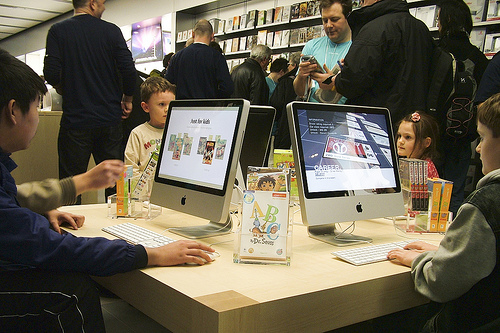
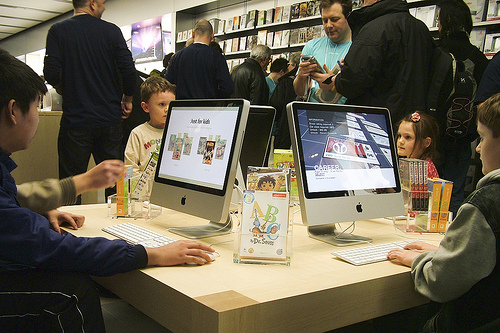
7566329228_4d5377458b_z-620x410

As the Maker Movement starts to gain momentum, schools that are trying to find ways to foster the do-it-yourself environment can learn a few lessons from another nexus in the universe: public libraries.

Dale Dougherty, founding editor and publisher of Make Magazine — and the de facto leader of the Maker Movement — has a vision to create a network of libraries, museums, and schools with what he calls “makerspaces” that draw on common resources and experts in each community. Libraries and museums, he said, are easier places to incorporate makerspaces than schools, because they have more space flexibility and they’re trying to attract teens with their programs.

“Schools have already got the kids,” Dougherty noted wryly, at the recent American Library Association Midwinter Meeting in Seattle. One day during the conference, dubbed Maker Monday, focused on the Maker Movement, which emphasizes learning by engaging in tech-related projects. Two packed sessions, one standing room only, were filled with librarians clearly fascinated by the potential of attracting teens (and even parents) to Maker activities in libraries.

Schools can learn from libraries that participated in the inaugural Maker Camps last summer. The librarians speaking at ALA proffered seven lessons that apply beyond libraries to schools and other potential makerspaces.

1)   KNOW YOUR SPACE.

“Why are you here?” That was one of the most common questions asked of the staff at the Make Magazine booth at the ALA. The answer: one of the hardest things for people interested in making is finding an appropriate physical space, and libraries actually have that space.

But not every space is alike, or even appropriate. Carla Avitabile of the Novato branch of the Marin County Free Library in California found some projects just aren’t suitable in certain activity rooms. For example, she said, they couldn’t do a glow-in-the-dark candy project because of the potential mess caused by boiling sugar directly above carpet.

Travis Good, the co-founder of the Maker City Census, said he visited 68 makerspaces to develop his criteria for readiness. At the top of list for libraries? “Tolerance for noise,” along with the Continue reading Want to Start a Makerspace at School? Tips to Get Started


Closing the Gap Between Educators and Entrepreneurs

Getty

There appears to be no shortage of new businesses looking to apply technology to education. An entire ecosystem has emerged in recent years to develop and promote the latest product or service for the classroom or district. But a major hurdle remains: the divide between what entrepreneurs build and educators need.

The ecosystem stimulating the “edupreneurial” activity ranges from startup instigators (Startup Weekend EDU) and startup showcases (LAUNCHedu, SIIA Innovation Incubator), to startup incubators (Y Combinator, Imagine K12) and startup investors.

But in many cases, enthusiastic edupreneurs are propelled from this starting ramp to run full speed, like Wile E. Coyote, into an oversized anvil — actual teachers. It doesn’t matter how good the concept, how cool the technology, or how pressing the need. There can be a fundamental disconnect between passion and reality.

And that can keep good ideas out of the classroom.

To dissect the disconnect, the MIT Enterprise Forum of the Northwest recently brought together a group of insiders: traditional education company executive Randy Reina, senior vice president of digital product development at McGraw-Hill Education’s Center for Digital Innovation; a not-so-recently-startup edtech company CEO Jessie Woolley-Wilson, who’s chair and president of DreamBox Learning; and teacher/entrepreneur Lindsey Own, a Seattle-area middle school science and health teacher and co-organizer of Startup Weekend Seattle EDU.

A handful of key themes emerged, casting light not just on what entrepreneurs need to know, but on issues parents and educators should expect as ed-tech startups get more attention. Continue reading Closing the Gap Between Educators and Entrepreneurs

2012 Ed Tech Trends: Insights From Insiders

At the end of the year, pundits love to share their versions of summarized lists of what was hot in ed tech in 2012. In addition to the obvious — Common Core curriculum and assessments, games in learning, consumer tech in education — there are others that may be more subtle or even counter-intuitive.

Here are five, drawn from first-hand observation at major 2012 industry conferences ranging from the more traditional Association of Educational Publishers’ and Association of American Publishers’ Content in Context to the edgy SXSWedu event in Austin. These represent one perspective of what the education industry itself is seeing, cutting across individual conferences and events.


Flickr:remiforall

1. PAPER IS NOT DEAD

While digital is firing up imaginations and well-equipped classrooms, paper is still the pervasive medium of choice. Digital instruction is simply finally achieving equal billing for serious consideration and state and federal funding. Despite this year’s declaration from the FCC and U.S. Department of Education that the industry should replace paper with digital textbooks by 2017, financial and technical hurdles remain.

For example, one high-profile Open Educational Resources pilot in Utah uses digital resources to create paper high school science textbooks — at an attractive per-copy price of about five dollars, versus $80 for commercial texts. Why paper? David Wiley of Brigham Young University explained at SXSWedu that the digital device cost per student was high and much of the benefit could be derived in how the material was customized, taking advantage of paper’s “unlimited battery life.”

Technical concerns were front-and-center at a Consortium for School Networking/SIIA Feedback Forum held with district and state officials during the ISTE 2012 conference. While WiFi and devices may exist in a school district, distribution can be lumpy, creating hurdles to smooth implementation. “We have schools that are one hundred percent textbook, and schools that are fully digital — a broad spectrum,” said a Louisiana-based tech coordinator.

It is, one administrator from a California district noted, the last mile Internet connection into schools and even individual classrooms “where things get interesting.” Which renders paper Continue reading 2012 Ed Tech Trends: Insights From Insiders

Going Retro: Reading Apps for Real Books

Reading Rainbow app

YouTube clips. Texting. Twitter. Facebook status updates.

The prevalence of short-attention-span media — easily scanned or consumed — has led to much hand-wringing over how students will develop that lifelong love of reading perceived to be so critical to lifelong learning.

One answer (in addition to “it’s not as bad as you think,” as a recent Pew Research Center study might be summarized) may be in adapting the function to the form. Which is to say to put real, and sometimes classic, children’s books on the latest digital devices via apps and the web.

That’s the tack several tech-oriented companies are taking with both fiction and non-fiction. And while the customer for each effort differs — ranging from parents to teachers to librarians — the emphasis is remarkably similar: instilling the love of reading and books early, even if there isn’t a physical book.

A handful of recent examples for this revenge of the retro:

LIVING BOOKS.  Your first reaction may be that “Living Books” sounds familiar. And it should.  A startup, Wanderful, is bringing back titles in the much-loved series that software company Broderbund originally produced two decades ago, at the dawn of the CD-ROM age.

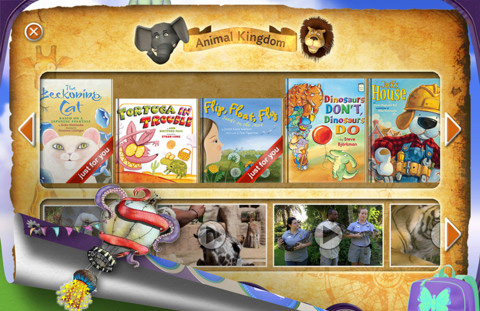
No longer restricted to physical discs or desktop computers underpowered for multimedia, the updated titles are returning as $5 iPad iOS apps (and eligible for Apple’s Volume Purchase Program for Education), with plans to add Android versions after the first of the year. These newest Living Continue reading Going Retro: Reading Apps for Real Books

Where Do Educational Games Come From?

Flickr:Flickingrbrad

Increasingly, digital games are cropping up everywhere in education. And that’s stimulated a flurry of activity leading to the expectation that no longer are learning games only likely to come from traditional education companies, but a wide variety of sources.

The expectation-setting stats and statements, at least, are straightforward. Both the New Media Consortium’s 2012 Horizon Report on higher education and its 2011 Horizon Report for K-12 put game-based learning in the mainstream (defined as adopted by about 20% of institutions) in the next two-to-three years. “The greatest potential of games for learning lie in their ability to foster collaboration and engage students deeply in the process of learning,” noted the 2012 higher ed collaborative effort of NMC educators and research centers.

Then there’s the expectation of the “demand” side: students. An Educause survey last October found 37% of college students use educational games or simulations – and 15% wished their instructors used them more often. Project Tomorrow’s national Speak Up report released in April found that 52% of middle school students wanted their “ultimate” school to have games and simulations.

Now, it appears, the “supply” side is responding, building on a base of learning game research from this century – or simply taking advantage of heightened expectations. No matter what the motivation, it provides evidence a perceived K-20 trend toward games may actually be real and is spurring activity from places not always thought as hotbeds of hard-core learning game development.

CONSUMER

Consumer and learning game worlds have long been separate, with some notable crossovers (Where in the World is Carmen Sandiego and SimCity are two early standouts). But motivated companies are trying to make consumer crossovers more common and even more structured. Continue reading Where Do Educational Games Come From?

What’s the Difference Between Games and Gamification?

Perhaps the best way to think about games in education is not to automatically call everything that looks like fun a “learning game.” Lumping all digital game approaches together makes no more sense than a toddler’s inclination to call every four-legged animal a “doggie.”

Game interest is definitely on the upswing in K-12 and higher education. It seems almost cyclical: every several years, almost in sync with the acceptance of new technologies (such as multimedia CD-ROM, then online, then mobile), there’s a surge of activity with games in education.

But everything game-like is not a game. And while game purists may wince at this simplification, it helps to consider games in education in terms of gamification, simulation and (simply) games. The three approaches aren’t always exclusive – they’re more of a continuum, or a Venn diagram’s overlapping circles – but they are notably different.

GAMIFICATION

Gamification is the current bright-shiny of the three terms – and, as a result, is the most used and frequently misused. But the cleanest definition is straightforward: gamification is adding game elements and mechanics to things that aren’t designed to be games.

Outside of education, some call these “reward, recognition and motivation programs.” And Alex Chisholm, executive director of the Learning Games Network, a spin-off from the MIT Education Arcade and University of Wisconsin, shared an equivalent perspective recently when he noted that saying you’re going to “gamify” something in education means you’re applying game design principles to motivate and inspire learners.

In apps and software, this is commonly interpreted as adding point systems (sometimes with competitive student leaderboards), badges for accomplishments and levels of progression. One of the highest profile examples of this approach is the Khan Academy, which layers avatars, energy points and badges on top of completing traditional math activities.

But gamification can be done well or poorly.

“The first place people go with gamification is ‘rewards.’ There can be dragons,” says Scott Dodson, a gamification expert and executive with Bobber Interactive. “Rewards done wrong Continue reading What’s the Difference Between Games and Gamification?

How Will Student Data Be Used?

Over the next few months, a handful of states will take early steps to try to solve a problem that’s become a by-product of the digital age: navigating the flood of student data.

Right now, all sorts of student data are being kept in everything from testing programs and instructional software to grade books and learning management systems. But the data are often trapped in the program and not easily extracted or combined with other data on the same student, creating the educational equivalent of the Hotel California: data can check in any time it likes, but it can never leave. Or be used effectively by teachers.

So a new initiative, supported by state education leaders and funded by prominent foundations, plans to provide a place in the cloud for each state to store all data for every student, using “free” open source software. And, in the process, student achievement information will be connected to instructional apps and web resources. That is, as long as the effort can address concerns about technology, privacy, and whether enough education companies will want to build products for a system that could undermine parts of their own businesses.

In a nutshell, this describes the complicated Shared Learning Infrastructure, being built by the near-namesake Shared Learning Collaborative. Continue reading How Will Student Data Be Used?

How Open Education is Changing the Texture of Content

By Frank Catalano

Schools are moving from creamy to chunky — but not in relation to cafeteria peanut butter. The change in texture is happening with content.

Instruction that was structured linearly, captured in books that were all-inclusive monoliths with a predetermined progression for a uniform, somewhat “creamy” consistency, is shifting to newer forms of instructional content that are more “chunky,” beginning as a scattered landscape of digital pieces that are then assembled to support full courses

The trend, steady and apparently inexorable, is inspired by higher education, driven by financial pressures, propelled by foundations and the federal government, and enabled by technology.

Digital course materials are, of course, nothing new. One of the highest-profile such initiatives, MIT’s OpenCourseWare, is a decade old. And digital textbooks, which have morphed from crude PDF representations of paper books to interactive iBooks, have also been available for years.

Now, digital curriculum — in both college and K-12 — seems to be shifting from attempts to break apart comprehensive digital textbooks to meet classroom needs, to building up lessons and courseware from individual instructional chunks. And that has the potential to make the traditional definition of “textbook” somewhat quaint.

Encouraging this acceleration of digital chunky content, in large part, is the Open Educational Continue reading How Open Education is Changing the Texture of Content

Which Device Will Win the Tablet Battle?

By Frank Catalano

The future of tablets in our schools may not be coming from Cupertino. Or even the U.S.

Despite the craze around Apple’s iPad, it’s only been two years since the device was introduced, and that may not be enough time to separate fad from trend over the long term in education. And while the iPad’s presence – and promotion by the Apple faithful since its launch in 2010 – is hard to ignore, a winning tablet trend hasn’t been clearly established on a global basis.

It’s certainly true that tablets are on the upswing in K-12 schools and higher education. There’s no shortage of U.S. numbers to cite. Going beyond statistics of tablet penetration (in one case, most recently, 25% of college students and 17% of college seniors), it’s in the composition of purchases where the data can get interesting. For example, a Harris Interactive/Pearson Foundation survey released in March gave iPads the largest share among college students (at 63%), followed by the Kindle Fire (26%) and the Samsung Galaxy Tab (15%).

Another way to read those figures: It’s roughly a 60/40 split between Apple’s iOS operating system and all flavors of Android devices (“flavors” might be the right word, as Android has named its more recent OS versions Ice Cream Sandwich and Gingerbread). These relative rankings among popular Android tablets in education mirror the broader U.S. consumer market.

But the scope of some big decisions made by international government agencies – and the price of non-U.S. devices – could upset the apple cart.

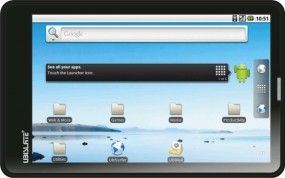
Consider India. Last fall saw the launch of the highly touted US$50 Aakash Android tablet for education (subsidized to US$35). That initiative subsequently stumbled following reports the first models built by the UK firm DataWind were sluggish and fragile. The government has since decided to press ahead with a new version with improved specifications.

Yet the overwhelming interest in what was supposed to be a first run of 100,000 tablets has spurred the growth of a handful of new education-focused competitors. They’ve developed tablets that are more expensive, but apparently more capable: the US$100 ATab, US$150 HCL MeTab, Continue reading Which Device Will Win the Tablet Battle?

When Technologies Collide: Consumer, K-12 and Higher Ed

By Frank Catalano

Schools have been adopting iPads with lightning speed  — more than 1.5 million have already been distributed to students, a mere two years after the original iPad launch. But beyond Apple’s influence in education, the high-profile tablet appears to be the poster child for a different trend.

Call it the consumerization of education technology.

What the iPad’s rapid incursion into the classroom masks is that the walls that used to slow new instructional technology’s adoption in education are falling. And when walls fall, what’s inside can spill out in any one of several directions.

A decade ago, the standard education technology adoption cycle was pretty straightforward. Cool tech was traditionally seeded in the consumer market. If the technology could be useful enough for teaching, it might be adopted in higher education where older students and their parents were the consumers. Then, after being thoroughly vetted and validated, it might eventually work its way down into K-12 classrooms where schools and districts bought the technology.

It was a long process, one that itself might take a decade — and for good reasons.

First, relative to today, technology was expensive – in 2002, a laptop with 512MB RAM, a 30GB hard drive and 15” screen running Windows XP or Mac OS X, sporting a not-so-fast 802.11b Wi-Fi connection and modem, cost about $3,000. For the most part, with the exception of these heavy laptops and some not-so-smart phones, mobile technologies were relatively unfamiliar in education.

Internet infrastructure was also a challenge. If any Web connections were prevalent in schools, they were rarely wireless. It really hasn’t been so long since NetDay, a grassroots volunteer effort, physically wired 75,000 classrooms for Internet access in 40 states between 1996 and 2001.

Yet the old evaluation cycle would work, haltingly. Online classes and distance learning began in higher education, as did digital textbooks, before filtering though the adoption strata into K-12 Continue reading When Technologies Collide: Consumer, K-12 and Higher Ed

How Educators are Finding Ways to Mix it Up

Content in Context attendees learned about the San Francisco algebra class that's piloting the iPad app.

Things have changed dramatically in classrooms across the country. Teachers are experimenting in innovative ways, trying to find the best method of engaging students in learning. Last month, the Association of Educational Publishers presented Content in Context Conference, at which educators discussed the ways in which they’re mixing it up. Frank Catalano headed up some of the meetings, and wrote about the highlights from the sessions. Here’s his synopsis, as posted on EdNET Insight.

By Frank Catalano

We’ve all seen wish lists of what teachers want in digital resources and technology. We’ve all read the increasingly voluminous studies of what educators, in aggregate, have in their classrooms, schools, and districts.

But what, though, are they actually doing?

If some of the highest-profile applications of digital tech to K-12 learning are any indication, teachers are experimenting in ways as varied and individual as the instructor and classroom.

Their inventiveness became clear as I helped put together, and then moderated, the opening general session of this year’s Content in Context Conference, organized by the Association of Educational Publishers. Session organizers asked educators far and wide to go into more depth about what’s happening with digital in the classroom, used teachers’ own videos to illustrate, and added a panel to provide the administrator and policy perspective.

The only consistency in deep implementations of tech is that there’s none. Here were some of the loosely common threads and trends:

One-to-one computing. One-to-one initiatives tend to get all of the attention, as though they were the gold standard of ed tech. But one-to-one…what? When the term was coined, it was one student to one desktop computer. Yet only the former has remained constant.

  • Fairfax County Public Schools in Virginia is piloting netbooks loaded with online textbooks for social studies classes in middle and high schools. Students like the ability to immediately look up and manipulate information. Teachers like how they support different learning styles. But Jim Siegl, technical architect for FCPS and a session panelist, said one surprise has been that high school students have been more resistant to the e-textbooks than their middle school counterparts—perhaps indicating that once study habits are established, they’re hard to change. Continue reading How Educators are Finding Ways to Mix it Up