Top 7 Stories on State of Health in 2013

Study shows sleep deprivation makes you crave high-calorie foods. (Getty Images)
No, ‘hamburgers’ was not the #1 story, but do you really want to see another picture depicting Covered California? (Getty Images)

Just like that, another year is coming to a close. And what a year it’s been on the health beat. I’m going to wager that you can guess what the top news story of the year was on this (or any) health blog. Technically, several Obamacare stories were Top 10 most-viewed posts on this site, but since one of them was from last year, I’m just giving all Affordable Care Act stories one slot.

  1. The Rollout of Obamacare — From Jan. 3 when the federal government approved California’s exchange through the state vs. county debate about funding the Medi-Cal expansion to the May release of plans and premiums to the launch of Covered California and the many challenges — and successes — since then, the implementation of the ACA has dominated health news coverage. If you’ve got questions about how the law affects you and your family, check out our Obamacare Guide, just for Californians. And if you just want to be entertained, watch this video of “President Obama” telling you to “sign up while it’s hot.”
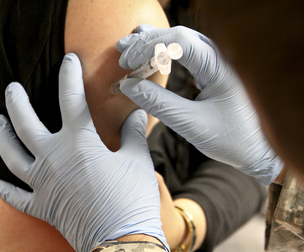
  2. Childhood Vaccines  — the state released its annual report on immunization status of kindergarteners and Marin County had the highest personal-belief exemption rate in the Bay Area. We simplified the state data to make it easy for you to look up your child’s school online and see what percentage of children have been vaccinated — or had parents who had opted out. On Jan. 1, 2014, a new state law goes into effect requiring parents who want to opt out of vaccines to meet with a health provider first. Washington instituted such a law in 2011 and the number of parents opting out of vaccines has dropped more than 25 percent. Continue reading Top 7 Stories on State of Health in 2013

How California’s Law to Encourage Vaccination Could Backfire

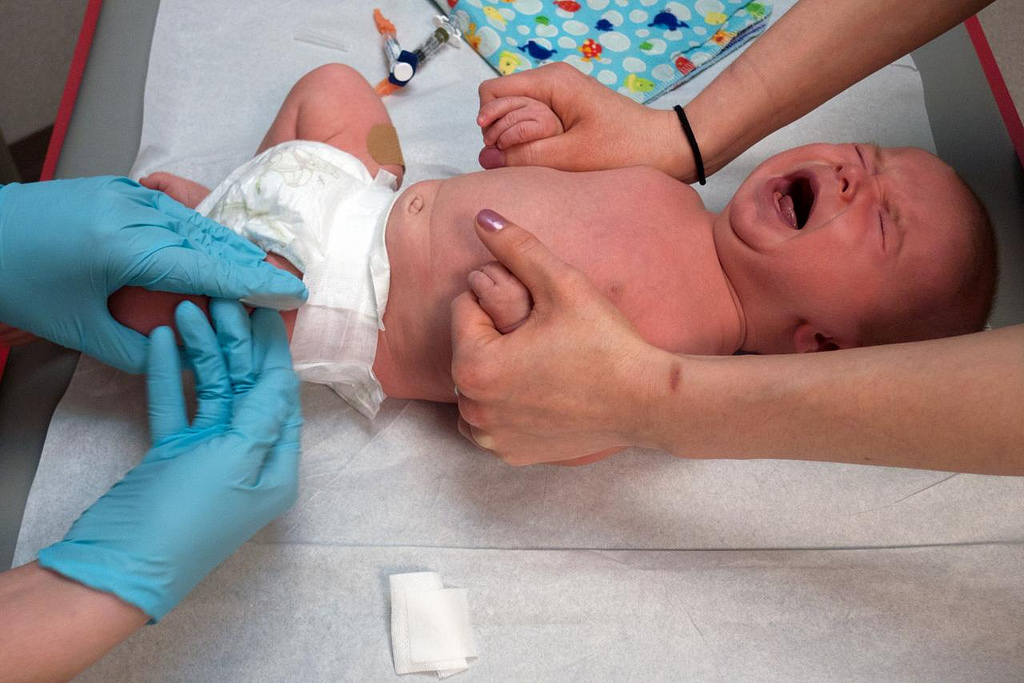
Baby cries after receiving a vaccine. (Dan Hatton: Flickr)
(Dan Hatton/Flickr)

By Nancy Shute, NPR

California has a new law that’s supposed to get more of the state’s children vaccinated against measles, whooping cough and other infectious diseases.

But the law has taken a strange turn on its way to being put into action, one that may instead make it easier for parents to exempt their children from required vaccinations.

In recent years the number of parents who request so-called personal belief exemptions from vaccines has been rising. It’s gotten to the point that public health officials fear that there could be disease outbreaks in parts of California. Same goes for other states where exemption rates are high.

On Sept. 20, 2012, California Gov. Edmund G. Brown Jr. signed a bill aimed at boosting childhood immunization rates. His signing letter included these instructions: Continue reading How California’s Law to Encourage Vaccination Could Backfire

Federal Health Officials to Launch Study of Valley Fever

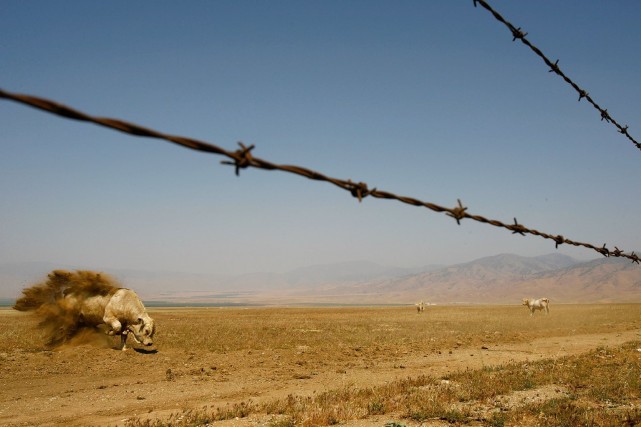
A bull kicks up dust on a farm south of Bakersfield. Valley fever spores are carried by the wind in the dry, desert southwest, including California's Central Valley. (David McNew/Getty Images)
A bull kicks up dust on a farm south of Bakersfield. Valley fever spores are carried by the wind in the dry, desert southwest, including California’s Central Valley. (David McNew/Getty Images)

By Rachel Cook, Reporting on Health Collaborative

The leaders of the Centers for Disease Control and the National Institutes of Health announced they will launch a clinical trial to get a better understanding of how to treat valley fever. The announcement was made Monday as part of a two-day symposium on valley fever being held in Bakersfield.

The randomized control trial will cost millions of dollars and involve roughly 1,000 patients, and it could help determine the best practices for treating the fungal infection.

“It will take some time to mount this trial, to plan it, to put it forward,” said Dr. Francis Collins, director of the NIH. “But I just want to assure all of you from this part of California that we’re serious about trying to get some of those answers even in the face of difficult budget times,” Collins said.

California’s San Joaquin Valley is a valley fever hot spot.

“What we’ve seen is a steady increase in the number of diagnosed cases of valley fever, or coccidioidomycosis,” said Dr. Thomas Frieden, director of the CDC. “We don’t know why that’s happened and there’s a lot that we need to learn.”

Continue reading Federal Health Officials to Launch Study of Valley Fever

Valley Fever Cases Soar in West, Yet ‘Off The Radar’ of East Coast Policymakers

By Rebecca Plevin, NPR

(Daniel Casarez/Vida en el Valle/Reporting on Health Collaborative)

When she was just 6, Emily Gorospe became very tired and sick. The spunky girl, now 8, developed a fever that wouldn’t go away, and red blotches appeared across her body.

“She’s got so much energy usually,” says Emily’s mother, Valerie Gorospe. “Just walking from one part of the house … she was drained.” The little girl was also very pale. “She just didn’t look like herself,” Valerie recalls.

Emily, who lives in the Central Valley town of Delano, was eventually diagnosed with valley fever, also known as coccidioidomycosis. She’s one of an estimated 150,000 people nationwide who get the fungal disease every year. There is no cure and no vaccine.

Valley fever is well known in the Central Valley and other areas of California and Arizona. Tiny fungal spores live in the soil throughout much of this arid region. When the spores are disturbed, they can be inhaled into the lungs.

James McCarty, the medical director of infectious diseases at Children’s Hospital Central California, says most people feel nothing, or experience symptoms similar to the flu. Common symptoms include fever, night sweats, weight loss, chest pain, cough and sometimes skin rashes.

Valley fever can be a very serious disease for some people, McCarty says. It can spread from the lungs to other parts of the body, like the central nervous system, bones or skin. It can be life-altering or even fatal. Continue reading Valley Fever Cases Soar in West, Yet ‘Off The Radar’ of East Coast Policymakers

Valley Fever Cases Skyrocketing, Says CDC

BY RACHEL COOKReporting on Health Collaborative

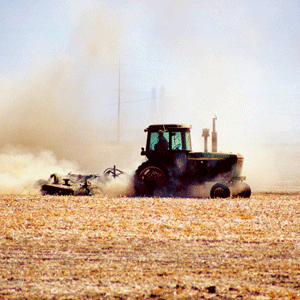
Farming in California's Central Valley is a source of smog, a major contributor to the region's high asthma rates. (Getty Images)
Valley Fever is a disease caused by a fungus found in the soil in certain parts of the southwestern U.S., including California. (Getty Images)

The Centers for Disease Control and Prevention confirms in a new research article this week what doctors, epidemiologists and people who suffer from valley fever have experienced first-hand — cases of the fungal disease rose at stunning rates over the last decade, especially in California and Arizona.

The CDC’s analysis addresses the findings reported in Just One Breath, a series of news stories on valley fever by the Reporting on Health Collaborative published in The [Bakersfield] Californian and other outlets. The series chronicled the rise in valley fever cases and deaths and the lack of attention by state and federal policymakers.

“I do think that the reporting series helped to put (valley fever) at the forefront, especially in California,” said Dr. Benjamin Park, medical officer in the CDC’s Mycotic Diseases Branch and the study’s senior author.

People catch coccidioidomycosis, also known as valley fever, after inhaling fungal spores that are common in the dry parts of the Southwest as well as Mexico and Latin America. Experts say the lack of funding and serious attention to valley fever has stalled efforts to combat the disease.

But valley fever seems to be gaining policy attention. House Majority Whip Kevin McCarthy, R-Bakersfield, and CDC Director Dr. Tom Frieden recently met to talk about valley fever’s impact in the Southwest. Continue reading Valley Fever Cases Skyrocketing, Says CDC

Don’t Panic Over Flu — But Do Get A Flu Shot, Say Experts

The states colored brown in this map from the Centers for Disease Control shows where flu activity is widespread. You see that California is currently seeing “regional” activity.

(Centers for Disease Control)

If you’re worried about contracting the flu, the CDC says that an annual flu vaccine “is the best way to reduce the chances that you will get seasonal flu and lessen the chance that you will spread it to others.” The CDC recommends everyone over age 6 months go ahead and get the shot. Today in a release, Dr. Ron Chapman of the California Department of Public Health also urged Californians to be vaccinated. Continue reading Don’t Panic Over Flu — But Do Get A Flu Shot, Say Experts

Valley Fever Cases Soar, Harm Remains Hidden

Editor’s Note: This story is part of Just One Breath an initiative on valley fever from reporters with The California Endowment Health Journalism Fellowships at the USC Annenberg School for Communication and Journalism. 

By Kellie SchmittRebecca Plevin and Tracy Wood

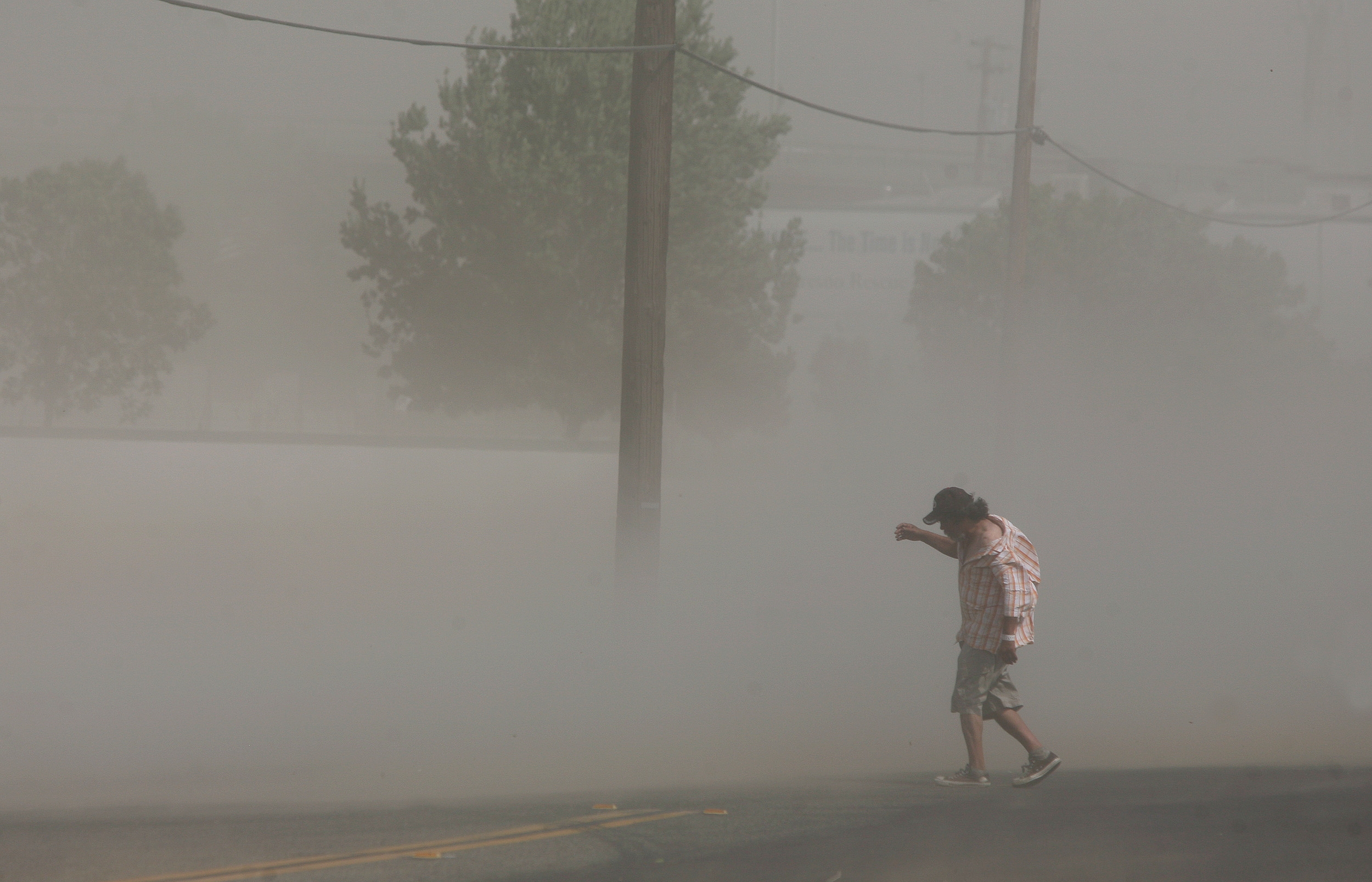
Dust storm. (Craig Kohlruss: FresnoBee)
A man struggles through heavy winds and dust blowing in downtown Fresno. (Craig Kohlruss: FresnoBee)

Valley fever starts with the simple act of breathing.

The fungal spores, lifted from the dry dirt by the wind, pass through your nostrils or down your throat, so tiny they don’t even trigger a cough. They lodge in your lungs. If you’re fortunate – and most people are – they go no further.

But if you are one of the more than 150,000 people stricken with coccidioidomycosis every year nationwide, it’s because the spores have sent roots into the moist tissue of your lungs.

They start to feed, and, over time, they can rob you of your health. In serious cases, your muscles waste away. Your bones become brittle. Pustules appear on your arms, neck and face and then erupt.

Once the fungus takes root, it never leaves you. In about 100 cases every year nationally the fever kills. That’s more deaths than those caused by hantavirus, whooping cough, and salmonella poisoning combined, yet all of these conditions receive far more attention from public health officials and are more widely known.

As horrible as the disease can be, people in Bakersfield, Fresno, Merced, Stockton and other parts of California’s San Joaquín Valley have come to accept it as a way of life. Everyone knows somebody who has had valley fever, and most have survived. Continue reading Valley Fever Cases Soar, Harm Remains Hidden

FDA Approves First Drug to Help Prevent HIV Infection

(Justin Sullivan: Getty Images)

The Food and Drug Administration has approved Truvada, the first drug shown to reduce the risk of HIV infection in people who are at high risk of acquiring HIV, the virus that causes AIDS.

Truvada was already approved as a medication for treatment of people already infected with HIV.

Truvada is to be taken twice a day in what is known as pre-exposure prophylaxis, or PrEP.

From the FDA’s press release:

As part of PrEP, HIV-uninfected individuals who are at high risk will take Truvada daily to lower their chances of becoming infected with HIV should they be exposed to the virus. A PrEP indication means Truvada is approved for use as part of a comprehensive HIV prevention strategy that includes other prevention methods, such as safe sex practices, risk reduction counseling, and regular HIV testing. Continue reading FDA Approves First Drug to Help Prevent HIV Infection

FDA Panel Approves First Drug to Prevent HIV Infection

The FDA panel approved Truvada, an antiretroviral drug for use by healthy people to prevent HIV infection.  (Justin Sullivan: Getty Images)
The FDA panel approved Truvada, an antiretroviral drug for use by healthy people to prevent HIV infection. (Justin Sullivan: Getty Images)

From AP:

A panel of federal health advisers has endorsed the first drug shown to prevent HIV infection in healthy people, clearing the way for a potentially landmark approval in the 30-year-old effort against the virus that causes AIDS.

In a series of votes, the Food and Drug Administration advisory panel recommended approval of the daily pill Truvada for healthy people who are at high risk of contracting HIV, including gay and bisexual men and heterosexual couples with one HIV-infected person. The FDA is not required to follow the panel’s advice, though it usually does. A final decision is expected by June 15.

Drugmaker Gilead Sciences Inc., of Foster City, already markets Truvada as a treatment for people who are infected with HIV.

Continue reading FDA Panel Approves First Drug to Prevent HIV Infection

No Whooping Cough Deaths Last Year in California

Pharmacist administers whooping cough vaccine. (Robyn Beck/AFP/Getty Images)

You know public health is working when nothing bad happens. Last year, for the first time in 20 years, California had no deaths from whooping cough, a highly contagious illness also called pertussis.

The California Department of Public Health credits a statewide vaccination effort which followed a 2010 outbreak when 9,000 Californians were diagnosed and nine infants died. In 2011, in addition to no deaths, the number of cases of the illness dropped to 3,000.

As the Los Angeles Times reports: Continue reading No Whooping Cough Deaths Last Year in California

Common Chemical May Affect Children’s Immune Systems

Pizza boxes are often coated with PFCs to repel water or grease. (Eddie Welker: Flickr)
Pizza boxes are one consumer product often coated with PFCs to repel water and grease. (Eddie Welker: Flickr)

Perfluorinated compounds, or PFCs, have been used for decades. This class of chemicals has both industrial and consumer uses, including in fast food wrappers, pizza boxes and stain-resistant clothing. In a study published today in the Journal of the American Medical Association, researchers looked at children and found that higher levels of PFCs were associated with lower antibody response to routine immunizations, including diphtheria and tetanus.

Philippe Grandjean of the Harvard School of Public Health led the team that looked at more than 600 children. Researchers looked at how children responded to vaccines, because the antibodies produced in response to vaccination can be easily measured and are a marker for immune system function. Researchers also quantified PFC levels. “What we saw was that the children did not quite react the way we wanted them to to the vaccines,” he said in an interview. “The higher the exposure to the PFCs, the lower the antibody reaction in the blood.” Continue reading Common Chemical May Affect Children’s Immune Systems