Here are three big stories concerning education and learning that you’ll be hearing about in the year ahead—and some pointers on how to think about them.
1. SMART USE OF TECH.
Computers have been present in classrooms for a number of years now, of course, and in 2013 excitement about their potential to transform education will keep running high. Bulky desktop models will continue to give way to mobile devices like laptops, tablets, and even cell phones, and more schools will be experimenting with “BYOD”—telling students to “bring your own devices” to school. Innovative teachers and administrators will find ever more ways to integrate technology into instruction—from simulating science experiments on the screen, to turning boring math and vocabulary drills into enjoyable games, to promoting online collaboration among students on history and language-arts projects.
At the same time, the runaway enthusiasm about edtech will begin to be tempered, I predict, by a more realistic sense of what computers can do for students, and what they can’t. Young people will still need to interact with classmates and teachers face to face. They will still need physical activity Continue reading Here Comes 2013: The Big Themes in Learning→
At the end of the year, pundits love to share their versions of summarized lists of what was hot in ed tech in 2012. In addition to the obvious — Common Core curriculum and assessments, games in learning, consumer tech in education — there are others that may be more subtle or even counter-intuitive.
Here are five, drawn from first-hand observation at major 2012 industry conferences ranging from the more traditional Association of Educational Publishers’ and Association of American Publishers’ Content in Context to the edgy SXSWedu event in Austin. These represent one perspective of what the education industry itself is seeing, cutting across individual conferences and events.
Flickr:remiforall
1. PAPER IS NOT DEAD
While digital is firing up imaginations and well-equipped classrooms, paper is still the pervasive medium of choice. Digital instruction is simply finally achieving equal billing for serious consideration and state and federal funding. Despite this year’s declaration from the FCC and U.S. Department of Education that the industry should replace paper with digital textbooks by 2017, financial and technical hurdles remain.
For example, one high-profile Open Educational Resources pilot in Utah uses digital resources to create paper high school science textbooks — at an attractive per-copy price of about five dollars, versus $80 for commercial texts. Why paper? David Wiley of Brigham Young University explained at SXSWedu that the digital device cost per student was high and much of the benefit could be derived in how the material was customized, taking advantage of paper’s “unlimited battery life.”
Technical concerns were front-and-center at a Consortium for School Networking/SIIA Feedback Forum held with district and state officials during the ISTE 2012 conference. While WiFi and devices may exist in a school district, distribution can be lumpy, creating hurdles to smooth implementation. “We have schools that are one hundred percent textbook, and schools that are fully digital — a broad spectrum,” said a Louisiana-based tech coordinator.
It is, one administrator from a California district noted, the last mile Internet connection into schools and even individual classrooms “where things get interesting.” Which renders paper Continue reading 2012 Ed Tech Trends: Insights From Insiders→
What will the future of education look like? KnowledgeWorks Foundation has just released the third edition of its education forecast, called Forecast 3.0, Recombinant Education: Regenerating the Learning Ecosystem, that outlines the deconstruction of the current education model, a change in educators’ roles based on their strengths, changing career pathways, and the role of technology in this realm. The language might seem a bit futuristic, but the insights are fascinating. Below, two short excerpts.
CUSTOMIZABLE VALUE WEBS
While the digital explosion has long been creating an expanding ecosystem of new services, applications, and tools, innovative business models will find new ways of harnessing these opportunities into flexible value webs that deliver highly customer-centric experiences.
Across industries, new intermediaries, novel customer value propositions, and creative ways of facilitating open digital platforms and networks are already transforming customer experiences. For example, new intermediaries in the music industry have integrated platforms such as iTunes, Google+, and Facebook with artist information, concert databases, and mobile apps to transform passive listeners into active music participants who share, create, remix, and produce music.
In education, new intermediaries will facilitate a similar integration of networks and systems that bring learners, resources, services, data, and learning agents together in novel value webs. Schools will no longer be singular, enclosed organizations.
Instead, they will serve students by harnessing and brokering resources and talent across the global community. Customer-centric value propositions will guide the creation of learning experiences that leverage rich value webs to serve distinct populations. What began as a “bring-your-own-device” (BYOD) movement may very well turn into a “create-your-own-school” movement as new intermediaries, learning agents, parents, and learners collaborate to weave vibrant value webs.
This increasing customization of learning will involve recombining learning experiences, assets, and tools to help each learner find the specific value proposition(s) that best meet her or his needs.
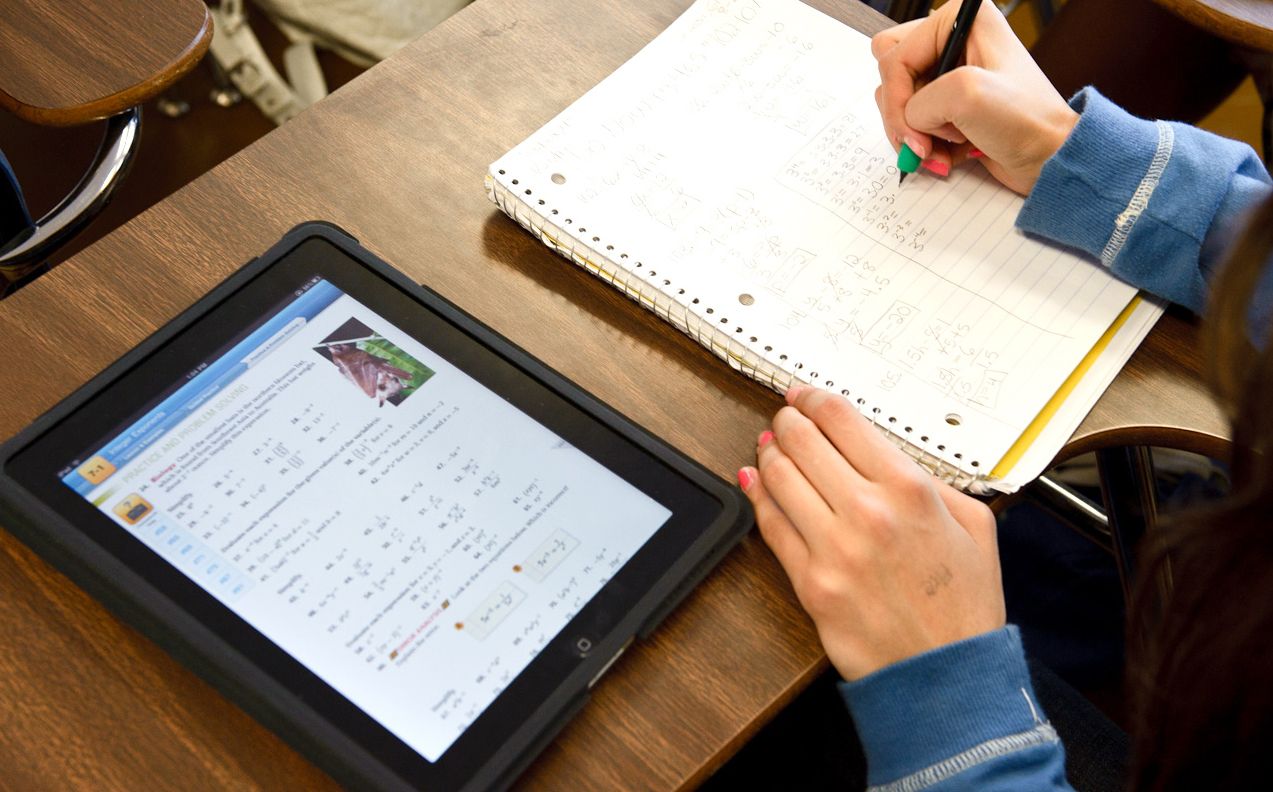
When it comes to deciding how or whether to use iPads, schools typically focus on budget issues, apps, networking logistics, check-in and check-out procedures, school and district tech-use policies, hardware precautions, and aspects of classroom management.
But it’s also important to think about instructional use, and to that end, consider the following questions.
1. What are the goals for iPad implementation? Engagement, access to digital textbooks, access to digital environments, primarily media consumption, media production, or a blend of everything?
2. What can the iPad do that is not possible–or is clunky and cumbersome–without it? That is, what learning problems does the iPad solve?
3. What sort of instructional planning are you using–traditional units, project-based learning, game-based learning, or something else? That is, what style of learning are you expecting the iPad to actuate?
4. How should your instructional design and lesson planning be revised as a result of the iPad? What “fail-safes” should be built into activities to ensure learning is possible when the technology misbehaves and doesn’t do what you ask?
5. What is your own comfort level with technology? What digital, physical, and human resources are available when something is needed?
The rush to create large, free online classes has generated anxiety at universities around the country. With finances already tight and with a surge of movement toward online learning, universities are being forced to move quickly to change centuries-old models of learning. Terms like historic, seismic and revolutionary now pop up in descriptions of the challenges that higher education faces in the coming years.
Many institutions have been preparing for these changes for years, building infrastructure and expertise, experimenting and recruiting, and integrating online learning into long-term strategies. Many others, especially traditional research universities, have been caught flat-footed as education has transformed around them.
This point of dramatic — and traumatic — change didn’t swoop in unannounced. Rather, it crept in like a series of streams meeting in a roiling confluence. Only by stepping back and looking in panoramic fashion can we truly understand how we’ve arrived at a point of transformation and how we might deal with it.
TECHNOLOGY LEADS THE WAY
Internet connections, computers and cellphones have become faster and cheaper, providing easier access to online material and creating the potential to speak with, work with, and learn from nearly anyone in the world. Information, once something people had to seek out, now flows relentlessly to them. In education, lecture capture and lesson creation have become easier and cheaper, and online storage has made retrieval cheap and easy. Free tools like Moodle, Jing, YouTube, and Twitter have provided new means of information sharing and collaboration. Smartphones and the iPad have provided portable means of accessing and creating information, making learning more portable than ever.
In their book Liberating Learning, Terry Moe and John Chubb say that this technological transformation is “reshaping the fundamentals of how human beings from every corner of the globe communicate, interact, conduct their business, and simply live their lives from day to day.”
It’s also changing the way they learn.
COLLEGE COSTS HAVE SKYROCKETED
The expense of higher education has risen more than 550 percent since 1985, pricing many students out of the market even as a college degree becomes more important than ever for reaching the middle class. At the same time, the cost of technology has dropped, allowing more people easier access to the Internet and to resources for learning.
Looking ahead at some of the education technology trends we’ll likely see in 2012, many are already underway.
But here are 12 areas where we believe we’ll see significant adoption and innovation in the coming months.
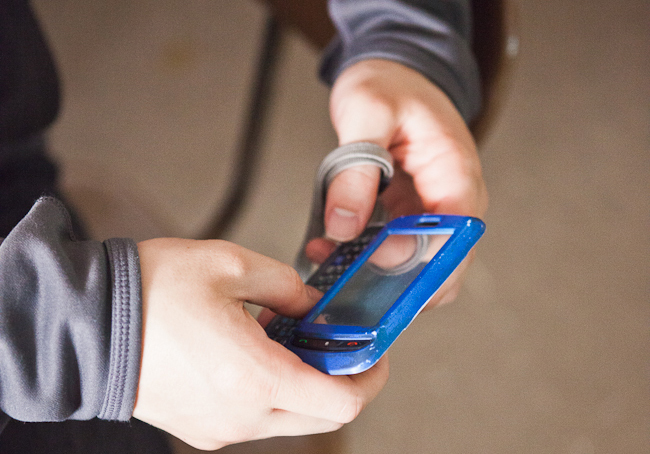
MOBILE PHONES: Mobile learning is hardly a new trend, but we have now reached the point with near ubiquitous cellphone ownership among adults, and growing ownership among children. More than three-quarters of teens own a cellphone, and about 40% own a smartphone. As such, these mobile devices will help unlock some of the promise of “anytime, anywhere” learning opportunities.
BYOD (BRING YOUR OWN DEVICE): A related trend to mobile learning. More schools will grapple with their policies surrounding students bringing their own devices to school. They do so already, of course, although cellphones in particular are often required to be turned off or stowed in backpacks or lockers. It isn’t just cellphones that are brought from home now either. There are iPod Touches, tablets, laptops, e-readers, and netbooks, and schools will weigh whether or not students will be permitted or even encouraged to bring their own devices to school.
BANDWIDTH ISSUES: The FCC has made broadband access the focus of some of its efforts over the last few years, arguing for its importance to the U.S. economy and education. It’s pushing for better access across the board, but also recognizing the importance of high-speed Internet specifically at schools and libraries. Even those schools with broadband access may find their Continue reading 12 Education Tech Trends to Watch in 2012→
The idea of using the pencil as an analogy to talk about technology in the classroom is hardly a new one. But the analogy has resurfaced and spread in recent weeks, sparked in part by a reading of John T. Spencer’s book Pencil Me In, which uses the pencil allegory to talk about technology integration, and by the virality of the Twitter hashtag #pencilchat.
Comparing the tools — pencils and computers — is something that Seymour Papert, “the father of educational computing,” has done for decades now. Back in 1984, Papert wrote:
Imagine (if you can) that we lived in a world without writing–and, of course, without pencils, pens and books. Then one day, somebody invents writing and the pencil, and people say, “Wow, this would be great for education. Let’s give these things to all the children and teach Continue reading #Pencilchat: the Ultimate Technology Metaphor→
Another thought-provoking manifesto by Lisa Nielson, who coaches educators in New York. One idea in specific: “When teachers let students explore, discover, and create, they meet learning goals in ways that teachers and administrators never realized were possible. Students enjoy the opportunity to choose to use their own devices because they have customized them to … Continue reading Quick Look: Busting Myths About Kids Using Their Own Devices in School→
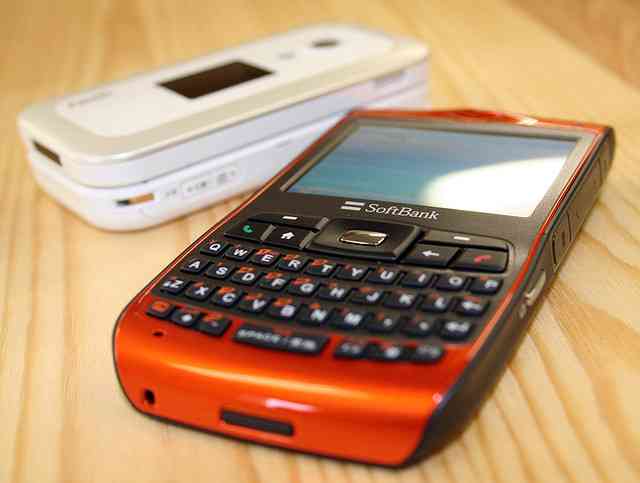
Last week, a study by the Pew Internet and American Life Project found that cellphones have become “near ubiquitous”: 83% of American adults own one. Over half of all adult mobile phone owners had used their phones at least once to get information they needed right away. And more than a quarter said that they had experienced a situation in the previous month in which they had trouble doing something because they did not have their phones at hand.
The findings of this Pew research — the reliance of adults on their cellphones — stands in sharp contrast to the policies of many schools, where cellphones remained banned or restricted. Students likely have these same needs as adults: to get online and find information they need right away. But often students are banned from using their cell phones in schools, something that students themselves list as one of the greatest obstacles they face in using technology in the classroom.
For many schools, these are formal rules, written in school policy or in student handbooks. But as phones become like more extended appendages in everyone’s lives, schools are rethinking their policies. MindShift asked teachers how or whether these rules were changing and received some interesting feedback.
Educator Nilda Vargas reported that students can use cell phones to access their online books, while teacher Shekema Silveri replied that although she requires cell phone usage in her class, the school policy against it hasn’t changed. “Most teachers are still afraid of cell phones in the classroom because they know little about how to use them as a tool for learning,” she wrote on MindShift’s Facebook page. Continue reading To Ban or Not to Ban: Schools Weigh Cell Phone Policies→
The article “21 Things That Will be Obsolete in 2020” has elicited a range of responses from readers. One describes a school where much of the predictions are already happening, while others convey serious doubt that any of these will come to fruition — whether it’s due to lack of money or dedication to education, fixation on standardized testing, or just plain jadedness about the possibility for change.
I asked the writer, Shelly Blake-Plock, to respond to the comments. Here’s his thoughtful observation.
By Shelly Blake-Plock
I’ve heard the criticisms regarding how outlandish these predictions seem for low-income schools. And I think a lot of it has to do with the transition period we find our selves in as a society and I think a lot of it has to do with the seemingly endless failures that have shaped the view of many an educator when it comes to the word “reform.”
And so when it comes to digital technology, folks say to themselves: “I’ve heard all that before. I’ve heard about how computers are going to change everything. I heard about how our offices were going to be paperless. Right. I’ve heard about the latest program that’s going to help my kids learn and I’ve seen all the computer games and seen money wasted on computers that are obsolete by the time they are plugged in.”
And I think, by-and-large, those folks making those complaints have been right to do so for years. But what they perhaps aren’t getting is that we’re not talking about computers anymore. We’re talking about the way that we connect to one another as human beings.
Those connections have changed. We don’t need to be broadcasted at anymore. We don’t need so many of the hierarchies we used to unwittingly depend upon. Just ask any manager of a CD shop in the mall.
We’re in the middle of a transition that extends to every conceivable form of human experience.
Including education.
We’re in the middle of a transition period between analog and digital realities in work, school, and life. That isn’t to say the analog isn’t important — it’s just to recognize that the digital in many ways opens up new opportunities that the analog just can’t offer. Anyone who has been able to immediately share pictures and videos of the kids in real-time with family elsewhere in the country can attest to this.
In schools, however, we often act as though nothing beyond the classroom walls and the strict curriculum taught within them matters. And we act as though digital technology is somehow only auxiliary to the experience our kids have in learning throughout the course of the day. So we have “reading time” and “math time” and “tech time” (maybe), but we often fail to integrate those things in the way they are already integrated in reality. We fail to integrate them, we fail to personalize them, and we let ourselves believe that doing so would just take too much effort and not show anything quantifiable for it in the end.
Many of the folks who’ve criticized my ideas in terms of tech in the classroom have told me it’s not feasible because “we don’t even have books, how are we going to provide computers?”
And I think that’s a fair question. But I’d argue that by-and-large you don’t have to spend a ton of money on computers. Because your students are often carrying more technological capacity in their pockets in the form of cell and smart phones than you could ever have imagined years ago.
Many schools are considering “BYOD” (Bring Your Own Device) as a way to fundamentally alter the playing field. The most important thing is being able to connect; it doesn’t matter so much exactly on the device. So let kids bring what they have and let them work together and share. Improvise. Experiment. Learn to trust one another and teach one another. Supplement what you actually need rather than spending money on 30 or 60 or 1,000 of the same thing. Manage your class in such a way that some kids can be using the available devices while other kids are doing something else. Not everybody in your class has to be doing the same thing at the same time. Mix it up.
As for books: Think about how much those textbooks cost; and think about how often new editions are printed. Think about how much money you waste on paper, toner, and copy machines. I’d suggest reallocating your funds from perishable forms of information to dynamic and ever-updated forms available online — and often for free. All you need is to provide the connection.
Now, yes, some things on my list of things that will be obsolete in schools by 2020 may seem extreme. But the idea of something like Facebook connecting 600 million people seemed pretty extreme four years ago. The idea of social media becoming a force in journalism, protest, and organizing seemed kinda extreme. The idea of a Fortune 500 company hiring someone in charge of Tweeting probably still seems extreme to a lot of folks; but go take a look at the Twitter feeds of every major corporation and organization today. Continue reading A Challenge to Doubters: Do Something Impossible→