5 Essential Insights About Mobile Learning

Erin Scott/MindShift

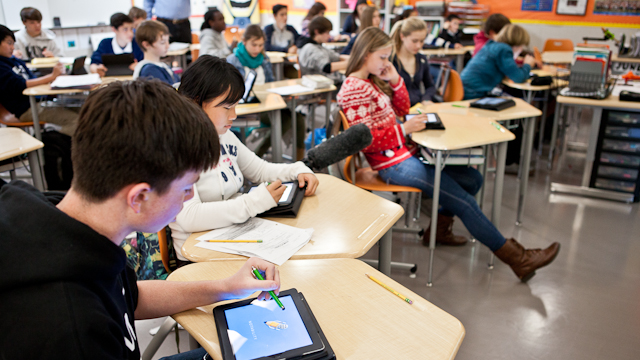
Just a few years ago, mobile devices were almost unheard of in classrooms. Over time, teachers and administrators have been experimenting with how to make mobile devices into powerful learning tools, and have come up with some strategies.

A group of administrators from some of the first districts to pioneer Bring Your Own Device (BYOD) policies and other forms of mobile learning are now sharing their experiences with those hustling to get on board. The Consortium of School Networking, a professional group for district leaders, is trying to make that knowledge more widely available through its Mobile Learning Initiative.

“It’s a way to keep up with what are the new burning questions, find out what leading people are doing, give a variety of insights into that particular topic so you can get a little bit of context and understanding,” said Marie Bjerede the initiative’s project director.

The site offers insights into some of the key steps to implementing a strong mobile learning program and provides quick answers to real world problems that busy administrators may have as they roll out their own programs.

1. Set goals and expectations for teaching and learning with mobile devices before worrying about the device itself.

“If this is a device plan and not a learning plan, you are definitely going down a path that could lead to some confusion and failed deployments,” said Michelle Bourgeois, technology coordinator at St. Vrain Valley School District in Colorado, and every administrator echoed this sentiment.

It’s easy to focus a mobile learning initiative on the devices themselves, without realizing that some of the thorniest shifts are in how educators approach the use of technology in the classroom. “The technology is a tool,” said Scott Smith, chief technology officer at Mooresville Graded School District in North Carolina. “The technology gives us exponential potential to do things we haven’t been able to do before. But the focus is on curriculum and instruction.”

Focusing on how mobile devices will change learning — not merely replicate old pedagogy on a digital device — means involving teachers and curriculum specialists in the planning process from the beginning. “The tendency is for the technology people to make the decisions in terms of the technology,” said John Connolly, Director of Technology at Consolidated High School District 230 in Illinois. “I think it’s really important for the curriculum folks and teachers to be involved in choosing what type of device and content, but more importantly the goals and where do we want to go as a group.”

Beginning a new initiative with the support and energy of teachers will also help the program to go more smoothly. Administrators who’ve been through the roll-out process before also recommend a pilot program to help identify problems, areas of professional development that are most needed and to begin developing some best practices to share with a larger group of teachers.

2. Develop a strong community of support for the initiative early and keep up transparent communication with parents and community members throughout the process.

“Long before we handed out the first device, we started a community awareness program in terms of what we were planning to do and why,” Smith said. District representatives held many community meetings where they explained why it would be important for students to come out of school fluent in technology use and with a collaborative set of skills different from what parents were expected to have. By describing a vision for what students would be able to do after leaving school, Smith gradually won over parents.

“Things were a lot different then,” said Tim Clark, Coordinator of Instructional Technology for Forsyth County Schools in Georgia. The iPad hadn’t even been released yet when Forsyth began its program. “Now the parents are expecting it and are actually driving our schools to adopt even more mobile learning because they want students to find instructional purposes for those devices in their pockets.”

The strong vision for how mobile learning can change teaching and learning was the core of the communication between district officials and the community. Getting everyone on board with the ultimate goal helped them deal with the inevitable bumps in rolling out the technology and learning to use it for learning.

3. Think about equity, but don’t let it stop forward motion.

While some districts deal with more poverty than others, equity concerns are part of every school administrator’s job. Many districts that pioneered mobile learning programs did so because they wanted to offer more equal access to the benefits of anytime-anywhere access to knowledge that computers offer.

“When you give every student a device, it levels that playing field, but there are still inequities,” Smith said. His district charges each student a $50 tech fee per year. A local education foundation has agreed to pay for families who can’t afford the fee, but about half of the families eligible for free and reduced price lunch still pay the fee because they recognize its importance for their children, Smith said.

For many districts embracing a 24-7 mobile learning program, the toughest equity challenge is getting every student access to the internet at home. “We’ve been trying to build lots of partnerships,” Bourgeois said. Her district includes both urban and rural areas, each of which have access issues. The district has been mapping resources that already exist, convincing cities to extend their programs if they are offering free internet in downtown business districts, and making sure students and parents know how to save resources for offline use.

“Most of our kids are bringing a device to school, so we’ve just been able to supplement what students bring in with school owned technology,” Clark said. His students go back and forth between school-owned devices and their own, depending on need and in case of battery failure or other technical difficulties. It’s become a very fluid process, he said.

4. Evaluate the effectiveness of a mobile learning initiative based on the goals set at the beginning of the rollout.

It’s easy to use improved test scores as a measure of whether a mobile learning initiative has been successful, but school leaders recommend trying to evaluate the goals set forth in the original vision and to think about evaluation holistically. If one element of a district’s vision is to put more power to direct learning in the hands of students, test scores aren’t the most appropriate measure of that goal.

[contextly_sidebar id=”bbc86d0e49f0b2ed278b2c409f765c1d”]

“Everybody wants to look at test scores because that’s a measurable goal that everyone understands, but there are other things that you can use to evaluate success,” Smith said. His district is in the sixth year of implementation and has found that graduation rates, attendance rates and academic success are all up. Meanwhile discipline issues and dropout rates are down. “Is that all because of technology? Absolutely not, but it is certainly a contributing factor for being able to meet all students where they are,” he said.

It’s also tempting to expect results immediately, but leaders recommended allowing three to four years for educators and parents to grow into the program before expecting to see its value.

5. Some of the biggest lessons learned include giving up control and trusting students.

“A lot of our shifts are making sure we are not mandating any more than we have to and that we’re empowering as much as we can,” Bourgeois said. She found that once devices were in the hands of teachers and students there was far more potential for creativity and student empowerment than district officials had imagined. The district has been working to get out of the way of that generative energy.

“One of the things I would do early is bring the students into the process because I think their insights are pretty powerful and sometimes surprising in the way they think about things,” Bourgeois said. If she could re-do her rollout she would have included students in the discussions long before devices were chosen or in classrooms. They are stakeholders in their own education, but often aren’t included in the decisions that will directly affect their daily instruction.

“Over time you start to really focus in on what students are doing and learning with those devices and then where is the rigor of instruction and where is the authenticity of instructional tasks,” Clark said. He noted that it’s natural for schools to worry about the technical aspects of a rollout, but the novelty of the devices wears off quickly and when it does the whole school community can become even more focused on how to use the devices to offer the best learning opportunities possible.

STAY NIMBLE

While these mobile learning pioneers have seen some of the pitfalls and can help districts new to the game avoid the same stumbles, this space is changing quickly and every community’s needs will be different.

“It’s no longer just something you implement; it’s evolving and it’s unique in each location,” Bjerede said. “If you try to be cookie cutter about it you won’t meet the needs of every kid in every classroom.”

The technology will change, students will surprise their teachers and the best advice to district leaders is to stay open to all the possibilities and allow students to take control of the tremendous learning opportunity that having a device at all times could offer them.

What Can We Learn From the Global Effort Around Mobile Learning?

feature-phone300

Closing the achievement gap and giving all students access to a world of learning online remains one of the strongest allures of education technology. In the U.S., that conversation is often centered on the newest shiny device, slickest software or free app, but internationally mobile technology is revolutionizing learning too, often without fancy gadgets. Recognizing the creative learning strategies being implemented in developing countries could help expand thinking in the U.S and inform the ongoing discussion about how to use technology to deepen learning.

“In developing countries, mobile has leap-frogged fixed-line connectivity,” said Steve Vosloo, a program specialist, in mobile learning at the United Nations Educational, Scientific and Cultural Organization (UNESCO). “People who were never connected before have access.”

Africa is the fastest growing mobile market and the second largest after Asia. Vosloo says there are more mobile phone subscriptions than people in Africa, meaning some people have more than one. Many people in developing countries have only accessed the internet through a mobile phone and mobile connectivity far surpasses desktop connections.

[RELATED READING: What Will it Take to Bring Mobile Ed to the Developing World?]

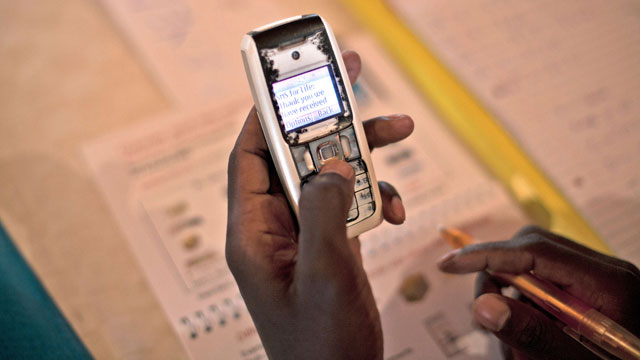
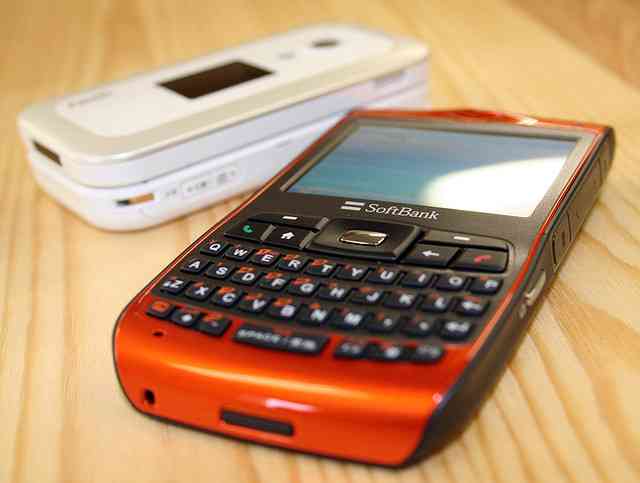
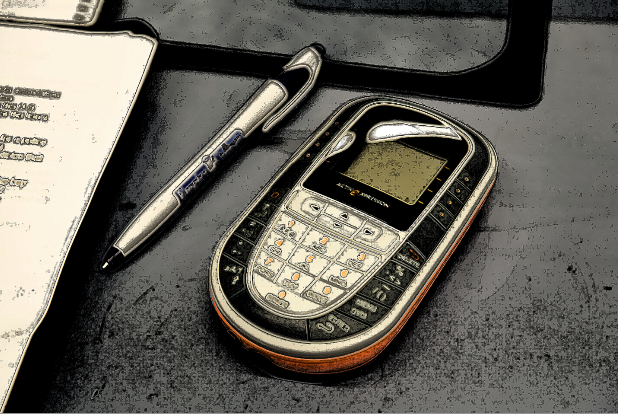
Given the rapid growth and existing infrastructure for mobile connections it makes sense to pursue strategies that leverage mobile devices for learning. Most people in developing countries have what are called “feature phones”; they’re less sophisticated and powerful than smartphones and have fewer features. But they do have numeric keypads, and can access the internet on a tiny screen. Researchers believe that even this small amount of access offers huge possibilities, although equity is still an issue for those who don’t have the money to consistently buy phone credits.

“Mobile learning can help reach marginalized populations,” Vosloo said, giving as an example a library in Ghana that has no books on its shelves, but now has an e-reader, giving the students of that village access to hundreds of books that could never be physically sent to the library. That e-reader has opened the world to curious learners.

MOBILE LEARNING PROJECTS

In Nigeria, UNESCO is piloting a program with English teachers. Program leaders send messages daily with examples of how to teach English language to teachers throughout the country. The messages are formatted specifically for viewing on inexpensive devices common in Nigeria and are modular lessons. UNESCO has received feedback from participating teachers that the support is changing their teaching style and helping them to improve. It also allows teachers to share their learning with one another, previously very difficult to do between remote rural villages. An agreement with the mobile provider keeps costs for users low.

[RELATED READING: Library For All: Free Digital Content For Developing Countries]

UNESCO is also studying how the World Reader app has changed reading habits in the developing world, especially in places where many are illiterate. The organization interviewed 4,000 users and found that, in general, users are accessing and reading longer form content on their mobile devices. Detailed results of that study will be released in February.

“Many parents and teachers still think mobile learning and technology is not part of education,” said Vosloo. “[They think] they are more for distracting or disrupting, anything but learning.” UNESCO is working hard to change that perception  and to help education departments to see mobile learning as an opportunity, not a threat. They advocate for clear policies set at the state or national level to guide mobile teaching practices. They’ve even written some guidelines to help governments set policy.

“It also sends out a clear message from leadership that, ‘we’ve considered mobile learning, we want to engage with it and these are the conditions in which it can happen,’” Vosloo said. The uncertain policy moment plaguing most of the world does not exclude the U.S. Districts are bringing tablets into the classroom or allowing student to bring their own devices, but haven’t always set clear policies. Some schools, recognizing the ubiquity of mobile devices, are taking their acceptable use policies and shifting them to become “responsible use” policies, trying to teach students how to use their technology respectfully.

[RELATED: How to Help Mobile Education Go Global]

Vosloo says even phones that only have texting (SMS) and calling functions can be useful for learning. “The main thing to remember is not that we’re going to deliver a whole textbook or learning experience by SMS,” he said. “The idea is what does SMS do well?” UNESCO has used texts to send reminders, for school administration purposes or to send small bits of content to students.

In one project focused on literacy for young women in Pakistan, students would travel to a central location for lessons in Urdu, then return to their remote villages for several weeks. The only way to reach them quickly was through text messages. “The biggest problem for new literates is forgetting what they’ve learned unless that knowledge is reinforced,” Vosloo said. Teachers texted reminders to the girls about reading and discussion assignments. “It played a very important role in that teaching and learning experiment,” Vosloo said.

Another program called BBC Janala in Bangladesh taught English to adults with audio. Students would call a number, listen to a three minute audio lesson and leave a message. The program used voice recognition software and texting for assessment. Again, a deal with the telecommunications provider kept the calls low cost.

Mobile technology is opening up creative ways for people around the world to learn from one another and the internet. In the U.S., school districts sometimes focus on glitzy devices and worry about giving students too much free access to the internet through their own devices. But perhaps there is a lesson from UNESCO’s global education work in recognizing the potential for reaching truly marginalized populations with fairly simple technology.

The UNESCO programs recognize the limitations of the devices their users own and cater their programs to those devices. They work around limitations and come up with creative ideas, rather than expecting every student to have the best phone.

What it Takes to Launch a Mobile Learning Program in Schools

Erin Scott

As mobile learning programs become more ubiquitous, international attention is focusing on how different countries integrate mobile devices into formal schooling. Last month, United Nations Education, Scientific and Cultural Organization (UNESCO) released a comprehensive report called UNESCO Working Paper Series on Mobile Learning on the state of mobile learning around the world.

The report breaks down usage and policies in different areas, including North America, and part of the research focuses on “Essential Conditions for Mobile Learning.” In this section of the report, researchers present five key conditions that must exist for a mobile learning initiative to succeed: visionary leadership and commitment, robust technology capacity, professional development, scalability, and policies that promote and support the initiative. Excerpted from the report:

1.  VISIONARY LEADERSHIP AND COMMITMENT

Leadership and vision are central to the development of school reform efforts and mobile learning initiatives. Pioneering schools and districts with robust mobile learning programs often have strong, visionary leaders who promote and oversee the projects. While many national, state and provincial, and local policies have encouraged mobile learning, efforts to implement mobile learning programs are typically spearheaded by a school leader – often a principal, technology coordinator, district superintendent or university faculty member.

The project leader must cultivate a unified vision across the school or district, drawing in leaders from the curriculum and instruction, assessment, and technology departments. According to Lenny Schad, chief information officer for Katy Independent School District in Texas, it is critical that Continue reading What it Takes to Launch a Mobile Learning Program in Schools

Quick Look: Harvard Professor Chris Dede Encourages Teachers to Embrace Mobile Learning Devices to Engage More Students”

Chris Dede has been working on the edge of mobile learning for years, and what he has to say is thought-provoking. Source: Marketwatch BASKING RIDGE, N.J., Nov. 16, 2011 /PRNewswire via COMTEX/ — Dr. Chris Dede, the Timothy E. Wirth Professor in Learning Technologies at the Harvard Graduate School of Education, is encouraging teachers to … Continue reading Quick Look: Harvard Professor Chris Dede Encourages Teachers to Embrace Mobile Learning Devices to Engage More Students”

10 Major Mobile Learning Trends to Watch For

Mobile devices in education are becoming more ubiquitous.

Technology has been used in the classroom for decades now. But with the advent of cloud computing and the proliferation of smaller, more portable computers and Internet-capable devices, it’s now possible to bring the classroom into the technology instead. Mobile learning, focuses on learning through mobile devices, allowing learners to move about in a classroom or remotely learn from the location of their choice. The movement has gained a lot of steam in recent years, and despite some criticisms, isn’t likely to fade fast – especially as new technologies that make mobile learning more practical continue to emerge and the popularity of remote learning opportunities like online colleges continue to grow.

While the applications of mobile learning are growing all the time, Online College has highlighted some of the major trends here, showing the changes in how we teach, learn and interact in educational environments.

  1. Location-based integration. Mobile learning has taken to the streets, with technologies that allow for seamless integration with a wide range of locations. One of the best uses of this technology has been within museums, where visitors can use a mobile device to listen to information about items in the museum’s collection. The American Museum of Natural History in New York is one museum with an especially rich mobile tool, guiding users turn-by-turn to the best pieces in the museum’s collection and enhancing the experience of visiting. Of course, mobile integration isn’t just for museums. Some colleges are using it to create high-tech tours for visiting students and their families. With millions of smartphone users and the number growing larger each year, this trend is likely to grow as more businesses and organizations work to enrich the patron experience.
  2. The domination of ebooks. Amazon is one of the biggest retailers of books, but in the past year, their sales of ebooks has outstripped that of traditional books. The same holds true for bookselling giant Barnes and Noble. The ebook is steadily becoming a popular part of everyday life for many Americans, and the digital book is slowly making its way into the classroom as well. Some states, like California, have proposed replacing student textbooks with ebooks. Not only could it be a big money saver, it may help eliminate the problem of student textbooks becoming quickly outdated as new discoveries are made, something every teacher and child can appreciate.
  3. Cloud computing in schools. Cloud computing is a big buzzword these days, with tech companies like Microsoft and Apple pushing their devices and applications — and schools haven’t ignored the hype. Schools are increasingly looking to cloud computing as a way to provide access to information and to close budget gaps. An inexpensive solution, cloud computing is becoming the norm everywhere from grade schools to grad schools, perhaps because it is not only simple to use, but mobile as well. Information on the cloud, whether for lesson plans or class projects, can be accessed from anywhere, anytime and on any mobile device. In an increasingly mobile world and classroom, cloud computing is more than just a trend, and is likely to become the standard in information management over the next decade.
  4. Bring-your-own-device classrooms. Since most kids these days already have access to a mobile device, schools are seizing the opportunity to turn these gadgets from distractions into learning tools by incorporating these devices into classroom lessons and projects. From mobile phones to laptop computers, teachers and students are increasingly bringing technology to the classroom, and in many school districts, it’s being put to good use. Numerous studies have highlighted the benefits of one-to-one computing programs in raising test scores and increasing college attendance, but with many districts strapped for cash and unable to provide devices for each student, this isn’t always a possibility. The solution may be found in asking students to bring their own devices to class, cutting back on the number of mobile devices the school needs to provide while still enhancing the learning experience.
  5. Online collaborative learning. There aren’t a lot of places these days that are devoid of an Internet connection, and many people can now access the web from, well, anywhere they can get a cell phone signal. Schools are embracing the web as a learning tool in a variety of ways, but one particularly exciting one has been the growth of online collaborative learning. This can mean a variety of things, but in many cases it involves students each participating in a project on the web. Numerous classrooms have taken to collaboratively blogging about projects and ideas in the classroom. Others have produced their own podcasts. Still others ask students to work together to create a multimedia website. These kinds of projects not only help students learn to work together, but educate them on technological tools they’ll need to use in their academic and professional lives. The popularity of these kinds of lessons isn’t likely to fade anytime soon. Continue reading 10 Major Mobile Learning Trends to Watch For

Ignore the Potential of Mobile Learning, Risk Widening the Digital Divide

From S. Craig Watkins’ blog The Young and The Digital. In the following post, Watkins talks about how he’s witnessing these trends in his field work.

By S. Craig Watkins

During a recent research related visit to New York City I decided to take a stroll down 125th Street in Harlem.  Among the assortment of shops and vendors on the famous stretch that is home to the legendary Apollo Theater were an abundance of mobile phone providers.  Even a few of the street vendors offered mobile phone accessories such as cases, covers, and car adaptors. It struck me that while you could easily purchase a mobile phone on 125th Street you could not purchase a desktop or laptop computer.  Not that long ago the assumption that African Americans were a viable market for mobile phones did not exist.

As far back as 2007 data started to emerge that suggested that black and Latino households were much more likely to go online via a mobile phone than a desktop or laptop computer.  We are also learning that a surging number of poor households are choosing to go with a mobile phone over a landline, largely because they cannot afford both. My fieldwork is consistently suggesting that the future of black and Latinos digital lives are linked, for better or worse, to mobile devices. The growing appeal of the mobile phone among African Americans and Latinos has not gone unnoticed by the press.  In fact, several news outlets have even reported that mobile phones may be closing the digital divide.  Is this true? Is there any evidence, empirical or anecdotal, that mobile is closing the digital divide? Continue reading Ignore the Potential of Mobile Learning, Risk Widening the Digital Divide

Mobile Learning Proves to Benefit At-Risk Students

As we explore the potential of mobile learning, especially as it relates to reaching out to disenfranchised students, the most recent results from Project K-Nect seem that much more relevant.

The pilot program based in North Carolina, which we covered here on MindShift, was designed to make math more engaging for low-income kids with the use of mobile phones in Onslow County School System.

In its third year, the program has more than proven successful. Some stats from the most recent report, released last month, quoted here:

  • By the end of the fall 2010 semester, 89 percent of the Algebra I students reported they are more motivated to learn math compared to 76 percent at the beginning of the semester.

Mobile Learning: Are We On the Cusp of Something Big?

One of the most exciting things about living in the digital age is witnessing huge cultural changes occur in real time.

We’re at just that point now with mobile learning. Whether it’s on an e-reader, a tablet, or a cell phone, there’s great excitement — though not a lot of research yet — around the potential of how these devices can strengthen learning.

“What if your mobile device had a sixth sense?” asked Harvard professor Chris Dede, who’s researching the diverse dimensions of mobile learning, at the recent ISTE conference.

When most of us consider education, we think of learning happening in isolated places — schools. But mobile devices are upending that assumption. With innovations like augmented reality, different kinds of information and experiences can be superimposed onto the real world, complementing and adding another dimension to “formal” learning institutions.

Pilot programs are springing up all over the country (more on those soon), as educators and researchers determine what kind of learning can happen best with mobile devices. Continue reading Mobile Learning: Are We On the Cusp of Something Big?

Creating Mobile Learning Apps Adds Another Layer to Learning

I’ve written a lot about mobile learning — and there’s a lot more to write about because it’s a quickly growing and changing study.

But today at the Cyberlearning Tools for STEM Education Conference, I heard about the value of kids not just using mobile apps, but actually creating them.

Chris Thompson, Associate Director Evaluation & Technology, Georgia Tech, talked about the university’s Mobile Learning Laboratory (MoLLy). Thompson enumerated some of what kids learn while they’re creating apps:

– How to create media (animation, audio, video)

– Game design (different genres, set of rules and play, how to best engage users)

– Programming, user interface and instructional design

– Robotics (there are robots in mobile devices inside mobile phones, he says).

– Collaboration (working with other kids on the app)

– Critical thinking (identifying what’s most important and relevant in the game)

– Marketing and business practices as well as promoting and public speaking (how to sell it to the public)

– And last but definitely not least, they become mini-experts in the subject the app and game they’re creating.

Again, it goes back to the idea of how creating media makes learning a subject more relevant and interesting to the digital generation.

Read more about Thompson’s project.

Mobile Learning Could Be Key in Achievement Gap Equation

By Leslie Rule
Leslie Rule is studying at the Harvard Graduate School of Education in the Technology, Innovation, and Education (TIE) program.

Can mobile learning bring quality education to under-served communities? Research is pointing in that direction.

A recent report by Pew Internet and American Life Project shows that the mobile Internet may be the very technology that finally helps close the “digital divide.” Researcher Aaron Smith notes that access to the digital world is increasingly being untethered from the desktop, and this is especially true for people of color: African Americans and English-speaking Latinos are more likely to own a mobile phone, use non-voice data applications, and take advantage of a wider range of features compared with whites. Most interesting is the finding that minority populations’ attitude towards, and use of, the social web is different. For instance, minority populations are much more likely than whites to view government use of social media as helpful and informative.

A 2010 poll by Education Next found, “online learning is growing more acceptable to the public at large.” According to Harvard Graduate School of Education Professor Marty West, who conducted the survey, there was a 10-percent jump in support for the idea (from 42% to 52%). “In a single year, [that jump] is highly unusual,” he said. But what’s even more telling? That support for the idea of online learning is higher among minorities (African Americans: 61%; Hispanics: 65%). Continue reading Mobile Learning Could Be Key in Achievement Gap Equation

Finding Value in Mobile Learning Apps

The mobile app world is changing constantly, as are learning theories around them. For more context on the Cooney Center’s study “Is There an App for That?” here’s my Q&A with Dr. Michael Levine, executive director of the Center, Dr. Cynthia Chiong, the report’s lead author, and co-author Carly Shuler.

How does this report change the thinking around mobile learning apps?

Before the report, we thought of the mobile device as simply another platform for educational applications, only more mobile. But we discovered that the unique affordances of the mobile device is actually going to shift how technology is used in educational settings. This breakthrough has potential to address long standing concerns with young children using media. 1) The average session is short – this calls for a different kind of application. Kids probably aren’t going to watch a 30-minute show on a phone or spend an hour playing a game like they might on a computer or video game console. This may help to allay concerns of too much screen time for kids. 2) The touch screen allows for more active involvement. This can help to address concerns of passive learning (like watching a show).

Should parents feel guilty about allowing their kids to use their mobile phones for games?

No. Kids see their parents using mobile phones all the time. It is only natural for them to want to use them too. And from the data in our study it looks like many parents are letting their children use them responsibly – with restrictions and in moderation. We recommend a balanced media diet that consists of content that is fun, educational, and doesn’t take up too much time in a given day.

However there is reason to worry that such vigilance will erode over time and we would be quite concerned if young children, especially preschoolers began to dramatically increase their mobile screen time.
Continue reading Finding Value in Mobile Learning Apps

The Future of Mobile Learning Apps

The mobile app world is changing constantly, as are learning theories around them. For more context on the Cooney Center’s study “Is There an App for That?” here’s my Q&A with Dr. Michael Levine, executive director of the Center, Dr. Cynthia Chiong, the report’s lead author, and co-author Carly Shuler.

How does this report change the thinking around mobile learning apps?

Before the report, we thought of the mobile device as simply another platform for educational applications, only more mobile. But we discovered that the unique affordances of the mobile device is actually going to shift how technology is used in educational settings. This breakthrough has potential to address long standing concerns with young children using media. 1) The average session is short – this calls for a different kind of application. Kids probably aren’t going to watch a 30-minute show on a phone or spend an hour playing a game like they might on a computer or video game console. This may help to allay concerns of too much screen time for kids. 2) The touch screen allows for more active involvement. This can help to address concerns of passive learning (like watching a show).

Should parents feel guilty about allowing their kids to use their mobile phones for games?

No. Kids see their parents using mobile phones all the time. It is only natural for them to want to use them too. And from the data in our study it looks like many parents are letting their children use them responsibly – with restrictions and in moderation. We recommend a balanced media diet that consists of content that is fun, educational, and doesn’t take up too much time in a given day. Continue reading The Future of Mobile Learning Apps

7 Important Traits of a Great Mobile Learning App

Parents shouldn’t feel guilty about letting their kids play games on their mobile phones — especially if they’re educational ones. That’s one of the main conclusions in the recent study released by the Joan Ganz Cooney Center, “Learning, Is There an App for That?”

The report uses information from three quantitative and observational studies conducted by the Center in conjunction with PBS Kids, Sesame Workshop, Hotspex Survey Research and Rockman, to document for the first time the design, development and research issues related to the use of educational apps for young children’s (preschool and primary age) learning.

Most parents know to moderate the amount of time kids spend with the gadgets, and with the help of these kinds of studies, can readily find out which have protein and which are just empty calories.

The best learning apps have the following attributes:

1) They’re interactive. Touchscreens beg for touching. Continue reading 7 Important Traits of a Great Mobile Learning App