Ten years ago, the concept of a university openly sharing its prized (and expensive) curriculum for free with anyone who was interested, especially one has highly regarded as M.I.T., was unheard of. But in the past decade MIT OpenCourseWare has paved the way for the open-source content movement.
On their tenth anniversary, ReadWriteWeb enumerates what the next decade will bring for the organization. Highlights: the inevitable app, reaching out to high schools, and collaborative studying.
“It’s quite humbling for us to see the impact OpenCourseWare has had,” says Professor Shigeru Miyagawa, Chair of the MIT OpenCourseWare Faculty Advisory Committee and a member of the original faculty panel that first proposed the program. “We set out to create a resource other faculty could draw on to improve their classes, and tapped into a much larger need around the world. Millions of people have come to the site for the chance to learn, even without credit offered or access to faculty.”
Some students have been using ChatGPT, a text-based bot, to do their homework for them. Now, 22-year-old Edward Tian’s new app is attracting educators working to combat AI plagiarism.
Educators and students of CS50, a widely popular computer science class at Harvard that’s also available in a high school AP version, use a variety of tools to help with the collaborative part of learning computer science.
Developers at MIT Media Lab are gearing up to release a new version of Scratch that works on mobile devices, can be integrated with physical objects, and that is lighter and faster.
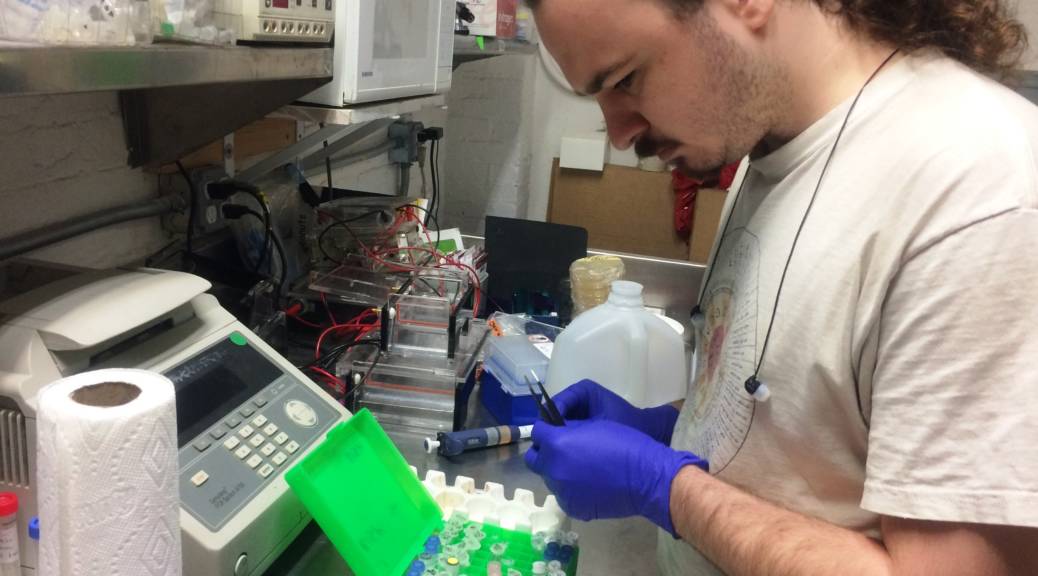
Some compare the democratization of personal computing in the 1970s to the current changes in access to genetic engineering tools, in part thanks to the CRISPR gene editing tool.
Creating opportunities for students to operate an indoor farm remotely using technology has helped kids lean about food while seeing themselves as makers.
The Arduino is an awesome programmable prototyping platform. It’s a little computer that acts like a brain for robots, sensors, or other machines that connect to the real world. It’s pretty inexpensive, too! For less than the cost of a tank of gas, you can get yourself this little blue open-source brain board and start creating something incredible. With just a little bit of code (that you don’t even have to write), it can do almost any crazy thing you want.
Courtesy of Sylvia Todd
Not to mention, Arduino boards now come in all shapes and sizes (some of them are shown above) with tons more processing power, and a variety of inputs and outputs. Only the blue Arduino boards are officially called “Arduino”, offshoot boards like the RedBoard above are called Arduino-compatible. They can do everything an official blue Arduino can do, but look different and are made by someone else. For our experiments, we recommend the Arduino Uno or the Redboard, which are easy to get and simple to use.
When you get an Arduino, it’s not always clear what you should do. I’ve heard of some people who get one, and then just leave it on the shelf — what a waste! With just a quick search online, you can find literally thousands of incredibly creative Arduino-based projects, like walking robots, musical instruments, or even video games.
Thanks to the awesome Arduino community, most projects can be built at home with the parts listed and open-source code you simply copy-and-paste. Once your invention is working, you can change the code, add functionality, and make the machine your own.
When you want to tell a computer what to do, you quickly learn that it doesn’t speak your language. That’s why a bunch of smart peeps came up with programming languages that computers can understand. Arduino uses a pretty old but very good language called “C”. Every Arduino program is a list of instructions written in the C language that tells the Arduino to do something exactly same way, every time the program runs. It’s mostly English, with a bit of syntax to make it more standard. It can be a little hard to read at first, but just pick out stuff you know, and the rest will start making sense.
The Arduino may be small, but it’s very fast. It can do things faster than a millionth of a second, and we’re going to use that to our advantage for this project. Once your simple strobe is assembled, you need to teach it to work by programming it. We do so by writing a program (or changing someone else’s program). Today, lots of people call their computer programs, “code,” and the programming process, “coding.”
Every Arduino sketch has at least two functions: setup and loop. The setup function is triggered ONLY when the Arduino starts up. Then, the loop function runs and when it’s done, it runs again, forever! Using just these two functions, you can make the Arduino do almost anything you want.
“Super Awesome” Sylvia Todd has been making and tinkering since she was 7 years old. She hosts her DIY web show “Sylvia’s Super-Awesome Maker Show” with the help of her father James Todd. She has demonstrated her projects to President Obama at the White House and at Maker Faires around the country.
A boy plays with a solar-powered computer tablet on Mount Wenchi, Mirab Shewa Zone of the Oromia Region of Ethiopia. (Courtesy of Tim Freccia/Xprize)
A rural tribe is living peacefully in the Kalahari desert, free of contact with the modern world. One day, a Coke bottle drops from the sky, falling from a passing airplane.
The villagers find many uses for this unfamiliar new technology: a fire starter, a musical instrument, a stamp for printing on cloth. But because of its very uniqueness, they start to fight over it, and one of the villagers decides that to preserve harmony, it’s best to return this “gift” to the gods.
The Gods Must Be Crazy, a South African comedy, was a global smash hit in the early 1980s. It’s only in the past decade, though, that its plot — or at least, the setup — has been adapted as a playbook for transforming education.
The idea: Some previously unknown technology could, all by itself, catalyze a revolution in children’s learning, especially in the developing world.
The latest incarnation of this idea was announced this week. The $15 million Global Learning XPRIZE is being billed as the largest-ever technology competition in the private sector, to “revolutionize global education.”
The winning team of the Global Learning XPRIZE, organizers say, will “develop a free, open-source and scalable software solution in 18 months that can enable children to teach themselves basic reading, writing and arithmetic.” The software, says the challenge’s director, Matt Keller, will be designed to be deployed on very low cost Android tablet computers.
THE READING PROJECT
Keller explains that the idea emerged from his previous work with the One Laptop Per Child project. Announced in 2005 by Nicholas Negroponte of the MIT Media Lab, One Laptop Per Child has distributed over 2.4 million of its specially designed “XO” laptops and tablets around the world.
While the majority of these have gone to school systems, Negroponte and Keller ran a side experiment called The Reading Project, where solar-powered computers with literacy apps were distributed directly to children in remote areas of Ethiopia. The children were given no instruction in how to use them.
The initial experimental sites chosen were villages with no schools, no libraries, no printed material, even without road signs. “We tested the supposition that kids could teach each other how to read,” Keller says. “The theory was, if you had the right kind of application and design for self-learning, you could conceivably see a breakthrough.”
Maryanne Wolf, a professor of child development at Tufts University, has been researching the outcomes of the project, now called the Global Literacy Project, with sites in Uganda and the rural American South. She says that while the children haven’t learned to read, they have learned the English alphabet from the tablets alone. “Our data serves as a kind of germinating first round of evidence that this approach can really help many children,” she says.
The Global Learning XPRIZE grows from this seed. According to the press release for the XPRIZE, it aims to prove “that through technology a child can learn autonomously.”
Keller says this is important because an estimated 250 million children around the world lack basic literacy, and 58 million are not in school. Schools are overcrowded and teachers are undertrained.
“I did a lot of work in Afghanistan,” he says. “Teachers there are often just one grade more educated than the kids, and sometimes they’re not literate at all.”
But why not just spend the money to train teachers or build schools?
“Even just to get the kids that are out of school into school, you need to train 3 million more teachers and build 1.1 million more schools, which is going to take a really long time,” Keller says. “You can say you’re looking at a model that has arguably failed many, many, many kids. We’re not in the business of looking back.”
He says the time is ripe to gamble on new approaches.
NO GIRLS ALLOWED
Payal Arora is not so sure. A media and communication professor at the Erasmus School of History, Culture and Communication in the Netherlands, she has studied a similar attempt at technologically driven self-learning, the Hole in the Wall project in India.
Started by Sugata Mitra, Hole in the Wall simply places computers with an Internet connection in locations where they will be accessible by children. Mitra’s concept of “minimally invasive education” won the 2013 TED Prize, given to a “visionary leader” with a “high-impact wish for the world.”
Most of the positive research on Hole in the Wall comes from Mitra himself and his collaborators. There are reports of children acquiring basic computer literacy and researching topics like genetics.
Arora visited a few such sites in the Himalayas and found very different results. “The two most popular things are porn and video games,” she says. “The boys download them and take over. It becomes a male domain, and daughters don’t want to go there.”
Mitra has responded publicly to Arora’s claims, calling them “armchair debate.”
Arora says the Global X Prize, like Hole in the Wall and One Laptop Per Child, represent not an evidence-based approach but an ideology: the belief that “Human resources are so deeply flawed that investments in technological resources will be much more effective.”
But in reality, she argues, “learning is never 100 percent self-directed. Of course we want children to be agents of their own learning, but no one in their right mind would say let’s get rid of human input, from parents, schools, or communities.”
Arora says that before we continue to sway resources toward a quick technological fix, she’d like to see “substantive evidence that self-directed learning autonomous from human mediators can be a stand-alone tool.”
Keller says his prize, if it works as designed, will generate exactly that evidence.
Unlike previous XPRIZE challenges, the final phase will be a controlled trial. Applications developed by the five finalist teams will be distributed to a few thousand children in West Africa, and the program deemed most effective at raising the kids’ basic literacy and math scores from a baseline will be called the winner.
“We don’t know if this is going to work,” he says. “But if it does, it’s transformative, and why not try?”
Copyright 2014 NPR. To see more, visit http://www.npr.org/.
Ryan Imbriale had a quick and concise answer when asked whether his school district, Baltimore County Public Schools, received enough state funding to pay for its transition from textbooks to software: “No.”
As executive director of the district’s innovative learning department, Imbriale is overseeing a five-year project, called BCPS One, to move its entire curriculum online and make it available to teachers and students. He estimates that the district will spend more than $1 million a year on digital resources for its 108,376 students. The district was “lucky enough,” he said, to get one of the governor’s innovation grants.
On the other side of the country, the San Francisco Unified School District pays about $800,000 a year for software licenses and maintenance. Even with discounts from the companies, “the price tag is beyond the budget we get from the state” for technology, said Chief Technology Officer Matthew Kinzie. He said the district is seeking grants and donations to cover the costs.
But depending on these occasional infusions of money and continuing to look for outside resources isn’t practical.
“Those are not sustainable funding streams that people can count on year after year,” said Doug Levin, executive director of the State Educational Technology Directors Association (SETDA).
Funding – or lack of it – is the number one issue facing school districts as they convert to the digital learning world, said John Halpin, vice president of the Center for Digital Education, a national research institute that focuses on in K-12 and higher education technology trends. It’s not that districts don’t necessarily have money for instructional materials; rather, state policy and district proclivity often haven’t caught up with tech realities. States have operated for decades in a system where they have huge textbook adoption cycles where they shell out millions for, say, middle school science texts that are expected to last for five-to-seven years — even if a new planet is discovered or dumped.
In the transition to digital, districts buy a license for a specific software and pay based on the number of students using it. Though it’s uncertain whether the move saves money, there are other benefits. Districts could negotiate for updates and improvements, just like any other software program.
“In the software world you’re never done because every year people expect to take what you’ve learned about what works and doesn’t work and enhance it,” said Larry Singer, managing director for K-12 education at Pearson, one of the big three textbook publishing companies (along with McGraw-Hill and Houghton Mifflin Harcourt).
However, districts eager to go digital are often stymied by laws restricting textbook funds to print books. In other instances there’s no line item in district budgets for instructional software.
The technological innovations that have permeated our private lives seem “so far to have eluded many of the 50 million students enrolled in public K-12 education,” according to a 2012 report by the State Education Technology Directors Association.
Despite every best intention, the transition to digital isn’t quite here yet.
The Messy Decade
The textbook market is slipping, but remains a multi-billion dollar industry for elementary and secondary schools. It added up to more than $2.5 billion for the 2009-2010 academic year, the most current figures available from U.S. Department of Education. While that’s a lifetime ago in the digital sphere, Halpin said it’s still fairly accurate; he doesn’t anticipate a significant drop in print textbook sales for a few years.
“The decade we’re in right now is the decade of transformation. We’re transitioning from one to the other. It’s very messy; I often call it the messy decade,” joked Halpin. “You have this period of time when many districts are going to be caught in between, using some textbooks and some digital content and devices, but we’re paying for both.”
But that should change as state regulations become more flexible.
More than 20 states have updated the definition of textbooks to include digital content and a handful, including Texas, California and Indiana, explicitly allow districts to use textbook dollars to buy digital instructional materials. North Carolina has moved to the forefront with a state law requiring districts to buy only electronic textbooks and materials by 2017.
Even if districts had all the money they needed to purchase software, many would be unable to use it because they’re not connected to high-speed internet, have aging or too few computers or don’t have the capacity to bring the internet into every classroom.
Only 37 percent of schools today have the bandwidth they need for digital learning, according to the Education SuperHighway, a nonprofit that provided free bandwidth testing to schools in the run-up to the computer-based pilot tests designed for the new Common Core State Standards.
One rural school district in California bused 100 elementary school students to the high school to take the test, while another had to administer the exam one student at a time in order not to crash the computer network.
Not surprisingly, the Education SuperHighway found that “the biggest correlation between those who have enough bandwidth and those who don’t is actually tied to the wealth of the school,” said Evan Marwell, the CEO and founder.
The wealthiest 2 percent of schools in the United States are three times more likely to have the bandwidth they need than are the poorest schools, those with three-quarters or more of their students eligible for the free and reduced lunch program.
Laudable and Insufficient
The federal government is stepping in to help close the technology gap. On July 11, the Federal Communications Commission voted 3-2 to revamp the E-Rate program, which provides educational technology subsidies, and spend $2 billion dollars over the next two years to expand access to high-speed Internet and wifi to schools.
A year ago, President Obama announced the launch of ConnectED, an initiative to solicit support from private industry to help close the digital divide in schools. Ten companies have so far signed on: Adobe, Apple, AT&T, Autodesk, Esri, Microsoft, O’Reilly Media, Prezi, Sprint, and Verizon.
AT&T and Sprint have each pledged mobile broadband for 50,000 students who don’t have Internet access at home. Adobe, Autodesk and Esri have agreed to provide free software.
“Rarely do schools have all that they need,” said Charlie Fitzpatrick, K-12 education manager for Esri, which developed geographic mapping software.
He estimates the giveaway is valued at about $1 billion, but the company’s bread and butter comes from sales to government agencies and private companies, which use Esri’s software to analyze data on everything from finding patterns in earthquake depth, magnitude and location to improving public transportation routes. Fitzpatrick said the donation would help those paying customers by training the next generation of workers.
“Every industry is looking for people who know how to work with these tools. Students who learn this have a leg up.”
ConnectEd has attracted high profile companies and raised awareness of the challenges that some districts face, but neither education nor industry officials see it as a long-term solution.
San Francisco Unified has looked into some ConnectED companies, but Kinzie is concerned that with the free services limited to low-income schools or students, it would create fragmentation of software and hardware at a time that the district is seeking more standardization.
“Discounts or free software from tech companies is not going to solve the bigger challenge we have, which is that we need a systemic investment in bringing our public school up to 21st century standards,” said Kinzie.
SETDA’s Levin concurred, calling it “laudable” but not sufficient. SETD has called on the federal government to put some ongoing money into educational technology to close the digital divide, like the $3.73 billion invested in Enhancing Education Through Technology program between 2002 and 2010. Congress cut funding for the program in 2011; a year after the Obama Administration recommended the same thing.
Pearson views ConnectEd as a sincere effort by the president to create technological equity between poor and wealthy districts. Some companies that aren’t a part of ConnectEd use similar marketing techniques by providing short-term, free software licenses to districts. To Singer, these programs won’t do much more than create an opportunity for low-income districts to experiment with various programs before plunking down any money to buy software.
Districts “see initiatives like this as interesting things to try to take advantage of, but they see them as one-time opportunities,” said Singer.
Sliding Scale Model for Low-Income Schools?
Pearson doesn’t offer free or sliding scale software licensing fees and Singer said that in his experience price is rarely the issue. He said school districts are more interested in finding software that’s the best fit for their needs and technological capabilities, not the cheapest.
The same is true of Houghton Mifflin Harcourt. Varying prices would violate “the most favored nation requirements established by our customers, which dictate equitable treatment across districts regardless of size or income levels,” explained spokesperson Leah Riviere.
Discovery Education, which reaches more than a million students in 50 states with its streaming video service and online “techbooks,” also has no-haggle fees, but set them as low as possible to maintain profitability without pricing districts out of its market.
A year of streaming video is $2,000 to $3,000 per school, while techbooks are $45 per student through grade 8 and $55 per student in high school for six years – that includes updates so information stays current.
They can do this because the company was never a traditional publisher so it never had a traditional mindset, said Senior Vice President Scott Kinney.
“Because we didn’t have that legacy, we could literally cut our costs in half and pass those right along to our [customers],” said Kinney.
Mind Research Institute, creator of the popular ST Math, offers volume pricing as does Achieve3000, developer of a popular program for differentiated instruction that tailors the same lesson to meet the academic ability of each student in a class. Achieve also accommodates poorer districts with sliding scale fees.
Even companies without discounts often provide free trials or work with school districts to meet their curriculum needs and budgets, while still keeping an eye on the corporate bottom line.
“We can’t give it away, it took a lot to build, but we can say we want to find a way to work with you and the means and resources you have available,” said Justin Hamilton, head of corporate communications for Amplify, developer of digital curricula in math, science and English.
Samsung hopes to boost interest in its Chromebooks, tablets and interactive classroom platform with a contest worth $2 million in technology for public schools that submit the most innovative digital curricula in science, technology, engineering and mathematics, or STEM subjects.
No Longer a One-Way Street?
Still, the switch to digital will force Pearson and other publishers of educational resources to reimagine their marketing strategies. In the past, a district would purchase a complete set of textbooks from a single publisher and everything students needed to learn in a particular subject would come out of those books. It was also a one-way street.
“When I was sitting on the other side of the desk as an educator, people would always want to tell me what they were selling,” said Discovery Education’s Kinney.
In the digital era, sales are more personal and directed. Companies have to act as consultants and problem solvers. “The new model is what are your goals and objectives and how can we help support you?” added Kinney.
Digital materials make it possible for à la carte approaches, said Julia Freeland, co-author of Schools and Software: What’s Now and What’s Next, for the Clayton Christensen Institute for Disruptive Innovation.
“The ed tech market is a weird beast with many limbs,” Freeland said with a laugh, adding that districts are “not looking for a one-stop shop. Schools don’t necessarily want your program to do everything for everyone. They’re currently jerry-rigging different programs to do different things for different students, which is logical.”
That includes the open-source movement among teachers and some organizations who share curriculum, content, ideas, lesson plans and software for free. CK-12, a nonprofit company that has been around since 2007, not only doesn’t charge for its online publications, it also works with school districts to adapt the content for their specific curriculum needs.
Founder Neeru Khosla said districts began paying more attention to them during the economic downturn when “free” wasn’t a commonly heard word.
“They say, ‘How much is it going to cost me?’ I’m not kidding,” Khosla said. “They have to hear it a few times.”
Los Angeles Unified, Seattle and Madison Metropolitan are among the growing list of CK-12 users.
Pearson expects its share of both the print and online K-12 instructional market to dip in coming years, and has been building a new niche market for itself as a digital and services business. Over the past decade, the company has been buying testing and assessment companies that will position it, among other things, to give the online exams required by Common Core State Standards.
As part of that transition, Pearson announced earlier this month that it will have eliminated 4,000 positions in its global workforce by the end of this year, but is offsetting that with the creation of 1,800 new digital jobs.
“We expect we’re going to get, frankly, a larger share of the business,” Singer speculated, “and our traditional counterparts will find themselves mired in the old textbook model.”
Prodigies in piano or dance can study at schools like Juilliard to develop their musical or performing arts talent. By contrast, nothing like Juilliard exists for children who show great promise at math. But an ambitious experiment will soon change that: In fall 2015, a small, independent school that’s exclusively tailored for math whizzes will open in downtown San Francisco.
Designers of the new, non-profit Proof School intend to provide mathematically gifted youth an intensive and complete education in grades 6-12 that typical schools can’t muster. The pupils will learn advanced areas of math, such as number theory topics that a university math major or graduate student might tackle. They’ll work on math research projects, and engage in community service through math tutoring.
“They’re going to be involved in math in a really different way, a really exciting and dynamic way,” said Sam Vandervelde, who is leaving his math professorship at St. Lawrence University in New York to become the new school’s dean of mathematical sciences.
Proof School will initially open with roughly 45 children in three grades, with plans to grow to around 250 students in a decade. Getting in won’t be easy, but the school’s mission is to serve the needs of “math kids” in the Bay Area — ranging from high-IQ wunderkind types to students who participate in math competitions or math circles, to children who love to play with numbers. “What we want is kids who are passionate about math,” said Paul Zeitz, school co-founder and chair of mathematics at the University of San Francisco.
Roots in Math Circle Culture
The new school takes its inspiration from math circles, an Eastern European and Russian tradition that spread to the U.S. starting in the 1990s. These weekly extracurricular clubs bring youngsters together with a mathematician who guides them in exploring numerical ideas and concepts in depth. It’s often a highly interactive conversation, with the kids avidly chiming in with questions and thoughts.
For kids who live and breathe for numbers, the experience can be transformative, as Ian Brown of Marin County, Calif., can attest. In 2011, he began taking his 10-year-old son, Nico, to local math circles. Nico hadn’t been happy or thriving in his public elementary school, because “he wasn’t finding kids in his classes who understood what he was going on about when he was talking about higher mathematics,” Brown said. But math circle changed everything. “Not only did the lights go on, but the heart went on,” he said.
About a year later, Nico joined an advanced, invitation-only math circle for a half dozen students that was led by Zeitz. “Here they all are, for two hours once a week, joyful, joyful, joyful,” Brown recalled. One day in January 2013, as he watched the group animatedly discussing how many ways there are to color a cube with two colors, he turned to another student’s father, Dennis Leary, and marveled: “Look at these guys, they’re thrilled to be working together. Why don’t we do this all day long — and every day?”
Brown wanted to build a school for kids like his son “that they feel is really meant for them.” One conversation led to another and to the birth of Proof School, with him, Leary, and Zeitz as co-founders. To jumpstart it, Brown left his job as a language-arts teacher and dean at a private school for gifted and talented youth where his son, now 13, currently attends seventh grade.
While San Francisco has several high-caliber schools, including Lowell High School, it lacks specialized science schools such as Stuyvesant High School in New York City or the North Carolina School of Science and Mathematics in Durham. But Proof School won’t be like any school out there, anywhere, Zeitz said. Not only will its student body be different — they’ll all have exceptional math ability — but so will its teachers.
At a traditional school, a teacher in a top-notch math classroom might take students on the intellectual equivalent of a strenuous hike that brings them to top of the hill. But as Zeitz put it, “what they don’t realize is that they’re in this incredible mountain range, which they can’t see because their teacher doesn’t know how to get them to put on a hang glider and jump off the cliff and see the entire topography at once.” Proof School teachers will ideally have math Ph.D.s and the deep expertise to do that, he said.
As in math-circle style, the curriculum will emphasize working on and communicating about interesting math problems. Because one of Proof School’s guiding principles or “axioms” is not to waste their pupils’ time, the kids will be spared the unchallenging busy work or mind-numbing exercises that are common in standard schools, Zeitz said.
Afternoons Dedicated to Numbers
Every afternoon, students will spend two-and-a-half to three hours learning mathematical sciences, including computer science. Following an unconventional block curriculum structure, the academic year will be broken into six blocks of math instruction that each immerse the entire school in a single topic (such as problem solving or algebra) for five weeks straight. For each topic, kids will be placed into 10 to 12 different tiers by their skill level, Vandervelde said, which allows a lot of flexibility in meeting their individual needs.
“We’ll sort kids into groups based on what they’re ready for,” he said, not by age or grade. Some off-the-charts precocious students will be able to take on very advanced problems at the level of the U.S.A. Mathematical Olympiad, and “we’re going to be ready for them too,” said Vandervelde, who, like Zeitz, competed in the International Mathematical Olympiad as a teenager. “We want to develop and nurture every one of those kids and bring them along as far as they are capable of going.”
Recruiting girls to the school is a high priority, Zeitz said, noting that many young girls are enthusiastic about math but often drop out in their interest between sixth and ninth grades. “We would like to fight that trend as much as possible,” he said.
Beyond numbers, the school will offer a full education, with non-math courses in English, history, languages, and science all scheduled in the mornings in a traditional grade-level manner. Proof School’s teaching style will also draw upon blended learning methods that make use of technology in the classroom, as well as inquiry-based learning practices. Because classroom facility space will initially be limited, the founders plan to tap nearby educational resources: Students might go to the Exploratorium for hands-on science learning, to the Museum of the African Diaspora for history, and to TechShop for 21st century shop class.
Since some math kids are not exactly social butterflies when it comes to people skills, the school’s guiding axioms also make a point of teaching students how to engage with and navigate the world around them. “We will work as hard on social-emotional intelligence and communication skills — writing and public speaking — as we will on anything else,” Zeitz said.
Turning a Math Dream into Reality
Zeitz and his colleagues have much work ahead to make all the prime factors of their creative ideas, logistical plans, and hiring goals — which includes finding a charismatic humanities dean who “is able to stand up to math nerds,” he said — add up to an equation for success. They’re getting ready to launch an early admissions program and give “a day in the life” school preview this summer. Currently in fundraising mode, the founders hope to secure at least $1 million in order to keep the private tuition as low as possible and provide ample scholarships and financial aid.
To make the school accessible to math kids around the Bay Area, the campus will be located near public transit, most likely in San Francisco’s South Financial District area. The founders also plan to share their math curriculum and resources with the world in an open-source way, which will include hosting math talks and events for the public.
Many families in Silicon Valley have expressed strong interest in Proof School, but other reactions have ranged from initial skepticism to some concerns that the school will be elitist. “We’re not going to be elitist but we will be elite,” Brown said. “We’re not going to be snobby. We’re simply taking kids who operate at this [intellectual] level and putting them together with their peers, which they haven’t had in the past. And many have suffered for it.”
His own son, for example, is leaving his private middle school after this academic year because he has no math peers there, Brown said. If all goes well, after a gap year of homeschooling, the plan is to start Nico in ninth grade at Proof School in September 2015. “Oh, he can’t wait!” Brown said.
The promise of using technology in school technology has been to give students more control over their learning, while helping teachers provide tailored instruction to individual student needs. “Personalized learning” has been the common rhetoric driving most one-to-one device initiatives.
The stated goal is to make learning more of an individual experience, but many schools have chosen to implement technology programs in fairly regimented ways — for lots of different reasons. Many schools want all students to have the same kind of device, with the same apps pre-downloaded. Students often have little choice over which tools they can use on their devices. Even for online research, many schools filter out useful websites like YouTube, Facebook and Twitter, making it harder and more restrictive.
Schools have many reasons for wanting to systematize the technology in schools: to ensure equity for all students, the ability of IT department to support the devices, and to comply with federal laws. Most schools are working with limited technology budgets and IT directors are trying to decide how to get the most out of those limited dollars. At the same time, they’re being bombarded by tech vendors, feeling pressure to keep up with new changes.
Though all these reasons make sense in context, this focus on controlling devices may also be undermining the goal of helping students to become independent learners. Are schools missing a key element of the technology revolution in schools, a moment for real change, by locking down computing systems and by default ensuring students remain tech-users, not creators?
A PIRATE ISLAND DISTRICT
A district in Pennsylvania is flying in the face of the trend towards closed systems, instead choosing open source devices and software whenever possible. “We sometimes feel like a pirate island because this is unusual,” said Charlie Reisinger, technology director for Penn Manor School District in Pennsylvania.
The district recently gave all 1,700 high school students laptops running Ubuntu operating systems, an easy-to-use version of the open source product Linux. Reisinger estimates that going with an open-source operating system has saved the district $360,000 in just the first year of the program and his dedication to Linux machines has saved closer to $750,000 over the ten years he’s been with the district.
“The difference is with a device such as this, it’s unlocked and kids have administrative level accounts on their laptops,” Reisinger said. “So where our formal instruction ends, their new learning can begin because they have control over the device.” Students can download and load anything they want — and Reisinger even encourages them to do so. He’s not worried about them breaking the system because of its flexibility and wants them to learn from mistakes, if they do.
Reisinger is baffled by the behavior of districts like Los Angeles, which rolled out a one-to-one iPad program and then revoked student privileges when kids figured out how to navigate around district filters. “On the one hand we’re handing kids amazing learning devices, perhaps one of the most amazing inventions of the past 100 years, but yet we’re saying don’t learn about it, we don’t want you to understand how it works,” Reisinger said.
Treating devices that way makes students and teachers dependent on programmers for their needs, rather than letting them learn what’s under the hood. Penn Manor teachers assign work on devices to help kids meet learning standards just like teachers everywhere else, but they also have more options to let the kids explore safely.
“While we have the ‘must do’ layer, there’s also that little bit of subversion here, giving kids that little bit of creativity and maybe a ray of hope,” Reisinger said. “I want them to learn that learning is not all about what someone else preordains for you. It’s OK to tinker and play with things.” Penn Manor is as beholden to performing well on state tests as any other school district and its teachers make sure to cover curriculum, even using a few third party software programs to provide remedial help.
But Reisinger says in addition to the advantage students have by just having access to their own laptops, students are becoming curious about the world of computing. “We’re seeing these little sprouts of discovery and problem solving that they never would have been about to do if we’d given them a locked down device,” Reisinger said.
STUDENTS DESIGN CLASSROOM SOLUTIONS
When Penn Manor was rolling out its one-to-one high school laptop program in January, a core group of students who had already showed an interest in computer science played an integral role. A few juniors and seniors who had been interning with the IT department over the summers helped configure laptops and served as support to their peers on hardware issues. They essentially became part of the IT team.
“What we did a little differently is we structured the help desk into an actual course, so they could do this type of work,” Reisinger said. Schools often have students staff this kind of help desk before or after school, but Reisinger felt that making it a class would legitimize the effort and make the students a part of his team. Students are even designing programming solutions to problems that arise in class.
Teachers were complaining that they wanted a simple way to share files and links within the classroom, like a private Twitter app. Rather than having IT professionals respond to the request, Reisinger’s students programmed a solution that they call Paper Plane. ”Those kids have code up on GitHub [a site for open-source code] right now that they’re sharing out,” Reisinger said. Students also designed the help ticketing software that their peers use to request IT support.
Reisinger is aware that his computer science interns don’t represent the whole student body and that not every student is taking advantage of their open devices to become programmers. But a few are. “Every district has talent like that,” he said. The systems just have to support them to let those talents shine.
IS OPEN MORE DIFFICULT TO SUPPORT?
A lot of people are scared away from open-source software or operating systems like Linux because of the belief that they are harder for teachers and students to use, and are more challenging to support. Reisinger hasn’t found that to be true for his district. “If you look at the learning opportunities in the free and open source community there is so much out there and the community is incredibly friendly,” he said. He gave students and teachers a 10-minute tutorial to their Ubuntu devices and that was all they needed.
Reisinger thinks a bigger reason people don’t go open-source is that the devices and software aren’t as shiny and exciting as iPads or Chromebooks. “Schools are sometimes so afraid to try things that are outside the box because they’ll be met with fierce criticism,” Reisinger said. “It’s tough to follow a path that hasn’t’ been well trodden.”
Aside from the cost savings Penn Manor has found by using open-source software whenever possible the district also owns all its student data, so recent concerns regarding third party providers and privacy are less of an issue. “We have control of our destiny this way,” Reisinger said.
Penn Manor uses open-source solutions like Moodle and WordPress, companies that have built their businesses on providing support rather than on tracking data. The district is also able to customize the software, a service many schools complain they can’t get from third party providers. “If we need to make tweaks to it, we own it, it lives on our servers and we can make changes we need,” Reisinger said.
It’s also very expensive to change providers once a school has chosen one because all a school’s data is in that system and it can’t be easily removed and transferred. That puts districts in the difficult position of being married to the first vendor they choose.
WHY DON’T MORE DISTRICTS GO OPEN?
There could be a lot of reasons more districts aren’t following the Penn Manor path. In many cases districts haven’t even heard of the open-source options available. In others, there’s a perception that getting something for free inherently means it will be a worse product.
In other places, giving students the most expensive, shiniest device might be a point of pride. “We wanted our students to have the best of the best,” said Dr. Darryl Adams, Superintendent of Coachella Valley Unified School District. This is a very poor district. Every child gets free and reduced priced lunch and yet voters passed a $42 million bond in 2012 to provide technology to schools. In the eyes of this district’s students, Apple products are the best.
“They’re very proud,” Adams said. “There are two other districts in the valley that are more affluent, but they don’t have what our kids have.” The district also chose iPads because it liked Apple’s iLife products and wanted teachers to have access to the app store with its many education resources. “We felt like the benefits outweighed the cost,” Adams said. “We wanted something more systematic.”
Hillview Middle School in the much more affluent Menlo Park School District had similar reasons for choosing iPads. “Currently, and things are changing, the iPad education app store is far more advanced, mature, bugless and ubiquitous than the others,” said Eric Burmeister, principal of Hillview Middle School. At his school all app downloads have to be approved and initiated by the IT department, so all the devices have the same resources on them. The central system knows immediately if a student has tampered with any of the internet filter settings or tried to download something.
Burmeister said he chose tablets instead of laptops because he felt the touch screen was intuitive to students and the devices could do just as much as laptops in terms of video editing and other creation tools.
Yet another district, Oakland Unified, chose Chromebooks, deciding that the most important resource for students is the internet and the many programs and applications found there. Relying on the internet allows schools to make individual decisions about when and where to spend money on other online tools.
“Don’t pay for anything until you’ve gone to one end of the internet and back and decided that it either doesn’t exist for free or it doesn’t exist in the way you really need it to in terms of functionality and support,” said Killian Betlach, principal of Elmhurst Community Prep, a Title I school. “There is so much out there.” He’s confident with a strong internet connection his teachers can do a lot to support their student’s learning.
Reisinger understands concerns of other districts, but can’t help thinking they are overlooking powerful, low cost tools in the open community. “There’s so much emphasis on the new and shiny,” he said. “And in some ways we’re going back to the start, letting kids work on computing and programming, it’s not that sexy.” For him, the big differentiators is the freedom to explore and build meaningful products without being cut off from the underlying code.
“If this program is truly for and about our kids then why would we not want to put them in the drivers seat and make them the engineers?” Reisinger said.
Yesterday, a $100 million startup lost its last customer. According to a Politico article, the state of New York, inBloom‘s last remaining client, will delete all student data on the repository due to privacy concerns.
InBloom’s company spokesperson told Politico the nonprofit was “pushing forward with our mission,” though at the moment there are no known state partners.
InBloom’s trajectory has shined a spotlight on the public’s sensitivity around what happens to student data. When it first began as a mammoth ed-tech project in 2011 by the Council of Chief State School Officers, the Bill and Melinda Gates Foundation and the Carnegie Corporation called the Shared Learning Infrastructure, the purpose was to provide open-source software to safely organize, pool, and store student data from multiple states and multiple sources in the cloud. That included everything from demographics to attendance to discipline to grades to the detailed, moment-by-moment, data produced by learning analytics programs like Dreambox and Khan Academy. An API — application programming interface — would allow software developers to connect to that data, creating applications that could, at least in theory, be used by any school in the infrastructure.
In February 2013, just a little over a year ago, SLI relaunched as an independent nonprofit named InBloom. The company had nine state partners, Colorado, Delaware, Georgia, Illinois, Kentucky, Louisiana, Massachusetts, New York and North Carolina, representing 11 million students. At SXSWEdu, they made a splashy public debut the following month, hosting parties and panel discussions as an official sponsor, a gathering focused just as much on business as on education.
“Our purpose is to remove the friction in the deployment of technology in the classroom,” CEO Iwan Streichenberger told me at the conference. “It’s not very exciting, but if you don’t have plumbing you can’t have appliances.”
InBloom’s offering is not uncommon — in fact, similar technologies exist all over the internet, and consumers largely embrace them. For example, an API allows you to sign in and comment on the Washington Post or rent a home on AirBnb using your Facebook profile information. You can sign in to personal finance site Mint.com and see all of your bank account information in one place, or for that matter, buy products on Amazon with one click thanks to back-end security protecting financial transactions.
But student information, like electronic health records, remains much more sensitive than other kinds of consumer information, and the public response since InBloom’s launch has been equivocal at best. In state after state, parents and other education activists raised concerns that student data would be exploited for financial gain or stolen by hackers. In the words of Leonie Haimson of Class Size Matters in New York City, one of inBlooms’ staunchest critics, “For-profit vendors are slavering right now at the prospect of being able to get their hands on this info and market billions of dollars of worth of so-called solutions to our schools.”
THE FUTURE OF STUDENT DATA
So what does the demise of inBloom mean? It doesn’t mean that student data is safe, either from marketers or hackers. According to a recent study by Fordham University Law School, 95 percent of schools and districts already use a hodgepodge of third-party cloud providers for data storage and internal data mining. Fewer than 7 percent of these arrangements actually restrict the sale or marketing of student information by vendors, and parents are generally not informed of how their children’s data is stored or used.
It also doesn’t mean that the use of student data will come to a standstill. A small startup called Clever, launched in 2012, uses a single freestanding API to connect the vast mishmash of student information systems with third-party applications. It doesn’t store the data itself; it just makes it easier to get the data out of silos where it can be accessed by educational software developers — the exact same purpose announced by InBloom. So far, 10,000 schools have adopted it, with no public outcry.
It does mean that, at least when it comes to student data, when tech businesses roll out product pitches to schools, they need to understand the extent to which the concerns of parents and teachers will affect their business plans.
In our conversation, Streichenberger talked about taking down “barriers to entry” and creating an “attractive market for entrepreneurs.” Silicon Valley may generally take it for granted that what’s good for its business is good for everyone else, but for those wary of the privatization of the public school system, these are fighting words.
The same critics who are skeptical of the Common Core State Standards (also Gates-seeded) are skeptical about inBloom because of the underlying notion of “interoperability” in education practice. Standards and interoperability are core tenets of the web. It’s because of shared communications protocols such as HTTP that anyone can create a web page or application that is usable by virtually anyone else. Similarly, proponents of the Common Core argue that having a shared understanding of priorities will allow all schools to improve by sharing best practices.
The principle of interoperability is now coming into conflict with a longstanding tenet of American public education — that of local control. The ultimate outcome is anyone’s guess, but it’s now clear that the transition to a big-data educational future probably won’t come from a centralized mandate or single coordinated effort — at least not now.